
When people ask me why I send my kids to international summer camps, I usually say something about the amazing experiences they have learning about other cultures, making friends from around the world, and becoming better global citizens; coupled with gaining resilience, grit, and self-confidence from pushing themselves outside of their comfort zones (and geographical boundaries). Which has definitely been enough for us to continue to explore new camps in new countries summer after summer.
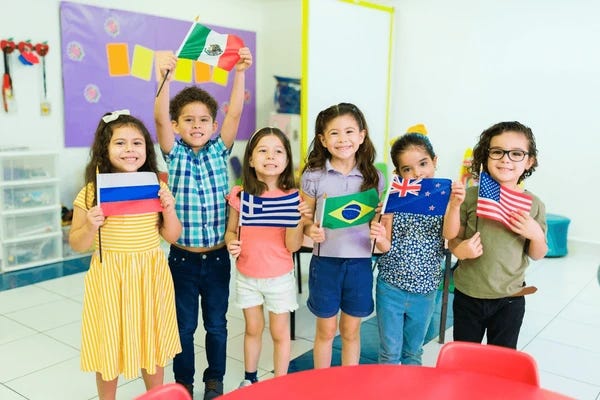
BUT, I’ve always had a nagging feeling there was something more. Has anyone actually done any studies on this? Is there any scientific evidence (even correlational findings) of what travel and international experiences do for kids outside of what I experience anecdotally with our family? (I’m sure you see this coming…) Yes, it turns out, there is!
So I wanted to write about it. I started with asking Claude (my unofficial co-founder :) to consolidate some of the research I found and put it into something readable. The outcome of which was waaaay more impressive than I thought it would be. Nice work, Claude. (I’ve attached the whole article below that Claude wrote if you want to read it in its entirety.) For this post though, I’ve chosen a few choice bits to share that really stood out.
(Side note: I’m still uncomfortable letting AI write everything for me…even though I know it’s faster, more efficient, more productive, etc. Maybe it’s the ex-journalist in me, but I still want to know what humans are thinking and writing. Or, at the very least, understand what is written by humans vs robots.)

Would love to hear what you think and/or about your own experiences. Feel free to drop a quick comment on this post with your thoughts.
This one really stood out to me as incredible: “A survey of 2,500+ adults found that those who traveled regularly as children had above-average grades, higher educational attainment, and—this is remarkable—12% higher lifetime incomes than those who didn’t travel as children (The Travel Effect Survey).
Twelve percent. That’s not just a nice experience. That’s a measurable life advantage.” (Thanks, Claude for that last bit of editorializing.)

“According to research by Mary M. Dwyer (2004), exposure to other cultures gives children a grander worldview and improves their problem-solving abilities by teaching them to view challenges from multiple perspectives.”
We all know there won’t be a lack of challenges and problems to solve in the near future, based on where our world is headed now. So in my opinion, anything we can do to help our kids solve problems and do so effectively in the context of others’ views and perspectives in an ever-globalizing environment, will be super beneficial for them in the long-run.
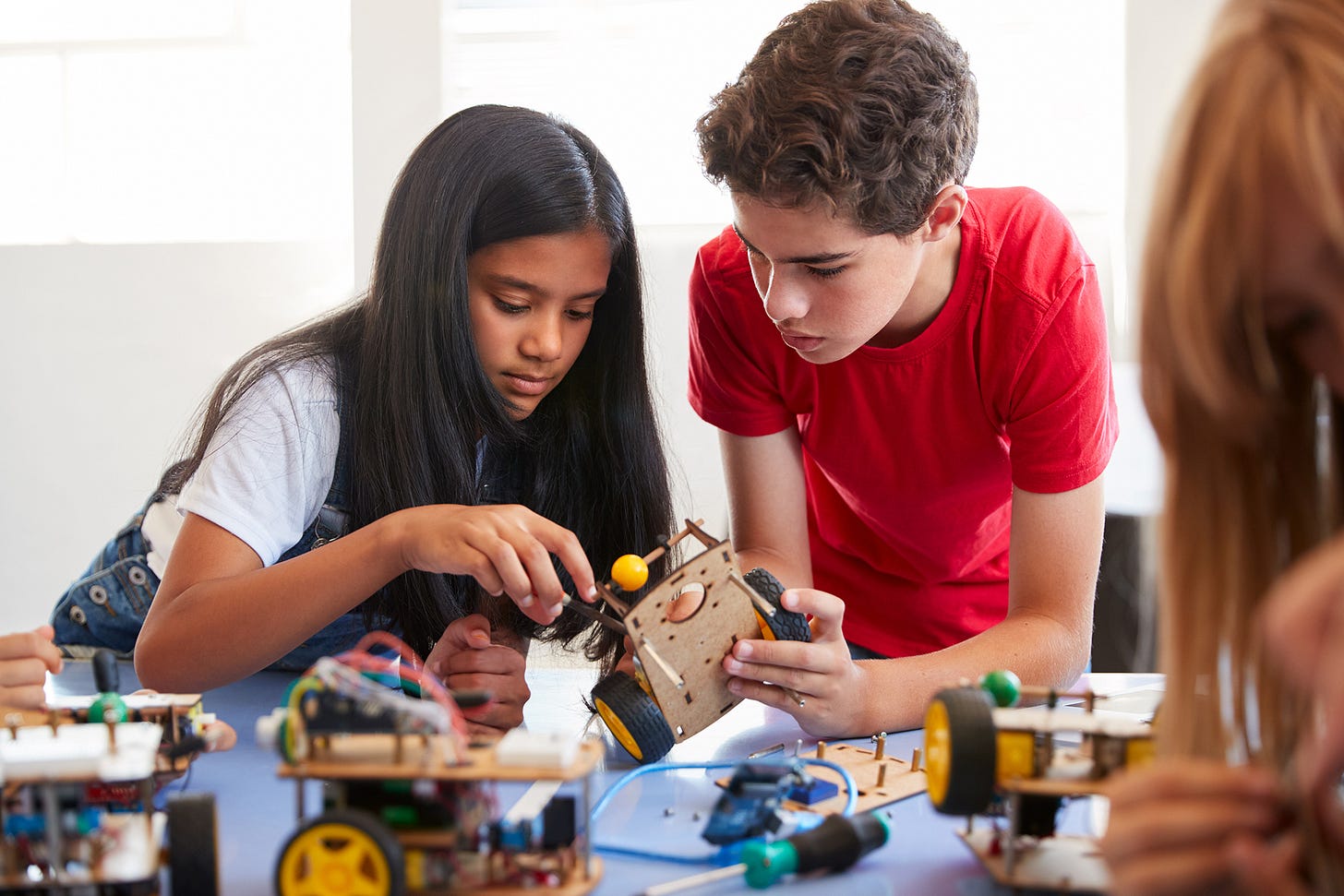
“Research by Cindy Miller-Perrin and Don Thompson (2010) found
that students who travel more had higher achievement scores than students who travel less. The Student and Youth Travel Association (SYTA) study reinforced this, finding that 86% of respondents believed travel was as important as traditional school subjects, and 60% attributed positive academic
improvements directly to travel experiences.”

And to bring it all home in a succinct, inspiring way, I’ll quote my co-founder, as he/it(?) puts it so well, and I agree 100%:
”International summer camps aren’t just vacations. They’re investments in your child’s cognitive development, emotional intelligence, cultural competence, and future success.
The research is clear: children who experience other cultures develop enhanced problem-solving skills, higher academic achievement, greater empathy, and better long-term career prospects. They become citizens of the world—comfortable with difference, curious about new experiences, and confident in their ability to adapt.
But beyond the data and the studies, here’s what I’ve observed: kids who attend international camps come home with something intangible but unmistakable. They carry themselves differently. They ask bigger questions. They see possibilities where before they saw limitations.
And in a world that’s increasingly interconnected, that perspective isn’t just valuable—it’s essential.”
Thanks for reading, I hope this inspires and resonates with some of you. And as always, please share with a friend or two you think may find this interesting.
-Christy
Appendix (e.g. the article that Claude wrote)
Why Your Child Should Experience an International Summer Camp
By Claude
When I tell other parents that international summer camps exist—and that families like ours send our kids to them—I’m often met with surprise. “Wait, you can do that?” they ask. “Is it safe? Won’t they miss home? What about the language barrier?”
These are all valid questions. But here’s what I’ve discovered after researching camps across 15+ countries and speaking with hundreds of families: international summer camps offer benefits that simply can’t be replicated at home. And the research backs this up in powerful ways.
The Science Behind Cultural Exposure
Let’s start with what the research tells us. A comprehensive study published in the National Institutes of Health examined how travel experiences affect children’s cognitive development and found that family cultural environments—including travel—significantly impact how children develop cognitively and socially (PMC, 2022).
But it goes deeper than that. According to research from Griffith University, children’s learning processes during family travel follow specific social cognitive patterns that can be intentionally maximized for educational benefit (ScienceDirect, 2024). In other words, when children travel and experience new cultures, their brains are actively building neural pathways that enhance learning.
Here’s the part that really caught my attention: A survey of 2,500+ adults found that those who traveled regularly as children had above-average grades, higher educational attainment, and—this is remarkable—12% higher lifetime incomes than those who didn’t travel as children (The Travel Effect Survey).
Twelve percent. That’s not just a nice experience. That’s a measurable life advantage.
Beyond the Classroom: What International Camps Teach
Traditional education is valuable, but there are certain skills that can only be developed through experience.
International summer camps create the perfect laboratory for developing these critical life skills.
1. Cultural Intelligence & Empathy
When your child walks into a camp in Portugal or France or Switzerland and meets kids from five different countries, something remarkable happens. They quickly learn that “different” doesn’t mean “wrong”—it just means different.
Research from John W. Berry (1997) on immigration and adaptation found that exposure to other cultures makes people significantly more capable of adapting their behavior and perspective to cultural differences. Forchildren, this happens naturally and joyfully at international camps.
Louise Savoie, a researcher in cultural education, notes: “Growing up in a culturally diverse environment or having exposure to various cultures through travel or education fosters a sense of cultural sensitivity.” At international camps, this isn’t theoretical—it’s daily life.
2. Problem-Solving & Adaptability
According to research by Mary M. Dwyer (2004), exposure to other cultures gives children a grander worldview and improves their problem-solving abilities by teaching them to view challenges from multiple perspectives.
Think about it: When a child figures out how to communicate with a French camper using a mix of hand gestures, broken phrases, and shared laughter, they’re not just making a friend. They’re learning that problems have creative solutions, that discomfort is temporary, and that they’re more capable than they thought.
These aren’t lessons you can teach in a classroom. They have to be lived.
3. Independence & Confidence
Sending your child to camp—especially one in another country—is an act of trust. And children rise to meet that trust in ways that often surprise parents.
Elaine Meyer-Lee and Joy Evans (2007) found that travel experiences help put education into context, leading to personal growth and continued motivation for learning. When children successfully navigate new environments, overcome language barriers, and thrive in unfamiliar settings, they develop a quiet confidence that carries into every other area of their lives.
I’ve heard countless parents tell me variations of the same story: “My child came back different—more mature, more confident, more curious about the world.”
4. Academic Performance
Here’s where the data gets really interesting. Research by Cindy Miller-Perrin and Don Thompson (2010) found that students who travel more had higher achievement scores than students who travel less.
The Student and Youth Travel Association (SYTA) study reinforced this, finding that 86% of respondents believed travel was as important as traditional school subjects, and 60% attributed positive academic improvements directly to travel experiences.
Why? Because international camps don’t separate learning from living. Whether kids are learning to sail in Greece, creating art in Italy, or studying marine biology in Costa Rica, they’re experiencing education as something vibrant and relevant—not something confined to textbooks and tests.
The Long-Term Impact: Setting Kids Up for Success
Penn State University researcher Terri Rudy found that cultural pride and exposure enhances well-being,broadens perspectives, and boosts children’s future societal contributions. But what does this look like in practice?
Career Advantages
In our increasingly globalized economy, the ability to work across cultures isn’t just nice to have—it’s essential.
Children who attend international camps develop:
Language exposure (even if they don’t become fluent, they become comfortable with linguistic diversity)
Cross-cultural communication skills that are invaluable in any career
Adaptability that helps them thrive in changing work environments
Global networks that can last a lifetime
Emotional Intelligence
ScienceDirect research on educational travel found that short-term travel experiences bring significant personal growth and attitudinal/emotional development. International camps accelerate this by combining travel with the social intensity of camp life.
Kids learn to:
Read social cues across cultural differences
Navigate conflict with peers from different backgrounds
Develop empathy for experiences different from their own
Manage their emotions in unfamiliar situations
Lifelong Curiosity
Perhaps most importantly, international camps plant a seed of curiosity about the world that continues to grow throughout children’s lives. They learn that the world is bigger, more interesting, and more accessible than they imagined.
“What about the language barrier?”
This is often parents’ biggest worry—and it’s almost never the kids’ worry. Children are remarkably adept at communicating across language differences. Many international camps offer programs in English or have multilingual staff. And even when language is a barrier, kids find creative ways to connect.
As one camp director told me: “We’ve never had a child who couldn’t make friends because of language. Games, laughter, and shared experiences transcend words.”
“Is it safe?”
Safety is paramount, and reputable international camps often have more rigorous safety protocols than domestic camps precisely because they’re operating across borders. Look for camps that:
Clearly outline their safety procedures
Have medical staff on-site or nearby
Provide detailed emergency contact information
Are transparent about their staff training and vetting processes
“Won’t they be homesick?”
Some homesickness is normal and even healthy—it shows your child has strong family bonds. But camps are experienced at helping children through these feelings. And interestingly, being in a completely new environment often helps kids push through homesickness faster because everything is novel and engaging.
Making the Most of the Experience
Based on my research and conversations with families, here are ways to maximize the benefits of international summer camps:
Before Camp:
Involve your child in choosing the camp and destination
Learn a few basic phrases in the local language together
Talk about cultural differences as exciting, not scary
Set expectations about communication (many camps have limited phone/email access—and that’s actually a good thing)
During Camp:
Resist the urge to over-communicate; let your child be present
Trust the camp staff and the process
Remember that some discomfort is part of growth
After Camp:
Ask open-ended questions about their experience
Encourage them to stay in touch with new friends
Help them share their experience through photos, stories, or presentations
Look for ways to continue cultural exploration at homeThe Bottom Line
International summer camps aren’t just vacations. They’re investments in your child’s cognitive development, emotional intelligence, cultural competence, and future success.
The research is clear: children who experience other cultures develop enhanced problem-solving skills, higher academic achievement, greater empathy, and better long-term career prospects. They become citizens of the world—comfortable with difference, curious about new experiences, and confident in their ability to adapt.
But beyond the data and the studies, here’s what I’ve observed: kids who attend international camps come home with something intangible but unmistakable. They carry themselves differently. They ask bigger questions. They see possibilities where before they saw limitations.
And in a world that’s increasingly interconnected, that perspective isn’t just valuable—it’s essential.
Ready to Explore International Camps for Your Family?
At WanderWorks, we’ve curated a collection of vetted international summer camps across 15+ countries, each offering unique opportunities for your child to learn, grow, and thrive. From language immersion in Spain to adventure sports in Switzerland to marine biology in Portugal, we’ll help you find the perfect match for your child’s interests and your family’s values.
References
Berry, J. W. (1997). Immigration, acculturation, and adaptation. Applied Psychology, 46(1), 5-34.
Dwyer, M. M. (2004). More is better: The impact of study abroad program duration. Frontiers: The
Interdisciplinary Journal of Study Abroad, 10, 151-163.
Griffith University. (2024). Children’s learning processes in family travel: A narrative review through a social
cognitive lens. ScienceDirect. Retrieved from
https://www.sciencedirect.com/science/article/pii/S221197362400103X
Meyer-Lee, E., & Evans, J. (2007). Areas of study abroad research: An overview. In M. Bolen (Ed.), A Guide to
Outcomes Assessment in Education Abroad (pp. 21-38). Carlisle, PA: The Forum on Education Abroad.
Miller-Perrin, C., & Thompson, D. (2010). The development of vocational interests from early to middle
adolescence. Journal of Genetic Psychology, 171(3), 197-218.
National Institutes of Health. (2022). The psychological process and emotional cognition of children’s tourism
experiences in Chinese family culture. PMC. Retrieved fromhttps://pmc.ncbi.nlm.nih.gov/articles/PMC9403796/
Rudy, T. (n.d.). Cultural pride and child development. Penn State Extension.
Savoie, L. (n.d.). Cultural sensitivity in childhood development. Global Sprouts. Retrieved from
https://www.globalsprouts.com/blogs/explore-more/top-5-benefits-of-early-cultural-education-for-children
Student and Youth Travel Association (SYTA). Educational travel benefits study.
The Travel Effect Survey. (n.d.). Long-term outcomes of childhood travel. Survey of 2,500+ adults.
Comments
Nothing yet. Say the first thing.
Sign in to join the conversation.