

Each month, we ask a writer to share what’s on their minds and in their open tabs. This July’s guest curator is Meghan O'Rourke, Executive Editor of The Yale Review, professor, and New York Times bestselling-writer and poet working at the intersection of health, illness, and social psychology.
Hello from New Haven, where I’ve just returned from a writing retreat and a conference in France to a very long to-do list. I am trying to get life in order as summer kicks into high gear and my children’s schedules are completely upended—only to remember, as I do every summer, that life is never in order, and the trying-to-order-it is all I can do, and also the very thing I must stop doing in order to actually enjoy life. Our entryway is piled not only with galleys of the new books I want to read but also swim bags and pool towels and the kids’ tennis rackets and FIFA World Cup cards. Thank god for writing residencies—it is the only way for me to get work done, and I don’t know why I didn’t accept that earlier. I just finished a draft of a new book there, called Partum. It’s a lyric memoir that braids experiences of birth and death and the special attunement to other vibrations of existence that come when we’re living side by side with these existentially transitional moments; structured loosely around the Egyptian Book of the Dead, it is about my father’s death and my children’s birth. In case you’re curious, I also have a new poem called “Sectioned” in The New Yorker if you’d like to check it out.
I live with chronic illness, as I described in The Invisible Kingdom: Reimagining Chronic Illness. And so the big work of the past year for me was working on The Story of the Body, an anthology of illness poetry I edited for W. W. Norton, which comes out this fall; it gathers poems on illness and recovery. It was moving to compile, to spend time with all these amazing writers talking about some of their most vulnerable experiences. I’m blown away by the poems in it by Jericho Brown, danez smith, Laura Kolbe, and more. Check out their work.
As I write, the world in chaos; I’m reading manuscripts and keep spotting ones written with AI, and so I’m doubling down, here, on personhood and idiosyncrasy and paper-based life. Thus, my list.

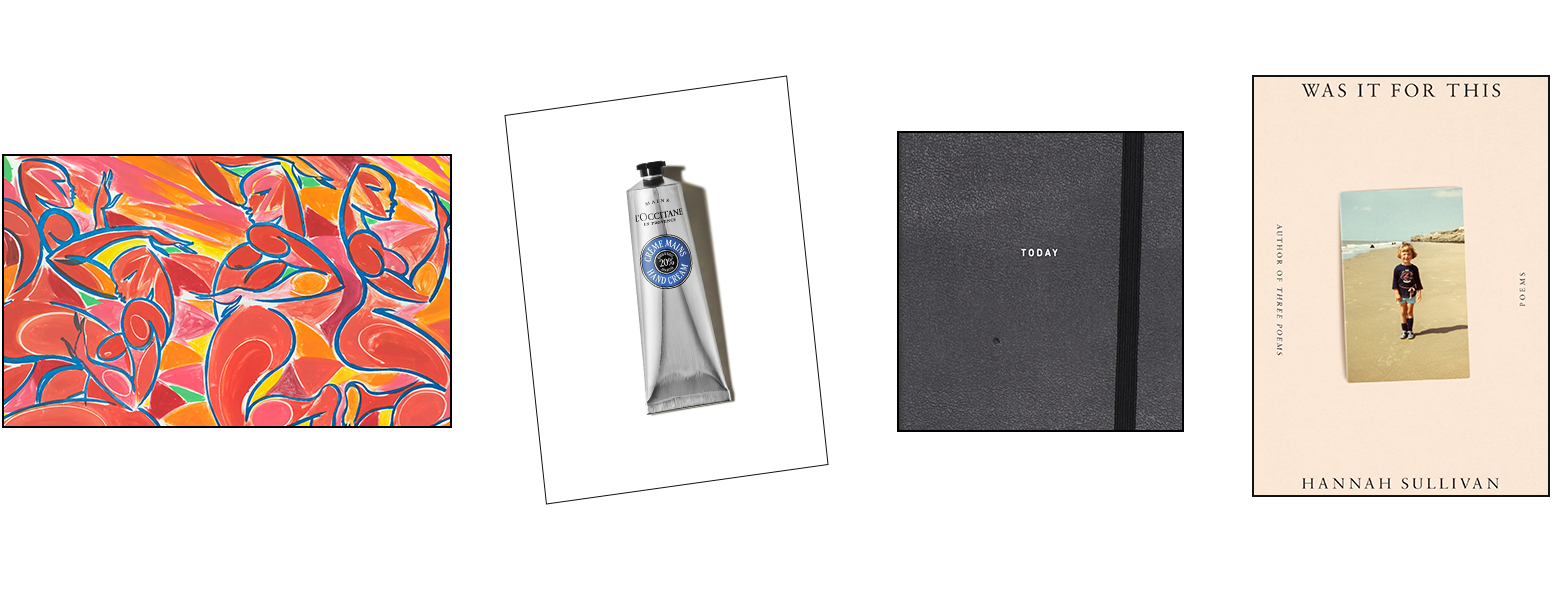
1. Hannah Sullivan’s poetry. Sullivan’s poetry is at once smart and tender. In her most recent book, Was It for This (the title is a reference to Wordsworth), she writes about daughterhood and motherhood and hitting the middle of one’s life in poems that are formally rigorous and emotionally unsparing at once. Also funny: “Suddenly, I’ve done all the things,” she writes. She also has a devastating poem in it about the Grenfell fires. If you’ve never read Three Poems, her first book, start there; her poems remind us that thinking and feeling are intertwined, and that poetry is a place to think through feelings and vice versa.
2. Transcription by Ben Lerner. Lerner’s new novel is about being a father and having fathers—a strangely underrepresented category in fiction, I think? The book begins with the narrator damaging his phone, and takes us into the world of noticing that being phone-less produces. The novel is poignant, anxious, funny, and surprising. I loved it.
3. The Artist’s Way by Julia Cameron. People have been talking about this book to me constantly over the past five years; I finally read it last fall. Cameron prescribes “morning pages” and regular “artist dates” with yourself to help jump-start your creativity. It really does help, I found, to build rituals and routines to protect that space for making. We all need more idiosyncratic creativity in our lives these days! Reading The Artist’s Way helped me write my new book much more quickly; it got me out of a rut I was in, in which I was trying to write a version of the book that was not really the one I wanted to write. Cameron focuses on returning to one’s own core desire, to get other people out of your head. Doing that freed me to write the book I did want to write.
4. Yale University Art Gallery (or any free art museum). To bring some quiet and playfulness into my hectic life—as a mom, executive editor of The Yale Review, professor of creative writing at Yale, and writer—I try to keep the “artist dates” Cameron’s book tells us to make with ourselves. Going to see art is one of the things I’ll do. The trick is to tell yourself you are going only for a very, very short visit and to look at just one piece, maybe three. Taking the pressure off makes it playful instead of dutiful, which is exactly what makes it generative. The YUAG is free and one of the great ones; whatever is free near you will do.
Comments
Nothing yet. Say the first thing.
Sign in to join the conversation.