
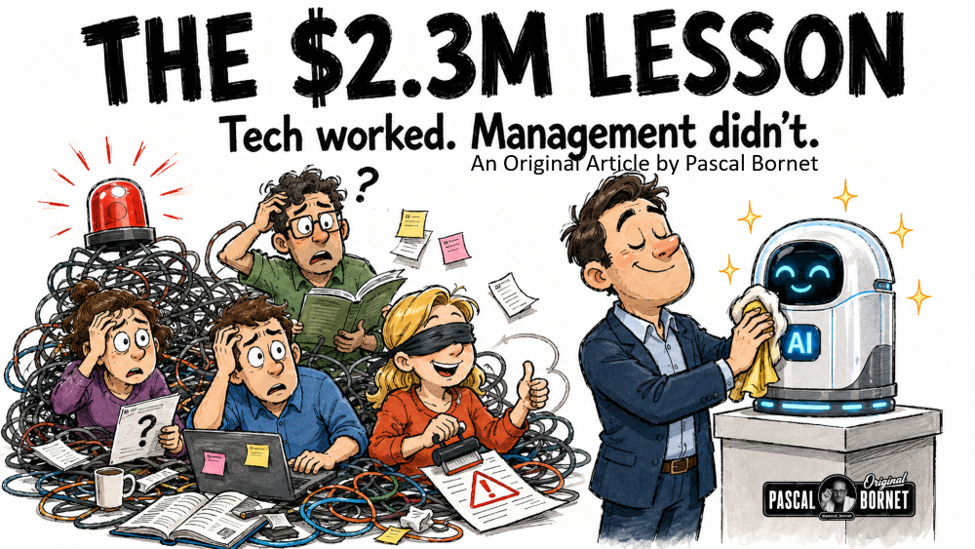
This article is adapted from my latest book: The Human-Agent Orchestrator, about leading hybrid teams of humans and AI agents.
Three years ago I signed the biggest contract of my career, and it nearly ended it. I want to tell you what happened, because I think almost everyone deploying AI agents today is one decision away from the same mistake.
The client was a large pharmaceutical company. Their analysts reviewed three to four drug safety reports a day, with a backlog of ten thousand and a regulator running out of patience. My plan was clean: AI agents would do the first review, human analysts would check and approve. I told the client’s director, Dr. Brown, we were augmenting judgment, not replacing it. She agreed. We began.
By month three the results looked extraordinary. Five experienced analysts, each paired with an agent, were handling three times their previous output. I was already mentally drafting the case study. What I did not do, and this is the mistake everything else hangs on, is stop to ask why those five, specifically, were succeeding. I assumed it was the technology. It was not.
When we scaled to all fifty analysts, things broke quickly. The five experienced ones kept performing, because they already knew how to manage delegated work and calibrate trust. Everyone else struggled silently, approving outputs they did not fully understand. One of the newest asked me a question I still think about: “If the AI can do my job, why do they need me?”
My response, and this is the part I am least proud of, was to work harder. I reviewed outputs personally, rewrote instructions, added controls, stayed late. I was, without realizing it, making myself the single point of failure in a system designed specifically to not need one. Then an agent marked a medication interaction as low risk, a newer analyst signed off, and a senior colleague caught what both had missed, days later. The program was shut down within the week.
I spent two weeks genuinely uncertain whether I had done irreparable damage to my career. What I eventually understood was that the AI had never been the problem. It worked exactly as designed, every time. What was missing was a management layer — decisions about accountability and escalation that I had never made, because I was so focused on the technology working that I mistook technical success for organizational readiness.
Here is the claim I want to leave you with. I believe most AI deployments succeeding in pilot but destined to fail at scale are succeeding for the exact reason mine did: they have accidentally selected for people who already had the management skills the system silently requires, and no one has noticed yet that the skill, not the technology, is the real constraint.
Dr. Brown put it better than I could, in a note after we finally fixed it: “You almost killed this program by treating it like a technology project. You saved it by treating it like a management challenge.” I have never forgotten that sentence.
Have you had your own version of this moment, the one where you realized the technology was never really the problem? I would genuinely like to hear it, however uncomfortable. Comment below.
If this resonated, the book goes deeper. We are celebrating two months since launch by dropping the e-book to $2.99 for a limited time. You can find it here: The Human-Agent Orchestrator. If you liked this article, I think you will find the rest genuinely useful.
#AgenticAI #Leadership #AIFailures #FutureOfWork #ChangeManagement #HumanAgentOrchestration
No posts
Comments
Nothing yet. Say the first thing.
Sign in to join the conversation.