

We are honored to count you among the 1+ MILLION readers of our weekly newsletter. Please help grow our community by inviting your friends to subscribe.
If you’re new here, we celebrate the ways Artificial Intelligence is making our world more Human. This newsletter is released in collaboration with The Rundown AI.
⚠️ My new book is finally out. For those who want to stay at the edge of AI, this is the next step: Orchestrating AI Agents. You will just love it!

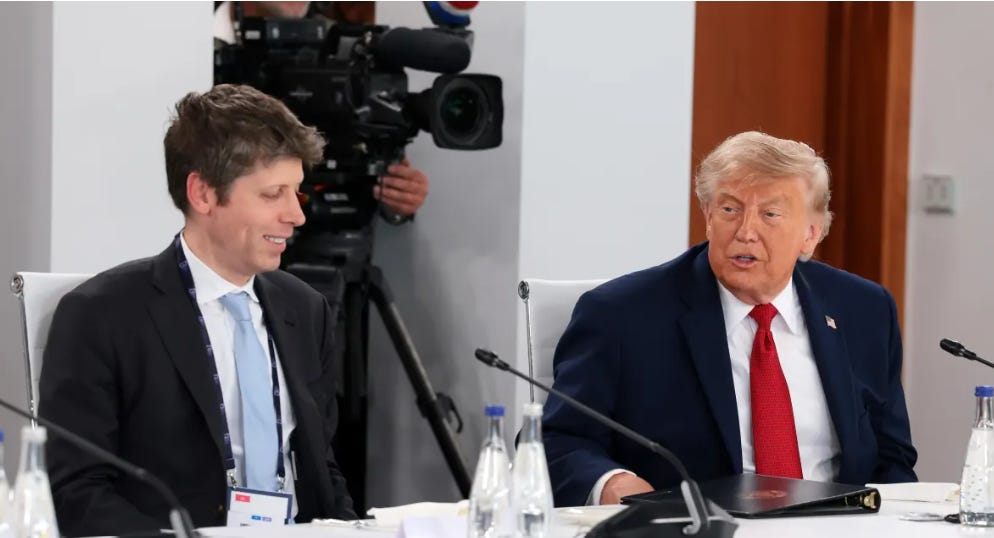
The U.S. government and Anthropic have remained at an impasse over the export restrictions that took the lab’s top models offline. But new details are emerging: a letter to Anthropic from Washington, employee reactions, and France’s G7.
Key Takeaways:
Bloomberg released a letter from U.S. Commerce Sec. Howard Lutnick, who warned Anthropic against distributing Mythos/Fable to “foreign persons.”
Internal messages obtained by the NYT show concern from employees that the lab is being “unfairly targeted” and “bullied based on bad vibes.”
The Washington Post reported that the list of companies with Mythos access had “ballooned,” including a S. Korea firm with suspected ties to China.
Dario Amodei, Sam Altman, Demis Hassabis, and others are at the G7 summit in France, expected to discuss AI regulation and safety with world leaders.
My Take: Anthropic employees are coming to the same conclusion we initially did — that this is a relationship issue more than a safety one. But details like WaPo’s expanded Mythos list point to a clear situation that would draw the ire of the USG, though its stance on jailbreaks sounds like an impossible ask to comply with.
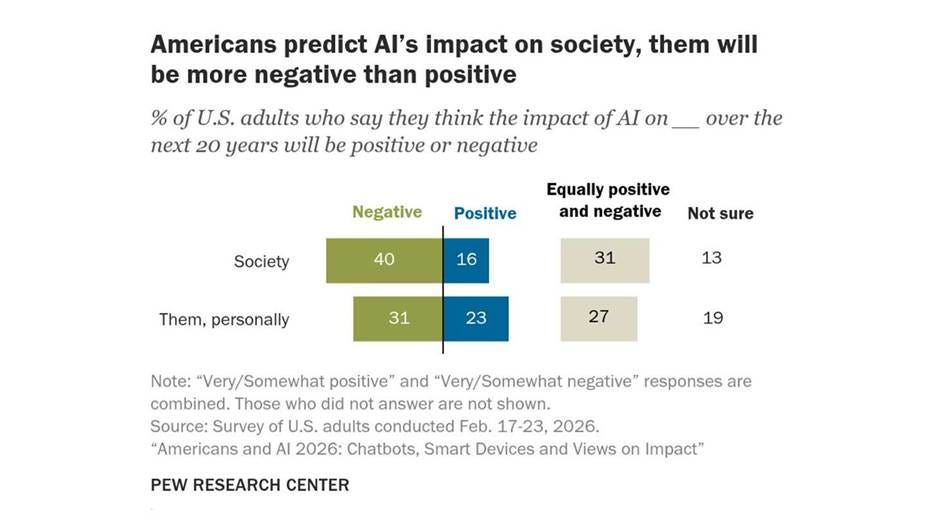
Pew Research just released its 2026 data on more than 5K U.S. adults, measuring both how people use AI and how they feel about it — with the two lines running in opposite directions as adoption climbs while optimism continues to slide.
Key Takeaways:
Chatbots just crossed a milestone, with about half of U.S. adults now using one, and a quarter do so daily — a leap from just 1/3 of the public in 2024.
Pessimism reigns, with nearly 40% expecting AI to make society worse over the next 20 years and just 16% believing it will change things for the better.
The under-30 crowd leans on AI the hardest but trusts it the least, with only 14% seeing a positive payoff for society.
ChatGPT still dominates the field at 44% of adults, double its 2023 reach, with Gemini at 24% and Claude at just 6%.
My Take: This data aligns with our own gut check of AI’s sentiment outside of our narrow bubble, with adoption rising alongside fears for the future. The adoption numbers behind specific platforms are particularly wild, with Anthropic being the constant talk of the industry despite barely registering with the average American.
🎙️ For the third year in a row, I had the pleasure of sitting down with Chris Hallenbeck to discuss the evolution of AI in the enterprise.
One of the most interesting aspects of these annual conversations is seeing how quickly the industry is moving—from early AI adoption to today’s challenges around agent governance, security, and operational scale.
In this interview, we move beyond the hype and explore what it really takes to manage AI agents throughout their lifecycle, build trustworthy agentic workflows, and make smart decisions about when to use AI versus traditional automation.
🎥 Watch the full interview on YouTube and share your thoughts:
#BoomiAmbassador #AgenticAI #EnterpriseAI #AIGovernance #IntelligentAutomation #DigitalTransformation #Leadership #AI
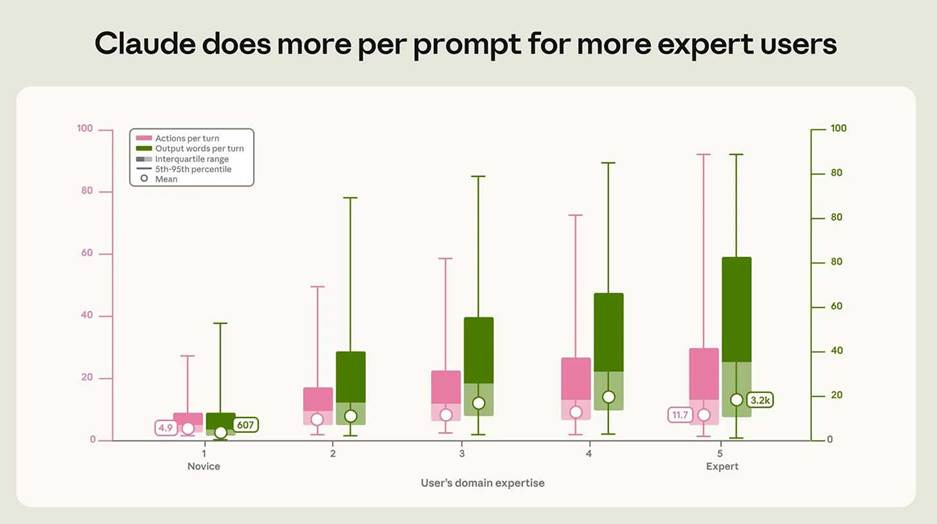
Anthropic just analyzed 400K Claude Code sessions, studying how work splits between human vs. agent and what drives success — finding that a user’s own expertise in their field matters more than their overall coding expertise.
Key Takeaways:
Users made roughly 70% of planning decisions in a typical session, while Claude handled around 80% of execution choices.
Skill changed the yield per prompt, with beginners drawing about five actions and 600 words from Claude versus an expert’s 12 actions and 3,200 words.
Verified success rates confirmed by passing tests or saved work climbed to 28–33% for intermediate-and-above users, over double the 15% rate for novices.
Lawyers, managers, and scientists with no coding job title nearly matched software engineers on coding tasks, finishing within just seven points of them.
My Take: This data rhymes with the Perplexity-Harvard study we covered last week, where agents pushed people toward harder, cross-field work rather than just faster work. Both point in the same direction, with the value of agents being capped less by the model itself and more by how much its user actually understands the job.
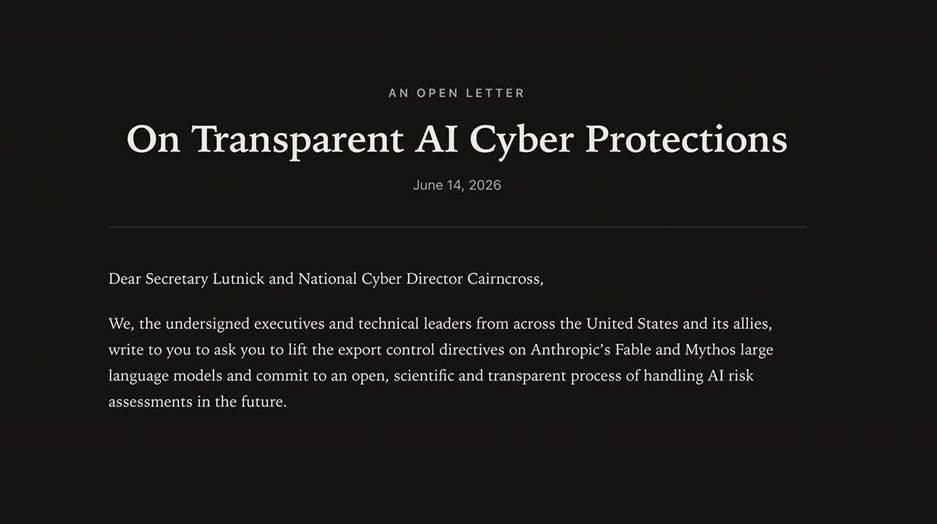
More than 100+ cybersecurity execs and researchers signed an open letter urging the U.S. to lift its export ban on Anthropic’s Fable 5, arguing it handcuffs defenders without slowing attackers who can pull the same capabilities from rival models.
Key Takeaways:
Ex-Facebook security head Alex Stamos said the flagged jailbreak produced a “proof of concept” of a flaw, which defensive teams use to patch weak spots.
The letter singles out OAI’s Daybreak for doing the same flaw-finding, with GPT-5.5, Kimi 2.7, Opus, and Sonnet all having the same capability.
The letter calls for model regulation to include grounding in scientific evaluations, a democratic process, and transparent and fair enforcement.
Signees include security leaders tied to Adobe, Zoom, Sophos, Vercel, Veracode, Nvidia, and Stanford HAI.
My take: Security researchers don’t agree with the government’s threat assessment that led to the restrictions, which adds to the cloud surrounding the true motivation behind the ban. With other reports citing comms as the main issue between the two sides, the problem is looking just as much ideological as safety related.
SpaceX just officially exercised its option to acquire AI coding startup Cursor in a $60B deal paid entirely in stock, coming on the heels of a post-IPO rally that has nearly doubled the company’s value and sent Elon Musk’s personal wealth surging above $1T.
Key Takeaways:
Cursor and SpaceX announced an initial deal in April that provided an option to acquire the startup for $60B or pay $10B for the partnership alone.
Since listing Friday at $135 a share, SpaceX has rocketed past $200, piling nearly $1T onto its value in under a week of public trading.
Cursor CEO Michael Truell said its upcoming model will be “generally intelligent,” trained from scratch, and as big as Opus.
SpaceX said Cursor is already part of a model-training push for Grok Build and its own editor, giving Musk a developer platform for his AI stack.
My Take: Cursor was already intertwined with SpaceX from the April deal, but the company’s up-only IPO surge just made a stock-only deal even easier. While Grok hasn’t been up to par on coding, the combination of Cursor’s models and SpaceX’s compute could turn things around at the breakneck speeds Musk likes to move at.
Which of these news stories resonates most with you?
Let us join hands to make our world more human! — Pascal
#artificialintelligence #intelligentautomation #futureofwork #AI #automation #management #technology #innovation
No posts
Comments
Nothing yet. Say the first thing.
Sign in to join the conversation.