

We are honored to count you among the 1+ MILLION readers of our weekly newsletter. Please help grow our community by inviting your friends to subscribe.
If you’re new here, we celebrate the ways Artificial Intelligence is making our world more Human. This newsletter is released in collaboration with The Rundown AI.
⚠️ My new book is finally out. For those who want to stay at the edge of AI, this is the next step: Orchestrating AI Agents. You will just love it!


The US and Japan expanded their bilateral AI collaboration agreement to include compute access and industrial AI strategy, while the UK and Canada signed a separate AI compute deal, establishing for the first time that access to frontier AI infrastructure is a matter of national competitiveness, equivalent to energy supply.
Key Takeaways:
The US-Japan deal covers co-investment in AI infrastructure, joint frontier model research, and shared governance standards for regulated industries including healthcare, finance, and critical infrastructure.
The UK-Canada agreement focuses on data center investment, AI talent mobility, and sovereign AI procurement, ensuring both nations can deploy AI without routing sensitive data through US or Chinese infrastructure.
Multinationals operating across jurisdictions now face AI infrastructure decisions that are simultaneously technical, commercial, and geopolitical — which cloud, which chips, where data sits, and who governs the model.
My take: Compute is the new oil, and governments are acting like it. For any multinational executive, the AI infrastructure stack is no longer a purely technical decision — it now carries regulatory, trade, and national security dimensions.
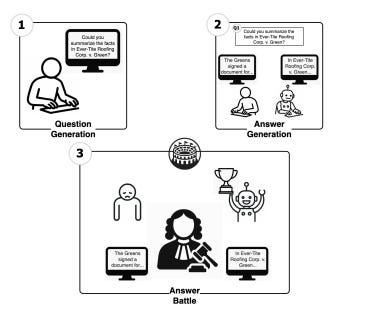
A new study led by Stanford ran a blind test of AI legal tutoring, asking 16 contract professors to judge anonymized answers from their peers and from two of Google’s AI systems — with the faculty siding with the AI outputs 75% of the time.
Key Takeaways:
The study tested contract-law office-hours questions, a setting where strong answers need judgment and critical thinking instead of just one correct answer.
Sixteen professors from 14 schools blindly judged 2,918 matchups between their own answers and those of Google’s Gemini 2.5 Pro and NotebookLM.
Faculty chose Gemini 2.5 Pro and NotebookLM responses 75% of the time, with only a single top professor staying level with the models in evaluations.
Extending the testing with an AI stand-in judge, the team ranked nine more systems, with Claude Opus 4.7 on top and all models beating the professors.
My Take: Early models like GPT-4 were already passing the bar exam, but this study puts AI in tougher, more subjective judgment situations on office hours contract law questions. AI’s rollout into the education world is still controversial and jagged, but areas like on-demand tutoring can help change the learning process for the better.

The future of work is not coming quietly.
It is being built by companies already redesigning how people, AI, and operations work together.
💥 That is why I’m excited to attend PegaWorld 2026 in Las Vegas, June 7–9.
Keynotes. Customer stories. Live demos. Hands-on labs.
👉 I’m especially looking forward to learning more about Predictable AI, agentic customer self-service, AI-driven testing, and Pega Blueprint.
Because enterprise AI does not become real in a press release. It becomes real when it changes how work gets done.
⭐ I’ll be there. Will you? Register here.
#PegaSystemsAmbassador #Pega #PegaWorld #PegaWorld2026 #EnterpriseAI #AgenticAI #Automation #CustomerExperience
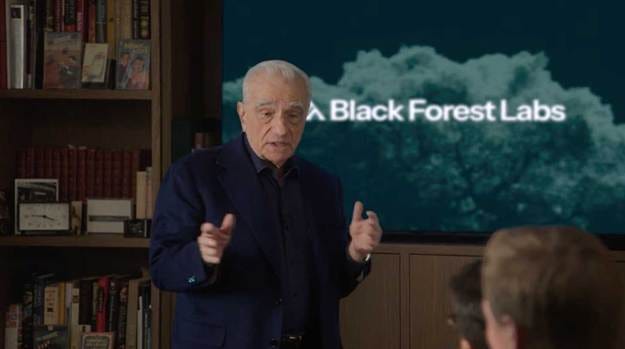
Martin Scorsese just went public as an adviser to AI image startup Black Forest Labs, with a new video detailing the Academy Award-winning director using the company’s FLUX model to help storyboard a new film.
Key Takeaways:
Scorsese signed on last year as a partner and adviser to Black Forest Labs, utilizing its FLUX AI image models for preproduction of a new film.
His use is for storyboarding only, with no generated actors, sets, or footage — calling being able to share a storyboard instantly “creatively freeing.”
Scorsese also said that “Cinema is a young medium, only around 125 years old, so we have to be open to how it can evolve”.
My take: This is going to ruffle some anti-AI Hollywood feathers, but a figure of Scorsese’s level coming out in support of an AI tool is a big deal. It’s also a good example of using the tech in a way that aids the creative process without replacing it, a more stomachable entry point for skeptical filmmakers than full AI films or studios.
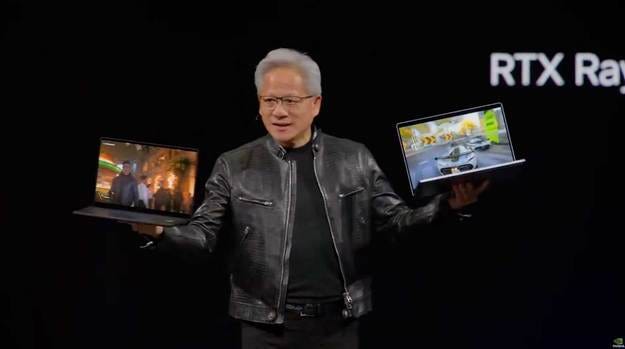
Nvidia just introduced a series of new AI releases across hardware, robotics, models, and more at COMPUTEX 2026, all built around the idea that agents will soon be the biggest consumers of compute power.
Key Takeaways:
The new RTX Spark supercomputer chips built with Microsoft run AI agents directly on PCs, with Nvidia saying it takes Windows “from tool to teammate.”
Nvidia called Vera the “CPU for agents”, a processor that finishes tasks 1.8x faster than rivals and is now being used by Anthropic, OpenAI, and the NYSE.
Cosmos 3 is a new open robotics model, giving robots and self-driving cars the ability to plan ahead and anticipate moves instead of just reacting.
Nemotron 3 Ultra is a new 550B parameter model that moves to the top of U.S. open-source and competes with Chinese rivals like Qwen3.5 and Kimi K2.6.
My take: Nobody builds across the entire tech stack quite like Nvidia, but the central theme in the chipmaking giant’s latest moves is the prioritization of AI agents themselves as the consumers of compute — with a company worth $5T+ now organizing its entire lineup around enabling software that didn’t exist two years ago.
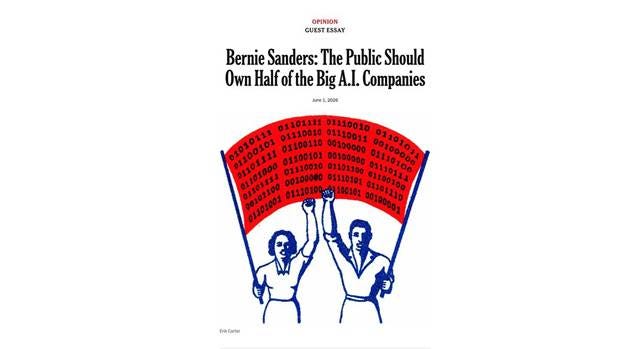
In an NYT op-ed, Bernie Sanders previewed the American A.I. Sovereign Wealth Fund Act, an upcoming bill proposal that would route half the stock of the largest AI companies into a public fund and pay the gains back to Americans.
Key Takeaways:
Sanders framed it as a one-time tax collected in equity, with the government gaining voting power and a board seat at OAI, Anthropic, and xAI.
Sanders cites the AI labs themselves as precedent, with each already pitching public funds or “universal high income” to spread AI’s gains.
He pointed to Norway’s $2T oil fund and Alaska’s oil dividends to residents as examples of “ensuring ordinary people benefit from national wealth”.
Sanders said, “A.I. is being built on a public resource far more valuable than oil: the accumulated knowledge, creativity, and labor of mankind.”
My Take: With public AI sentiment at a low and mega IPOs from top AI labs coming at valuations that leave little room for the average investor, Sanders’ concerns that ordinary people are not benefiting are real. Getting the AI labs on board to give up 50% of their equity, despite the posturing, is another question.
Which of these news stories resonates most with you?
Let us join hands to make our world more human! — Pascal
#artificialintelligence #intelligentautomation #futureofwork #AI #automation #management #technology #innovation
No posts
Comments
Nothing yet. Say the first thing.
Sign in to join the conversation.