
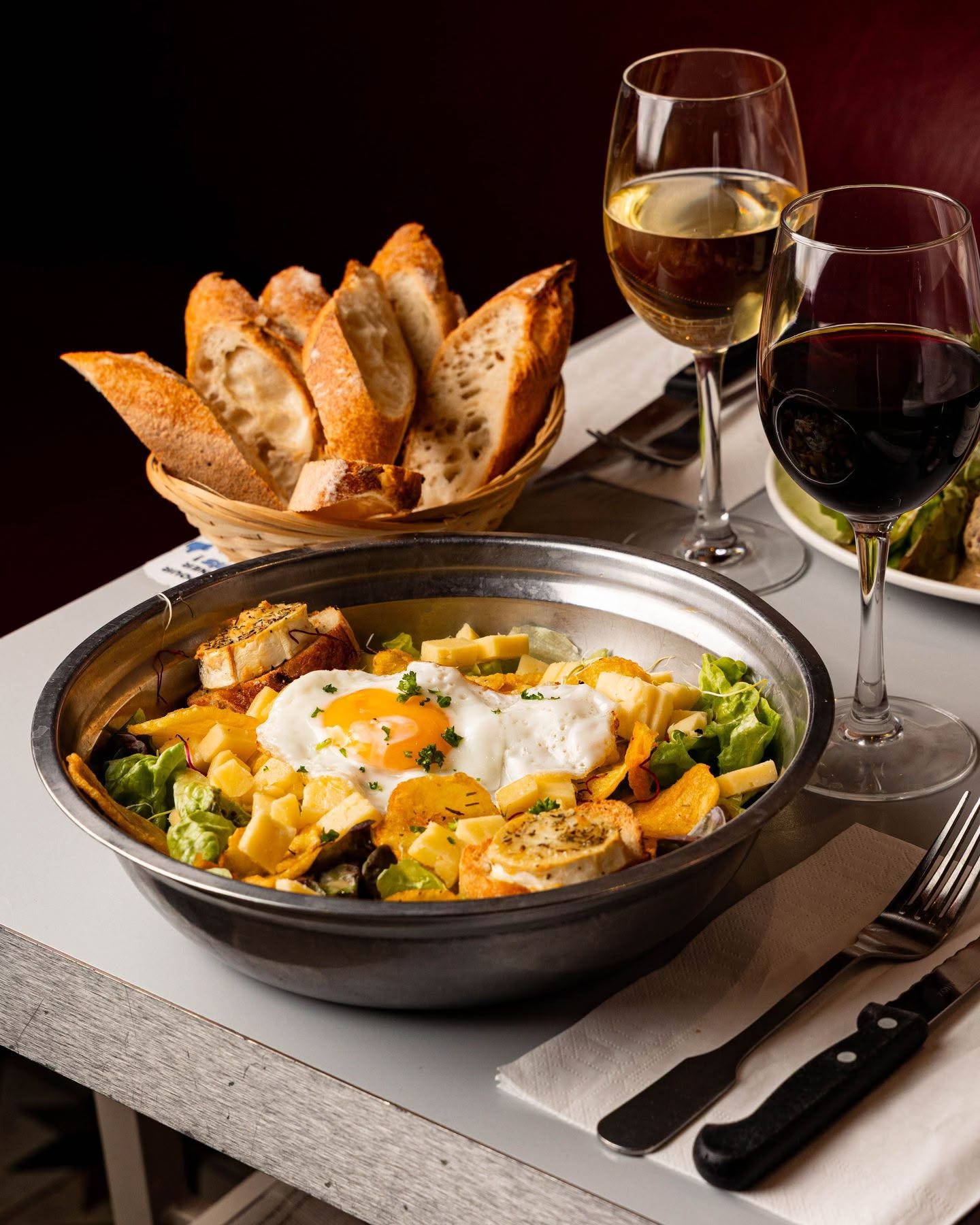
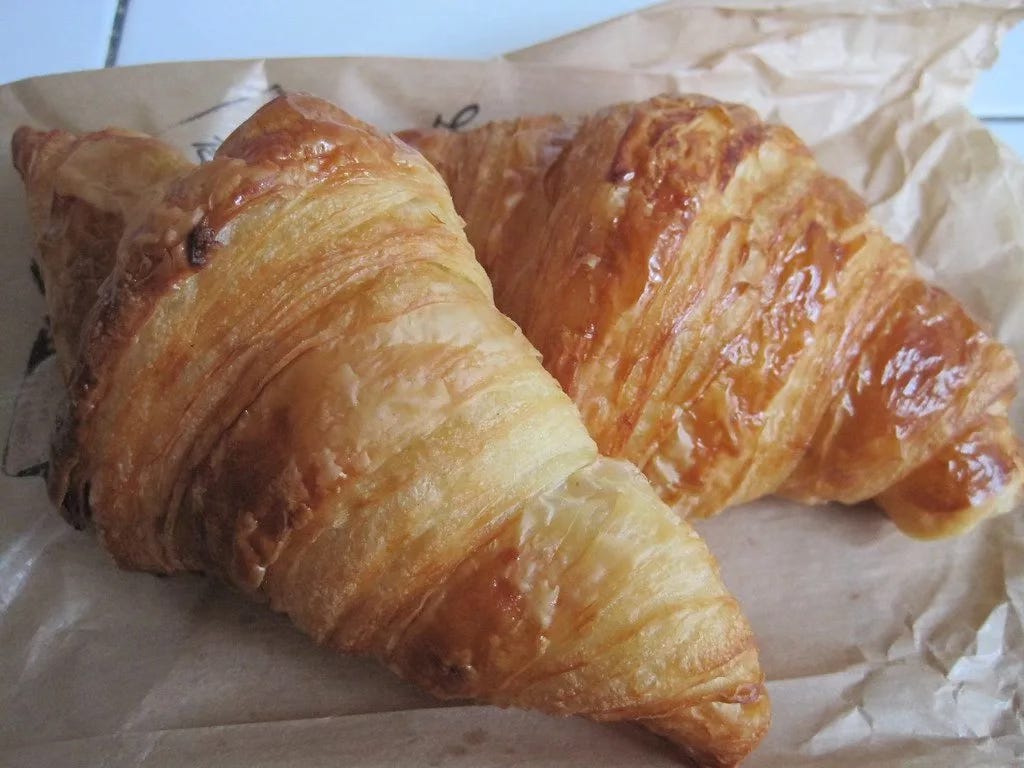
I’ve often mused on the surprising problem of terrible food and restaurants in Paris, and noted just how widespread it is in the capital. You have to work somewhat hard to avoid wasting precious, inflation-stretched funds on awful meals that were probably made in part from frozen, tasteless or out-of-season products. This often comes as a shock to visitors who believed Paris to be a gastronomic paradise where every corner bistrot or brasserie might regale them with the best meal of their lives.
Instead, they get a limp whole leaf of iceberb lettuce smothered with industrial dressing and grainy bits catching in their teeth, a piece of lukewarm fish that tastes vaguely freezer-burned, and (again courtesy of the freezer section) a perfectly-formed but uninspiring mi-cuit (chocolate molten cake) that was likely thawed that morning.
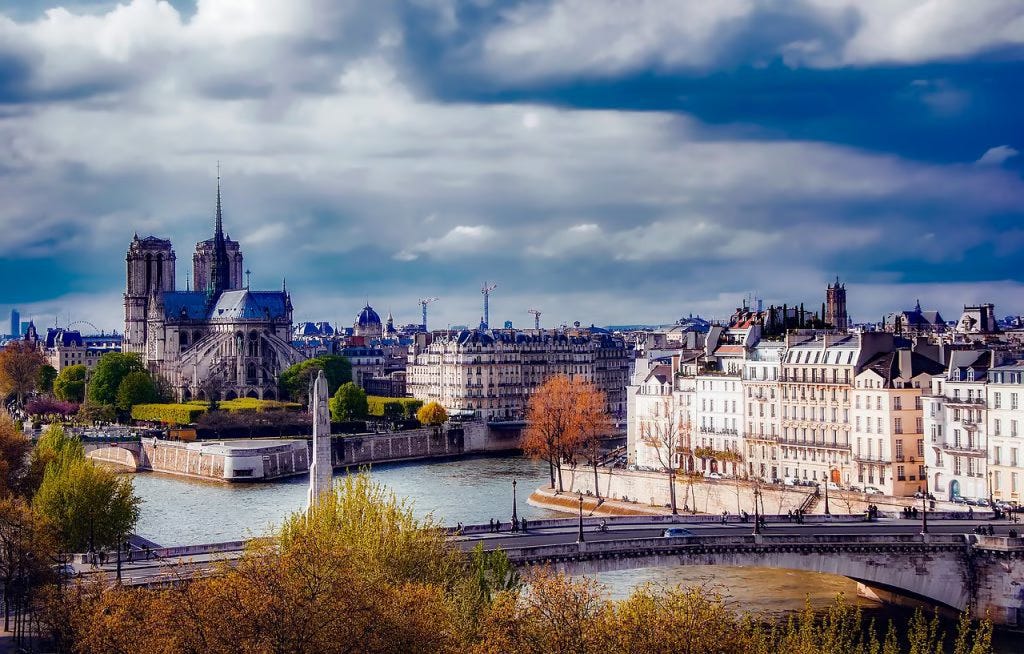
With these disappointing experiences in mind, we’re hoping to help you avoid them, building a series of handy guides on where to eat out in areas that are particularly littered with tourist traps. Contributing Editor Rachel Naismith’s latest piece at Paris Unlocked tackles a neighborhood that’s especially difficult when it comes to intelligently parsing dining choices: the Latin Quarter. Previously, she wrote about where to find inexpensive lunch and dinner around the Louvre and the smack-center of the capital:
This time, she offers some excellent recommendations for an area that’s especially hard to navigate because restaurant owners often feel little incentive to make their food better: they know they can make good margins from feeding reliable crowds of tourists subpar ingredients and finished products, so why spend more on improving anything?
And it’s not enough to avoid tourist-trap lanes like the infamous Rue de la Harpe, where you’re accosted by hosts practically pulling at your clothes in a bid to get you to come in and eat, and where menus illustrating “authentic” French dishes plastered outside easily convey that the fare offered within is anything but. It’s a good idea to have a few concrete recommendations for the area, where mediocrity-to-terribleness in the food department is, again, rather endemic.
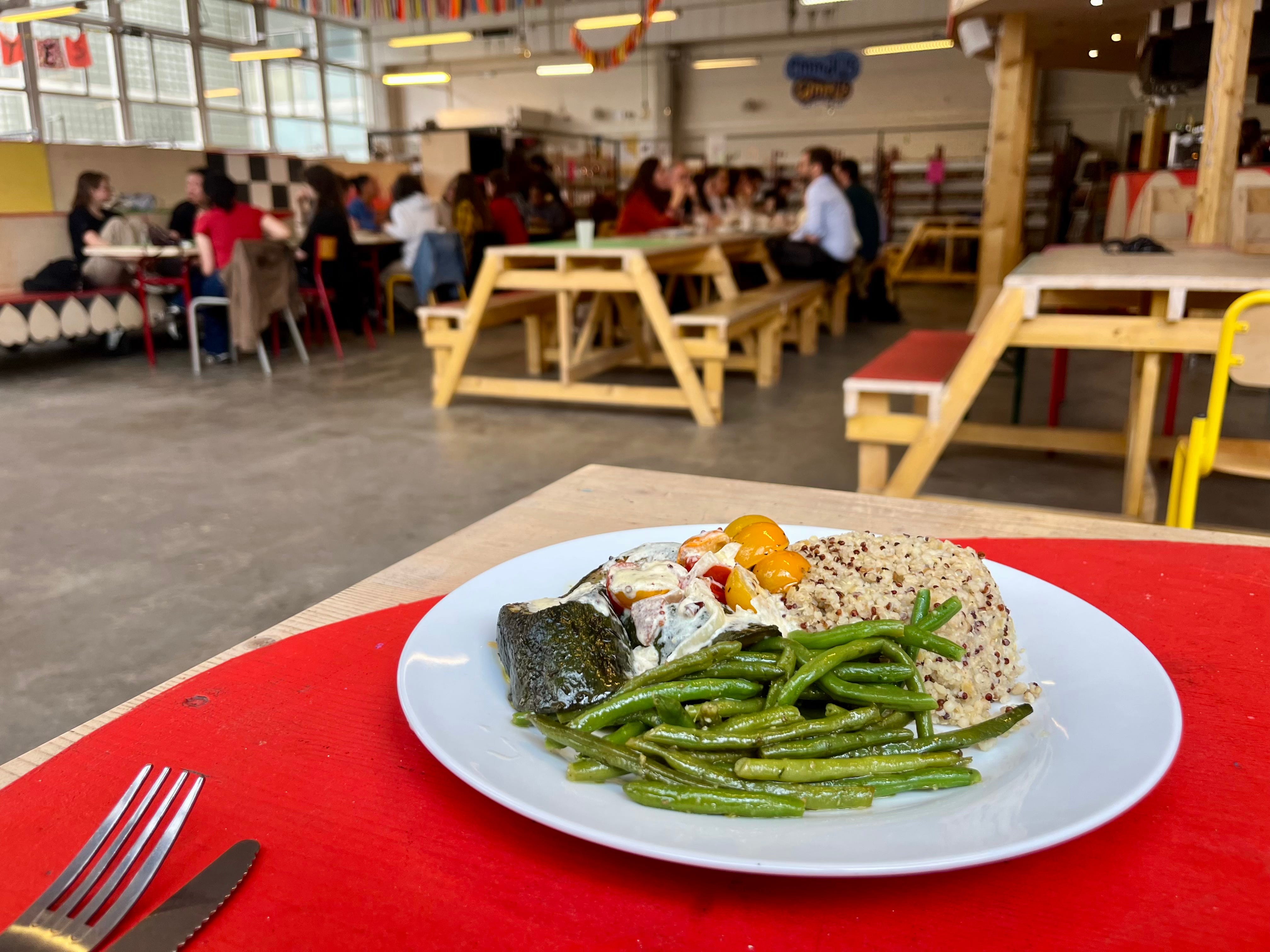
What I really like about Rachel’s piece is that she avoids the tired snobbery of your standard “best-of” restaurant recs. There’s one Michelin-starred table amid her suggestions, but there’s also a cozy neighborhood café, a traiteur perfect for taking away fresh dishes for a picnic at the Jardin des Plantes or the Jardin du Luxembourg, and even a cantine (neighborhood cafeteria) where the food is remarkably fresh, and students from the Sorbonne often stop for lunch. “On my last visit, a roasted courgette dish with a tahini drizzle perfumed the room from the open kitchen. Everything tasted fresh and homemade”, Rachel notes of La Césure.
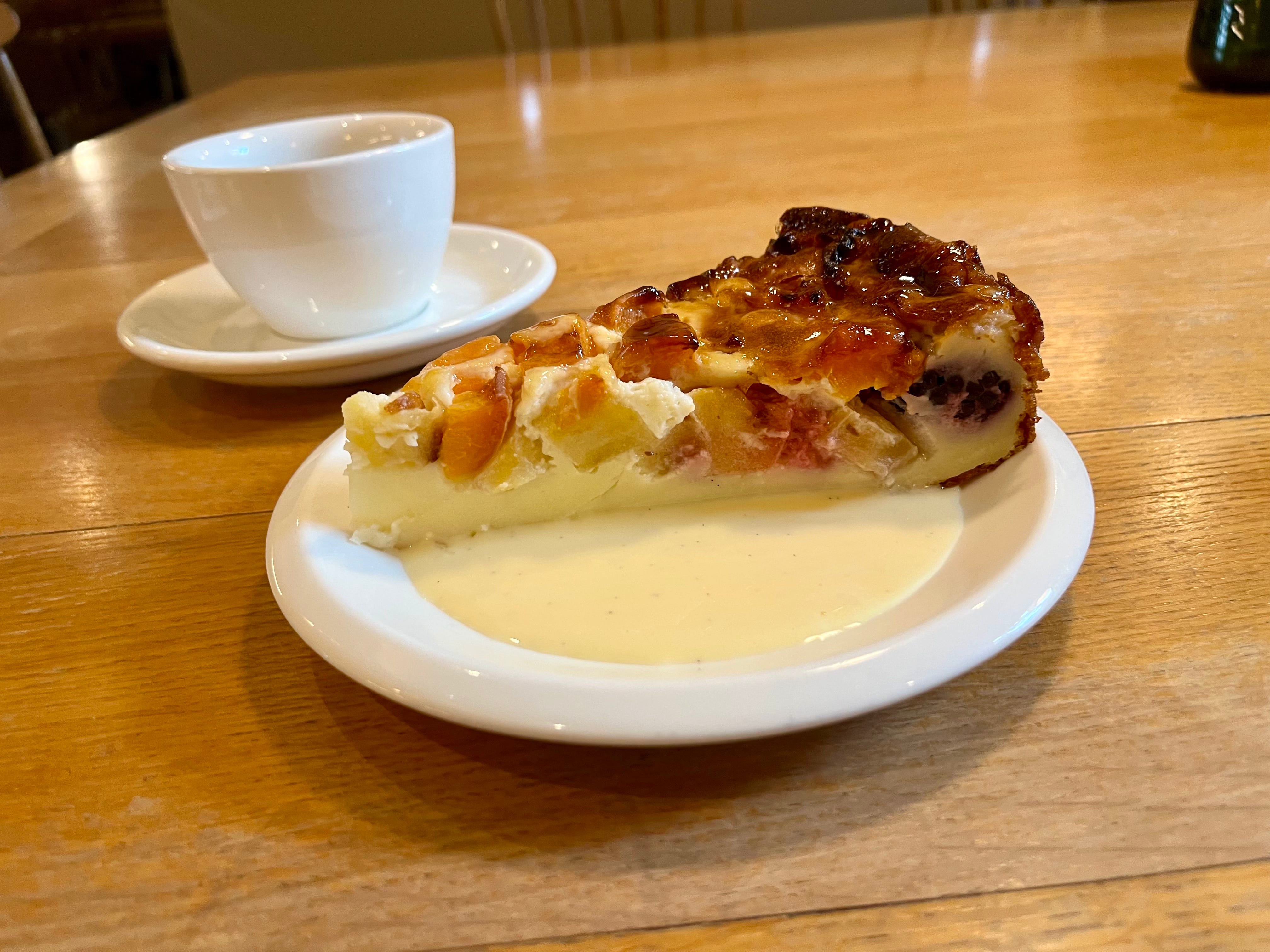
For cakes and other sweet fare in the area, Rachel suggests Tram Café, a pleasant cafe and adjoining bookshop. “Their cookies are rich and fudgy, but from spring onwards I almost always opt for the clafoutis, made with seasonal fruit and served in a little moat of crème anglaise”, she says. For lunch, Tram also serve savory dishes that are light, tasty and inexpensive.
Reading this piece again has made me insanely hungry— especially Rachel’s description of a local Lebanese restaurant’s offerings (sorry, you’ll have to consult the full article to find out more): “I usually choose the lemony roasted chicken shawarma, generously packed with garlic sauce, pickles and potatoes. The falafel is just as good: freshly fried, crisp on the outside and herbaceous within, bundled into flatbread slicked with house-made hummus.”
Pivoting away from food (grumble grumble, my stomach protests as noon comes and goes), summer officially begins this weekend with the Fête de la Musique, a free music event held on the evening of Summer Solstice (June 21st). This year, it falls on a Sunday, meaning there will be quite a few hung-over office workers the following day. On the bright side, though, crowds might be a bit thinner than usual.
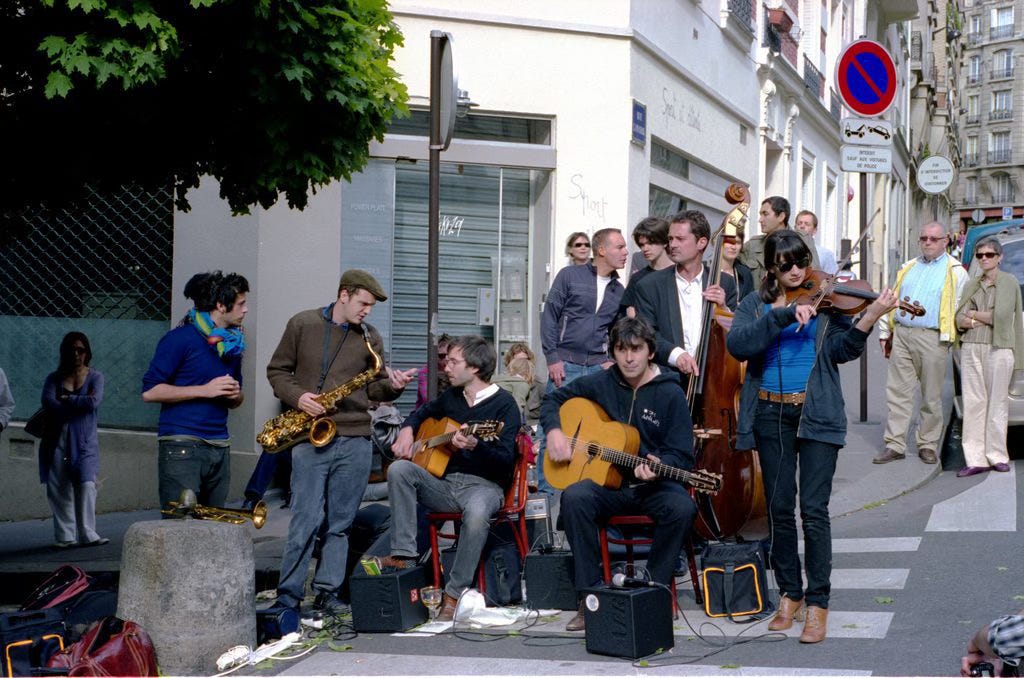
Have I had mixed experiences of the event? Sure. I always think of Julie Delpy’s character in 2 Days in Paris, as she anxiously navigates a crowd of people gathered to watch performances for the Fête around the Canal St-Martin (it doesn’t help that she’s having an argument with her boyfriend).
It’s an event that can feel a bit like improvisational jazz, chaotic, joyful and sometimes a bit stressful, depending on whether you just go with the flow and stroll around to happen upon performances good and bad, or actually make a schedule for yourself and target some of the more professional performances, which are also free. I tend to go for the former tactic, as I like an element of surprise and spontaneity. This sometimes means that I never hear anything particularly good, but it’s (in my sense) a better way to approach the spirit of the Solstice. The Californian hippie in me is peeking out here— I’m fully aware.
See more on the Fête de la Musique, and on other summer festivals in the capital, in our full guide.
If you’re in town at the moment, also try to go see the ephemeral installation at the Pont-Neuf, which has transformed the city’s oldest bridge — (confusing, I know, since the name suggests exactly the opposite) — into a series of granite-like structures.
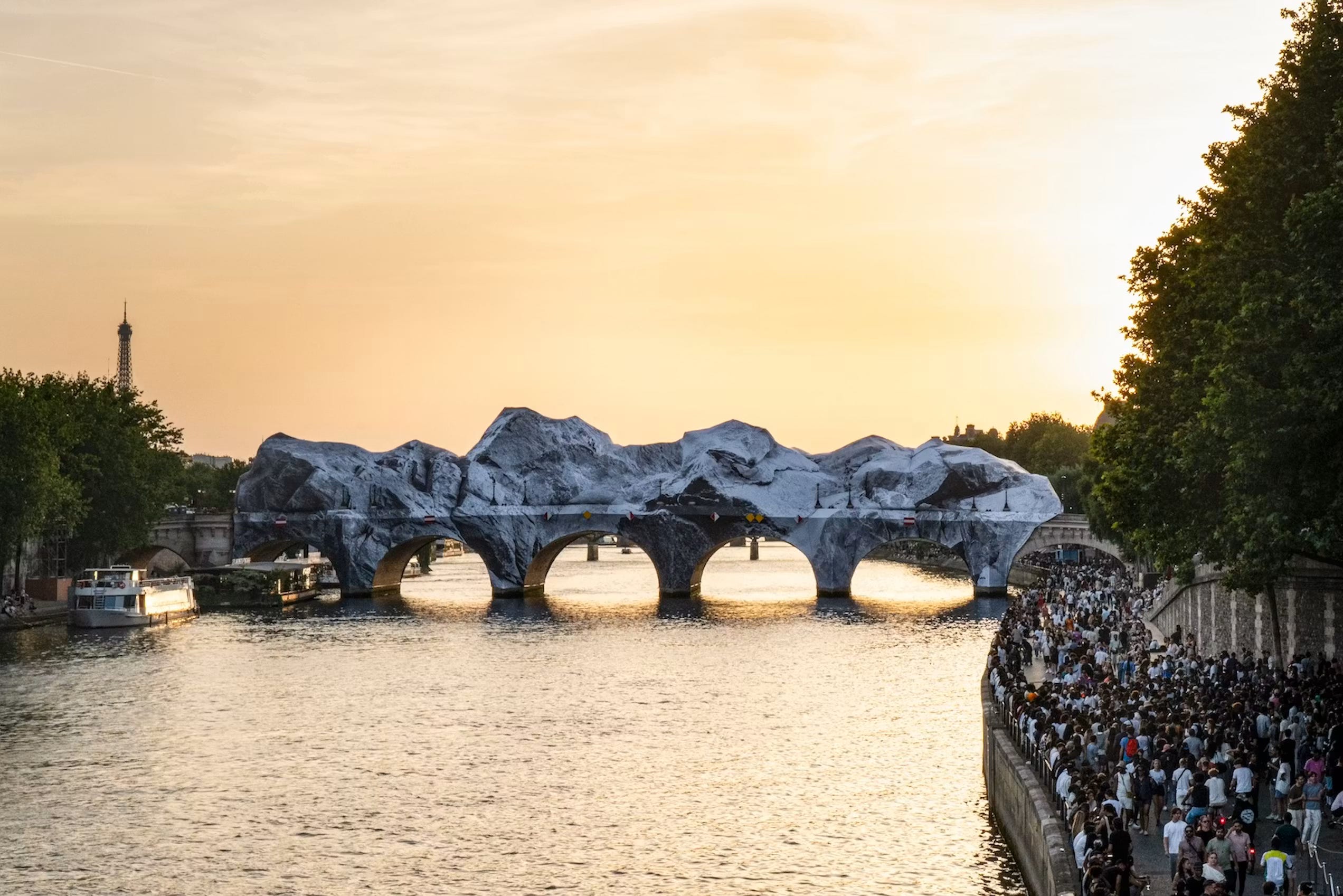
Celebrating 40+ years since the late conceptual artists Christo and Jeanne-Claude unveiled their installation, The Pont Neuf Wrapped, this new installation represents yet another reimagining of the bridge. Artist JR says the stone-like structures were inspired by the quarries used to build the Pont Neuf.
Access is free and open 7 days a week, and you can see the installation from several points, including from most of the quays and bridges of central Paris. It’s expected to stay in place through June 28th.
Paris in June: What to See & Do
Paris in July: Summer Festivals & More
Now for a bit of history. Today is June 18th— a day before Juneteenth in the US, celebrating the emancipation of enslaved African-Americans (and an occasion I think is all the more important to loudly mark given that the current presidential administration is actively trying to suppress the memory of slavery in federal parks, museums and other institutions).
In France, June 18th is an important day in the calendar, even if many French people themselves remain unaware of it, and it’s not a public holiday.

History buffs may know that it marks, at least on a symbolic level, the beginning of the French Resistance against Nazi occupation (and collaboration) during World War II. On June 18th, 1940, a decorated but then little-known war veteran named General Charles de Gaulle– who would later become the first President of France’s Fifth Republic– made a rousing call through English radio waves from the BBC in London.
In the address, which was broadcast at 10 pm London time and 8 pm French time, the exiled General De Gaulle called on French citizens everywhere to join a movement of wholesale resistance against both Occupied France– a government headed by the German Gestapo from Paris– and so-called “Free France”, a collaborationist regime helmed by Marshal Philippe Pétain from the thermal spa town of Vichy, in southern France.
Read more about the significance of the date in my full piece at Paris Unlocked.
Next up, les ami/es, I need to announce another subscription model change here at the Paris Unlocked Newsletter. Last year, I was happy to make all my main posts paywall- free, meaning my free and paid subscribers can read the long-form essays, reviews, travel tips and editorials I offer here. Now, with my recent launch of The French Culture Podcast, all my main hourlong episodes from the pod are also free for all to listen to. And that’s not changing.
But I need to be honest with you about some of the massive changes happening in the online world, and how these are forcing me to rethink a bit how I keep this project sustainable.
As you may or may not have read about in recent weeks, Google and other major tech platforms are in a big rush to roll out all-AI search models. What does this mean concretely for independent writers like me, who make most of their living from producing in-depth, human focused resources and information online?
Instead of sending readers to Paris Unlocked, the all-AI search mode scrapes my articles for information, spits it back out in generic “summaries”, and largely discourages clicks from readers, which means my potential for revenue dramatically drops. According to some estimates, even when links are given as sources for AI summaries, fewer than 5% of users actually click on them.
This means that I have to find a way to protect my livelihood, and focus more on how to balance free vs. paywalled writing and audio.
My core “freemium” model is not changing. All of my main posts and podcast episodes will remain 100% free to read directly in your inbox. After four weeks, they will be paywalled, allowing my Donor Subscribers and Star Subscribers to access a rich archive of hundreds of articles online. I am also going to be producing several bonus episodes for The French Culture Podcast, starting with a behind-the-scenes look at the making of my episode on Henri Matisse, which I hope to drop by the end of the month. These bonus episodes will be reserved for paid subscribers, as a thank you for their generous support.
And of course, a “Donor”or “Star” subscription will also entitle you to an email consultation with yours truly ahead of your next trip, culminating in a mini-itinerary delivered by email. I always aim to make these consultations as personalized and detailed as possible, and working with my readers to improve their trips is genuinely gratifying.
By upgrading your subscription, and for less than a couple of barista coffees every month, you aren’t just protecting a human creator from being screwed over by tech bros. You’re contributing to a vital, growing ecosystem of projects devoted to French culture, both past and present.
Thanks so much for your support. And for my free subscribers, I’m incredibly grateful that you take the time to read these posts, and whatever you can do to support this endeavor is greatly appreciated— from telling a friend about this newsletter, following my podcast, or buying me a coffee.
Thanks for reading, listening, and, perhaps most importantly, for keeping human creation going amid incomprehensible (and brain-dulling) headwinds.
While I still have your ear, I’m partnering with a new language-learning app called Parler that I’ve tried out and found to be a fun, engaging, and inexpensive way to improve your French. You can also sign up for other languages, including Spanish, Italian and Portuguese.
Consider downloading it (currently only available for devices operating on iOS) and using it ahead of your next trip to improve your confidence in the language, and your interactions with locals. I can tell you that it can make a huge difference to know a few basic words and phrases before you land.
Well, that’s a wrap for this time. I should be back next week with a look at my second episode on Edith Piaf at The French Culture Podcast (see my post on Part 1 here, and have a listen if you haven’t, yet:)
Please make sure to comment below if you’re hoping to see something in particular covered here, at Paris Unlocked, or on the pod. You can also write to Courtney here: editor@parisunlocked.com.
Comments
Nothing yet. Say the first thing.
Sign in to join the conversation.