
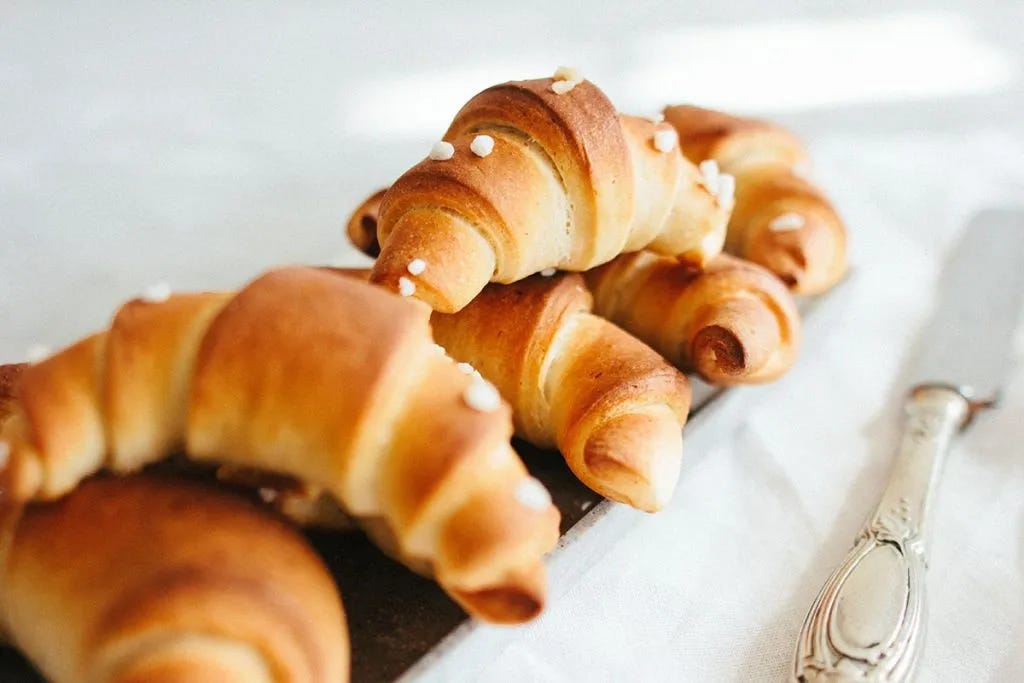
It’s well known that many bakeries and patisseries around France close up shop for much of August: a fact that miserably coincides with the height of summer tourist season. In Paris, visitors hoping to pick up some fresh bread and pastries for a picnic, or for a quick breakfast that’ll allow them to skip the expensive hotel buffet, end up wandering around in a daze, scanning the streets for a decent boulangerie that’s bucked the August trend. In late summer, trying to find a good bakery “au nez” (poking around randomly and following the scent of bread and butter) is too often a frustrating and fruitless exercise.
Some do remain open — here’s a partial list. I also recommend hitting high-end food halls like Le Gourmet at Galeries Lafayette and the Grande Epicerie de Paris), which mercifully feature in-house counters from some excellent boulangers and patissiers. And one of my favorite places for tasting creations from several renowned pastry chefs is Fou de Pâtisserie on the Rue des Martyrs— also mostly open next month. As is Arnaud Delmontel, just around the corner. Halleloo.
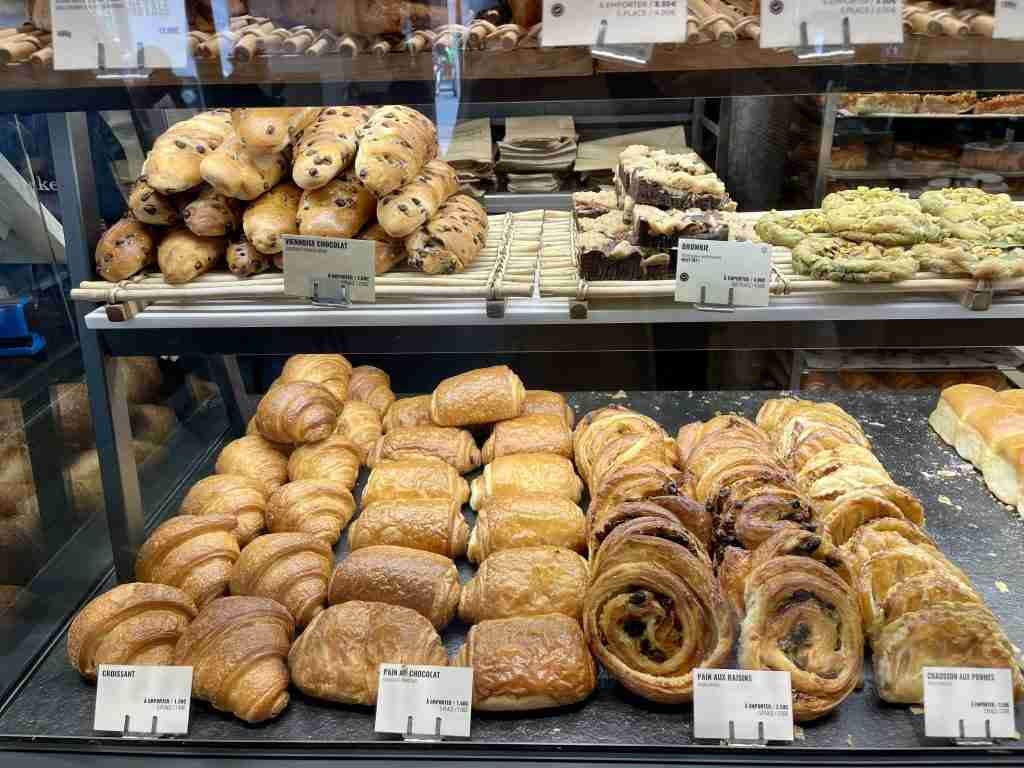
Just in time for that weird moment when it’s no longer possible to simply “run to the corner bakery” on a whim, I thought it would be interesting to ponder the history of some of the boulangerie-patisserie’s most-cherished staples. True, it might leave you frustrated and hungry. But maybe it’ll also whet your curiosity, and motivate you to make a slightly longer trek for an excellent réligieuse (a tempting row of which are pictured just above, upper right) or baguette tradition.
Let’s start simple, and with minimal sugar. In this feature at Paris Unlocked, I take a moderately deep dive into the history of the French baguette, and tackle some persistent and often funny myths around its origins.
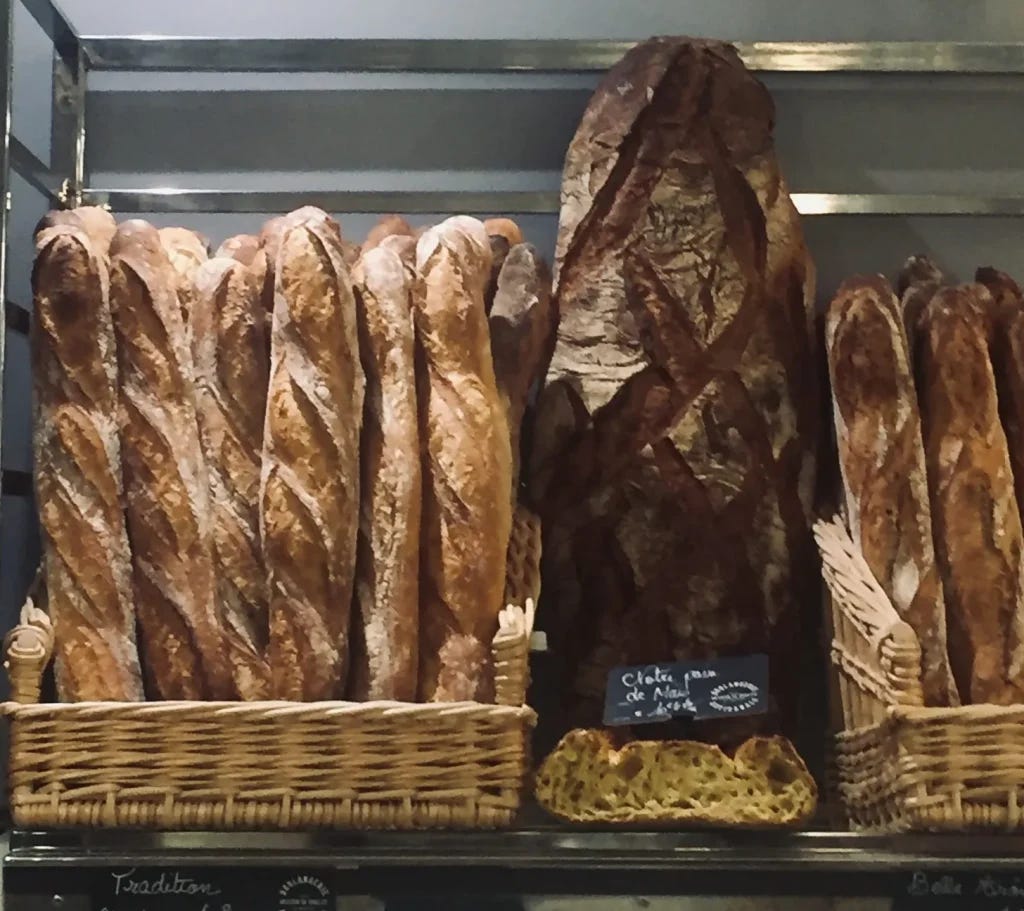
In 2022, UNESCO recognized the French baguette as a prized item of “intangible cultural heritage”. It lauded the “artisanal know-how and culture of baguette bread”, adding yet another notch to France’s status as a capital of culinary expertise and history.
One might assume that this much-loved, elongated loaf has been in existence for centuries– surely it must be a tradition whose conception is too historically remote to remember?
But despite the fact that an estimated 30 million of these breads are consumed each day in France, the baguette is a relatively recent addition to the country’s proud culinary stable. And as I tease out in the full piece, myths around its invention— including an especially persistent one that involves the Emperor Napoleon— have become so commonplace as to displace the real history.
Towards the end of the piece, I also help you decrypt the difference between an “ordinary” baguette and a “tradition”, as well as a number of other cousins. Even now, I sometimes get tongue-tied at the boulangerie, flustered by the choices. Hopefully this will help on that front.
Next, on to something with a much higher butter content: the French croissant. It’s so deeply associated with Gallic culture that, alongside the Eiffel Tower, the beret and the tricolore flag, it’s the icon most widely chosen to represent France.
Here’s the funny thing: it wasn’t really invented in France, but in Austria or someplace adjacent in Eastern Europe. And the ultra-buttery, steam-oven creation we know today is both firmly modern, and invented by an Austrian guy who’d transplanted himself to Paris. There is, after all, a reason why croissants and their bready bakery ilk are referred to as viennoiseries…
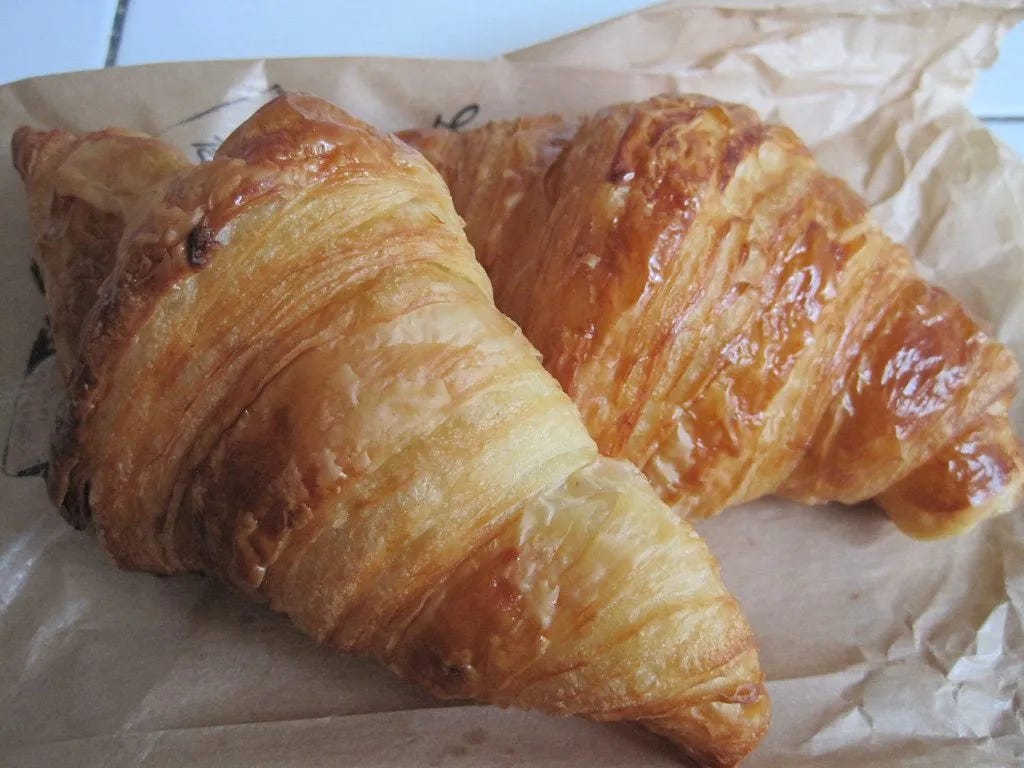
You may well have also heard that the croissant is so-shaped because it was meant as a big middle finger to the Ottomans after a battle in Vienna defeated them. In the full piece, I also test the veracity of this story.
If you’re interested in hearing me talk about all this in audio format, check out a radio interview I did a few years ago with Sean Moncrieff of NewsTalk Ireland, on the occasion of International Croissant Day. I wasn’t even aware such a day existed when the station invited me on the show, but I had a lot of fun talking about all the myths surrounding one of France’s most successful exports.
Thirdly, a few years ago my partner and I were visiting the town of St-Emilion, near Bordeaux (a region I’ve been thinking about constantly lately in light of the monstrous fires that have been devastating the region— more on all that below).
While ambling around, we stumbled on a shop purporting to sell the “original” macaron: a dense, plain, humble and un-colorful predecessor to the Parisian luxury export item.
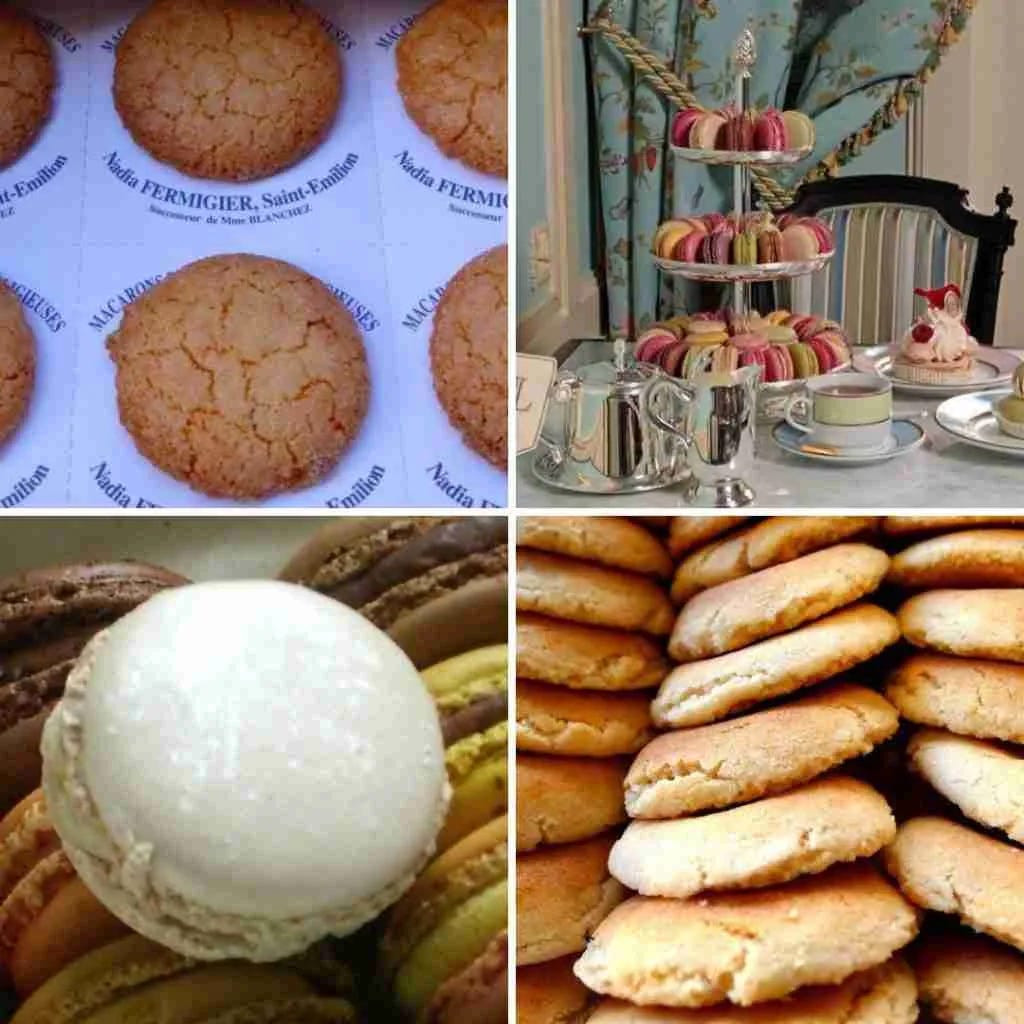
Tasting it led me down a wholly fun rabbit hole, and a quest to figure out who invented the original (there are in fact several regions and bakeries that claim it).
I also wanted to understand how it went from a rather plain-jane treat made by meditative nuns to one that’s almost obscenely rococo, associated with Sofia Coppola’s Marie Antoinette and the global luxury industrial complex.
If all of this has left you a bit cold because you’re vegan or can’t/won’t eat dairy and eggs, fear not. As Rachel Naismith reports in her butter-less & eggless investigation, a surprising number of plant-based bakeries and patisseries have opened in Paris over the past few years— some spinning out very decent specimens. And while we’re not totally convinced this is more than a passing fad, we still encourage you to go try them.
On a less cheerful note, I’ve admittedly had a hard time writing “travel stuff” about France this summer, even though last month I was lucky enough to spend a few days in the Corrèze region (between Limoges and Perigord, roughly), then on the Île de Ré, a prized destination for privileged Europeans who want something resort-y but less crowded and ritzy than the Côte d’Azur.
I'll likely put together some thoughts and recommendations related to the trip at a later time. For now, I feel almost paralyzed by the heat-and-fire-related emergency that has assailed France since late May.
First, I’d watched it from afar and kept in frequent contact with friends and colleagues, who reported feeling suffocated and even scared by the relentless heat, humidity, and tropical nights. One colleague who lives in Bordeaux described how many friends living at the edges of the city were worried they might be evacuated after firestorm-grade blazes in the Gironde region came within just a few miles of the city. Residents in the area also spent days cloistered indoors to avoid inhaling smoke and ash— all this happening while temperatures were again rising close to 40C (104F).
Arriving in France in early July, I was then sad to note that we felt much less motivated to explore the Correze region’s many adorable medieval villages and natural parks— because it was simply too friggin’ hot to be outdoors with four young kids in tow (including two cousins) during the peak heat hours.
We tried to explore a bit in the mornings, and still managed to enjoy ourselves, but it’s clear that had temperatures been closer to the normal historical ranges, we’d likely have spent more time poking around cute villages like Collonges-la-Rouge and Treignac, or lounging out on terraces. But lingering outdoors didn’t generally feel great.
Instead, we took refuge in churches and old stone houses, including the one we stayed in, and where the thick stone walls meant indoor temps were around 10C lower than outside at any given time.
Once on the Île de Re, we had the incredible luxury of an outdoor pool at our rental house. This offered huge relief from muggy, hot conditions during the first few days we were there, as well as something fun for the kids to do. Eventually, the heat dome lifted, and we immediately picked up our usual activity levels, notably taking rented bikes through the island’s many dedicated paths, through vineyards, salt marshes, and cute little towns.
One evening in the main port city of St-Martin-de-Ré, there was a palpable sense of relief and celebration amid the milder temperatures, as if someone had taken a steaming lid off of a pot and let the heat and pressure escape. That’s quite literally what it felt like.
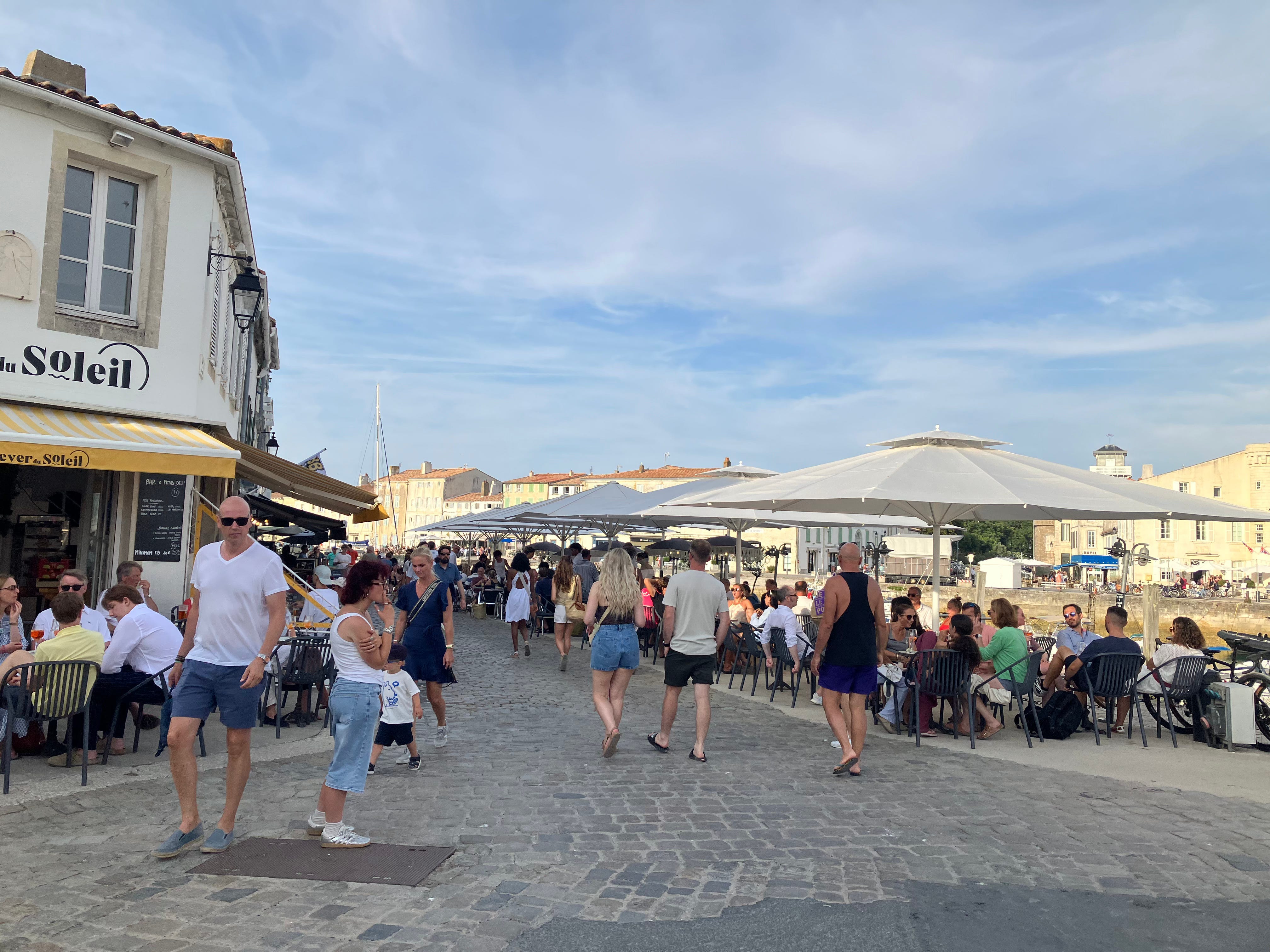
We were lucky to have made the most of our ten days, and found ways to enjoy them together, in spite of the ongoing climate emergency in France. But there were many moments where I thought to myself, “none of this is normal, and none of this is ok”.
On one particular afternoon at around 2pm, we took the kids to our local beach on the Île de Ré and the sand underfoot was so hot that it felt as if it was burning the tops of our feet as it sunk into our sandals. I grew up in Southern California, and I have almost no memories of sand that hot.
And for some reason, I felt both angry and desperately sad, remembering how much of my childhood had been spent getting lost in imaginative play on beaches. I forced back tears as I realized that my children were growing up at a time when we might have to avoid the beach outside of mornings and early evenings. When summer travel, period, was getting increasingly uncomfortable and complicated and even, sometimes, bad for our health.
None of this is normal. So to go on writing the usual cheerful summer travel advice would feel like total cognitive dissonance, and also dishonest. Travelers need to know that this is likely going to repeat itself many, if not most, summers in France and much of Western Europe, which is warming more than twice as quickly as the rest of the planet.
And it's set to get much worse, according to many climate scientists, especially if we don’t dramatically decarbonize our economy in the coming years. The summer of 2026, in retrospect, is going to feel cool and mild compared to what might be coming.
And the wildfires that have torn through France this year have broken historical records in ways that are both breathtaking and horrifying. The French newspaper Le Monde reported that in the Gironde, an area three times the size of Paris has already burned— and it’s only midsummer. The fires have led to the largest evacuations since the Second World War.
This is why it stunned me to hear that President Emmanuel Macron, all the while acknowledging the scale of the crisis, has qualified the fires as “atypical”, according to The Guardian. How can they be atypical when they’re entirely expected? 28 of the country’s 53 heat waves since 1947 have occured in the last 15 years. Macron’s acting like an ostrich here, ignoring undeniable trends that have made storm-like wildfires in France not only more likely, but entirely expected amid parched and scorched terrain.
The same piece notes that the French political class has been, as it’s been in the US recently, weirdly reluctant to talk about climate change in frank terms, and has been backsliding on net-zero goals and promises made in recent years. This is all infuriating and alarming. How many 40C days and burned villages across France does Macron and his ilk need to make net zero goals a priority again?
These are the angry questions that preoccupy me, as they do so many others, in what feels like an endless, stifling, often frightening summer. I only wish I had more reasons for optimism, but this is where I’m at.
Whew. I needed that. </rant> In case you’re looking for indoor activities to escape the heat, wherever you may be on the planet, why not queue up the four episodes I dropped earlier this year for The French Culture Podcast’s debut season?
Most recently, I featured a second episode on Edith Piaf, trying to move past the mostly cliché ways she’s been framed and remembered to consider aspects of her life that have received little attention: her role in the French Resistance, her many interesting appearances in films, her platonic and passionate friendships, her mentoring of (mostly male) performers including Charles Aznavour and Yves Montand.
Here are just a few places where you’ll find The French Culture Podcast, if you prefer to listen elsewhere:
I’d so appreciate it if you could take the time to add a rating (hopefully a good one!) on these platforms, as this will go a long way in helping me to build an audience beyond Substack.
A “Donor”or “Star” subscription entitle you to bonus episodes for the podcast, as well as an email consultation with me to help you prepare for your next trip, culminating in a mini-itinerary delivered by email. I always aim to make these consultations as personalized and detailed as possible, and working with my readers to improve their trips is genuinely gratifying.
Bonus Episode: Were Matisse & Picasso Really "Frenemies"?
·
Jun 23
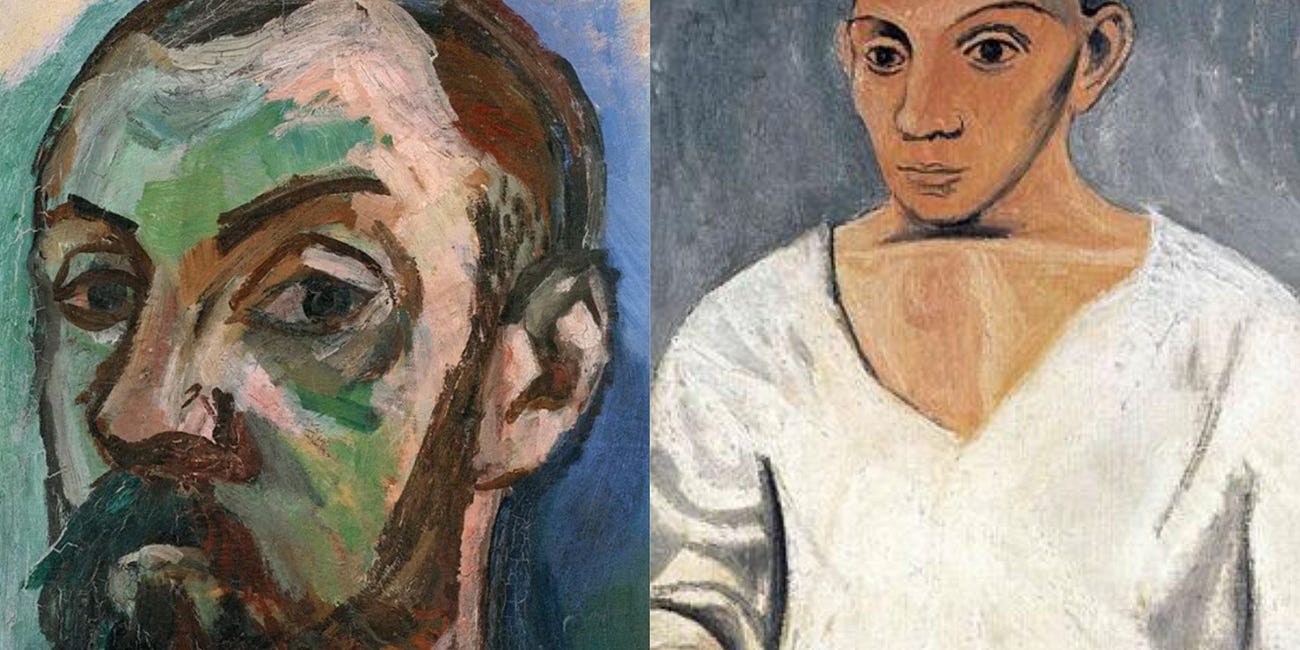
In this bonus episode for The French Culture Podcast, I tackle a common myth about Henri Matisse and Pablo Picasso: were they really “frenemies”, or is the truth more complicated? I also offer a behind-the-scenes looks at my research process for the full episode (Ep. 2) on Matisse
By upgrading your subscription, and for less than a couple of barista coffees every month, you aren’t just protecting a human creator from being screwed over by tech bros. You’re contributing to a vital, growing ecosystem of projects devoted to French culture, both past and present.
Thanks so much for your support. And for my free subscribers, I’m incredibly grateful that you take the time to read these posts, and whatever you can do to support this endeavor is greatly appreciated— from telling a friend about this newsletter, following my podcast, or buying me a coffee.
While I still have your attention, I’m partnering with a new language-learning app called Parler that I’ve tried out and found to be a fun, engaging, and inexpensive way to improve your French. You can also sign up for other languages, including Spanish, Italian and Portuguese.
Consider downloading it (currently only available for devices operating on iOS) and using it ahead of your next trip to improve your confidence in the language, and your interactions with locals. I can tell you that it can make a huge difference to know a few basic words and phrases before you land.
That’s about all I’ve got this issue, les ami/es. Please make sure to comment below if you’re hoping to see something in particular covered here, at Paris Unlocked, or on The French Culture Podcast. You can also write to Courtney here: editor@parisunlocked.com.

This post was fully written by a human. I never use AI to write, or even edit, this newsletter.
Comments
Nothing yet. Say the first thing.
Sign in to join the conversation.