
“If you do not change direction, you may end up where you are heading.”
- Lao Tzu
It doesn’t take a lot of deep analysis to identify companies that have failed, or are failing, to transform at the speed of disruption. In the former case, they’re already in or on the way to the retail graveyard. In the latter case, they are either edging ever closer to the precipice or are spinning in the zone of irrelevance like whirling dervishes.
If you are at the helm of an organization that has a business model at or approaching its expiration date a metaphor might prove helpful.
It starts with a question.
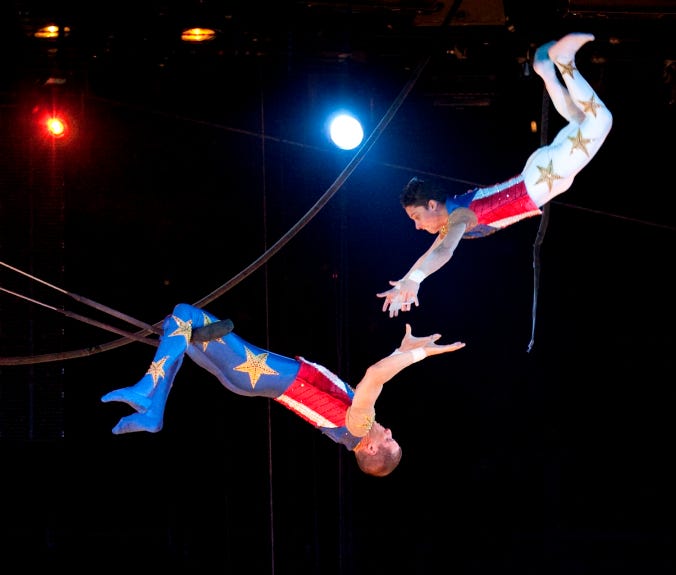
Q. Have you ever seen a timid trapeze artist?
A. Of course not. There aren’t any; they either get fired or they get killed.
Seth has something important to say about this:
“If you hesitate when leaping from one rope to another, you’re not going to last very long.
And this is at the heart of what makes innovation work in organizations, why industries die, and how painful it is to maintain the status quo while also participating in a revolution.
Gather up as much speed as you can, find a path and let go.
You can’t get to the next rope if you’re still holding on to this one.
As the pace of change accelerates, as the gap widens between what customers demand and what you are prepared to offer, those who hesitate are increasingly lost.
Sunk cost are sunk.
Opportunity costs are real.
It can be incredibly scary to let of go of what made us successful in the past to make the leap into an uncertain and volatile future.
But you know what else is hard? Having to close stores and lay-off thousands of employees because we were too timid to make the changes we often knew deep down we must.
If the market is kicking your ass and you’re finding it harder and harder to acquire new customers or get current customers to advocate strongly for your brand, then it’s worth asking yourself: why am I working so hard to hold onto the status quo?
I’ve literally been accused of being a literalist.
Which I think just means I care a little too much.
But we CAN find ourselves needlessly and avoidably wrapped around the axle if we get overly focused on semantics
Nevertheless, to make sense of an ever-changing and rather noisy world being clear and precise with language can be helpful.
For example, we can argue whether direct-to consumer (DTC) is a distinct business model or merely a distribution strategy (narrator’s voice: “it’s a distribution strategy”).
But regardless we shouldn’t use it as a blanket term for all of e-commerce or act as it was invented by the folks at Dollar Shave Club or Warby Parker. And while there are significant potential benefits—direct relationship with the customer, improve data capture, ability to better control end-to-end CX—it is not an inherently superior model. Take a look at what’s happened to most of the stocks of the new wave of “digitally-native vertical brand” disruptors over the last few years and you’ll quickly see what I mean.
“Experience” is another word that gets thrown around quite a lot, often followed by breathless pronouncements such as “retail is all about experience.”
Well, I’m sorry lamb chop, but if I just need to run into Walgreen’s to get some Tylenol I don’t need an experience, I just need some damn Acetaminophen stat.
Which brings me to this phrase, which has been oft repeated this year: “The consumer is resilient.” The problem here is that there is no one “consumer.”
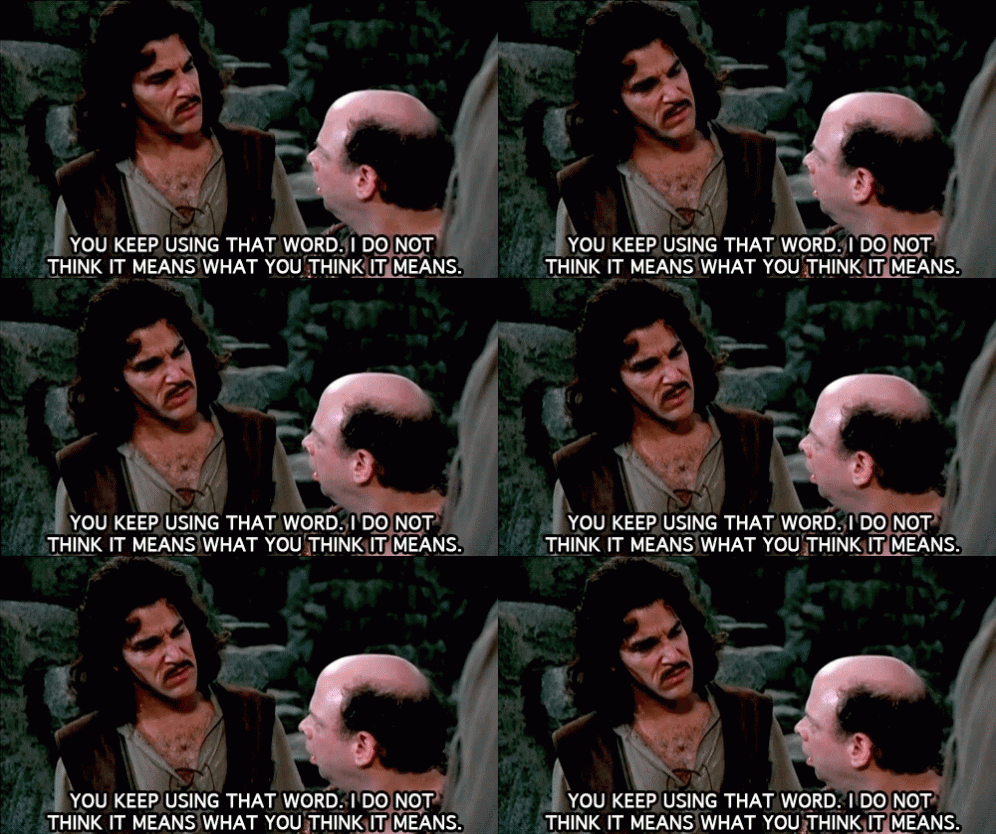
While this statement exhibits truthiness it isn’t the least bit useful for crafting and executing strategy.
When 50% of consumer spending is driven by 10% of the population (at least in the United States), it’s far more accurate to say there is a small percentage of customers that are doing great and a whole lot that aren’t resilient at all. If you are anywhere close to serving the average customer that just means you work at Amazon or Walmart.
For the rest of us, we have to dig a lot deeper. And that’s likely to show a hell of a lot less resilience.
NOTE: I’m taking this week off. This article is from my 2nd Substack post released last December.
The Remarkable Retail podcast is the among the most listened to podcasts globally—and the only major retail podcast with a 5-star rating on Apple Podcasts.
One of our top episodes from last year featured Jason Buechel, who does double duty as head of Amazon Worldwide Grocery Stores and CEO of Whole Foods Market.
Listen here, watch here, or follow us wherever you enjoy your podcasts.
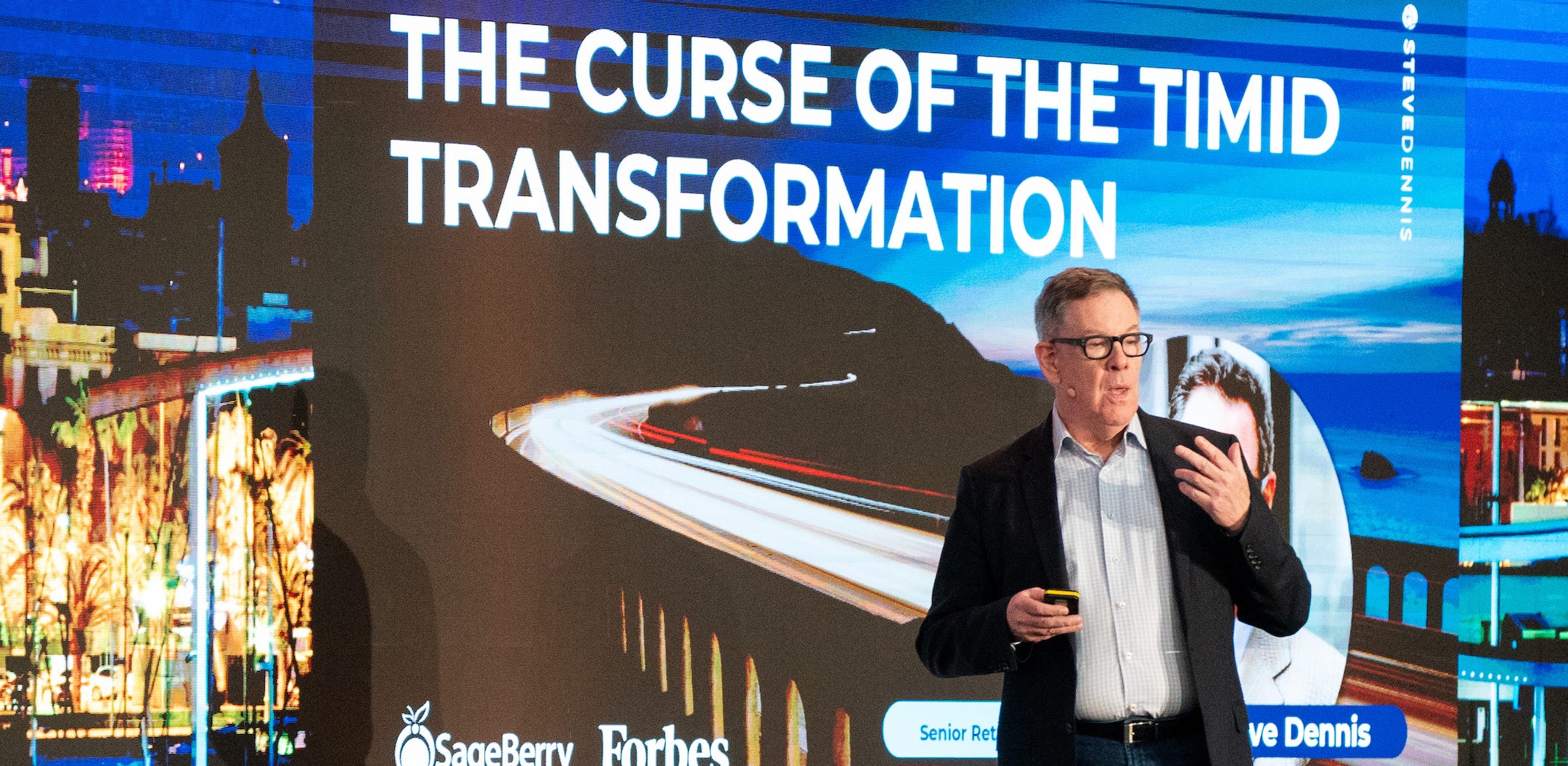
I’m excited to share that I’m speaking at the CommerceNext Growth Show this June 23-24 in NYC! In fact, I’ll be kicking things off on Day 1 with Tractor Supply Company’s CMO Kimberley Sweet Gardiner.

The Growth Show is where retail’s best come together to connect, learn and share what’s working (and what’s not), all in the heart of retail: NYC.
You can attend my session by registering today. Retailers and brands get FREE tickets and all others will save 10% on General Admission registration by using my special code “REMARKABLE” at checkout. Go here for more info and to secure your spot.
BUY A BOOK. Remarkable Retail is the best-selling, highest rated retail strategy book of the past decade. Leaders Leap is my latest and it lays out seven mind leap to help you navigate the volatile and uncertain future.
BOOK AN ADVISORY VIDEO CALL. I’m now live on Intro.co for 1:1 concise and high impact advisory calls. For the month of June I’ll be donating 100% of my proceeds to World Central Kitchen. Secure time here.
BRING ME TO YOUR NEXT EVENT TO SPEAK. I’ve delivered inspiring keynotes at major events on six continents, as well been a featured speaker at dozens of corporate events, customer dinners, and the like. I can even do a book signing.
Comments
Nothing yet. Say the first thing.
Sign in to join the conversation.