
Retail has never worked harder to be effortless.
Conference keynotes and breathless tech company pitch decks are chock-a-block with “seamless” this and “frictionless” that.
Returns are fast and free.
Home delivery in two days. No, next day. How does this afternoon sound? Or in thirty minutes or less?
Maybe we skip the line or grab-and-go?
Before long one-click ordering may give way to zero clicks.
The industry has settled on a simple creed: easy is better, easiest is best.
At one level, this is progress. At another, we risk chasing our tails.
What was once remarkable becomes table stakes, and what becomes table stakes becomes forgettable.
But the treadmill is only half the problem.
The deeper issue isn’t that convenience stops being remarkable. It’s what convenience takes from us while we’re busy applauding it.
Tim Wu saw this coming. In his 2018 essay “The Tyranny of Convenience,” he argues that convenience has become the most underestimated force shaping our lives — not because it fails, but because it succeeds so completely that we stop asking what it costs.
Convenience promises liberation but ultimately delivers a strange conformity. When everything is easy, ease itself becomes the only value, and the effortful things that actually constitute meaning — the browse, the discovery, the encounter with an actual person — get engineered away as bugs rather than features.
Convenience can become retail’s white whale: an all-consuming obsession, a relentless pursuit of elimination and subtraction. And once our customers acquire the taste for fast and easy, anything else can seem irrational.
Almost nobody has a fashion emergency. But if you can get those designer sneakers to me by lunchtime, sure, why not?
Yet consider what actually disappears when friction does.
The wander down the aisle you didn’t plan. The thing you didn’t know you wanted. The salesperson who talks you out of the wrong jacket and into the right one. The twenty minutes in a bookstore that started as an errand and ended as an afternoon.
None of this survives optimization. It can’t. Serendipity is, by definition, inefficient. Discovery requires detours. And a conversation with another human being is the least frictionless experience I can imagine.
Convenience, it turns out, is the great homogenizing force. When everyone optimizes for the same thing, everything ends up the same.
Fast. Easy. Boring.
Here’s the thing about friction: sometimes we line up for it.
Nobody has ever needed to camp outside an Apple Store. The same iPhone arrives, effortlessly, at your door on launch day. People queue anyway, for hours, sometimes overnight, because the line is part of the story.
The croissant-cookie-taco hybrid that’s blowing up on TikTok? The wait is the point. A ninety-minute line doesn’t deter the pilgrimage; it certifies it. Nobody posts a photo of their delivery confirmation.
Supreme built a billion-dollar brand on Thursday morning lines.
The hottest restaurant in any city is, by definition, the hardest table to get.
Three hours in line at Franklin Barbecue ain't just about tasty brisket. The brisket's gone in twenty minutes. The story lasts for years.
Strange behavior for a species that supposedly craves the frictionless.
Unless we’ve misread what customers want.
Convenience is what we demand from the things we don’t care about. The things we love, we’ll wait for.
Which raises an uncomfortable question for an industry spending billions to shave off every last second of friction: What if the customers you’re optimizing for are the ones who care about you the least?
Friction isn’t the enemy. Friction is a diagnostic.
Show me where customers willingly endure it, and I’ll show you where the joy lives.
Show me where they resent it, and I’ll show you a commodity.
Which means the job was never to eliminate friction. The job is to know the difference.
Strip out the friction nobody values: the checkout maze, the fourteen-field form, the return that requires a printer and a prayer. That’s just hygiene — the price of admission, not a strategy.
But protect, even invest in, the friction that creates the memory: the browse, the conversation, the discovery, the wait that certifies the story. That’s not inefficiency., that’s the product. And it’s the only ground the giants can’t take from you.
Because “easy is better, easiest is best” is a race with no finish line and the lanes are already taken.
Amazon and Walmart have spent decades and many billions building the machinery of easy. You will not out-convenience them. You can only spend yourself into exhaustion trying.
Nobody remembers easy. But even if they did, easy was never yours to win.
Boring, it turns out, isn’t just boring.
Boring is expensive. But that’s a story for next time.
Episode 306 features Tractor Supply CMO Kimberley Sweet Gardiner recorded live in conversation with me on the CommerceNext Growth Show main stage.
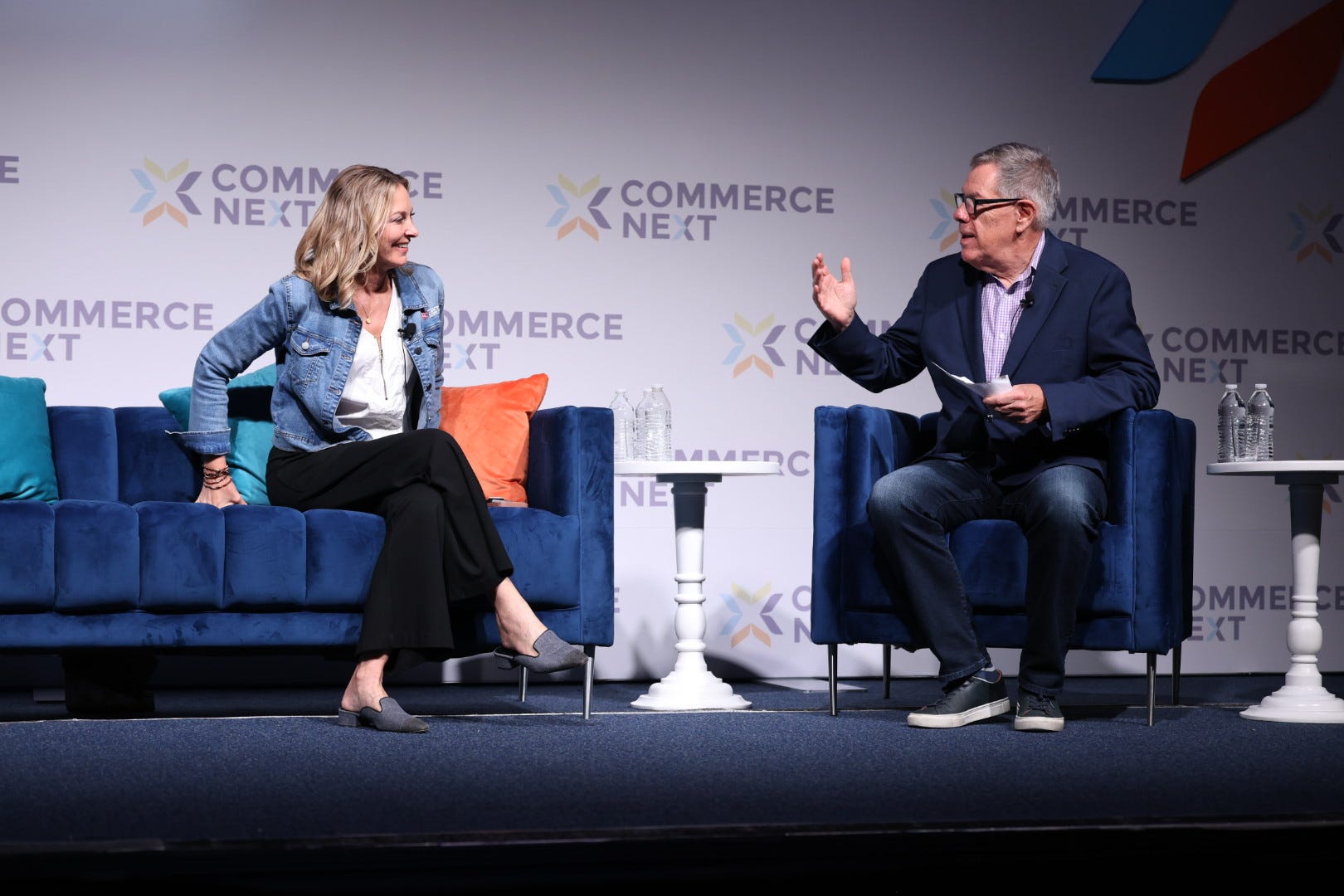
Listen here, watch here, or follow us wherever you enjoy your podcasts.
This summer we return with a series of short and fun video store tours featuring some of the world’s most remarkable retailers. First up: the Nespresso NYC flagship, a true coffee temple and their largest global outpost. Does Dua Lipa or George Clooney stop by? Inquiring minds want to know!
Check out more remarkable retail video shorts here.
Comments
Nothing yet. Say the first thing.
Sign in to join the conversation.