
You are reading Paramo Partners’ analysis on the intersection between venture capital and the finance market in Latin America (Latam). We provide an overview of the region, its current status, and the opportunities for the next 10 years. Additionally, we place special emphasis on comparisons with Southeast Asia (SEA) and their development. We hope you find it insightful.
Venture Capital and Finance in Latam
[You are here] Executive Summary and Chapter 1: Why invest in Latin America?
Chapter 2: Why is Latin America a good market for new financial technology
Chapter 4: The state of fintech and expected future trends for Latin America and Closing Remarks
Investing in Latin America holds great potential due to factors like capital scarcity, favorable economic conditions, and shifting geopolitics. Despite being underinvested compared to other regions, Latin America has seen notable tech exits, indicating promising returns. Key economies like Brazil and Mexico, along with a young population and increasing internet access, offer compelling growth opportunities. Geopolitical risks elsewhere and post-Covid supply chain shifts further drive interest in Latin America, potentially unlocking significant trade prospects.
Latin America's fintech sector is promising, driven by structural factors like high informality rates in labor and business. Traditional banking has left many underserved, creating space for fintech disruption. The region's banking sector, marked by inefficiencies and high concentration, presents opportunities for tech-driven financial services. Rapid adoption of digital finance and success stories like Nubank showcase the demand for financial inclusion. Robust VC investments and exits indicate a conducive environment for fintech innovation and growth in Latin America.
The future of Latin America's fintech industry looks bright, fueled by regulatory changes like open banking and advancements in instant payments. These developments enable tailored financial products and innovative use cases across sectors. Anticipated decreases in borrowing costs globally may reignite interest in venture capital, offering attractive valuations for startups. Latin America's fintech landscape has evolved significantly, with payment and infrastructure leading exits. Looking ahead, vertical-specific services, KYC, fraud detection, and embedded solutions are poised to drive innovation and growth in the region's fintech sector.
Latin America is a region with potential to create some of the most disruptive and fast-growing businesses in the next 10 years. Due to the current state of relative capital scarcity when compared to other regions, as well as a particular combination of institutional and geopolitical factors, investments made today are expected to return significant yields in the upcoming decade.
In 2023, capital investment in Latin American tech startups returned to pre-pandemic levels after an unusually high level of liquidity in 2021. As noted by The Economist1, this trend is primarily attributed to the macroeconomic context of generalized geopolitical turmoil, high inflation and, as a consequence, high interest rates, rather than specific dynamics within the Latin American entrepreneurial ecosystem. Despite this, the region is expected to see continued growth in startup creation.
Figure: Number of companies that received VC investments and capital invested in Latin America.
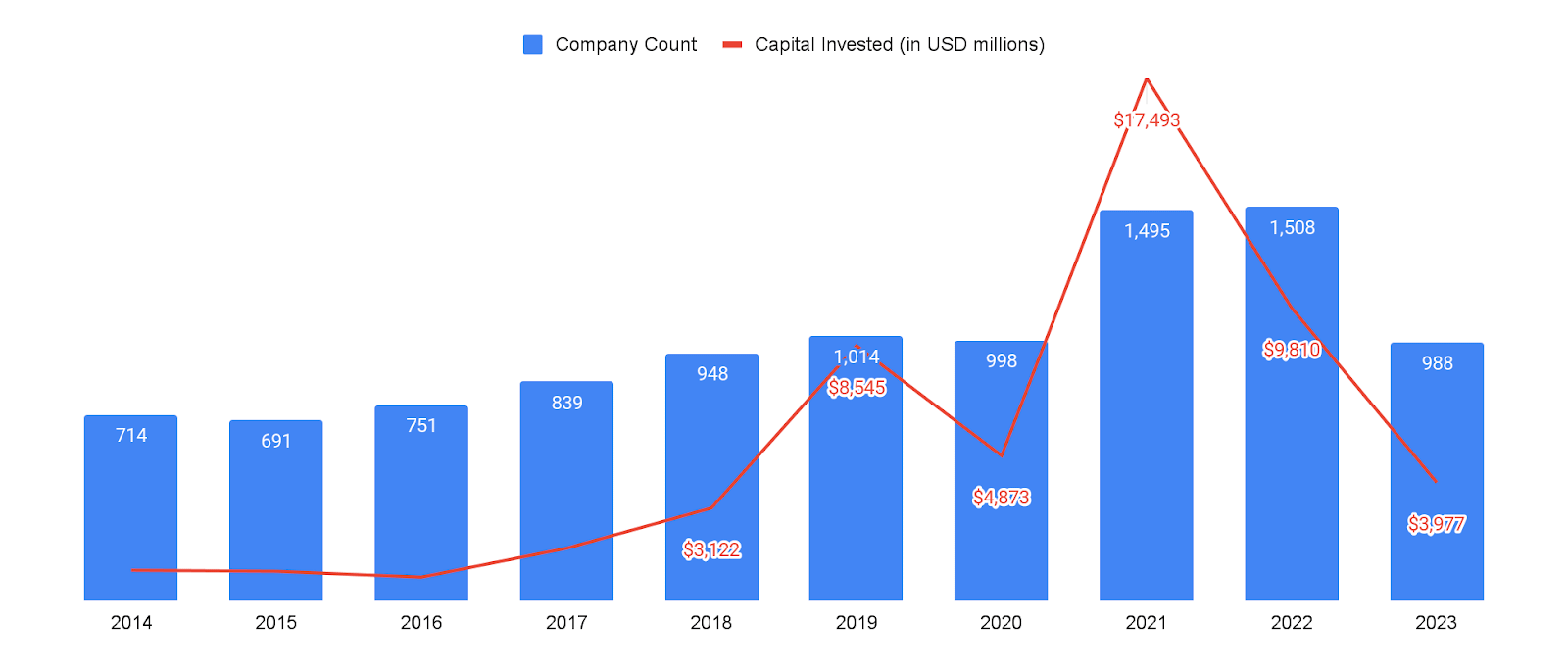
Source: Pitchbook. Data for 2023 up to Dec 19th.
When compared to other regions in the world, Latam is significantly underinvested. In 2022, the amount invested to companies from Latin America represented only 0.16% of the GDP of the region. Despite having steadily increased since 2013, when compared to other markets it is evident that capital is still extremely scarce considering that regions like India or South East Asia (SEA), with similar levels of development, had investment rates in 2022 of 0.72% and 0.44% respectively. This implies that, if Latin America were to catch up to India levels, it would be necessary to increase current investment by 4.4x. To catch up to America, a growth of 5.7x in capital flows would be necessary.
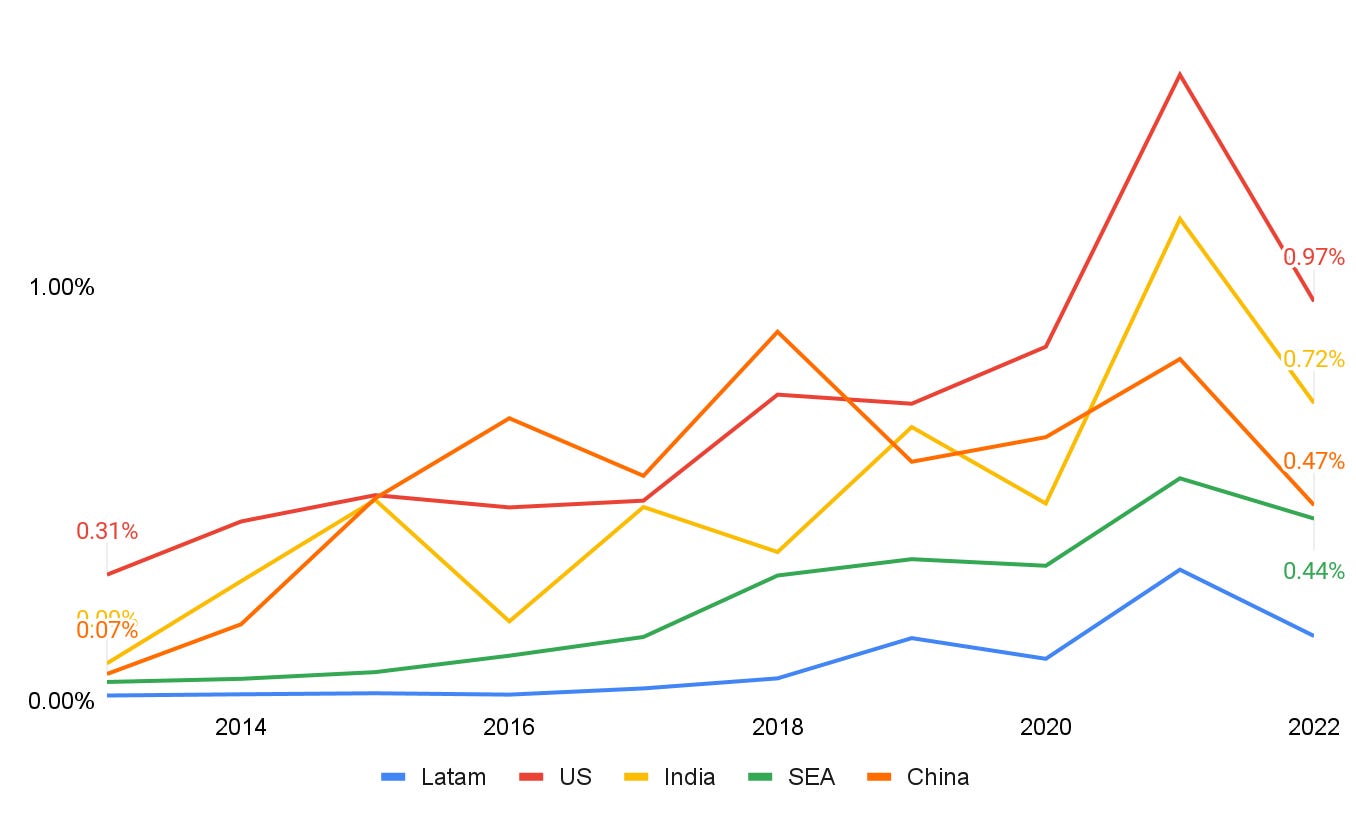
Source: Paramo Partners’ analysis using data from World Bank and Pitchbook.
Despite the scarce capital, in the last six years Latam yielded 12 exits above $1B USD with a total cumulative valuation of $91B. India, with more than 4x the invested capital, yielded 11 with an exit valuation of $68B (Pitchbook) and SEA yielded 12 exits with a valuation of $82B.
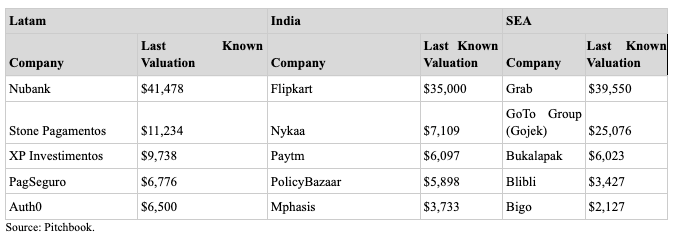
Source: Pitchbook.
As Lucas seminal paper mentions2 capital scarcity is linked to higher returns on capital in most neoclassical economics models. As marginal productivity gains are expected to be higher in economies with lower levels of development, investment flows from capital abundant to capital scarce markets should result in higher returns on investment. Despite a lack of conclusive evidence3, some research has suggested that emerging and frontier market investments might have competitive returns, which tend to be higher in high inflation-prone countries, as well as in markets not so integrated to the international banking system4.
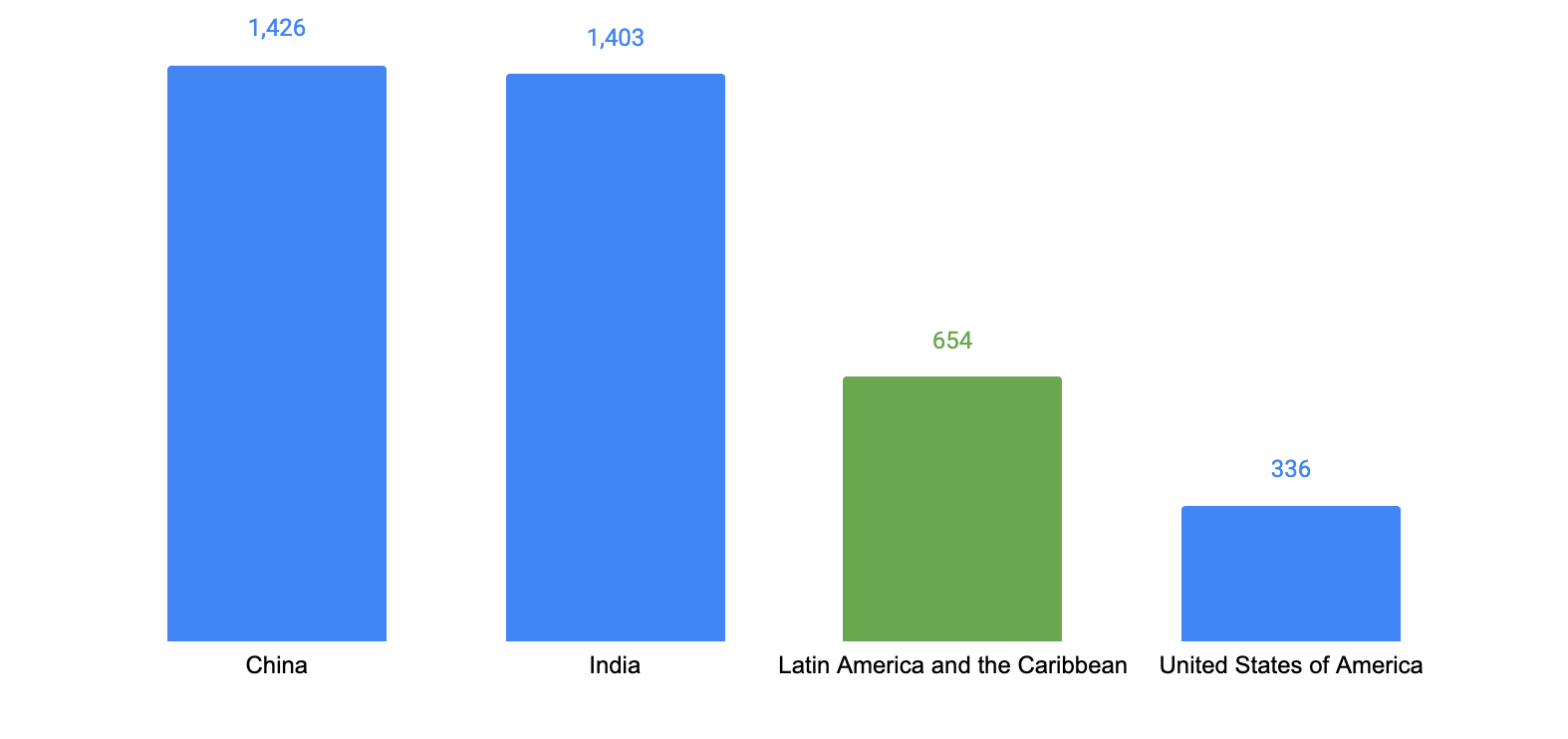
Latin America, despite having around one third of the population of China or India, is the 3rd world’s largest economy when counted as a single region (with a 3rd of the population of India or China).
Figure: Largest economies by GDP in 2022 (USD Billions)
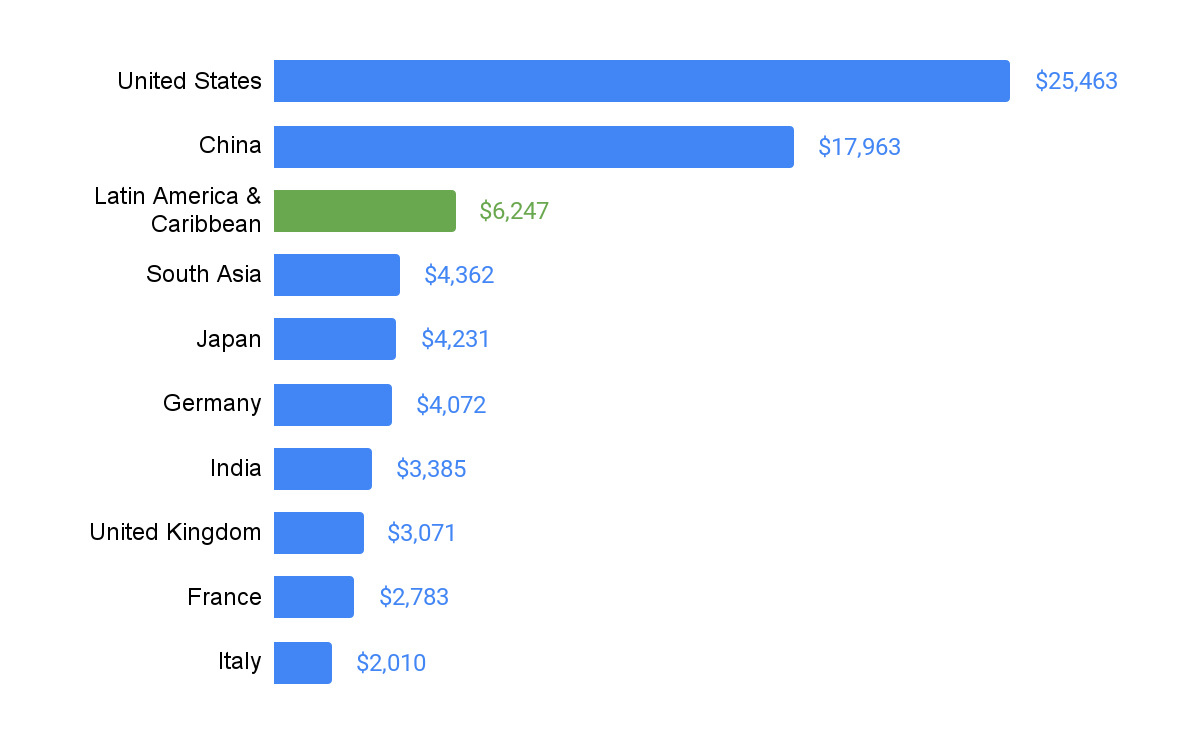
Source: World Development Indicators, World Bank.
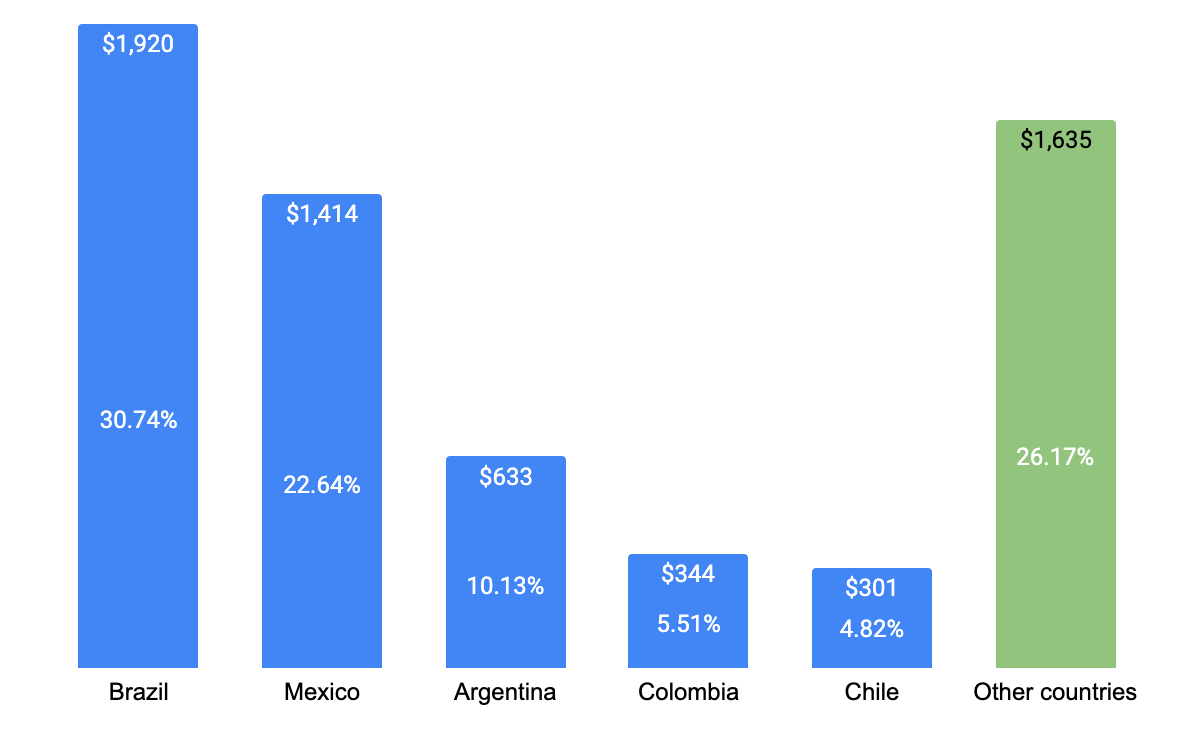
As shown in the chart below, Latin America’s 5 largest economies accounted for 74% of the region’s total economic output in 2022. Brazil and Mexico, in particular, made up for 52% of the GDP, and alone, are 11th and 14th largest economies in the world. As a comparison, Indonesia, the largest economy in South East Asia, had an output of 1.3B USD in 2022.
Source: World Development Indicators, World Bank.
Source: UN Population Estimates.
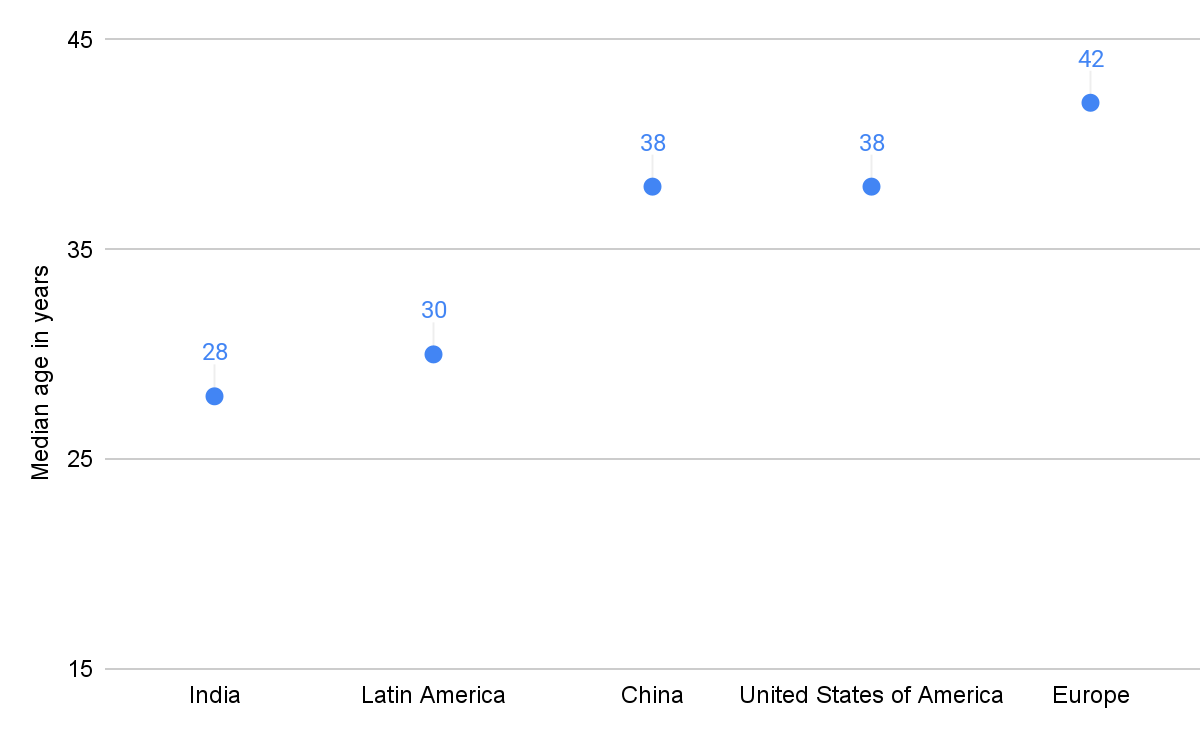
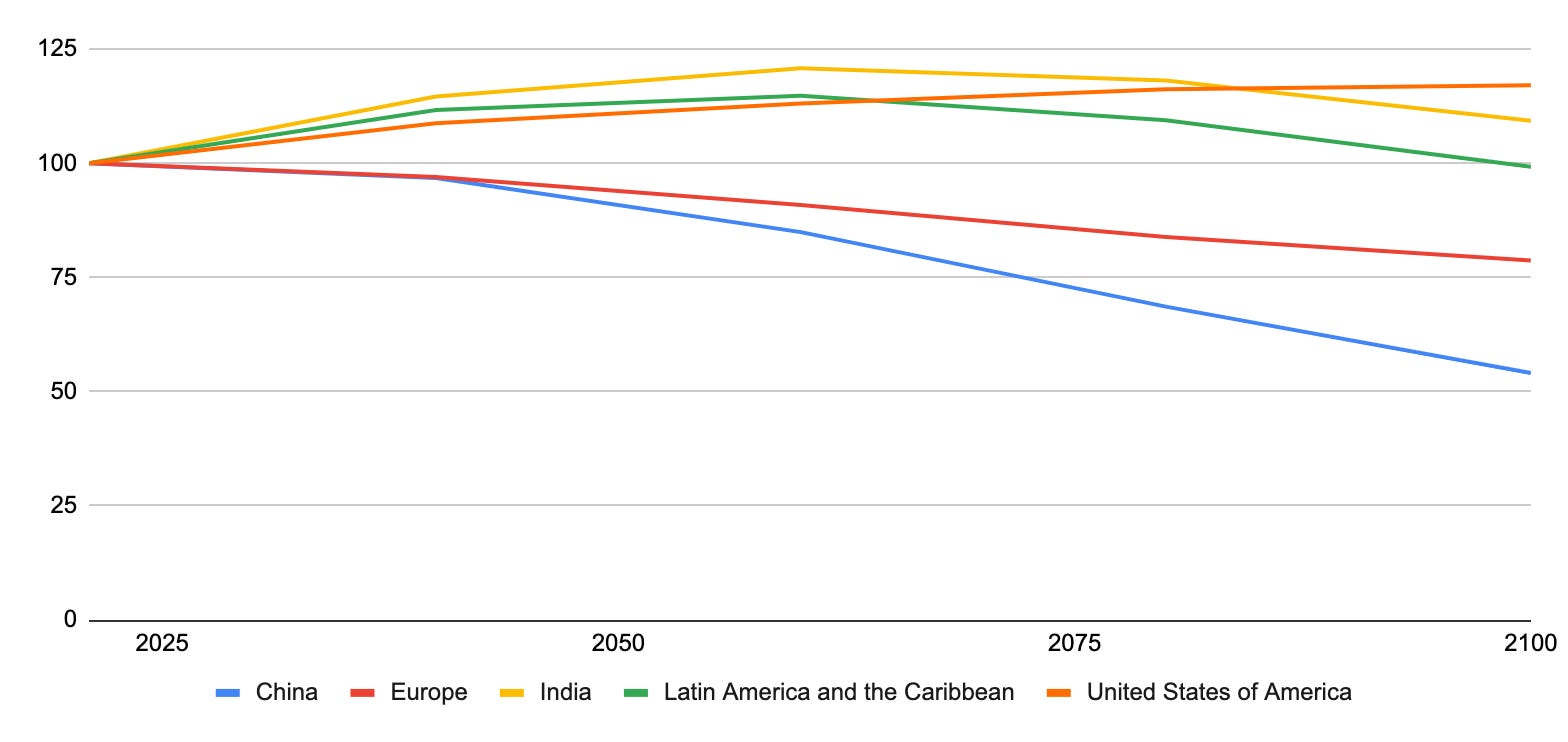
Moreover, Latin America’s population is still relatively young when compared to the developed economies, and is expected to expand significantly in the next four decades. As shown below, the Latam region has a lower median age (30) when compared to the US, China or Europe whose population’s median age is already closer to 40 years. This implies that, as shown in the charts below, Latam still has ~40y of expected population expansion similarly to India, while China and Europe have already peaked and are expected to shrink for the rest of the century.
Source: UN Population Estimates.
Source: Paramo Partners’ analysis from UN Population Estimates.
Latam has a higher internet penetration rate than other emerging markets that has grown rapidly in the last decade. As shown below, the penetration rate in the region more than doubled in the last 12 years from 35% to ~76% in 202. As reported by Atlántico VC citing the Survey on the Use of Information and Communication Technologies in Brazilian Households5 growth was propelled by a rapid catch up from the lower and middle income classes. Moreover, Internet usage from the lower income class in Brazil grew from 16% in 2015 to 61% in 2021 and from the middle class from 56% to 89%, up to the OECD standard (88% in 2021).
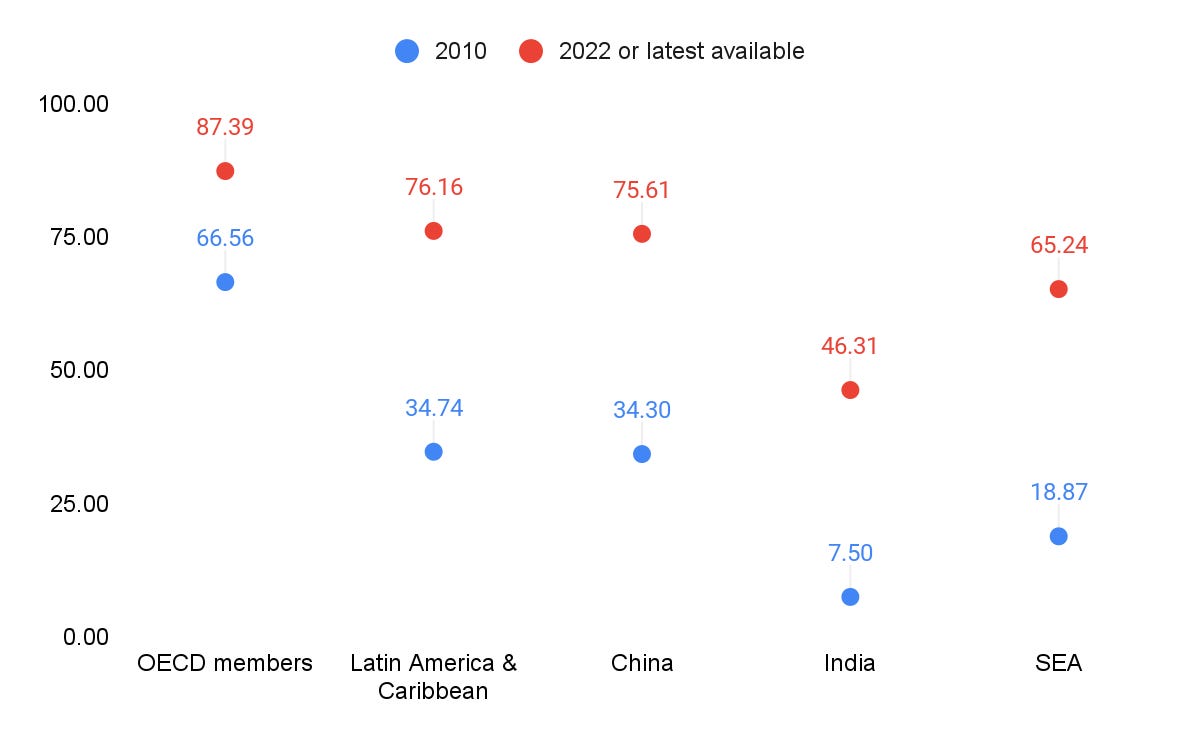
Source: ITU and World Bank Development Indicators 2023. South East Asia was calculated as a weighted average using the UN Population Estimates for 2010 and 2021.
Finally, it is remarkable that Latam has historically adopted digital tech faster than almost any other region. According to the GWI 2023 report, Latin American countries are among the heaviest internet users in the world. Adults from Brazil, Argentina, Colombia or Mexico spend up to 9.5 hours connected, while Americans spend less than 7. Citizens from China or India use it even less often. Moreover, the access to phones with access to the internet (the major gateway for financial tech products) in the region is higher than the global average, reaching almost universal coverage for the largest countries in the region and surpassing developed economies levels. According to GWI research, the access to smartphones reached up to 97.8% in Brazil, 95.1% in Mexico and 94.8% in Colombia; while the worldwide average was 92.3%, and the US level was closer to 90.7%6.
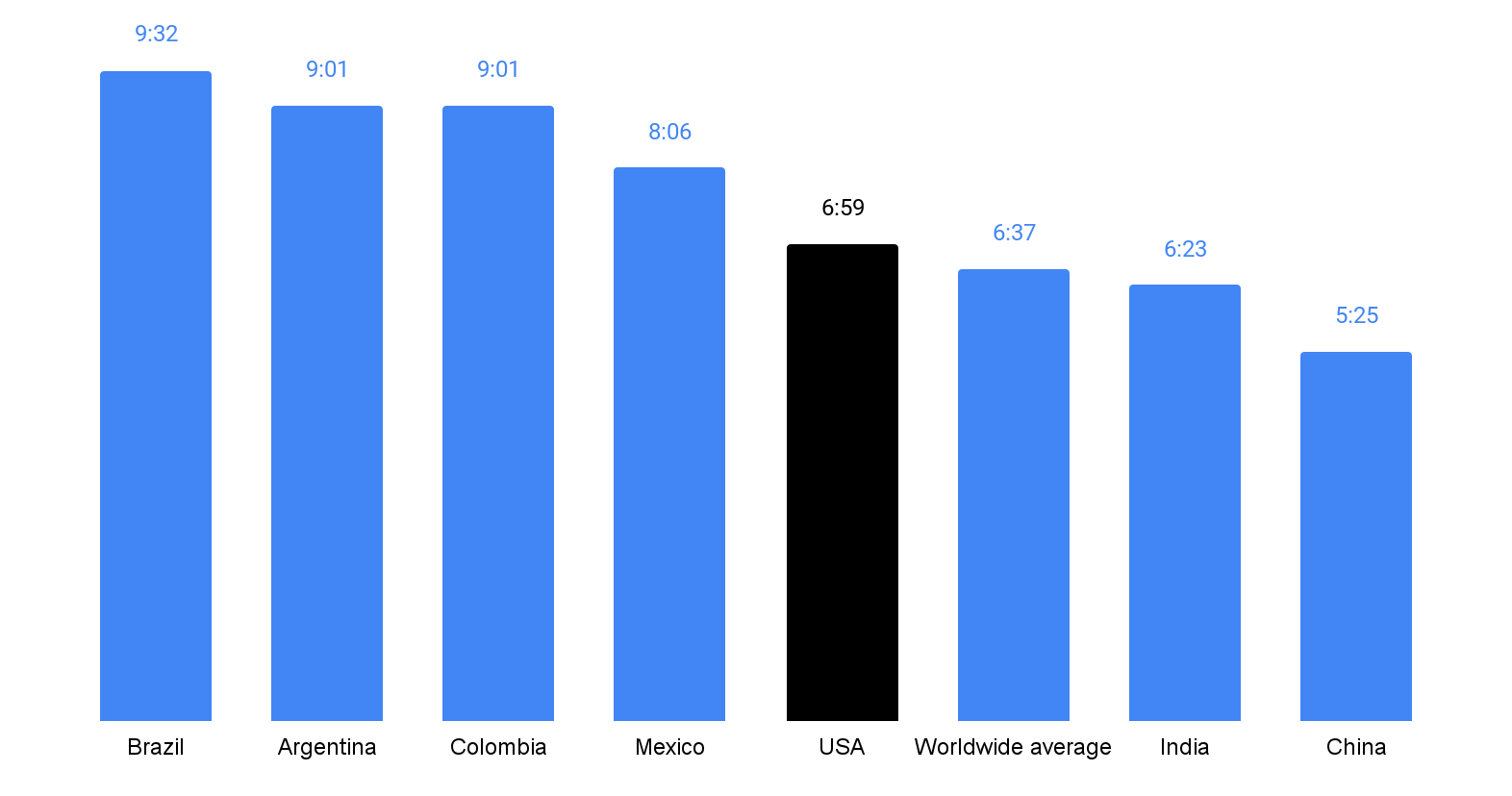
Source: GWI Q3 2022. Extracted from We Are Social Digital 2023 Report. Figures represent time spent by users between 16 and 64 years old.
In consequence, Latin America's relatively young population will boost the growth potential when compared to aging populations in developed economies. The region has also witnessed rapid internet penetration, doubling over the past decade, with a higher adoption rate than other emerging markets. Latin America's historical propensity to adopt digital technology quickly, coupled with its high internet usage and smartphone accessibility, indicates a favorable environment for fintech innovation. This demographic opportunity, combined with the leapfrogging ability of digital infrastructure is expected to catalyze growth for future investment in the region.
Geopolitical risks, especially related to war in the Middle East and Ukraine, as well as increasing tensions between US and China are making investments in Latin America more appealing than ever. Global investors are reducing their interest in China due to the political turmoil and finding alternative assets to allocate their capital. According to private sources cited by The Economist, up to $500 B USD are leaving China per year7.
Moreover, the Covid pandemic put in the limelight the weaknesses of the global supply chain. Some US companies are already finding ways to change suppliers from China to Latin America as stated by surveys carried out by the American Chamber of Commerce8. As a consequence of this, for the first time in the last two decades, in 2023 Mexico surpassed China as US top trade partner by volume of imports as shown in the chart below. This development in international commerce may generate additional exports for Latam of up to $78B per year according the Inter American Development Bank9.
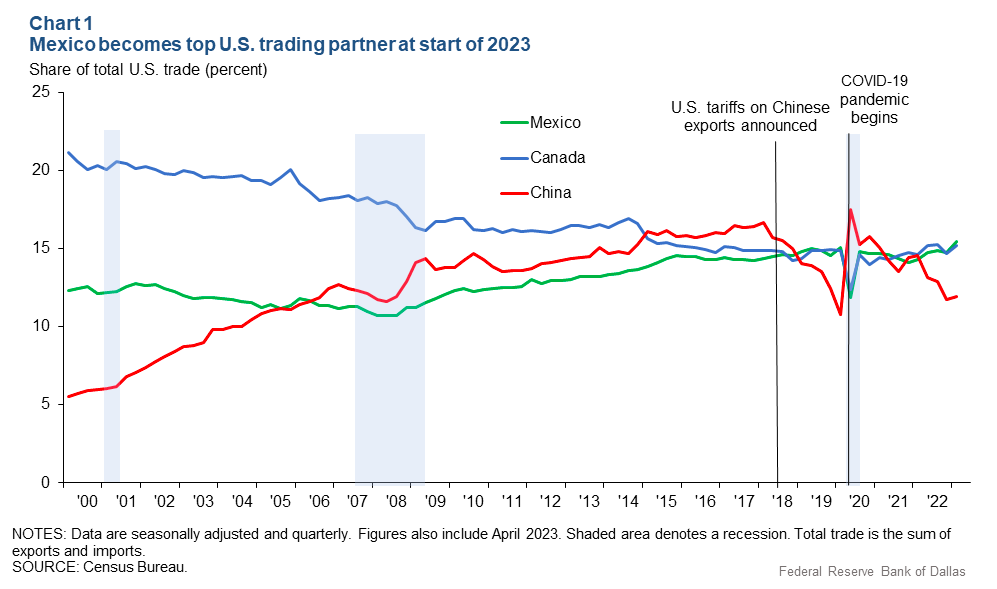
Source: Federal Reserve Bank of Dallas (Dallas Fed) and Census Bureau.
Researches
Venture Capital and Finance in Latam - Chapter 2
·
July 4, 2024

You are reading Paramo Partners’ analysis on the intersection between venture capital and the finance market in Latin America (Latam). We provide an overview of the region, its current status, and the opportunities for the next 10 years. Additionally, we place special emphasis on comparisons with Southeast Asia (SEA) and their development. We hope you f…
The Economist (2023) The future is bright for Latin American startups. Available in https://www.economist.com/the-world-ahead/2023/11/13/the-future-is-bright-for-latin-american-startups
Lucas, R (1990) Why Doesn't Capital Flow from Rich to Poor Countries? In The American Economic Review, 80 (2).
Chari, A., & Rhee, J. S. (2020). The Return to Capital in Capital-Scarce Countries (No. w27675). National Bureau of Economic Research.
Cole, S., Melecky, M., Mölders, F., & Reed, T. (2020). Long-run returns to impact investing in emerging markets and developing economies (No. w27870). National Bureau of Economic Research.
Comite Gestor da Internet no Brasil (2022) Pesquisa Sobre o Uso das Tecnologias de Informação e Comunicação nos Domicílios Brasileiros. Available in https://www.nic.br/media/docs/publicacoes/2/20221121125504/tic_domicilios_2021_livro_eletronico.pdf
Meltwater, Wearesocial and GWI (2023). Digital Global Overview Report 2023. Available in https://datareportal.com/reports/digital-2023-global-overview-report
The Economist (2023) How to sneak billions of dollars out of China. Available in https://www.economist.com/finance-and-economics/2023/12/14/how-to-sneak-billions-of-dollars-out-of-china
The Hill (2023) How nearshoring can revolutionize China US commerce. Available in https://thehill.com/opinion/technology/4389890-how-nearshoring-can-revolutionize-u-s-china-commerce/
IADB (2022) Nearshowing can add annual 78B of exports to Latin America and the Caribbean https://www.iadb.org/en/news/nearshoring-can-add-annual-78-bln-exports-latin-america-and-caribbean
No posts
Comments
Nothing yet. Say the first thing.
Sign in to join the conversation.