
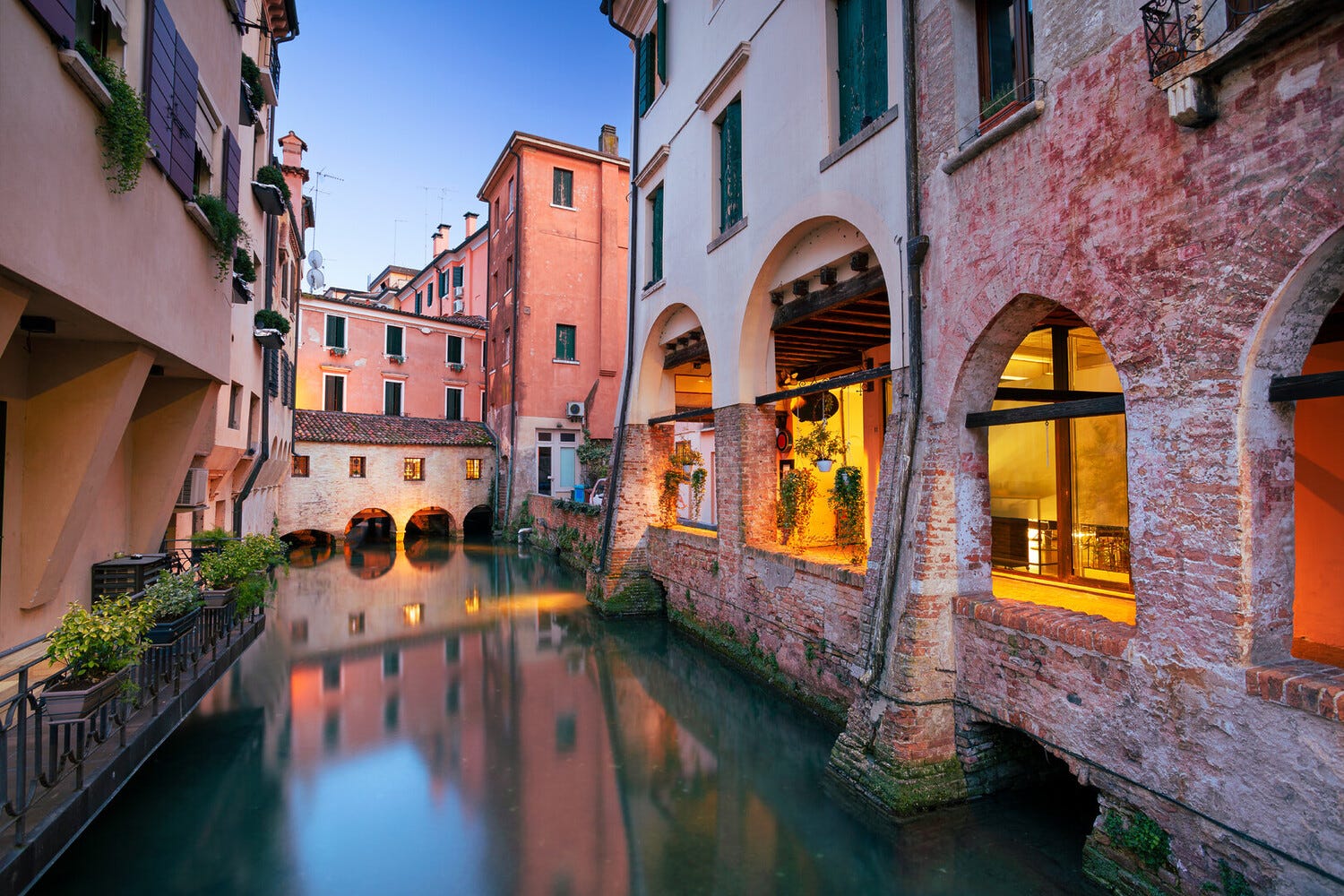
If you follow me on X, this past week I proclaimed Italianmaxing week:
Seven days celebrating the timeless aesthetics and lifestyle Italy still has in abundance. This piece is where the week lands on Substack.
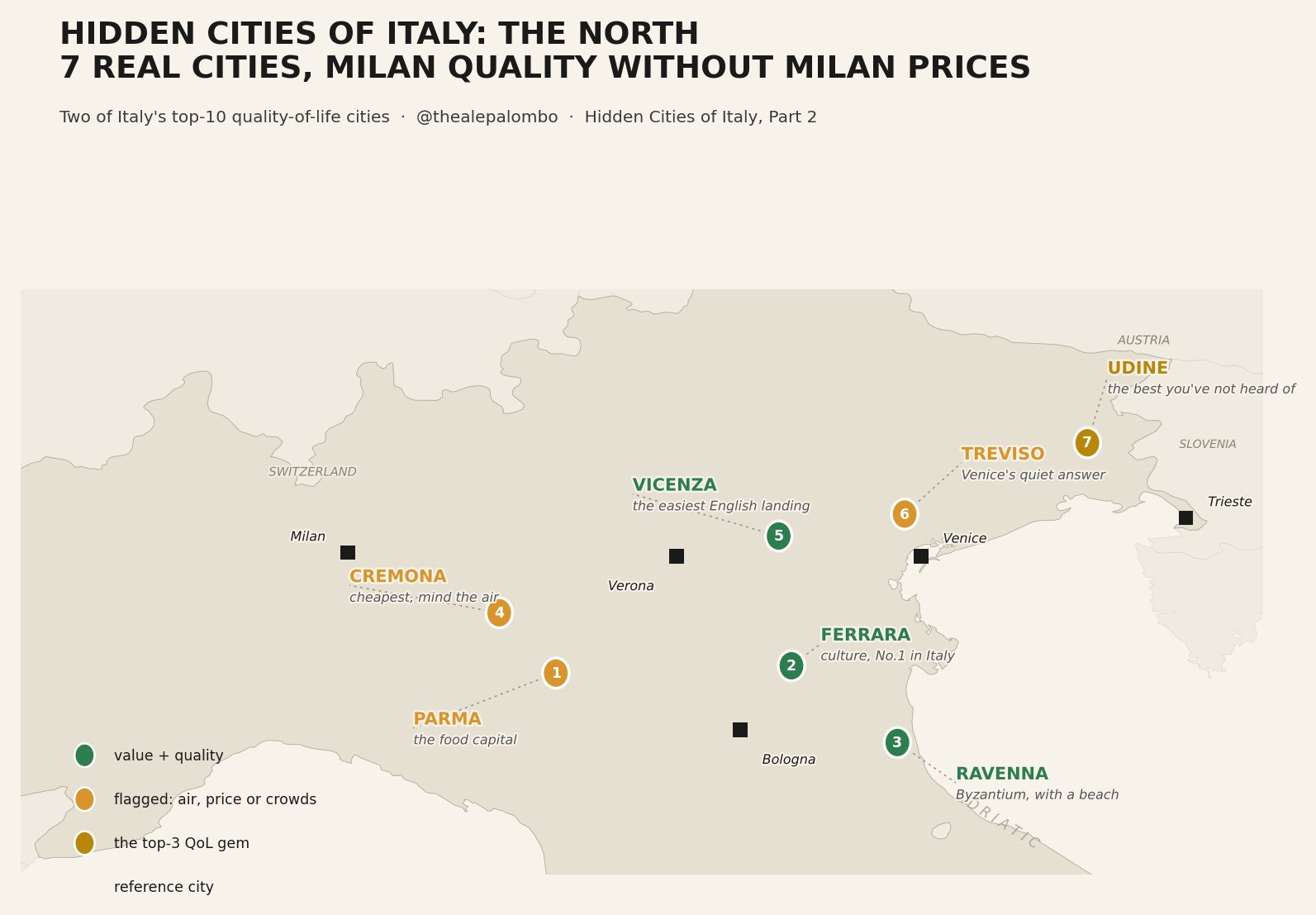
Part 1 of the Hidden Cities series went country-wide, from Trieste down to Lecce. Part 2 stays entirely in the North, because the North is where the “Italy is expensive now” assumption breaks down hardest.
Milan runs €5,000+ per square meter and climbing, and most foreign readers extend that number to the whole of Lombardy, Emilia-Romagna, Veneto and Friuli.
It doesn’t extend.
An hour or two from Milan sit cities where €1,500 to €2,600 buys a square meter inside a UNESCO city center, hospitals rank with Europe’s best, airports are 15 minutes from the centro, and three of the seven cities on this list sit inside the top ten of Il Sole 24 Ore’s annual quality of life ranking, the most-cited quality of life index in Italy.
For each city, here’s what I looked at:
Price per square meter and what €200,000 to €300,000 buys inside the walls
Nearest airport and time to it
Population and year-round livability, not just August
Who the city is for: retirees, remote workers, families, founders
The downsides nobody puts in the brochure, including the one word the North never says out loud: air
Taste and preferences from my own network of Italians who live in these cities
None of these are villages betting on charm. They’re proper mid-size cities where Northern Italians already live their best lives, off the radar.
Let’s dive in!
The food capital of Europe, and one of the most understated cities in the country.
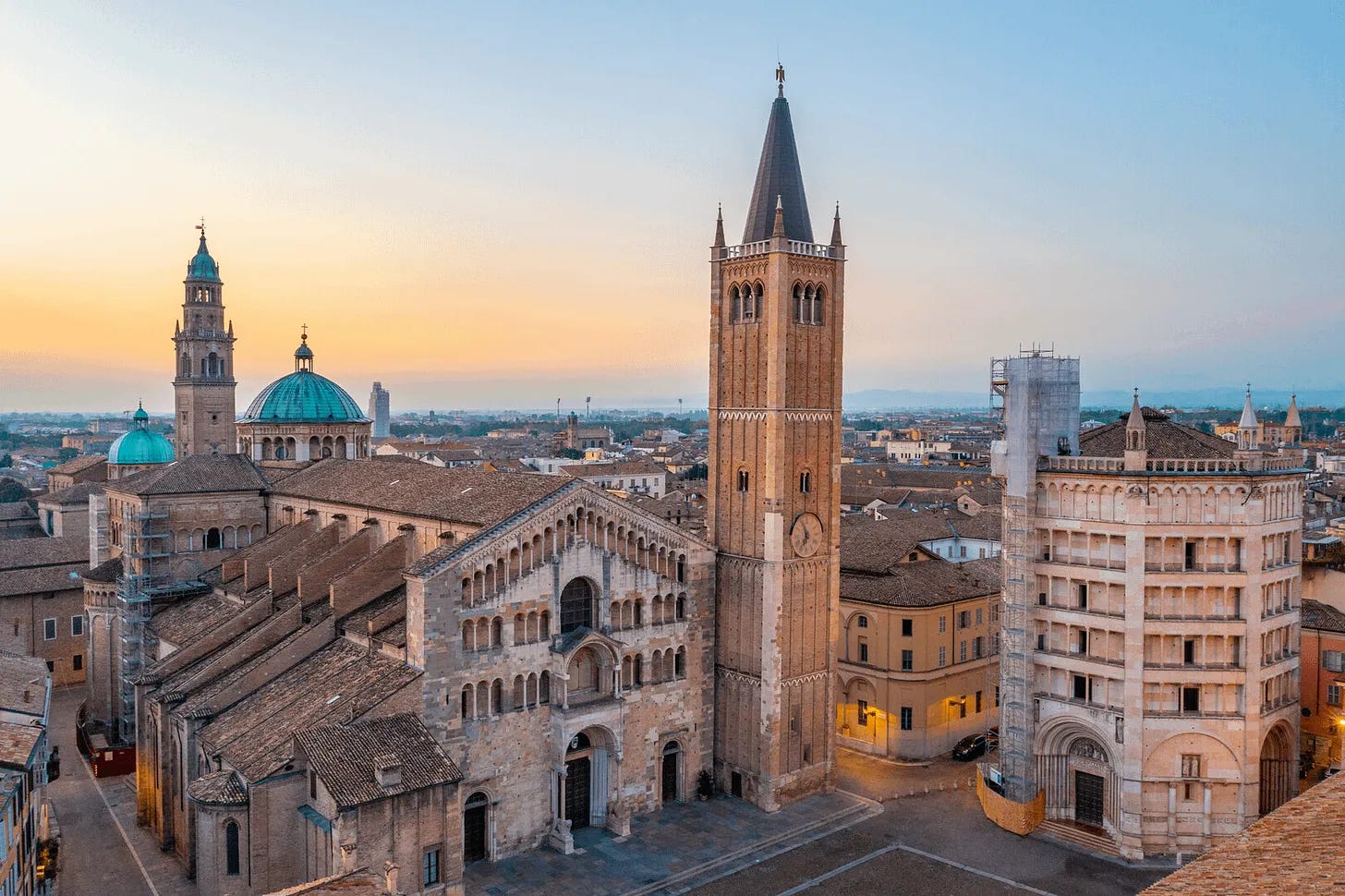
I’ve written about Italy for years and somehow never covered Parma. Today I’m fixing that.
People from Parma have a certain direct charisma. Elegant, understated, magnetic. The parmigiano ages in bank-style vaults outside town. The culatello cures in the fog by the Po. And the loggione of Teatro Regio is opera’s most feared audience: they still boo tenors off the stage.
Population 199,000, which makes it a proper city. Property runs around €2,500 per square meter and rising, up 6.7% year over year, with the centro at €2,844. €200,000 to €300,000 gets you 90 to 130 square meters in the historic center as a rough reference.
The accessible infrastructure is a major perk. Milan is 1h10 by train. Bologna is 40 minutes. Bologna airport is under an hour by car. The International School of Parma teaches the full IB curriculum, and it exists because EFSA, the European Food Safety Authority, brought around 500 international staff into the city. The university runs 30,000 students, which keeps the whole thing young. Cost of living lands around €900 per month for a single person before rent. A one-bedroom in the centro is around €790.
Eating in Parma is unfair. 40-month parmigiano straight from the source, culatello di Zibello, torta fritta with lambrusco. I’ve never met anyone unhappy with that.
The catch is the Po Valley. Fog in November, mugginess in July, and air quality no Northern Italian city really escapes. Tiger mosquitoes are a summer tax, and multiple people mentioned them unprompted when I was scouting. Prices are climbing hard and the bargain window is closing.
Best for food-first movers, families who need international schooling in the city itself, and remote workers who want Milan on tap without the Milan rent.
The bicycle city with the world’s first modern urban plan.
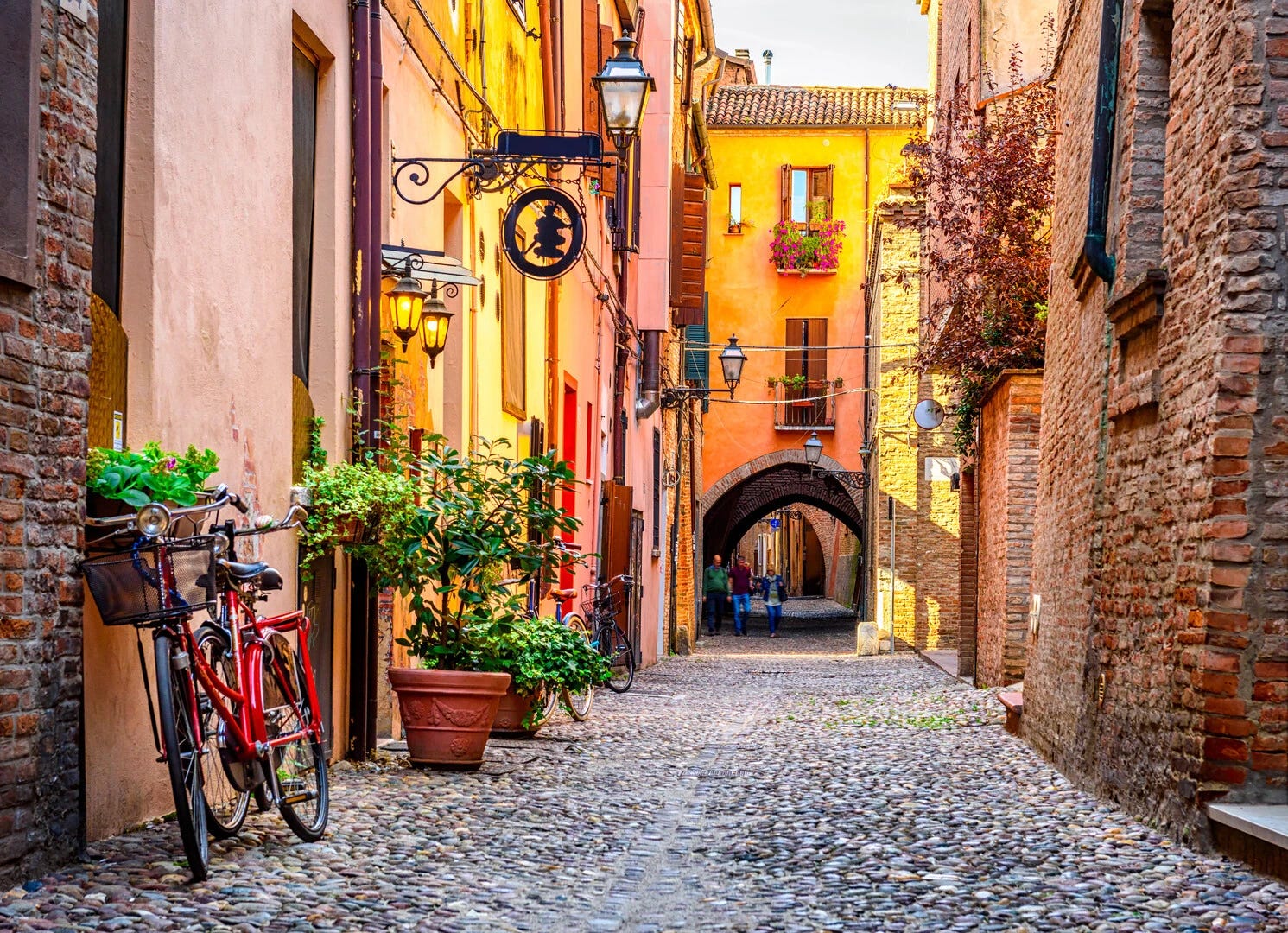
Ferrara is another massively underrated Italian city, and I’m not sure how many of you reading have even heard of it.
In 1492 the Este dukes doubled the size of the city with what UNESCO now recognizes as the first modern urban plan in Europe. Today it runs on two wheels: roughly three in ten trips inside Ferrara happen by bicycle, and you can ride the full nine kilometers of Renaissance walls before breakfast. My favorite Ferrara detail is that Copernicus took his doctorate here in 1503, allegedly because graduation fees were cheaper than at Bologna. The city has been a value play for 500 years.
Population 129,000. Property runs €1,745 per square meter, up 7.1% year over year, with the centro at €2,246 and the periphery from around €1,100. €200,000 to €300,000 buys 120 to 170 square meters inside the walls, ballpark.
The train situation is what makes Ferrara a serious option. It sits on the Venice to Rome high-speed line: Bologna 30 minutes, Venice around an hour, Rome under three. Bologna airport is 45 minutes by car. Il Sole 24 Ore ranks Ferrara #1 in Italy for culture and leisure specifically, and the university has been running since 1391. One-bedroom rents around €567.
Food is cappellacci di zucca, salama da sugo, and coppia ferrarese, the only bread in Italy with IGP protection.
Now the catch, and it’s ugly enough to explain the ranking gap: Ferrara sits 52nd in Italy overall for quality of life, dragged down almost entirely by property crime. It’s second in the country for home robberies. Lock the bike, alarm the house, and pick your neighborhood carefully. The city is also shrinking and aging, mosquitoes are heavy enough that Ferrara has Italy’s most intense West Nile monitoring program. The land itself sits below the level of the Po and is kept dry by pumps.
Cyclists, culture obsessives, and budget buyers who want a high-speed rail city under €1,800 per square meter should have Ferrara on the shortlist. It’s the best culture-per-euro number on this list by a wide margin.
Byzantium with a beach. Eight UNESCO monuments in a city of 156,000.
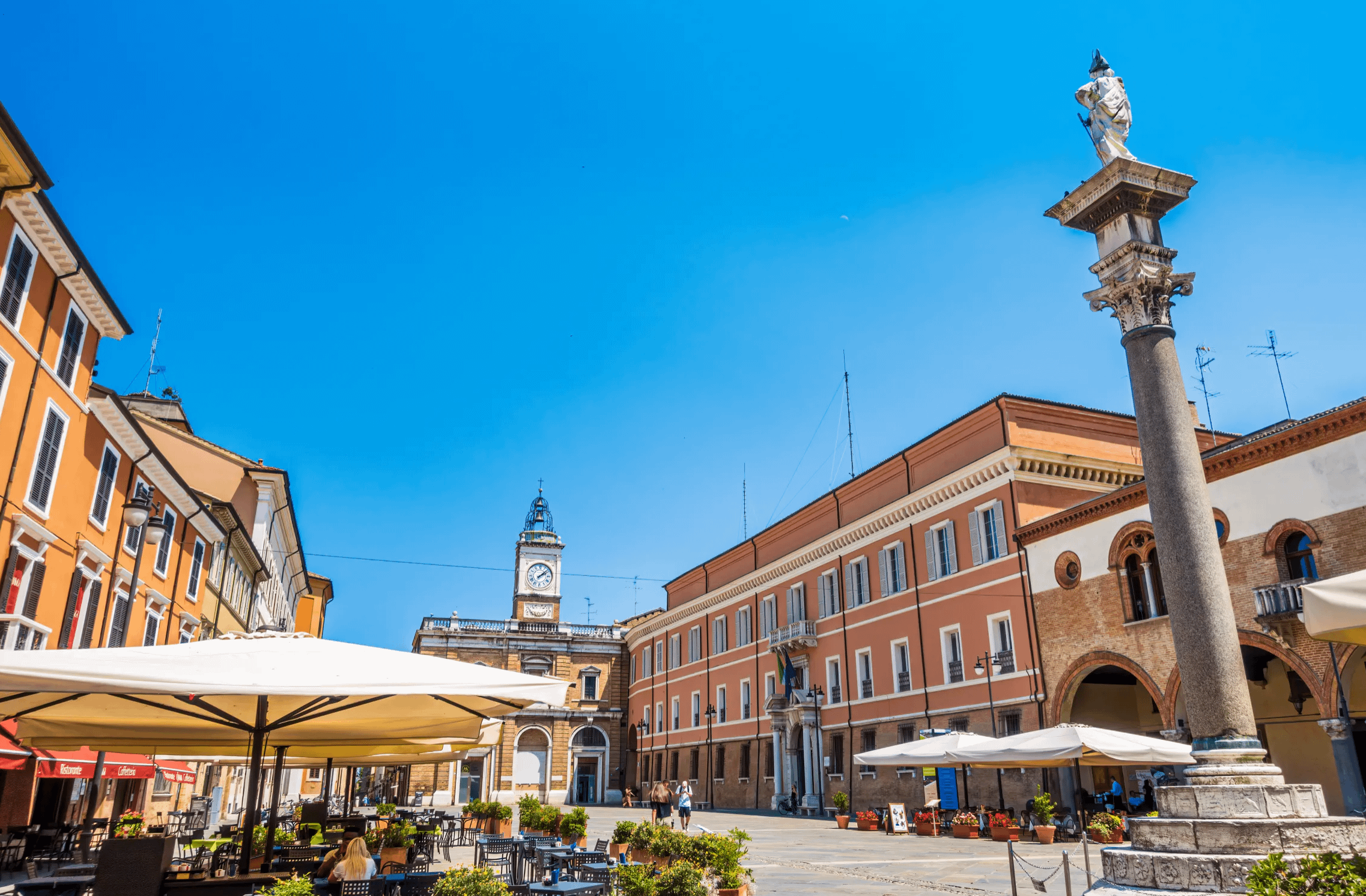
When Rome fell, the capital moved here. That’s why Ravenna has the greatest concentration of Byzantine mosaics outside Istanbul, and why Dante is buried in the city he wrote most of the Commedia in. Florence still sends the oil for his tomb lamp every year, a 700-year apology for the exile.
In the crypt of San Francesco, goldfish now swim over a 10th-century mosaic floor that flooded permanently. Klimt saw the gold mosaics of San Vitale in 1903, and his golden phase started right after.
Population 156,000. Property runs €2,190 per square meter, up 3.5% year over year, with the centro at €2,303. €200,000 to €300,000 buys 100 to 140 square meters.
The sea is 15 minutes from the city, through the pinewood Dante wrote into the Commedia. Bologna is 1h10 by train, and Bologna airport is about an hour away. That combination of coast, capital-city history, and Bolognese infrastructure is uncommon in Italy.
The catch is a mix of infrastructure and geology. There’s no true high-speed rail into Ravenna itself, so you connect through Bologna. The city has physically sunk 114 cm over the last century, and the 2023 and 2024 floods hit the province twice. If you buy in Ravenna, you check the flood map street by street, and then you check it again with someone local. Buyers who do that work tend to get rewarded for it in price.
Ravenna suits a specific kind of buyer: someone who wants sea and city at the same address and is willing to do the flood-map work before signing. If my wife and I were signing this year, it would be here.
More on that below.
Quick pause…
I hosted a free live webinar on the Italy Investor Visa yesterday. 750 people registered, and the questions on the €250K route all pointed the same direction: what the structure of the investment looks like, and what you get back.
We built Bitizenship Italia for exactly this. It’s an Italian innovative startup that qualifies under the €250K pathway and holds Bitcoin exposure directly, so your investment buys the visa and real upside at the same time, not a residency fee you never see again.
Preferential class B shareholders take 90% of realised profits from Bitcoin operations, with withdrawal rights every 24 months so you’re not locked in for the full duration.
If you want to walk through what the structure would look like for your situation, book a free consultation here.
Back to the North.
The city that was ordered to be silent for five weeks so the Stradivarius archive could be recorded.
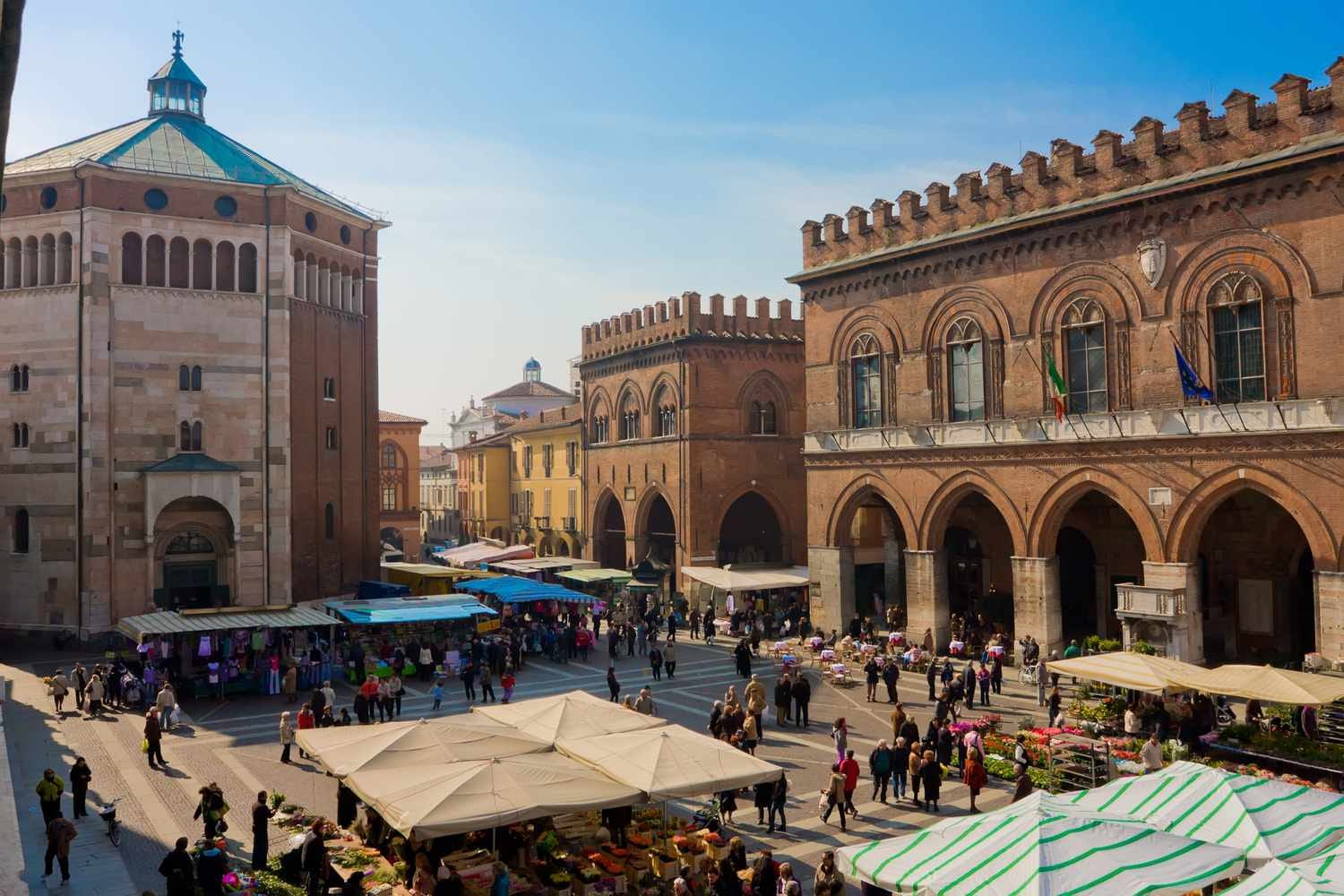
In 2019 the city of Cremona closed its streets, stopped traffic, and asked residents to walk softly for five weeks. The reason: audio engineers were recording every note of Cremona’s Stradivarius violins for a permanent archive, and the city complied without argument.
More than 150 violin workshops still operate in Cremona. Nearly a third of them are run by foreigners, mostly Japanese, Korean and French luthiers who came to study and never left. The Torrazzo is Europe’s tallest brick bell tower, holding the largest astronomical clock in the world, hand-wound since 1583.
Population 71,000. Property runs €1,545 per square meter, up 8 to 11% year over year, the fastest riser in Lombardy and still 14% below its 2012 peak. €200,000 to €300,000 buys 130 to 190 square meters, ballpark, and this is the cheapest square meter on the list.
Now the catch, and it’s the hardest one on the list. The air. In the European Environment Agency’s 2024 ranking, Cremona sat 370th out of 372 European cities on fine particulate matter. Fog runs most of the winter. If your lungs get a vote, they’ll vote against Cremona. There’s no high-speed rail, no airport with meaningful service inside an hour, and most white-collar work here means the 1h08 regional to Milan.
Cremona is for musicians first, obviously. Beyond that, it’s for value buyers who want a beautiful Lombard city at half price and who accept the air cost with eyes open.
Palladio’s laboratory. Italy’s third gold district. And the softest English landing in mid-size Italy.
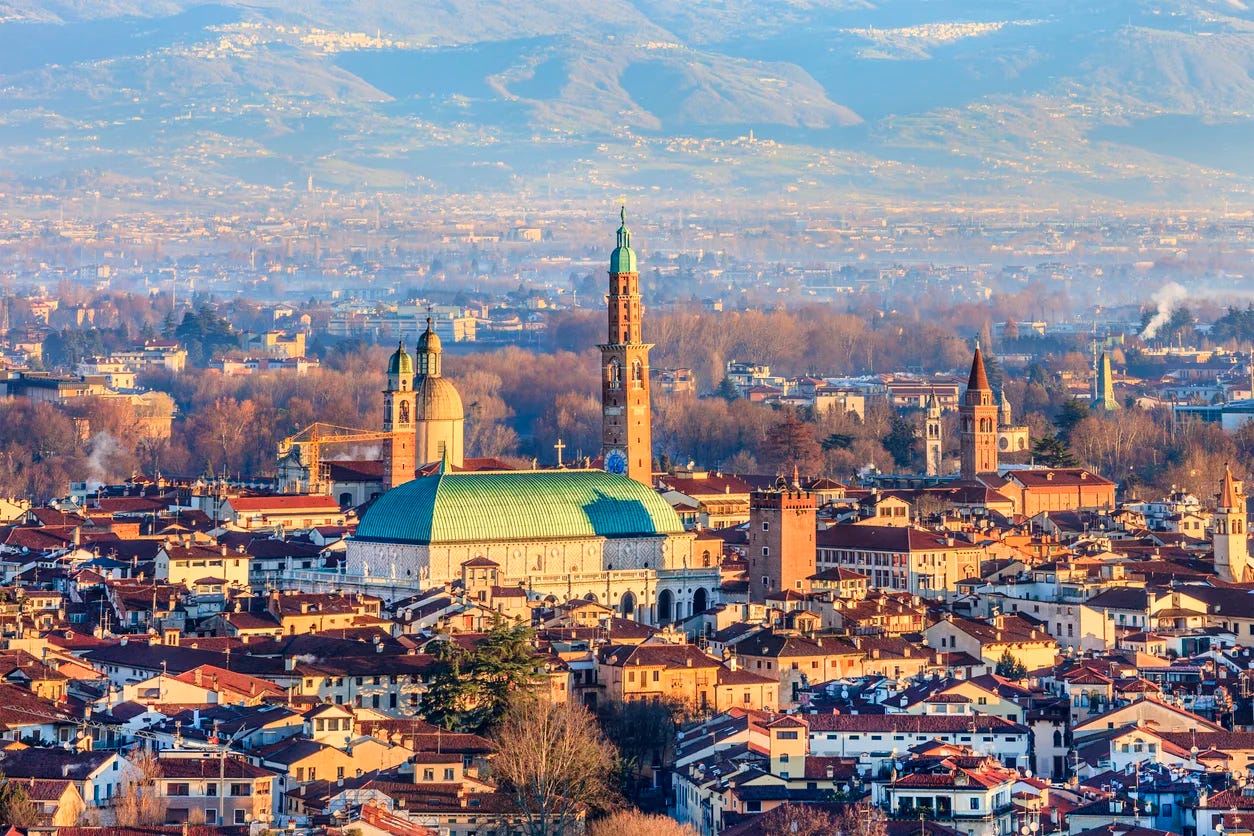
Andrea Palladio spent his career using his hometown as a laboratory, and the result is a UNESCO city that architects visit like a shrine. His Teatro Olimpico still holds the oldest surviving stage set on Earth, wooden fake streets from 1585, still in daily use.
Vicenza is also one of Italy’s three gold districts. More than 1,000 jewelry firms operate in and around the city, VicenzaOro sits on the international jewelry calendar, and Italy’s only jewelry museum is housed inside the Basilica Palladiana.
The practical surprise is who else lives there. A large American community, roughly 16,000 people according to local press, has grown up around the US Army base in the city. This is the easiest English-speaking landing of any mid-size Italian city, by a long distance. Saying that as an Italian: Vicenza is one of the most beautiful cities nobody outside Italy ever talks about.
Population 111,000. Property runs €1,871 per square meter, up 4.6% year over year, with the centro at €2,322. About a quarter cheaper than Treviso next door.
On connectivity, Vicenza is one of the strongest options on this list. It sits on the Milan to Venice high-speed line, with Milan 1h41 away and roughly 25 direct trains a day, Venice 35 to 55 minutes out, and Verona airport 50 minutes by car. H-Farm, the innovation campus on Europe’s largest tech park up near Treviso, is close enough to matter for founders (I hear good things about it). American schools already serve the expat families in the area.
Food is baccalà alla vicentina with polenta, and Soave and Amarone country starts just west.
The catch is water rather than air. The Vicenza province was ground zero of one of Europe’s largest PFAS water contaminations, with a landmark first-instance criminal verdict handed down in 2025. The city’s tap water tests within limits and sits outside the designated red zone, but if you buy property here you verify your specific address on the current maps before you sign anything. On top of that, the city’s quality of life rank slid from 8th to 18th in the last Il Sole 24 Ore ranking, and the western approach into town is tanneries and industrial sprawl.
Best for Americans who want Italy with training wheels, for high-speed commuters who need Milan and Venice on the same line, and for architecture romantics.
Venice’s quiet answer. The most expensive city on this list, and the fastest appreciating.
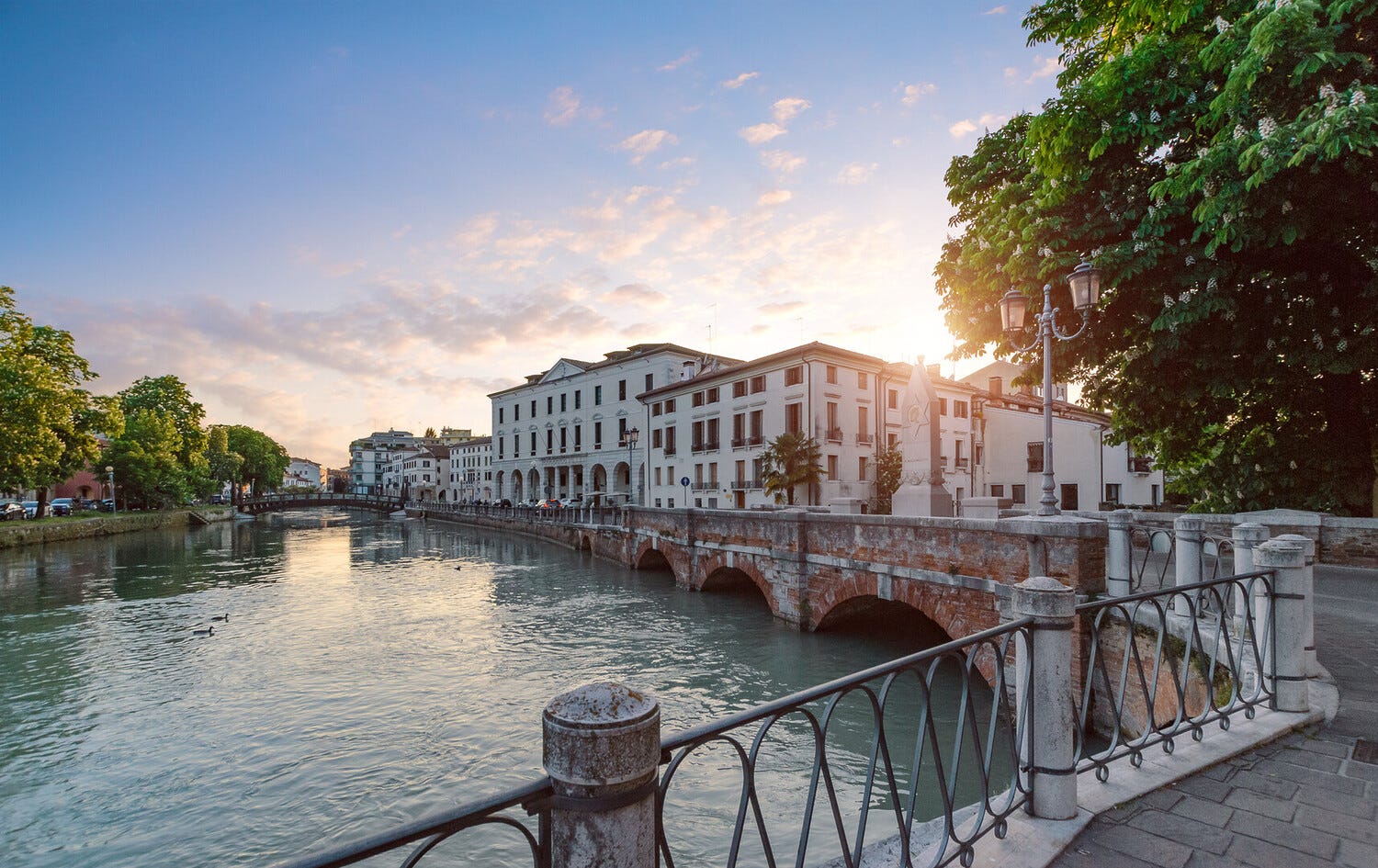
I’ve written about Treviso before, and every year the case for it gets stronger. Canals, water mills, frescoed facades, no cruise ships. Venice is 30 minutes away, and Treviso keeps the livable version of the same beauty at Treviso prices.
Tiramisù was codified in Treviso in the 1970s and the city hosts the Tiramisù World Cup every year to defend the point. The fish market has been operating on its own canal islet since 1856. The Fontana delle Tette, a 1559 fountain, poured red and white wine from two breasts for three days every time a new governor took office. The North knows how to celebrate.
Population 86,000. Property runs €2,526 per square meter, up 9.5% year over year, with the centro storico above €3,700. This is the priciest square meter on the list, and there’s a reason.
Treviso has two airports for one small city: its own Ryanair base with 4 million passengers a year, sitting 10 to 15 minutes from the centro, and Venice Marco Polo 30 minutes further out. Quality of life ranked 6th in Italy in the latest Il Sole 24 Ore index, up 18 places in a single year. H-Farm International School (full IB) sits on Europe’s largest innovation campus 20 minutes from the city. The UNESCO Prosecco Hills start half an hour north.
Food is radicchio rosso di Treviso in winter, tiramisù at the source, and prosecco from the hills that invented it.
The catch is that you pay for everything above, and Treviso is appreciating fastest of any city on this list. 2025 was the city’s first clean-air-compliant year in over two decades, which is progress, but the Po Valley basin doesn’t disappear from the map. Buy under the flight path and you’ll hear the Ryanair traffic. Beyond the walls, Veneto sprawl means you need a car for most things.
Treviso is Venice for people who want to live near Venice without living inside the theme park. Families, frequent flyers, anyone who wants a small livable city with a Ryanair base at the door.
Third in Italy for quality of life in 2025. First outright in 2023. On almost no foreign shortlists.
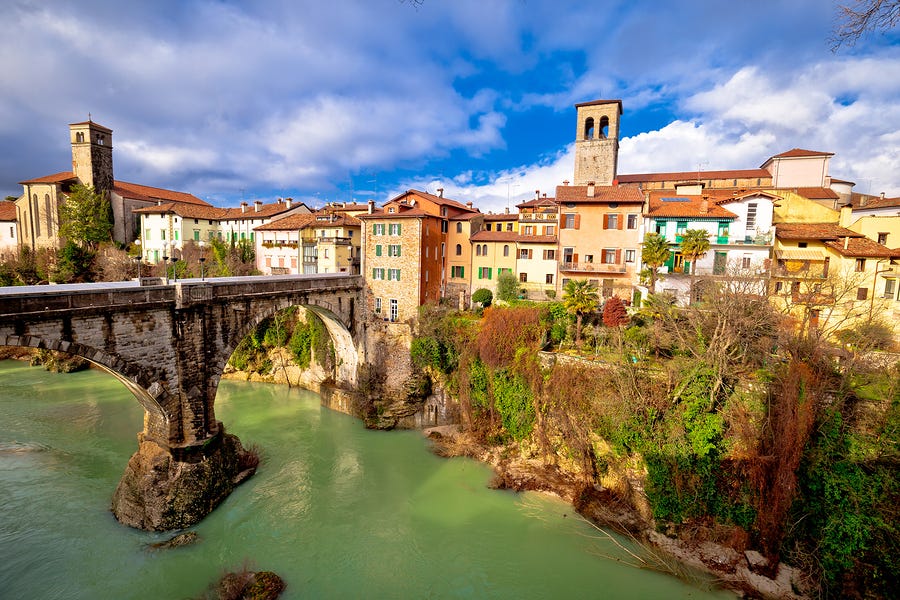
If you’re not Italian, Udine has probably never crossed your radar, and it should. Il Sole 24 Ore ranks the quality of life of every Italian province every year, and Udine won outright in 2023 and came third in 2025. Almost nobody outside Italy can place it on a map.
The University of Udine exists because 125,000 people signed a petition inside earthquake tent camps in 1976. It’s the only university in Italy founded by popular demand. The Patriarchal Palace holds the largest concentration of early Tiepolo frescoes anywhere in the world.
Daily life runs on the tajut: a €1.50 to €2 glass of Friulano, drunk in centuries-old osterie, twice a day, a social institution. Locally, tajut apparently doesn’t count as an alcoholic beverage (I’m kidding, obviously). Slovenia is 35 km away, Austria 60. The Adriatic beaches are 45 minutes.
Population 98,000. Property runs €1,821 per square meter, up 10.4% year over year and accelerating. €200,000 to €300,000 buys 120 to 160 square meters. This is the fastest appreciation on the list, and it’s off a low base.
Trieste airport is roughly 30 minutes away by direct train, a genuine rarity in Italy. Venice is 1h35 by rail. San Daniele, the prosciutto town, is 25 minutes from the table. One-bedroom rents around €630, the cheapest of any top-three quality of life city in the country. There’s an international school teaching the IB curriculum.
Food is frico with polenta, San Daniele crudo, and Friulano by the tajut. Repeat daily.
The catch is water again, but this time it’s rain. Udine is one of the rainiest cities in Italy, over 1,400 mm a year, roughly double Rome. That’s the price of everything staying green. It’s seismic country, with the 1976 quake’s epicenter 25 km north. Milan and Rome are far by rail. And it’s provincial in the true sense of the word: quiet nights, everyone knows everyone.
Udine is for quality of life maximalists, Mitteleuropa souls, and remote workers happy to fly out of Trieste and live better than nearly everyone else in Italy.
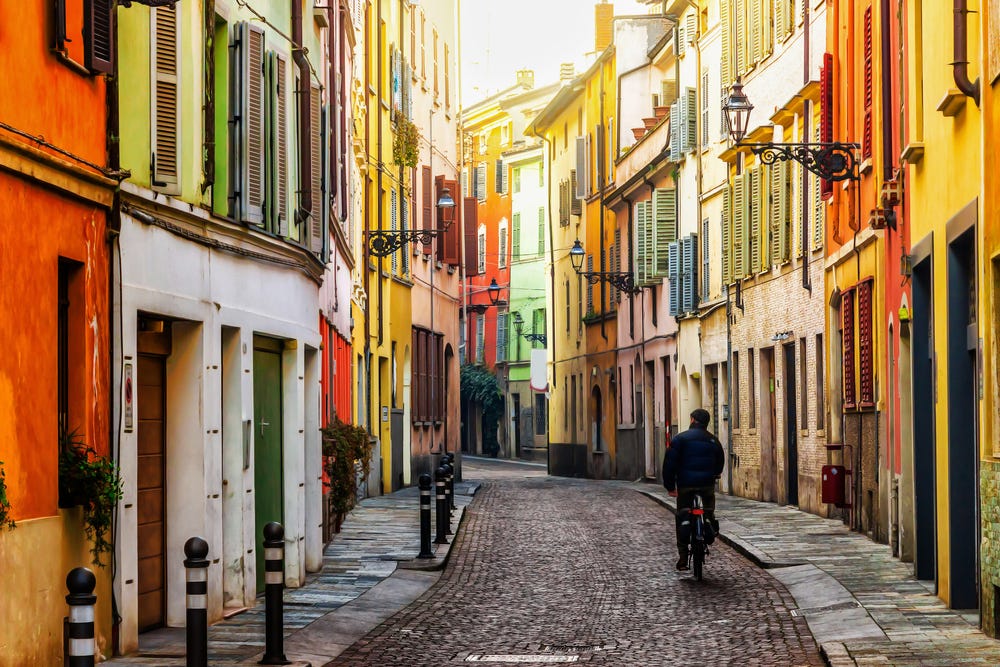
Most affordable: Cremona at €1,545 per square meter.
Best quality of life: Udine, third in Italy this year, first outright in 2023.
Best airport setup: Treviso, own Ryanair base 15 minutes from the centro plus Venice Marco Polo 30 minutes further.
Best high-speed rail: Vicenza, on the Milan to Venice line with Milan reachable in 1h41.
Best culture per euro: Ferrara at €1,745 per square meter, ranked #1 in Italy for culture and leisure.
Best food (and it’s not close…): Parma.
Fastest appreciation: Udine, up 10.4% year over year and accelerating off a low base.
Softest English landing: Vicenza, with the ~16,000-strong American community around the US Army base.
Strongest for families that need proper schools: Parma (full IB in the city), Treviso (H-Farm 20 minutes out), Vicenza (international schools already built around the American community).
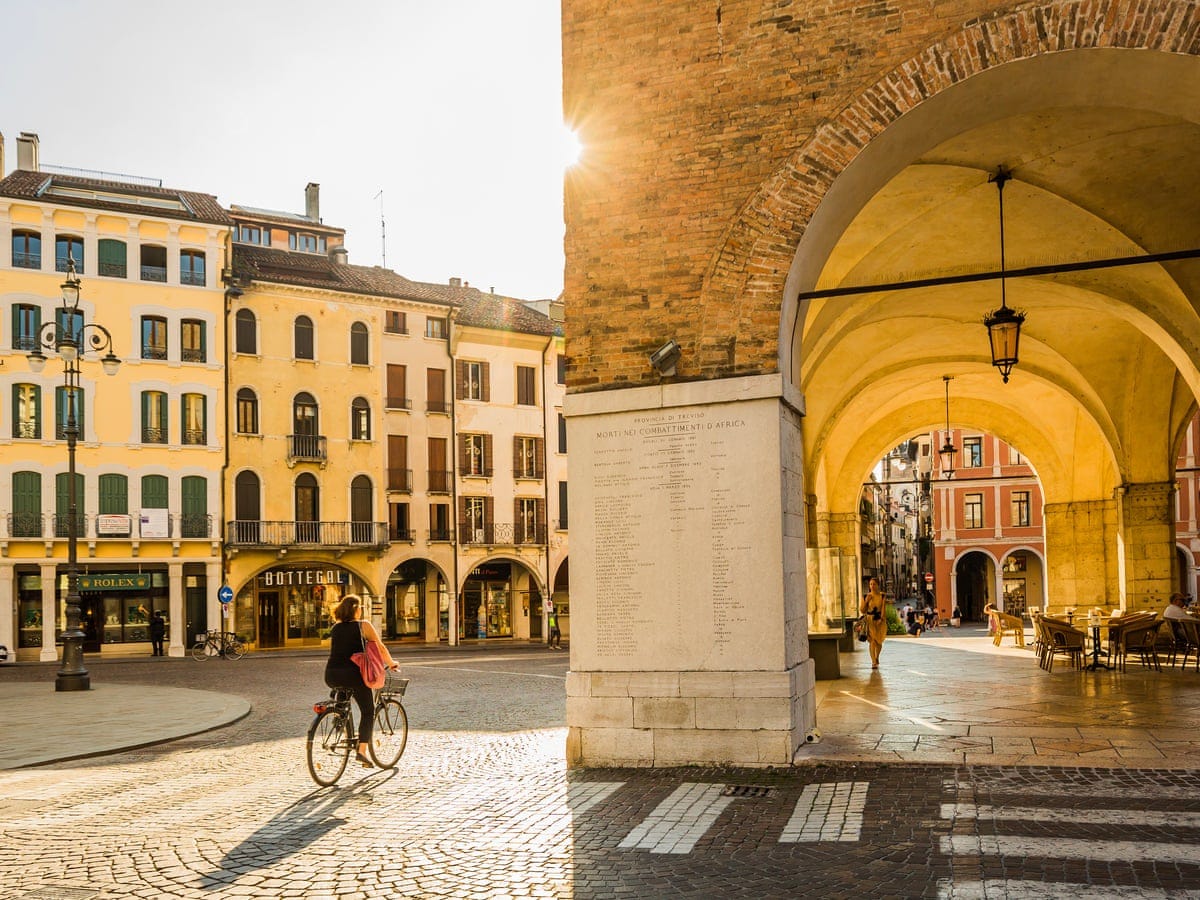
Retirees looking for art plus sea plus walkability go to Ravenna. Culture-first, flat, and bikeable is Ferrara. If the ask is a top-three quality of life city at reasonable prices, it’s Udine.
Remote workers and founders split three ways. Treviso if you fly frequently and want Ryanair at your door plus Venice thirty minutes out. Vicenza if you want the Milan to Venice high-speed line and the softest English landing in the country. Parma if you want Milan on the train and the food capital of Europe as your neighborhood.
Families cluster around the schools. Parma has the full IB in the city because EFSA staff need it. Treviso has H-Farm International 20 minutes out on Europe’s largest tech campus. Vicenza has international schools already built around the American community.
If the constraint is budget above everything else, it’s between Cremona at €1,545 per square meter (with eyes fully open on the air) and Ferrara at €1,745 per square meter with high-speed rail into Bologna, Venice and Rome.
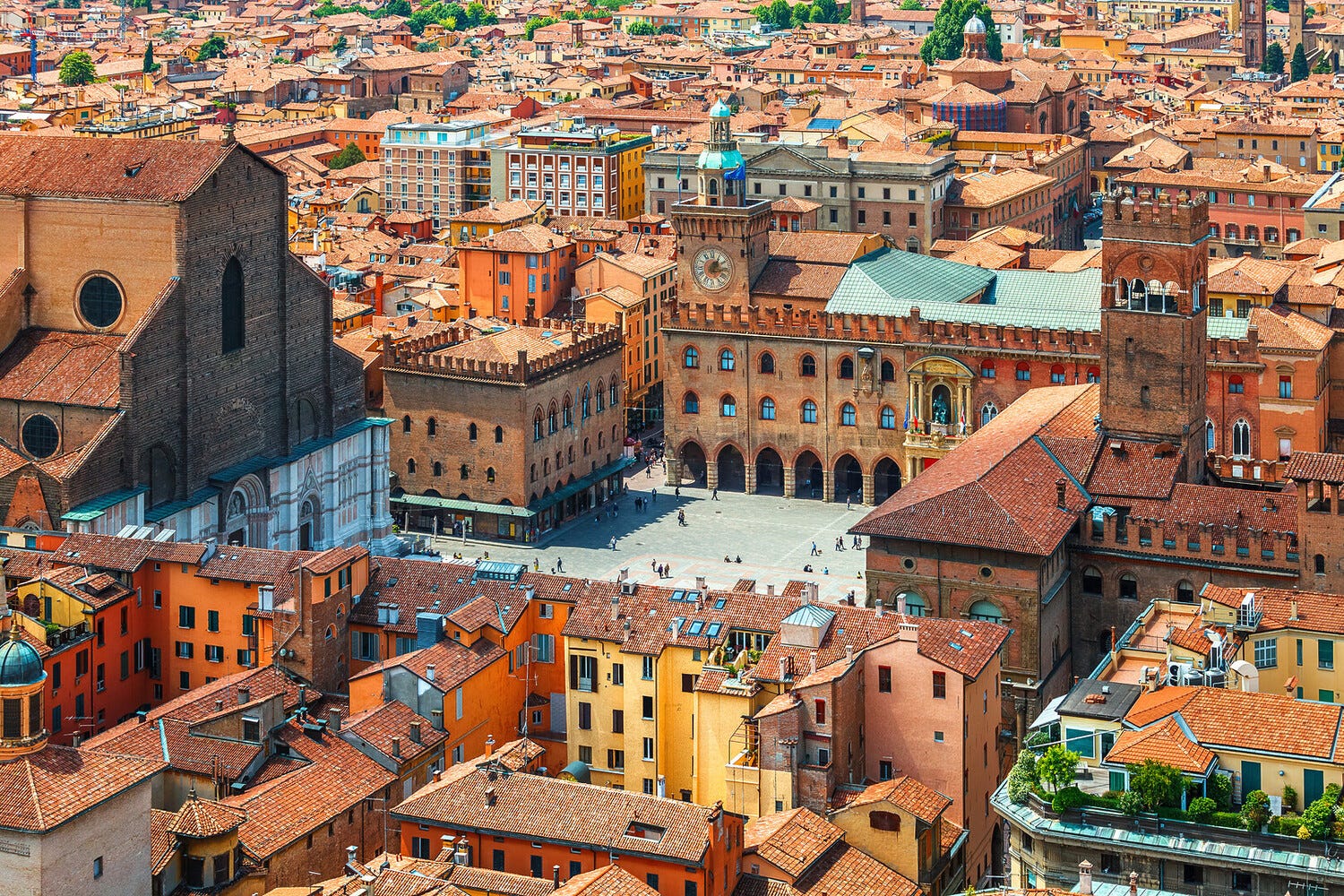
The value bet on this list is Ferrara: a city ranked first in Italy for culture, where €200,000 buys inside the walls for less than a Milan parking space, and where you cycle everywhere flat.
The one that surprised me most while scouting this piece was Udine. Almost never mentioned in English-language coverage, third best quality of life in the whole country, and nobody outside Friuli ever puts it on a list.
And the one my wife and I would sign for this year, if we were signing, is Ravenna. The mix of cost, proximity to Bologna, and continuous history at a single address is extremely underrated.
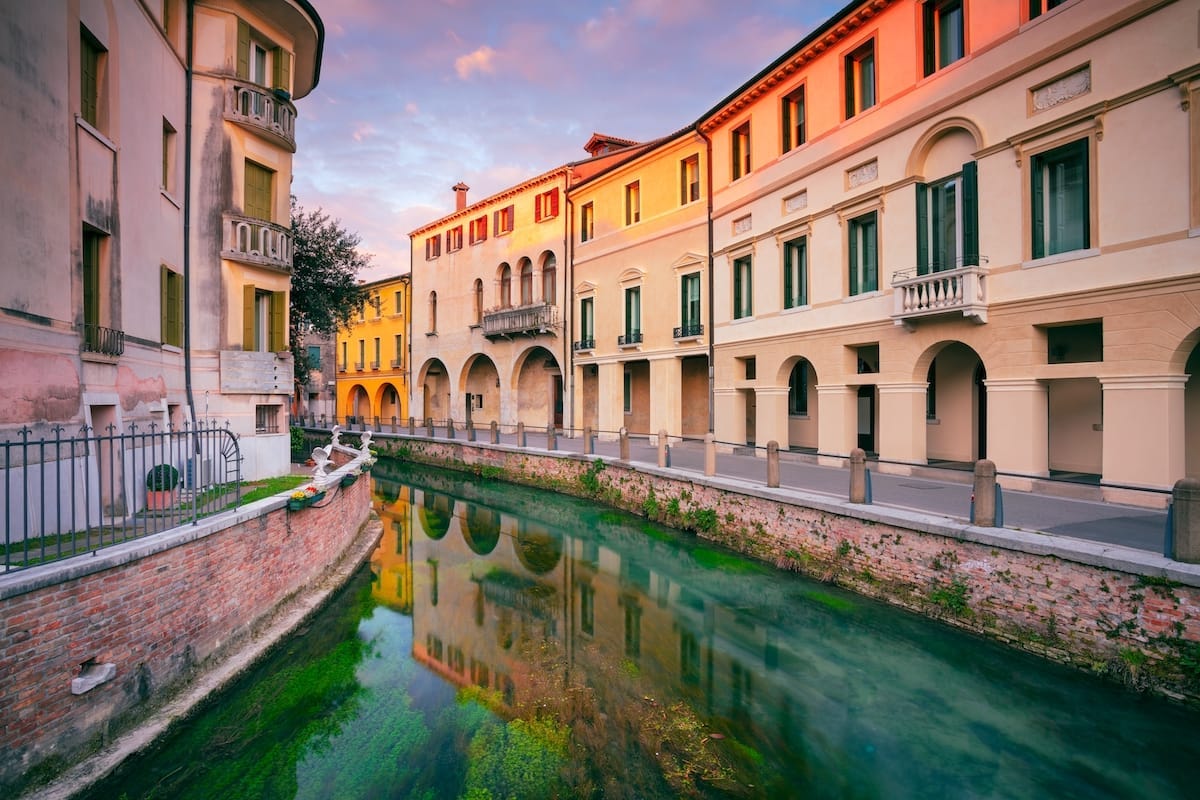
There is no 7% flat tax in Northern Italy. That regime belongs to the South, and it’s the entire subject of Part 3 of this series.
What the North sells instead is boring in the best way: hospitals that rank with Europe’s best, trains that arrive on time, airports 15 minutes from wherever you live, and salaries you can earn in euros if you need them.
The tax you pay in Northern Italy is atmospheric. The Po Valley is one of the worst air basins in Europe, and almost every city on this list sits inside it. Fog in November is romantic for a week and real for three months.
And you need Italian. These cities never learned English at scale because they never needed tourists to.
Three practical things before you buy anywhere on this list.
Visit in November, not May. If the fog test breaks the fantasy, better to know now than after you’ve signed.
Get a commercialista before you buy anything. €100 to €150 per month. Italian bureaucracy is undefeated without one, doubly so from abroad.
Learn Italian to A2 before you land. In these cities it’s not politeness, it’s simply part of the infrastructure.
Italy has 7,904 municipalities. Tourists visit maybe fifteen. Part 1 gave you eight cities across the country. Part 2 gave you seven more, all in the North. The South edition, with the 7% flat tax playbook that comes with it, is coming next.
If you missed Part 1 of this series, it’s the country-wide list:
And if you’re weighing Italy against your other European options, this is the piece that maps which countries fit which profile:
Reply and tell me which of these seven speaks to you loudest, or the one I missed. I read every message.
And if you enjoyed this, click the ❤️ button and restack.
Stay free,
Ale
Writing from Lisbon
Comments
Nothing yet. Say the first thing.
Sign in to join the conversation.