

Something I have found myself saying at various points in my life to a variety of people is “It’s not what you said. It’s how said it.” I have said it to clients and couples that I worked with professionally and to family and friends that are extremely close to me. It is a theme I have recognized is common in our human interactions that can lead to conflicts, hurt feelings, and toxic thinking patterns.
The person trying to communicate feels like they said what they had to say, but can’t understand why the conversation went sideways? They can be met with silence, a heaviness in the air, or an escalated intense battle. It is often followed by people replaying the situation in their heads trying to understand what went wrong or hurt by how it all played out feeding toxic narratives.
Most of the time the issue is not that people are misinterpreting our intended message. It is that our communication was delivered in a way that did not hold the intention, meaning, or ability to deliver the desired outcome. Whether it was our choice in language, words, tone, or other elements of delivery, these are all keys to how successful we can be in communicating in even the most difficult circumstances. Remember humanized communication is felt before it is completely understood.
We often underestimate the influence of how we communicate and the impact on our relationships. There is so much meaning in the choice of our words and how we frame them. For example, a sentence spoken with curiosity can invite connection, while the same sentence spoken with impatience can shut it down. Even a well-intentioned comment or feedback delivered with urgency or pressure can feel very judgmental or critical. Most of us can think of an instance where careless delivery, even when based on truth, has caused harm. For example, when trying to let your partner know that you have observed a change in their behavior it can feel like an attack if not delivered with careful thought and tact. This is an instance where “I am just being honest” is rarely a successful defense. Honesty without care or consideration does not provide clarity or express concern.
We are already living in a world that is so fast-paced in the various ways we communicate that we are left with very little to no margins for error, whether in the choice of mode of delivery or the words being expressed. Text messaging, although convenient, leaves so much up to interpretation that it is not always the best choice depending on the context. Even in-person meetings have been condensed in time and quality resulting in misunderstandings and lack of connection. Feedback is frivolous and fleeting without much consideration or meaning. In prioritizing what we think is efficiency, we have only managed to disintegrate the quality of our interactions and the long-term capacities of our relationships. This has been detrimental to our workplace interactions and personal relationships resulting in toxic thoughts, rising conflicts, hard feelings, and disconnection. The cost has eroded our trust, safety, and willingness to stay in conversations and ultimately our relationships.
What we need to recognize is that the quality of our communication is a skillset. It is not representative of our character or personality traits. We can be taught and can practice how to humanize communication more effectively. We can learn how to deliver difficult messages without having sharp edges to the message. It is not necessary to be forceful to be direct or be dominant in order to exude confidence. In confusing these, we lose the integrity of the message because the focus shifts to the unpalatability of the delivery, making it undesirable and unreceivable.
Humanizing the way we communicate starts with recognizing that every message is made up of what we are saying and how we are saying it. Both of these pieces require attention and intention. Thinking about what needs to be said along with how we want the other person to feel and hear will help us craft and shape the messaging and delivery.
For example, choosing our words matters. Words like “always” or “never” are absolute and don’t leave room for other considerations. Making assumptions or using labels tends to elicit defensiveness rather than cooperation. Tonality, which includes our volume, pacing, and emotional emphasis, makes or breaks the quality of the interaction. Choice of timing is often an aspect that is rarely considered but can be vital. Think about when is the best time to approach the topic and, if unsure, it is respectful to ask, “Is this a good time? Or “Please let me know when it would be a good time to discuss...”
We can salvage communication situations that have gone sideways, whether we are the messenger or receiver. For example, when our toxic thoughts tell us it would be easier to shut down or tune out, it might be helpful to say something like “I am open to hearing what you have to say, but I struggling to staying focused with the way you are saying it.” This gives a moment for the other person to regroup, de-escalate, and reframe their delivery and try to preserve their original intention of their message.
As the messenger, don’t take this personally. This is an opportunity and an act of care from the other person, expressing that they are interested in what you have to say and that it matters. It is information and a chance for a do over, like “That came out sharper than I intended. Let me try again.” This kind of response alone can help us to break free from toxic thought cycles and restore more trust, rather than trying to justify the original delivery.
We all play a part in improving our communications, interactions, and relationships. Remember, it starts with our intention of what needs to be expressed and thoughtfulness in how we are going to deliver it. Humanizing our interactions is not about perfection, but rather about taking responsibility and being accountable from either side of the conversation. Do overs are a gift!
For more ways to reconnect with yourself, others, and more humanized life, follow PainToPossibilities.com on #Substack.
Find more information about Mind Armour® Services & Training Programs
Now Available on AMAZON:
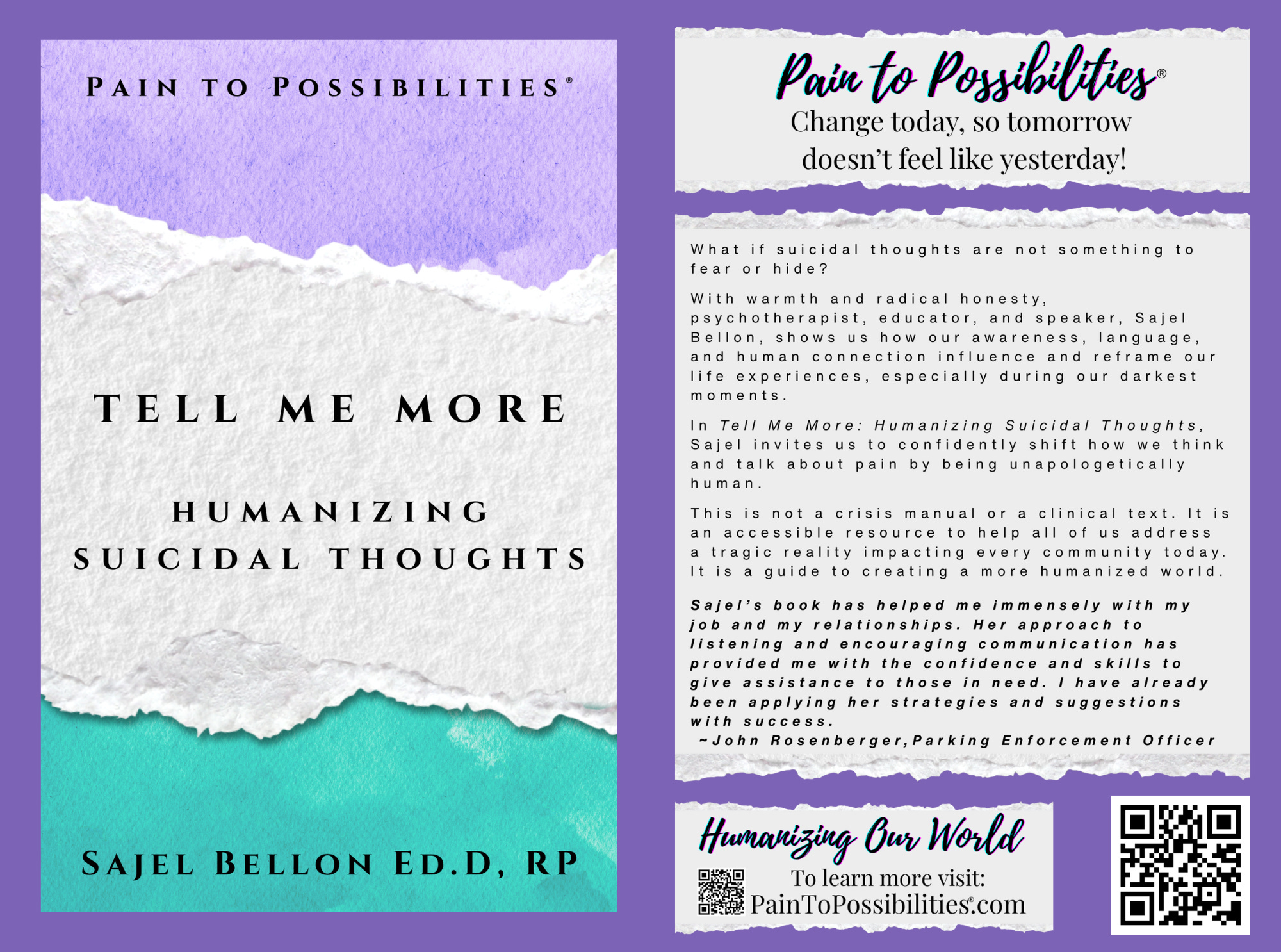
To stay updated about the release of the latest
Pain to Possibilities® Publications share & subscribe!
Comments
Nothing yet. Say the first thing.
Sign in to join the conversation.