
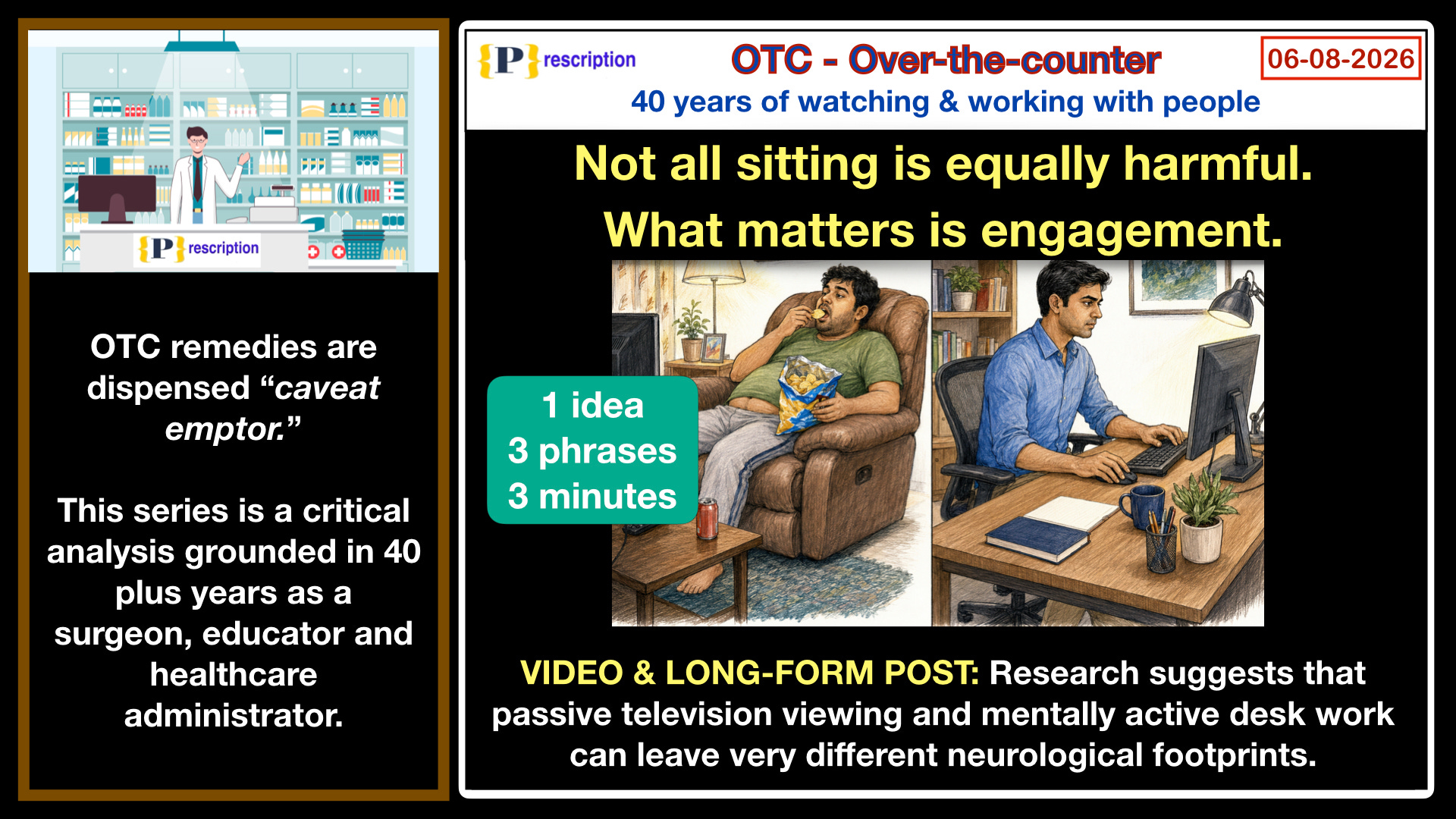
Your chair may not be the real problem. New brain-imaging research suggests that passive television viewing and mentally active desk work can leave very different neurological footprints. The finding challenges familiar advice about sedentary behaviour: brain health may depend not only on how long we sit, but on how we sit.
We often talk about sitting as though every seated hour has the same effect.
A long-term study of 1,712 adults suggests otherwise.
Participants reported their television viewing and occupational sitting habits in midlife. More than 20 years later, MRI scans showed that frequent TV viewing was associated with smaller volumes in several brain regions and more white-matter hyperintensities—markers associated with vascular damage and cognitive decline.
Sitting at work showed a different pattern: it was associated with larger volumes in some brain regions and fewer white-matter changes.
Active thought exercises attention, memory and judgement.
Passive viewing can continue for hours without interruption.
Screen time can crowd out movement, conversation and purposeful activity.
We are assuming that television is passive and desk work mentally demanding. Neither is necessarily true.
A documentary can provoke intense thought.
A repetitive spreadsheet can put the brain on autopilot. We are also assuming that earlier habits caused the later MRI differences.
The activities were self-reported in broad categories. The researchers could not measure the programmes watched, intellectual engagement, viewing companions or every health and socioeconomic difference.
Which premise survives scrutiny?
Not all sitting is equal.
The neurological meaning of an hour may depend on whether we are merely receiving stimulation or actively interpreting, questioning and responding to it.
For every hour of passive screen time, add an interruption involving movement, thought or conversation.
Stand and walk. Summarise what you watched. Discuss it. Question it. Connect it with something you already know.
The objective is not to declare war on television. It is to prevent leisure from becoming prolonged mental idling.
Should health advice measure only how long we sit—or also what our brains are doing while we sit?
#sitting #cognition #risk #dementia

{P}rescription is free, but if you would like to show appreciation, you can make a donation at a very worthwhile cause for education of underprivileged children at https://diyaghar.org
Thanks for reading {P}rescription! This post is public so feel free to share it.
Comments
Nothing yet. Say the first thing.
Sign in to join the conversation.