
0:00
-4:59
We celebrate rising life expectancy as an unquestioned victory. In India, as an example, the number has gone up from 29 years at the time of our independence to the mid-60s today.
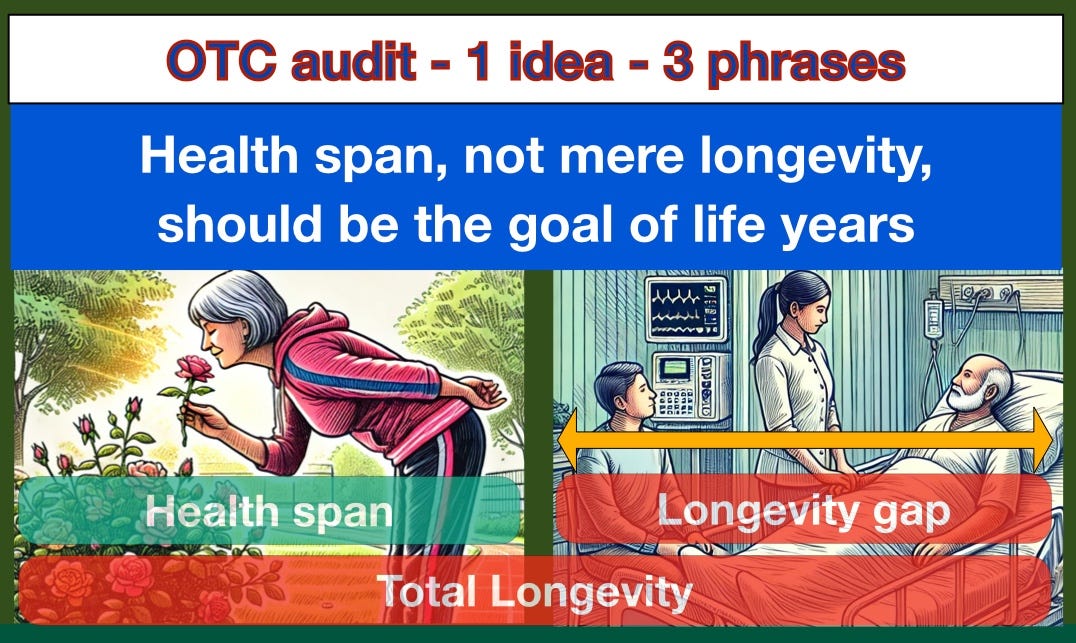
But there is a number hiding behind it: the number of years spent with chronic illness, cognitive decline, frailty or lost independence.
That gap is the problem.
The question is no longer, “How long can we keep people alive?” It is, “How long can people remain capable of living the lives they value?”
Extra years mean less when dependence and preventable suffering cast a shadow.
Mobility, cognition and autonomy matter more to daily life than a lifespan statistic.
Prolonged ill health affects individuals as also families, caregivers and health systems.
Can people control how they age? They can’t—at least, not completely.
Genetics, income, occupation, housing, education, neighbourhood design and access to healthcare all shape ageing.
Telling people to exercise and eat well is inadequate when safe spaces, affordable food, time and preventive care are unequally distributed.
The idea also assumes that illness or disability automatically diminishes a life. That is neither accurate nor fair. People can live meaningful, productive and connected lives with chronic conditions.
Exercise matters. Nutrition matters. Sleep matters. Social connection matters.
But none of them makes us immune to ageing, illness or bad luck.
We should also be careful about pitching healthspan against lifespan. Emergency medicine, effective treatment and rehabilitation can extend life and preserve function simultaneously.
The real choice is not longevity or healthspan. It is longevity with as much capability and dignity as possible.
The goal should be to preserve strength, mobility, cognition, relationships, purpose and independence—and to shorten, where possible, the period of severe decline.
Invest daily in future function.
Walk. Lift something. Eat nourishing food. Protect sleep. Maintain relationships.
In recent years, a growing body of information supports the value of social contact and relationships. Loneliness and isolation are very big problems. A sense of community goes a long way in the feeling of wellness.
Small actions will not control the future, but they can improve its probabilities.
If health span—not treatment volume—became a central measure of success, how differently would we design healthcare?
We need to attend to risks before they become disease. Can India’s highly privatised, profit-driven healthcare system ever consider this their mission?
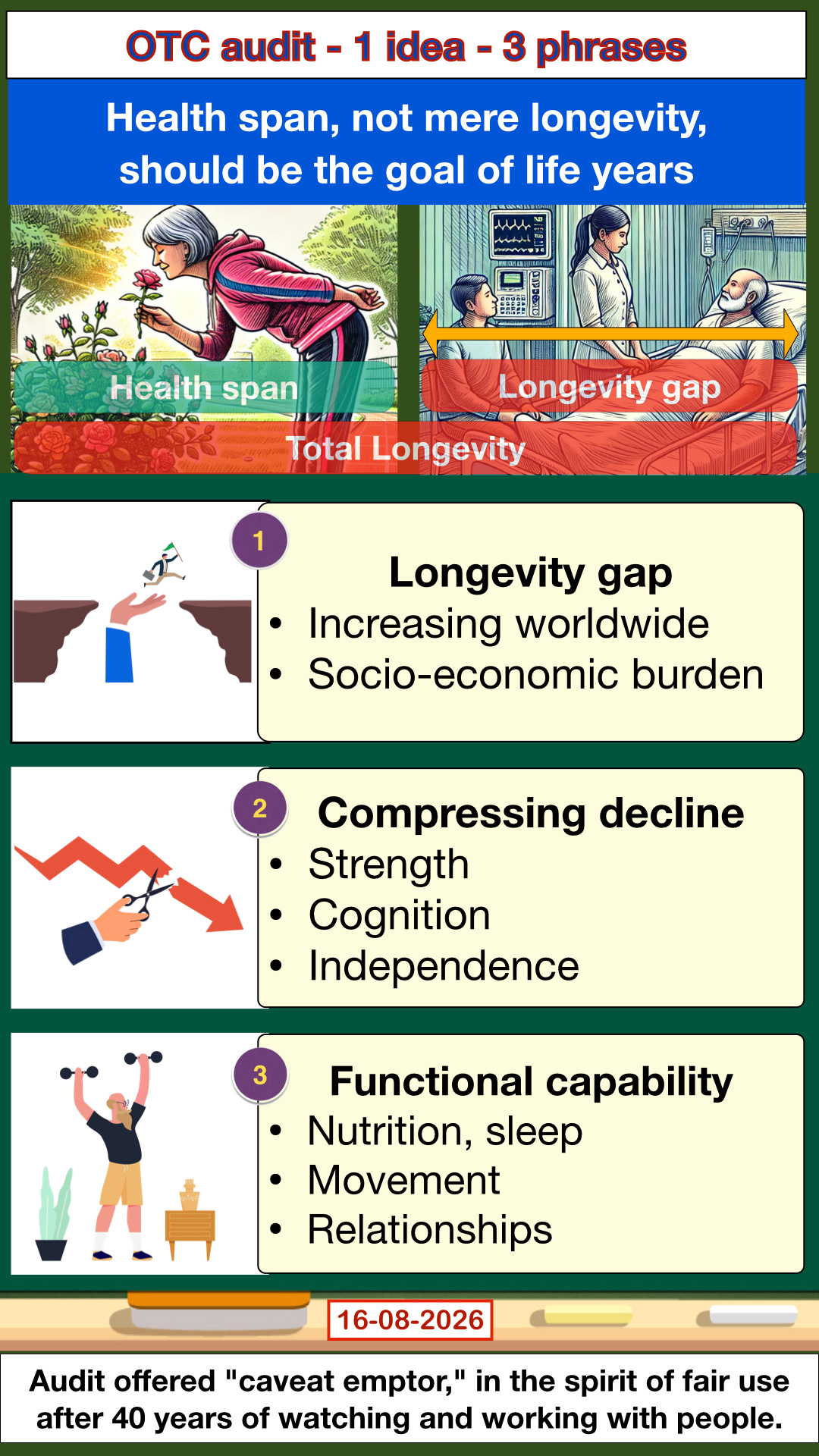
1. The longevity gap - The widening distance between how long we live and how long we remain healthy.
2. Compress the decline - Aim for a long period of capability followed by a shorter period of serious illness and dependency.
3. Function trumps years - Judge ageing by what people can still do—not merely by the birthdays they accumulate.
#ageing #health #prevention #exercise #wellness
More here:
Title: Move over, longevity: Healthspan is what we should be chasing
Author: Stuart Phillips
Source: The Conversation
Publication date: August 9, 2026

{P}rescription is free, but if you would like to show appreciation, you can make a donation at a very worthwhile cause for education of underprivileged children at Diyaghar
Thanks for reading {P}rescription! This post is public so feel free to share it.
Comments
Nothing yet. Say the first thing.
Sign in to join the conversation.