
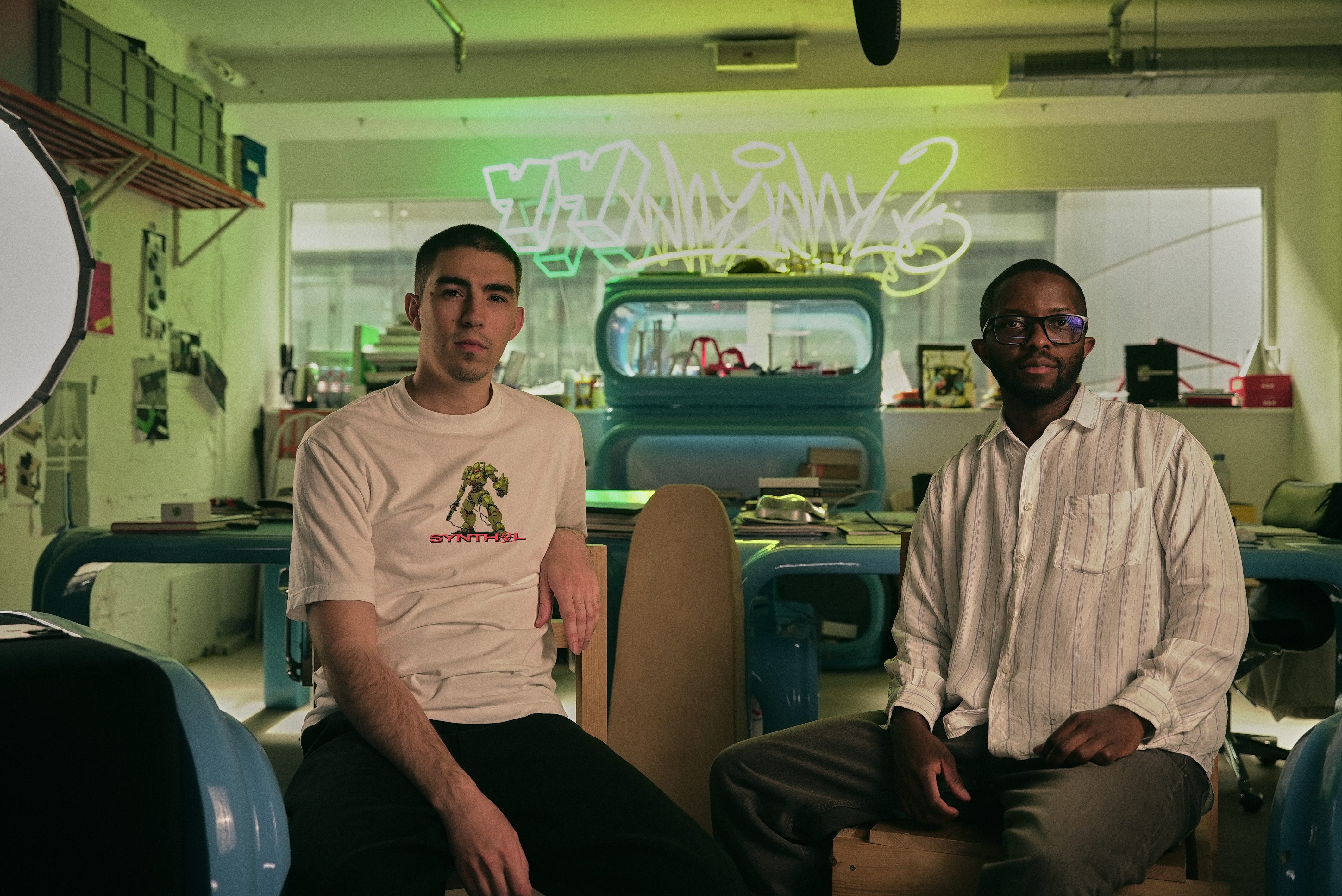
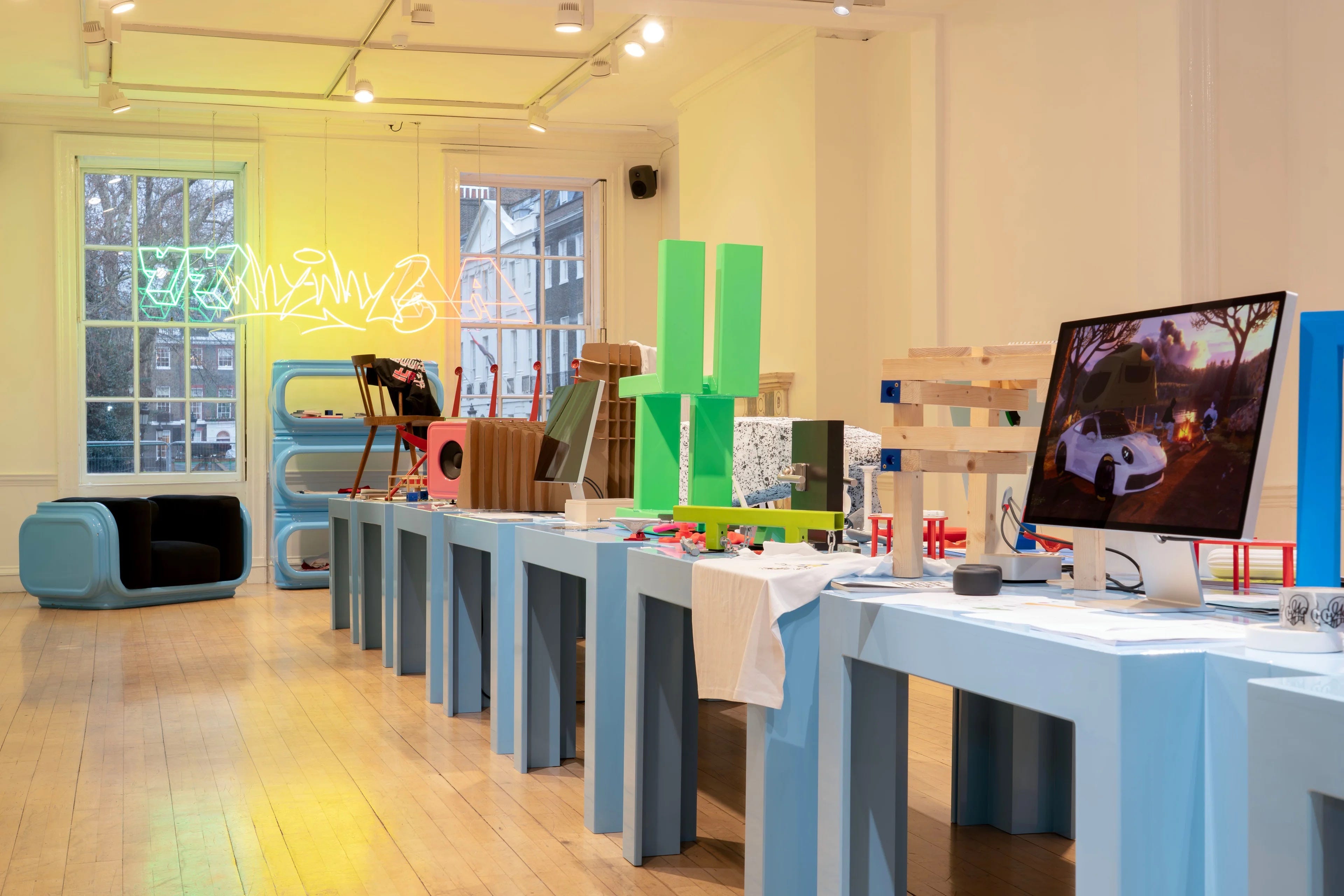
Nothing YY makes is final. Tawanda Chiweshe and Francisco Gaspar met folding clothes on a shop floor in London and went on to spend nearly a decade building a generation’s visual language together, first at Virgil Abloh’s ALASKA ALASKA, now as YY. Their objects for IKEA, Mercedes-Maybach, Vitra, and WhatsApp, and their exhibition AAAAYY: same same but different, are treated less as finished statements, more as prototypes released in-progress on purpose.
We sat down with Gaspar and Chiweshe to talk about taste, timelessness, and why the unfinished thing might be the most honest one.
What is taste, and what does it mean to you?
TC: Taste is conviction, really. Everything is subjective, and things can also just be styled. If there’s no conviction and you’re doing what other people are doing, you’re following a playbook, and that’s not taste.
FG: For me, it’s also filtering – the capacity to understand the current conditions of a moment, and filter what’s necessary for that time and context. That’s what taste is defined by, as difficult as taste is to define.
TC: You can’t buy taste. That’s what I’ll say.
How do you decide what’s worth keeping versus letting go?
FG: That’s a recurring question we ask ourselves at the studio. What we can and can’t let go of needs to be bigger than ourselves – the moment we put too much of ourselves into it is the moment we constrain the idea from existing or not.
TC: The question we always ask is, what is the best idea? And the best idea always wins – because it’s the thing that actually serves the intention of the context or application, bigger than trying to value objects and justify their existence.
What’s your taste red flag?
FG: For me, there are two big ones: explanation and language. If you try to explain an idea into the world, that’s a red flag. Language is extremely limiting; even for us, in our ability to actualize ideas across disciplines without being defined by a medium, but rather a point of view.
TC: The only way to really test an idea is to see it in multiple applications – the same language can’t exist in multiple applications, so consistency is almost a red flag. It’s about doing what’s actually right for a moment, space, time, and place. Otherwise you’re just making a brand. I’m not interested in being a brand.
Tell us about one piece you love and why.
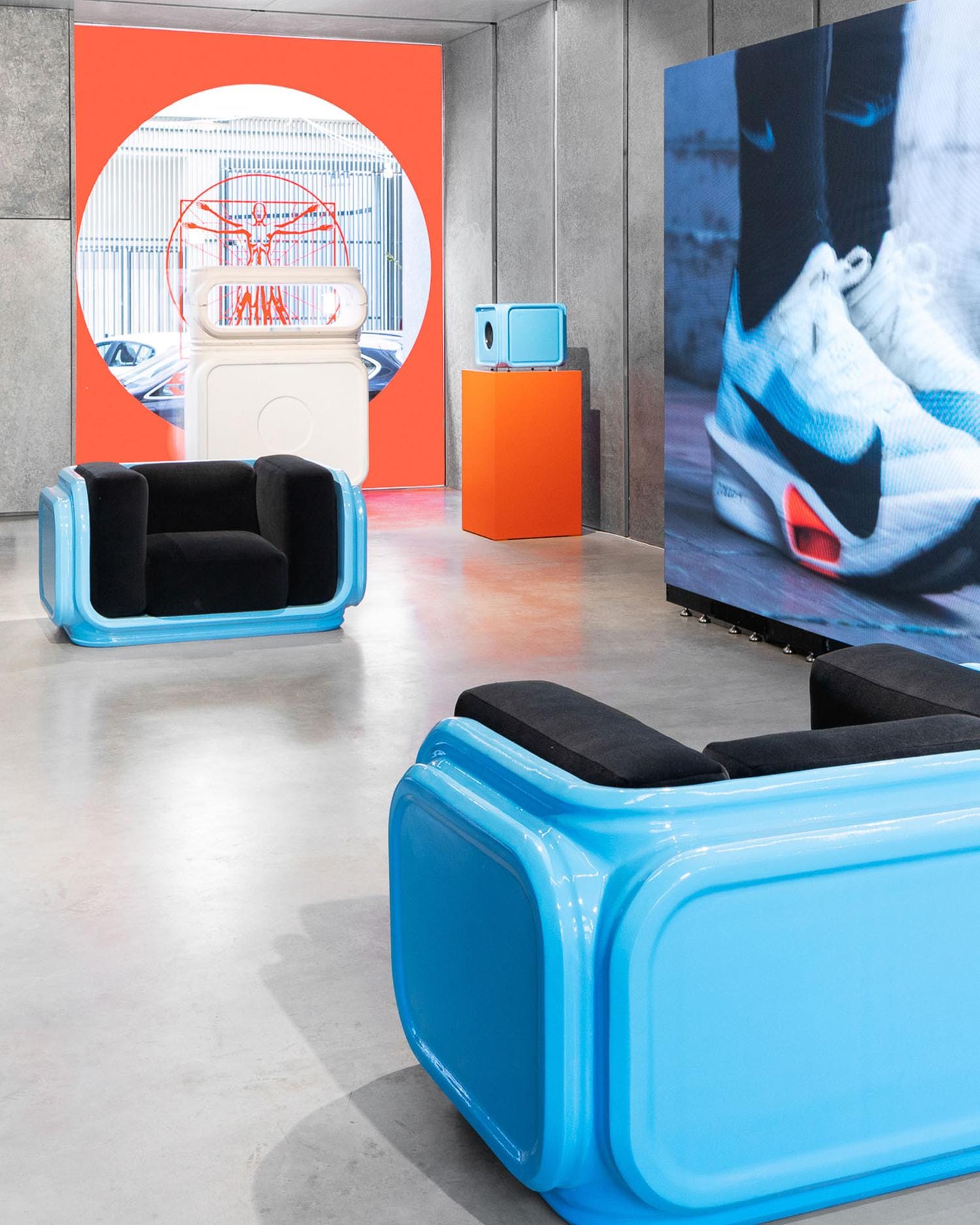
TC: I love the collection we did inspired by the K67 – a love letter to Saša [Mächtig], its inventor. Transmuting the language into different design typologies was an exercise in understanding the original intent and doing something relevant in dialogue with something iconic. The sofas, for me…I think they’re fire.
FG: The door handle we designed with Izé has the most meaning, because of the context in which it exists and the dialogue it creates relative to the space we’re trying to open up in design.
What piece in here has the best story attached to it?
FG: [One] object became a consolidation of our practice into one single piece. It started with an idea that failed, that we tried not to release – and we found another way. One of the biggest learnings: if we don’t tell people the limitations, are those limitations even real?
TC: It’s also an exercise in context – we’re not reinventing the wheel, just modifying a component to serve a different purpose. It’s the capacity to connect, iterate, reinvent.
FG: We just call it the Connector. It’s not that deep.
Walk me through how something actually gets made. Where does it start?
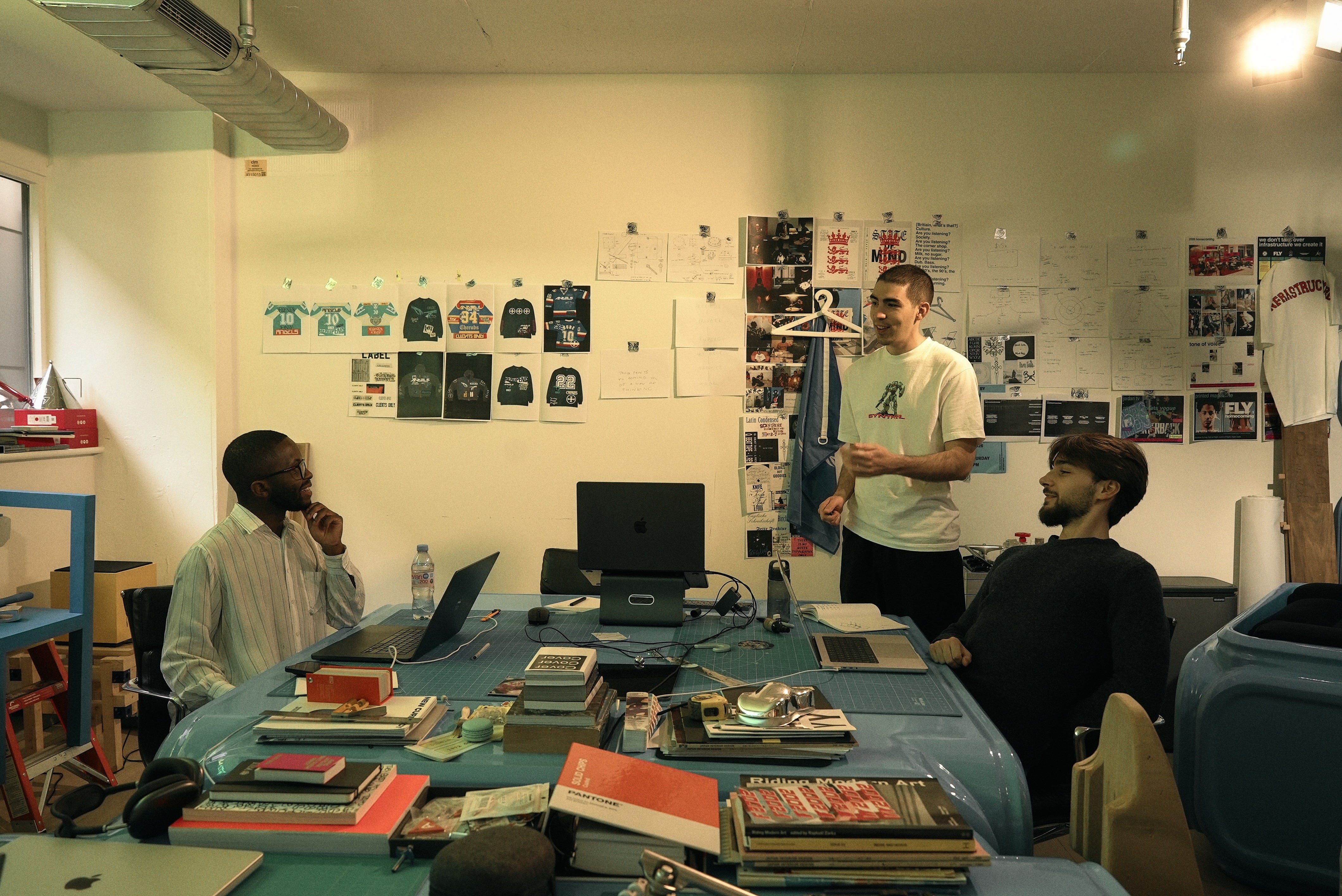
TC: It always starts with an idea. We’re interested in fleshing things out and iterating, letting one idea inform the next – an accumulation process, a snowball effect.
FG: Beyond an idea, it’s also a trigger – internal or external. Whatever we see or consume always comes back into the practice and informs what we put into the world.
What’s the last thing you made that actually surprised you?
FG: We’ve been surprised by a few ideas in the last couple of months as we progress them further. We’re so reactionary that everything feels pertinent to the moment.
TC: It’s the result of prioritizing meaning over output – we’re not trying to prescribe outcomes, the idea’s already validated internally. So you end up surprised. It’s gardening.
FG: We’re very much like kids at the studio – when you’re excited by something, you push it forward without prescribing an outcome.
How do you know when something is finished?
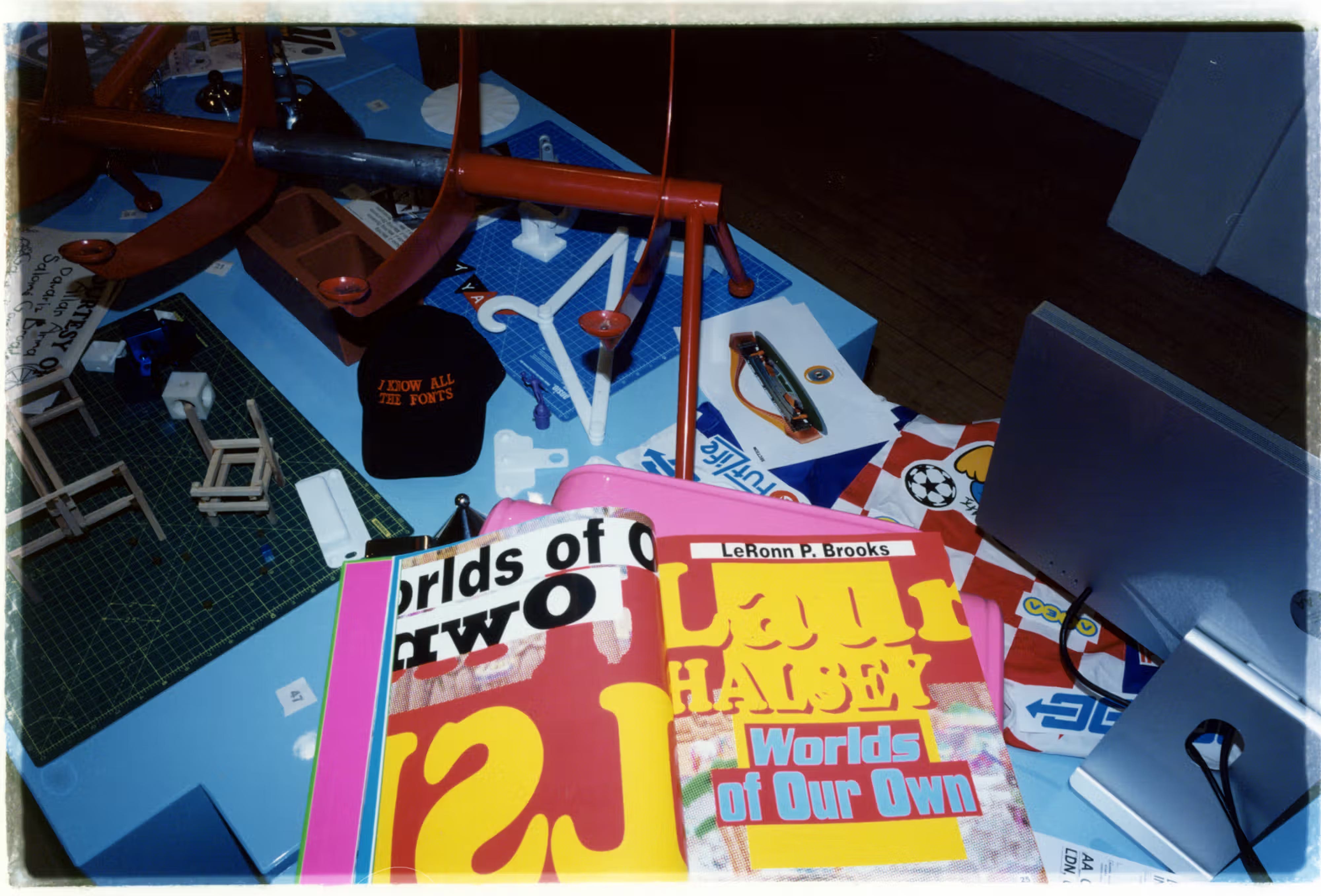
FG: I don’t think anything is ever really finished or unfinished. For the last year or so, we’ve focused on prototyping as more than a stage in the design process. It’s a worldview: the ability to iterate continuously on multiple ideas, letting everything inform each other.
TC: We’re a practice that oscillates with different outcomes feeding one another at the same time. Even if something appears finished because it’s launched, the remnants of that thread show up in another context. So it’s not finished.
FG: We publish a lot of processes – things not finished, cutting-room-floor ideas. The practice might look messy, but it’s actually very rigorous. The unfinished holds the most truth about an idea – right now, with everything happening from an AI perspective, I feel like the prototype has the most value.
TC: The prototype is the most human thing. People forget the value of the feedback loop – it’s necessary to really complete the process of developing an idea, and releasing it is part of that.
FG: This is why the Connector project is so interesting - we thought it should do something it wasn’t the best fit for. Sending it to peers, they’re using it differently than we expected, but the outcomes are incredible. At the end of the day, no one really cares about anyone’s idea. It needs to just be in the world, and you see how people react.
TC: The best idea wins.
Watch the full TASTE episode with YY on Youtube.
Thanks for reading Own The Future™
No posts
Comments
Nothing yet. Say the first thing.
Sign in to join the conversation.