
Most of Marley White’s sculptures are named after Appalachian murder ballads: old Welsh and Irish folk songs transplanted into bluegrass, with melodies upbeat enough that you don’t notice, at first, what they’re actually about.
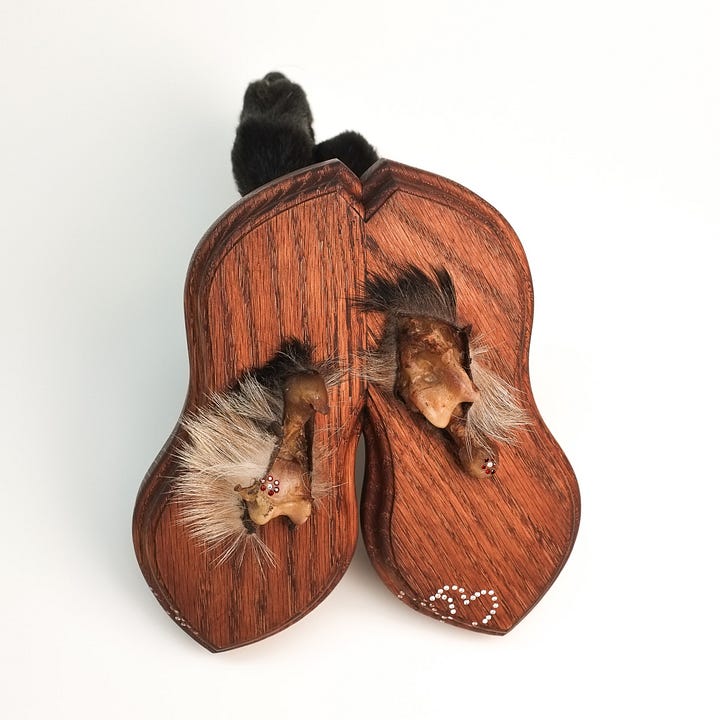
White grew up in an 1800s gristmill outside Traveler’s Rest, South Carolina, at the base of the Blue Ridge Mountains. She learned to weld with her grandfather in the marsh outside Charleston, trained in a goldsmithing studio in the Netherlands, and moved to Los Angeles, where a larger studio led her practice to expand in scope and scale. From ruby-encrusted taxidermy goat hooves to red clay dirt from back home, her singular material language examines the relationship between our outer and inner worlds.
We sat down with Marley in her LA studio to talk Bible Belt aesthetics, the holiness of filth, and the line between devilish unruliness and childlike play.
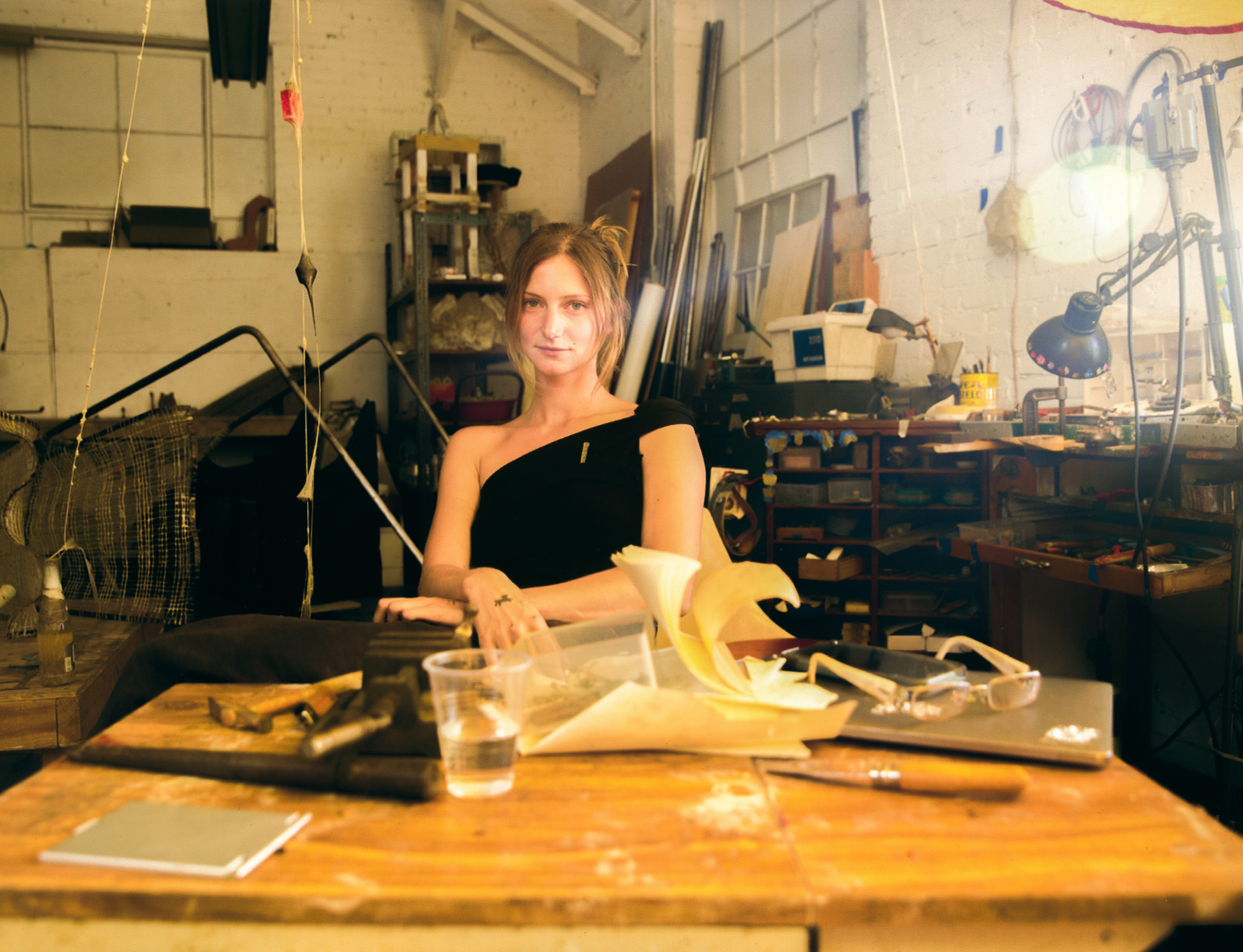
Where did you grow up?
Traveler’s Rest, South Carolina; the beginning of Appalachia. In an old gristmill used to process cornmeal, water wheel and all, about thirty minutes from the closest proper town.
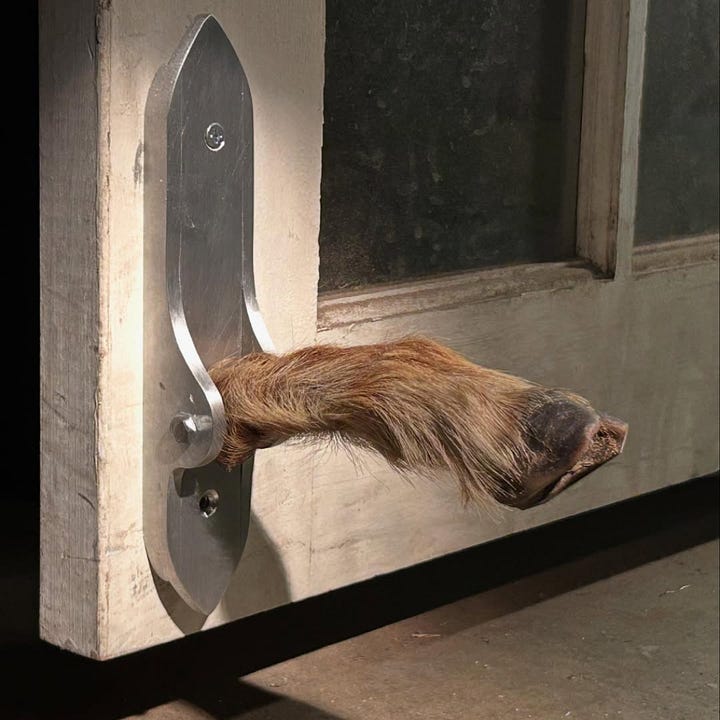
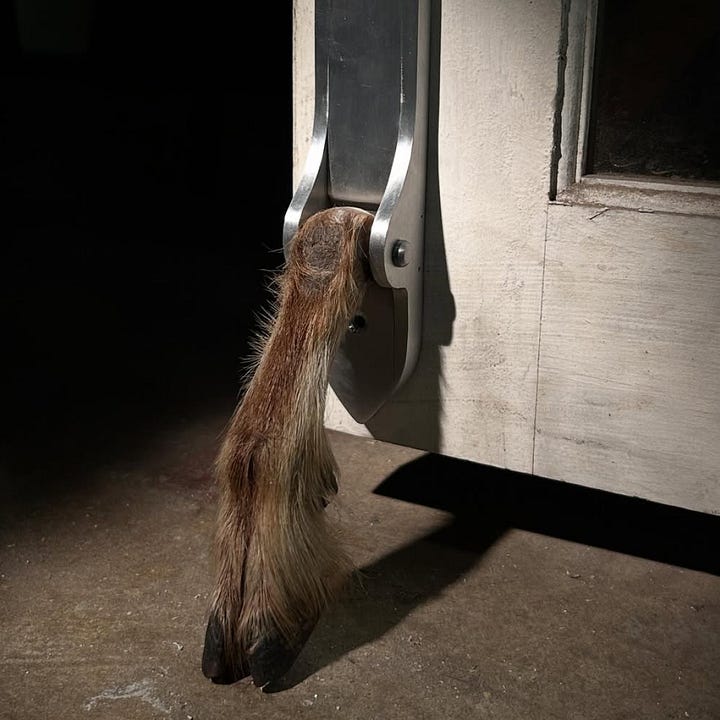
We had a lot of Tennessee fainting goats, which I hadn’t thought about when I started working with goat hooves, but my brother came in and was like, “Is this because we had all those goats?” – especially the ones propped up on the hooves, because that’s what it looks like when a fainting goat gets scared and faints. A car would drive by, they’d all faint, and somebody would come running into our house thinking they’d killed all the goats. They were all pets, no farm purpose. We started with two and ended up with twenty-one, each named after a different Harry Potter character.
Was craft part of your world growing up, or something you found on your own?
It definitely was part of the world I grew up in. I’d “help” my grandpa and his friend weld, but I was young, so I was just kind of there learning. My dad was always building, or working on cars or sheds or chicken coops, so there was a lot of physicality in the learning. My mom was an architect, so there was a lot of drawing and art early on too. I always thought I’d go into medicine, or something having to do with the body, which is interesting because so much of the work I make now is about the body, and the way the inside and outside are affected by the spaces around us.
What was it like moving to LA? Did it change how or what you make?
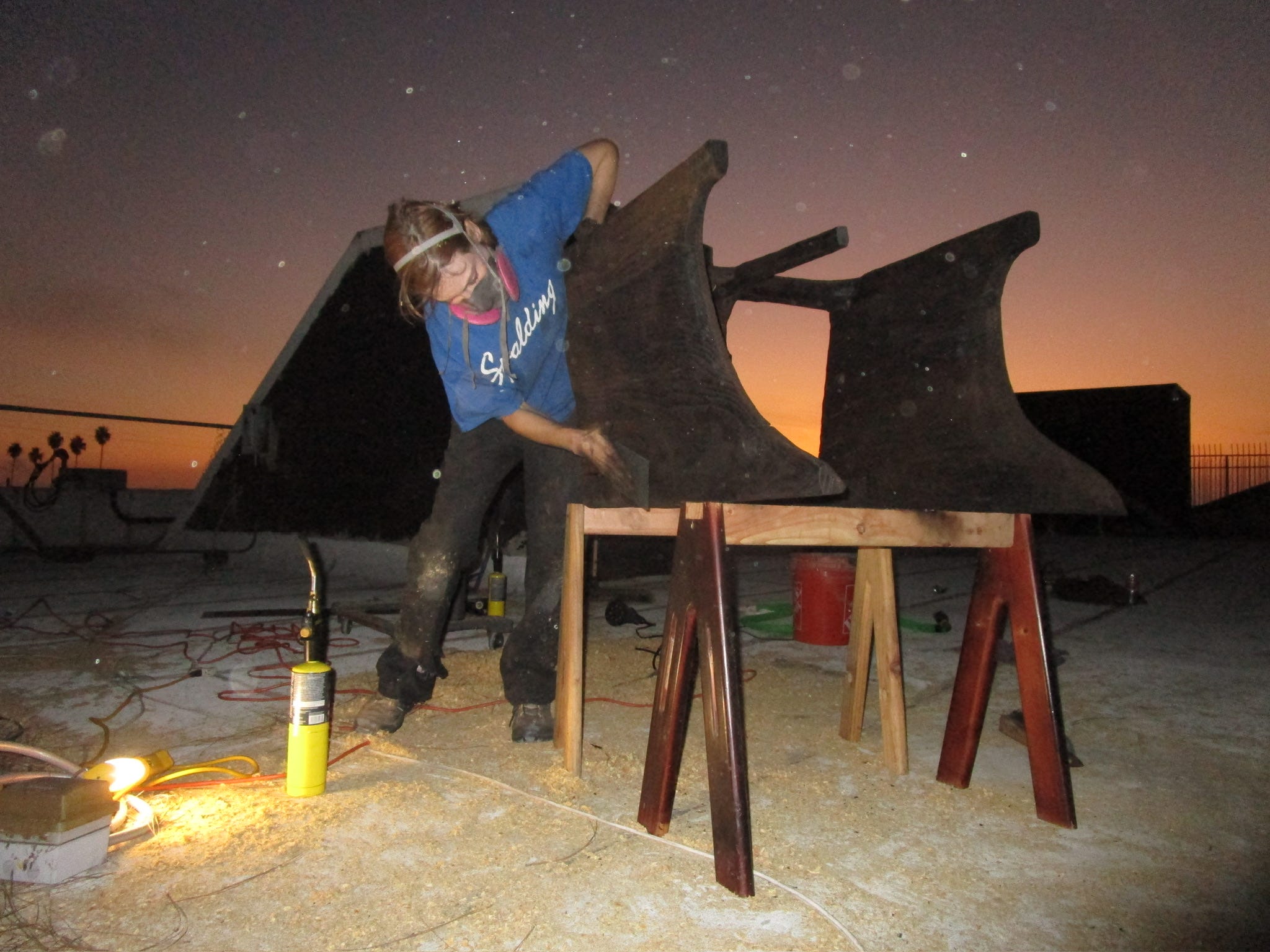
Yes; I lived in the Netherlands before this, working primarily in a silver- and goldsmithing studio, so my work was much smaller in scale, in the language of jewelry. But when I moved to LA and got this studio, I had all this space, and I immediately started making very large work. The first big piece I made was this eight-foot chair. It felt exciting to take ideas I’d been thinking about in a really internal, intimate way and make them way more spatial – to take advantage of what it means to walk through something or around it. Before, I was the inverse of that, situating all these ideas inside the body, making internal adornments.
What draws you to such tactile, bodily materials?
Where I grew up, all the dirt is red clay. When I was really young, I went to school in a city, and I’d feed the goats before school and track red clay behind me in the halls. I was so embarrassed I’d shuffle it under other people’s chairs so nobody would think I was the one leaving all the dirt. Then, I was probably nine when I heard the Gillian Welch song “Red Clay Halo,” this beautiful ballad about red clay being holy – getting into the gates of heaven in a red clay halo. The idea that the dirt and filth is what’s holy, against a biblical idea of filth and purity, I thought was such a perfect metaphor. I grew up in the Bible Belt, very Christian, and I find that a great lens for thinking about belief systems and the way they’re mimicked by our physical surroundings.
So every time I came back to LA I’d bring a bag of red clay with me through the airport; I mean, every time I go through TSA it’s the goat hooves, or the bag of dirt, or the tools. I never go through without getting stopped. Last time I had a suitcase full of summer sausage from Wisconsin, and that was just for eating. But they were very curious about it.
You mentioned goats earlier, and shepherds. Tell me more about growing up in the Bible Belt, and how that affects what you make.
I use so much biblical symbology, especially in the work I first started making when I moved back to the States. Living abroad really changed my idea of the South. I’d say it’s the fetishization of faith you find there – a belief system that’s not based in an intellectual understanding, that embeds in your body before you’re conscious of it. I think that’s such an interesting way to think about the social and political situations happening now.
I’ve been obsessed with that biblical logic of spatialized reasoning; you personify belief. When you’re in church, you take the Holy Communion and eat it, so it’s inside of you. You’re inside the body of the church, and the body of the church is a group of people. I think every piece I’ve made is playing with that logic.
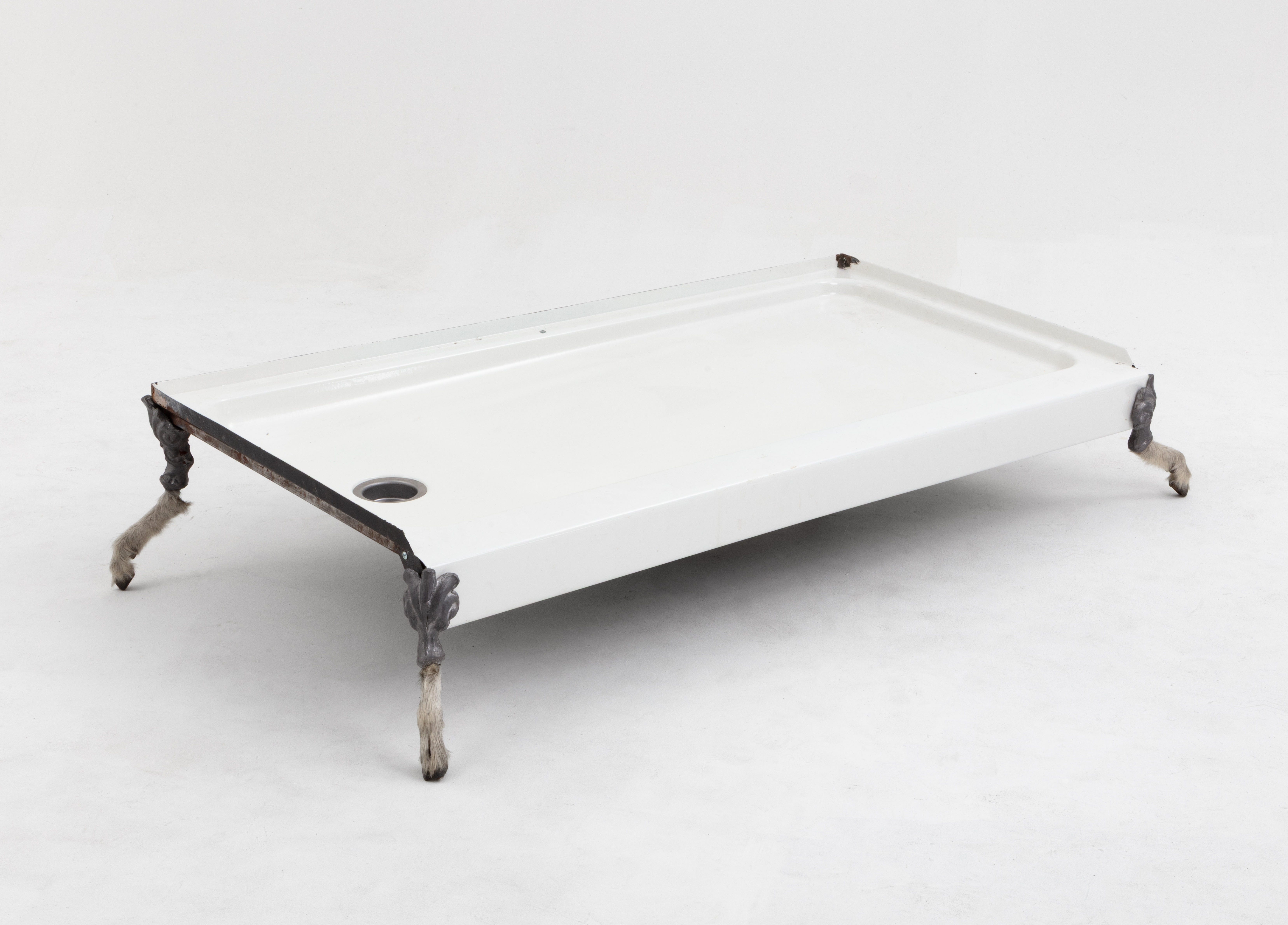
I’d also say a huge interest of mine is this idea of redneck aesthetics and how they’ve diffused from the South – in progressive areas, aesthetics with conservative origins get separated from their ideology, and that physical separation is very interesting to me. My use of goat hooves plays with that. They’re a symbol of Satan in the Bible, and I play with that idea of devilishness. Each piece has this idea of impurity; instead of evilness, it’s naughtiness, being unruly. I also use lead a lot, and the history of lead causing unruly behavior in children who’d eat it because it was sweet is just so conceptually interesting. The tub piece [from Basic.Space LA] has the lead and the hooves, giving it this devilish unruliness that also always has a childlike play about it.
Is there a piece that feels like the clearest distillation of what you’re after?
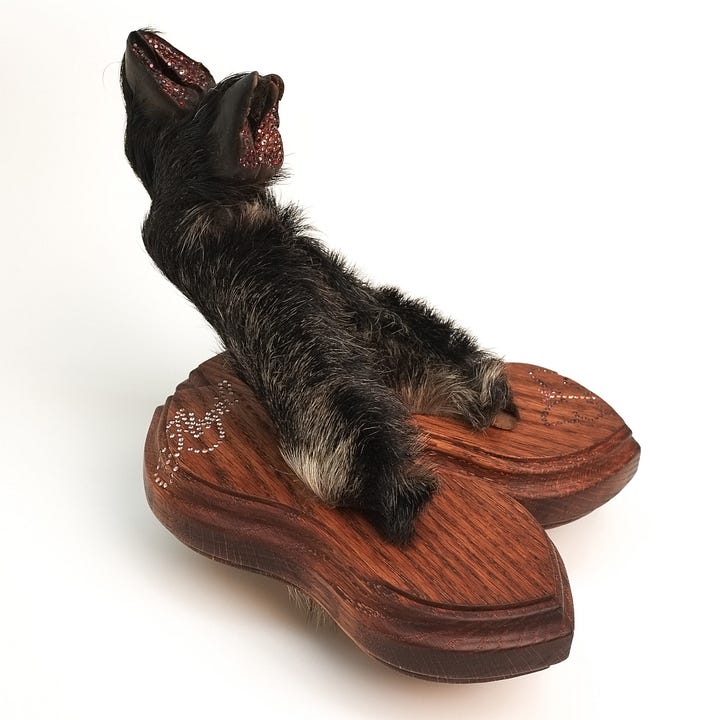
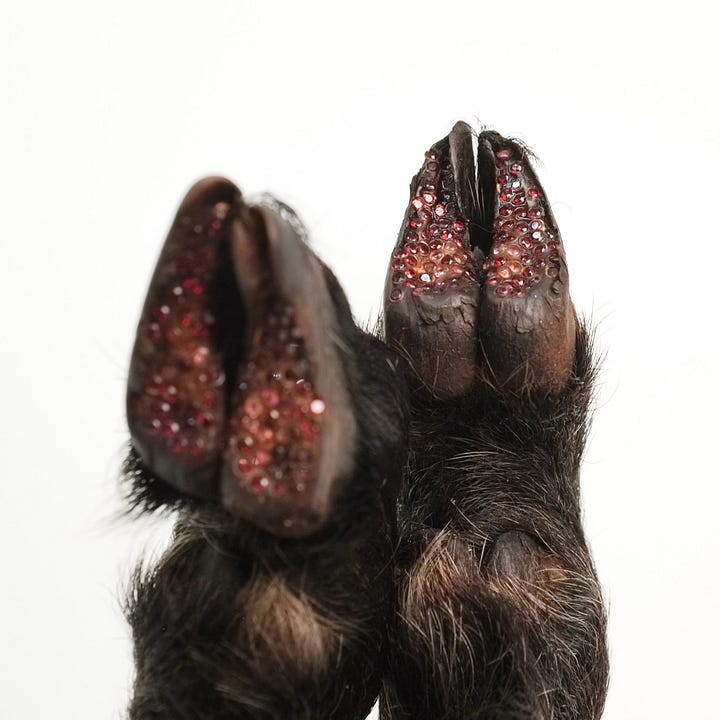
I’d say the first goat hoof. I’d been researching and thinking a lot about devilishness, using the imagery of lambs and shepherds and the parables around them. So I found somebody with taxidermied goat hooves, got them, and they sat in my studio. I’d also been using rubies for a while. I think the aesthetic of bedazzling is very interesting and dense. In traditional religious sculpture, rubies represent the blood of Christ and purity.
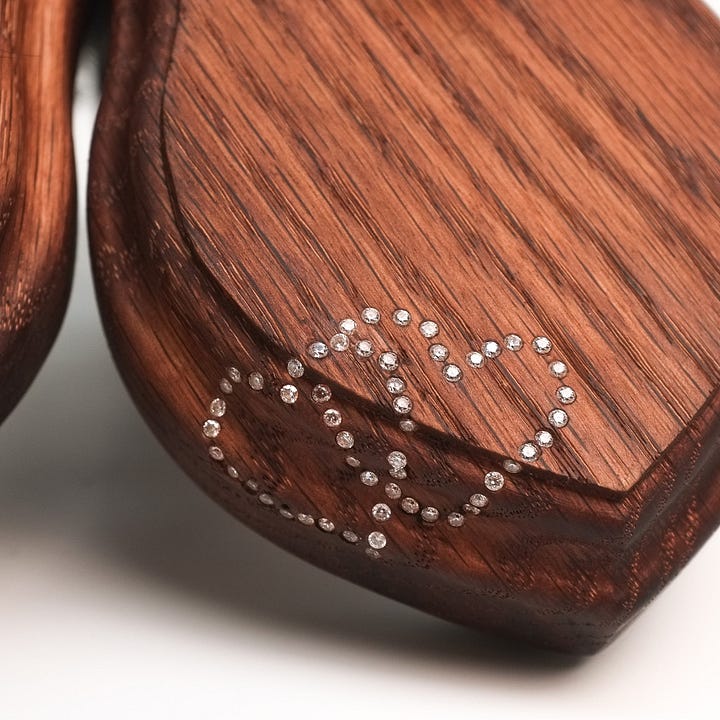
A friend curating a show came in and asked where my piece was, and I hadn’t had one. So I quickly took one of the hooves and set rubies in the palm of it, and I thought, this is the most concise thing I’ve made. A sculpture is good when it’s very concise, when it’s not over-speaking – this direct comparison of the devilish, naughty symbol, this baby little black goat hoof, against these playful rubies. It also reminds me of shirts in the South covered in rhinestones. And what’s usually stuck on the bottom of a hoof is dirt; here it was rubies, this symbol of purity and the blood of Christ. It just feels super cheeky.
Thanks for reading Own The Future™
No posts
Comments
Nothing yet. Say the first thing.
Sign in to join the conversation.