
Before the sofa could define a room, the room defined the sofa.
In the 1940s, American designer-manufacturer Harvey Probber began building upholstered seating from interchangeable wedges, quadrants and half-circles. Instead of a single, finished object, the sofa became a collection of parts that could be rearranged around a room. He called it “modular furniture.”
Probber’s designs were restrained, geometric and made for the affluent American living room. Over the next three decades, designers across Europe took the idea somewhere stranger. They pulled the sofa apart, dropped it to the floor, removed its frame and let it reshape the room around it.
New materials helped. Polyurethane foam, fiberglass and molded plastics freed upholstered furniture from the timber frames, legs and springs that had long dictated its form. At the same time, a new generation of designers was rejecting the formality of the postwar interior. Modularity offered another way to live: less prescribed, more open to change - for one Florence collective, it offered something closer to an argument.
Superstudio took modularity somewhere more theoretical. Founded in 1966 by a handful of twenty-something architecture students in Florence, they took one look at the postwar world and were unconvinced. To them, Modernism was a broken promise of something better that never arrived. American sci-fi and the street politics of the 1960s made better company. They named themselves Superstudio (no false modesty) and helped kickstart Italy’s radical architecture movement within the decade, building “anti-architecture” instead.
Co-founder Adolfo Natalini said, “If design is merely an inducement to consume, then we must reject design...if architecture is merely the formalization of present unjust social divisions, then we must reject [it] until all design activities are aimed towards meeting primary needs. Until then…we can live without [it].”
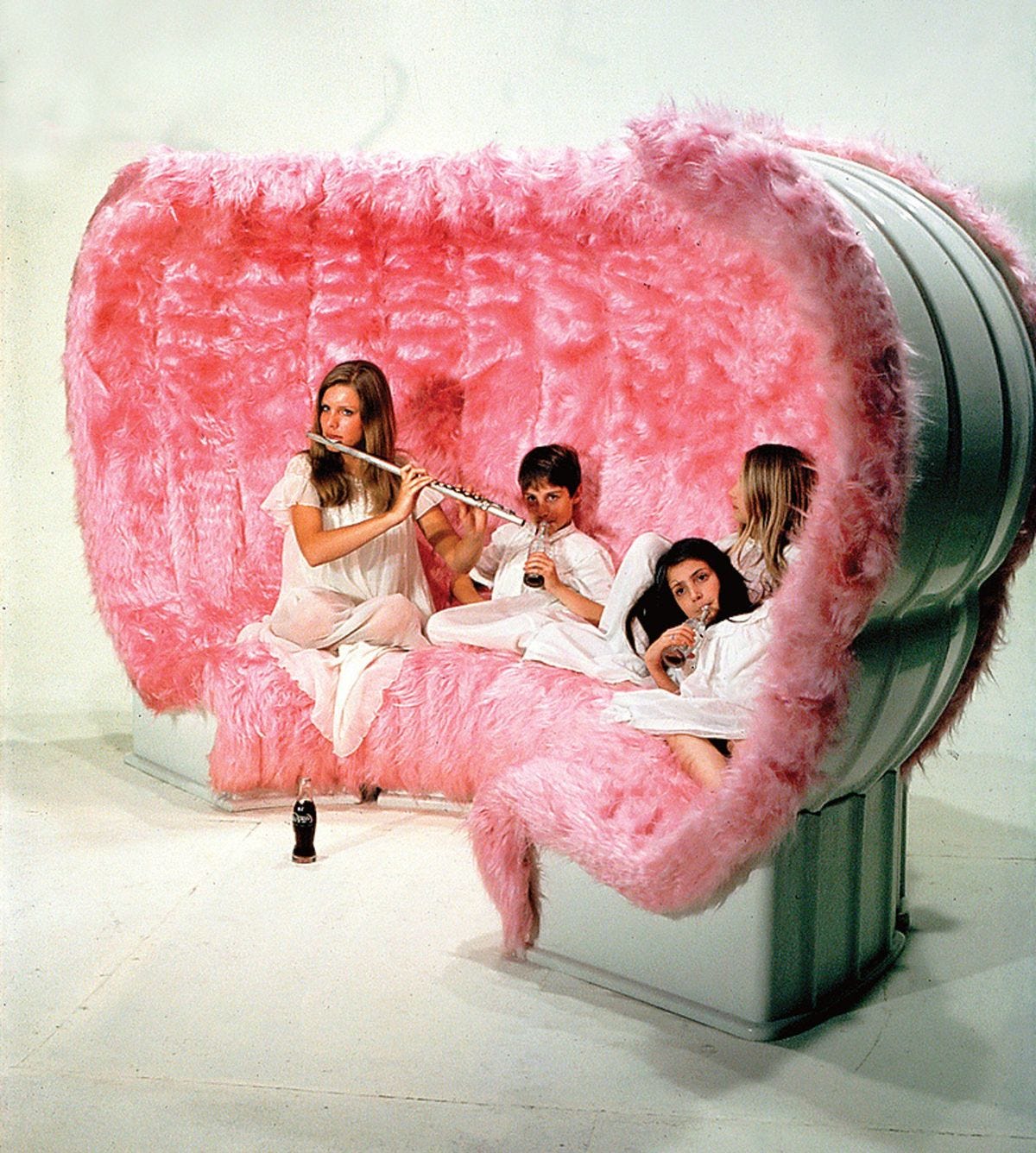
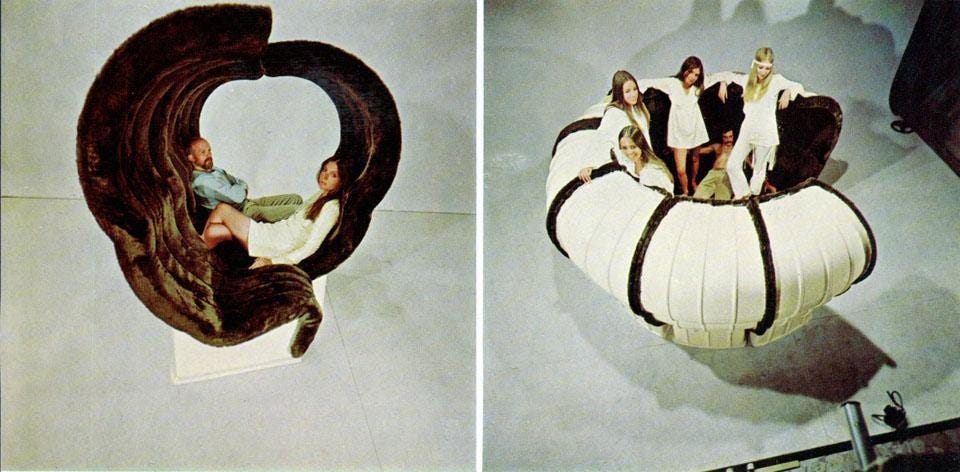
The Sofa Bazaar, produced by Giovanetti in 1969-70, put this idea into something sittable: five identical modules in molded polyester and fiberglass, wrapped in vibrant pink faux fur, curling into a sculptural wave that dissolved the line between furniture and architecture.
The group lasted only twelve years, disbanding in 1978 and scattering mostly into academia, but its place in postwar design history borders on the mythic: at its height it exhibited everywhere from the Museum of Modern Art to the Walker Art Center in Minneapolis, and echoes of its imagery still turn up in the work of Rem Koolhaas, Steven Holl and Bjarke Ingels.
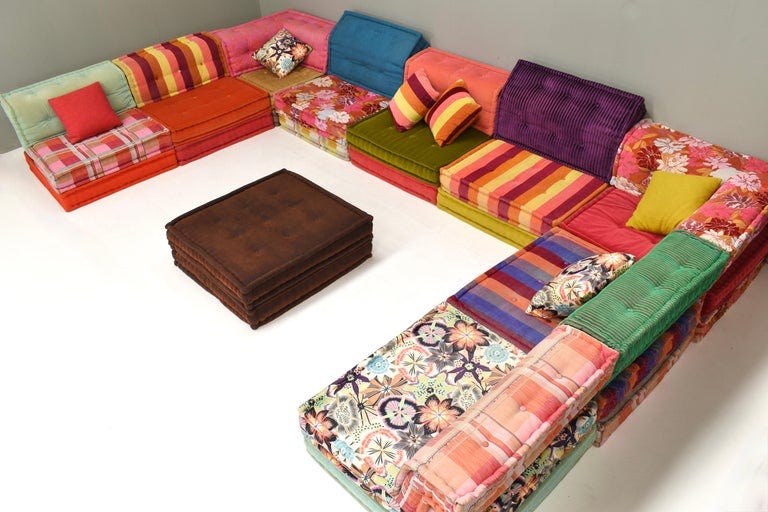
Hans Hopfer’s Mah Jong sofa - nicknamed for the way its three-piece modular units interlock - designed for Roche Bobois in 1971, took modularity closer to the floor. Low upholstered cushions could be stacked, scattered or joined into sprawling configurations, with no prescribed composition. Hopfer supplied the pieces; the owner decided what the sofa became.
Its adaptability has also kept it firmly in the cultural conversation, reimagined in fabrics by Missoni, Kenzo Takada and Jean Paul Gaultier - and most recently name-checked in Charli xcx’s 2026 album Music, Fashion, Film. A radical ’70s seating system has become its own shorthand for taste.
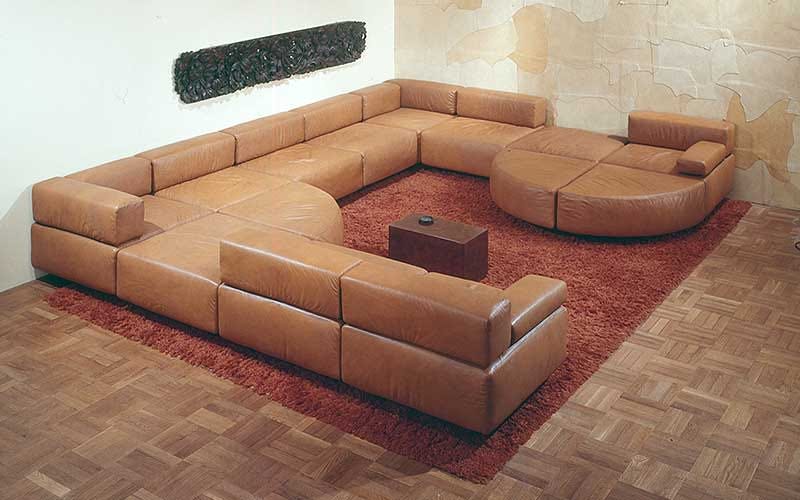
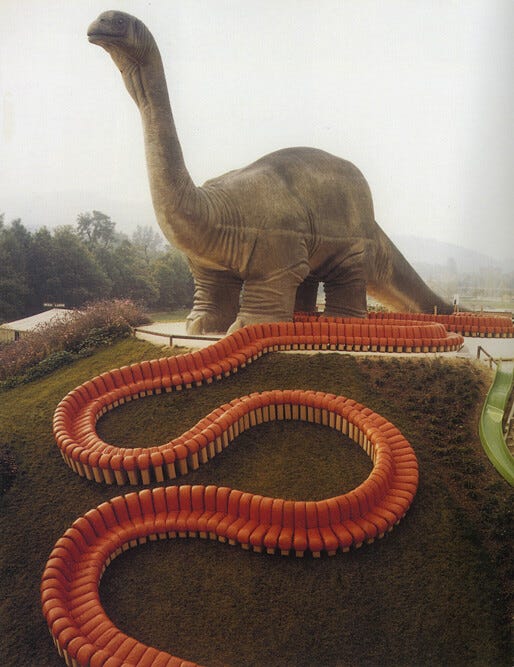
A year later, de Sede’s DS-600 stretched the idea in another direction. Designed by Ueli Berger, Eleonore Peduzzi-Riva, Heinz Ulrich and Klaus Vogt, the leather sectional was conceived as a chain of individual upholstered elements connected by zippers. Each could be added or removed, allowing the sofa to curve, coil and extend through a room.
Nicknamed the “Snake,” the DS-600 replaced the fixed silhouette of a sofa with something almost continuous. Its length was determined not by the designer, but by the number of modules assembled - seating that could bend around architecture rather than conform to it.
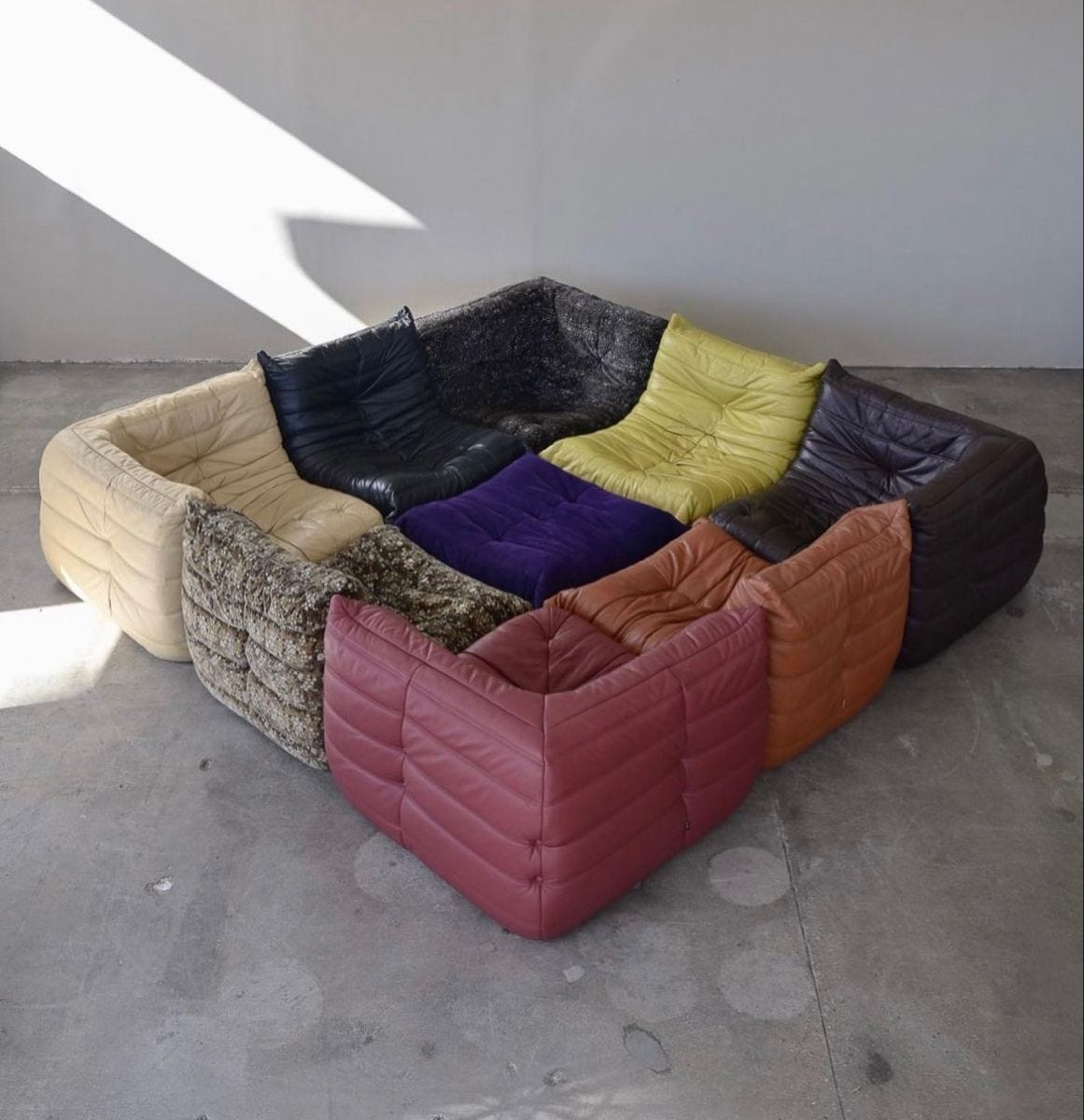
Michel Ducaroy stripped the sofa back even further with Togo, introduced by Ligne Roset in 1973. With no timber frame or legs, layers of foam formed its structure, folded into the deeply pleated silhouette Ducaroy reportedly compared to a tube of toothpaste bent back on itself. Individual seats, corners and ottomans can expand the form across a room, turning an experiment in all-foam construction into one of the twentieth century’s most recognizable sofas.
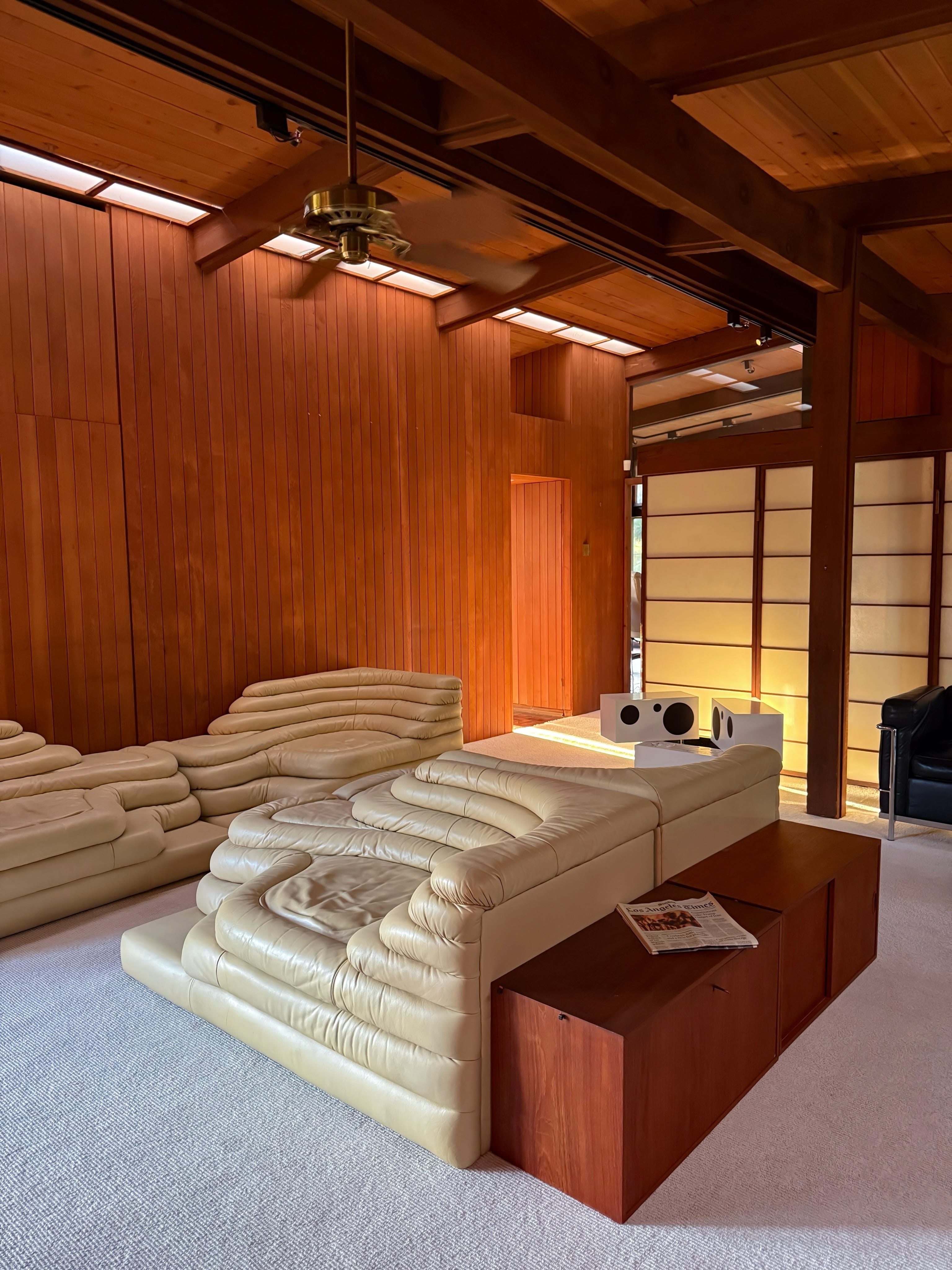
That same year, Swiss architect Ubald Klug designed Terrazza for de Sede. Graduated tiers of leather rise like steps, inspired by the terraced Alpine landscapes of Switzerland. Two modules placed together form a valley; separated, each becomes its own small mountain. The New Yorker called it “a monstrous thing” when it debuted.
The sofa was no longer simply occupying the room. It was creating its own terrain.
Pierre Paulin pushed the idea furthest with Dune, developed between 1968 and 1972: an enormous system of undulating foam-covered sections with tables embedded between its rises and depressions. Rather than a collection of individual seats, Dune proposed an entire interior organized around the body: a place to lounge, gather, and face one another. Paulin intended Herman Miller to manufacture it, but its scale and cost kept it from serial production.
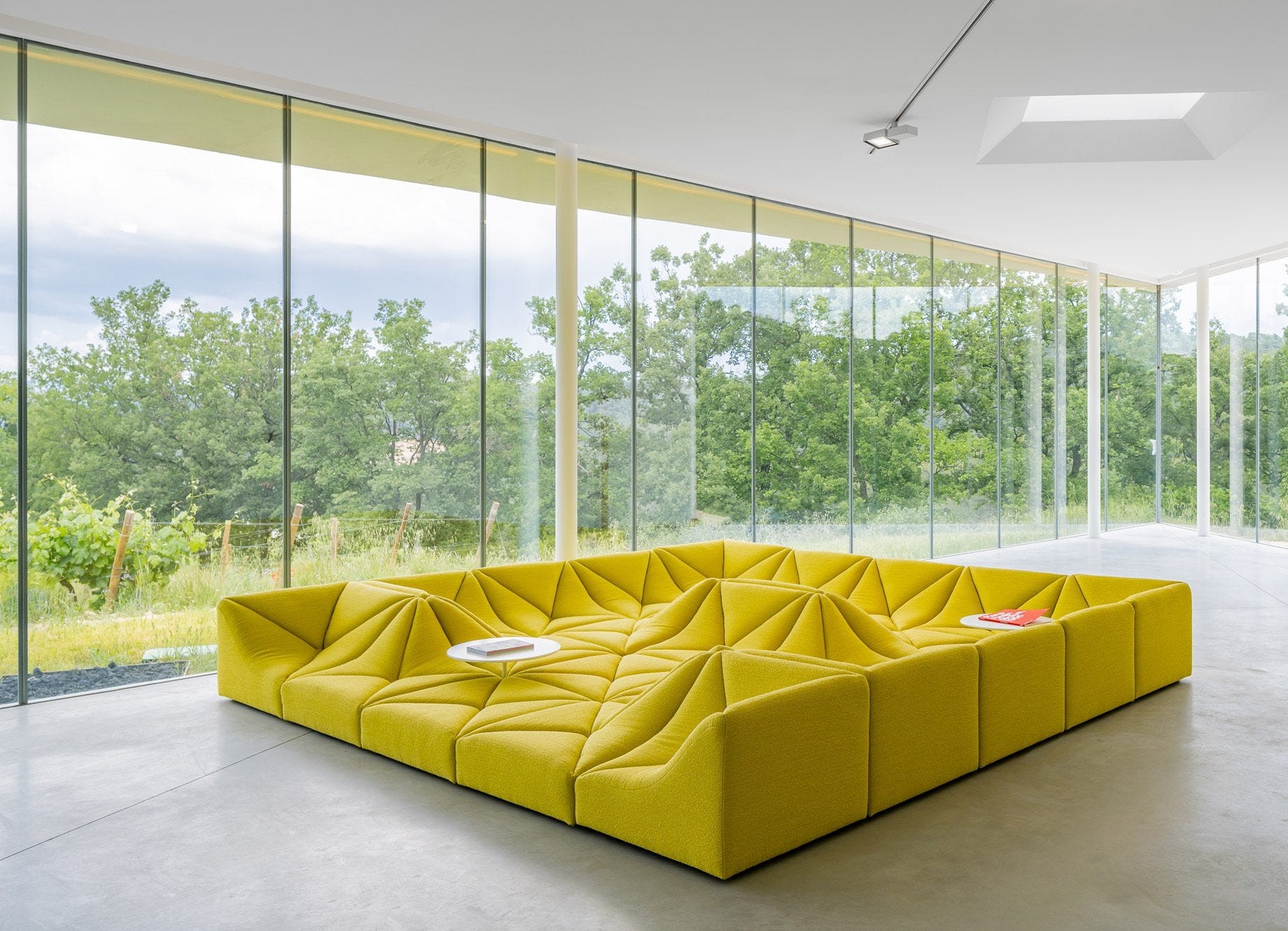
Decades later, his family brought Dune into production through Paulin Paulin Paulin, and the once-unrealized experiment became a cult classic. Frank Ocean famously owns a teal version, while the sofa has since appeared in the homes and creative worlds of Travis Scott, Rosalía, and Justin Bieber.
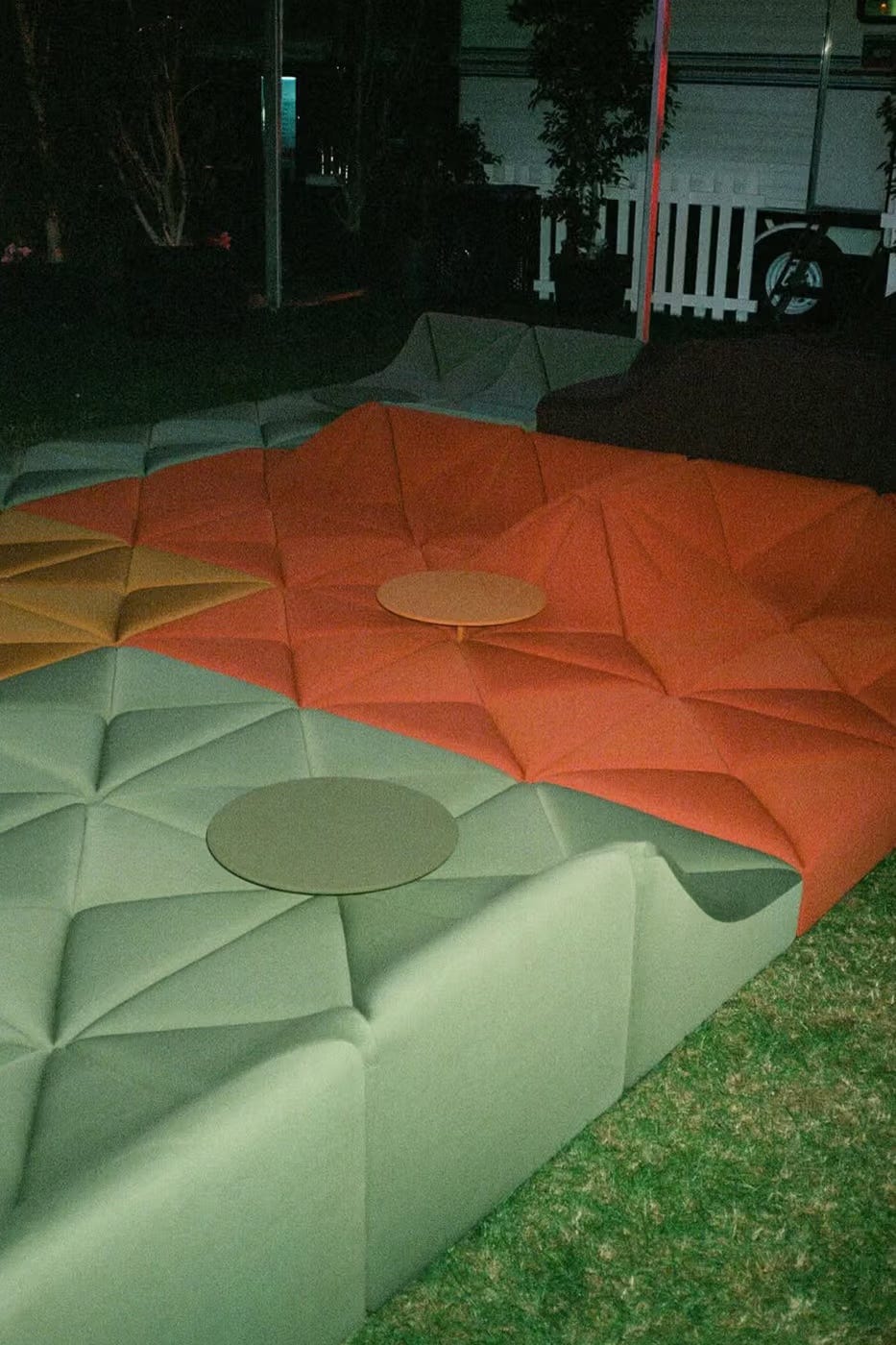
Its appeal goes beyond status. More than fifty years later, Dune is still being used as Paulin intended - as a place for people to gather. “I think it’s great to offer this opportunity in design… for furniture to bring people together and open discussion,” says Benjamin Paulin, cofounder of Paulin Paulin Paulin. (Watch Benjamin’s episode of TASTE here).
In three decades, modular furniture moved from Probber's orderly American system to Superstudio's faux-fur manifesto, Hopfer's free-form cushions, de Sede's endlessly extendable Snake, Ducaroy's all-foam construction and the upholstered terrain of Klug and Paulin. The forms changed. The idea didn't: the living room no longer had to stay still.
Thanks for reading Own The Future™
No posts
Comments
Nothing yet. Say the first thing.
Sign in to join the conversation.