
Craftsmanship was never secondary to form in 20th-century Brazil. It was the first principle.
Brasília is the proof: the capital didn’t exist until 1956, when President Juscelino Kubitschek appointed Oscar Niemeyer chief architect and sent him to raise a city out of open savanna in under four years. Working alongside urban planner Lúcio Costa, Niemeyer answered with what he called tropical modernism - sweeping concrete curves and monumental civic spaces that expanded the language of European modernism rather than simply repeating it.

He often described his architecture through the shapes of mountains, rivers, and the human body, allowing Brazilian landscape and culture to define forms distinct from their precedents.
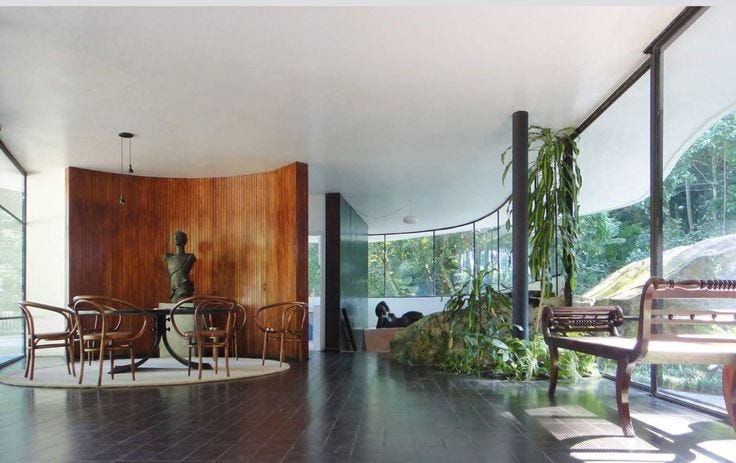
Niemeyer wasn’t the only one commissioned to build something from nothing. Jorge Zalszupin, Sergio Rodrigues, and others were brought in to furnish Brasília as it rose, translating Niemeyer’s vision into native hardwoods, woven cane, leather, and natural fiber.
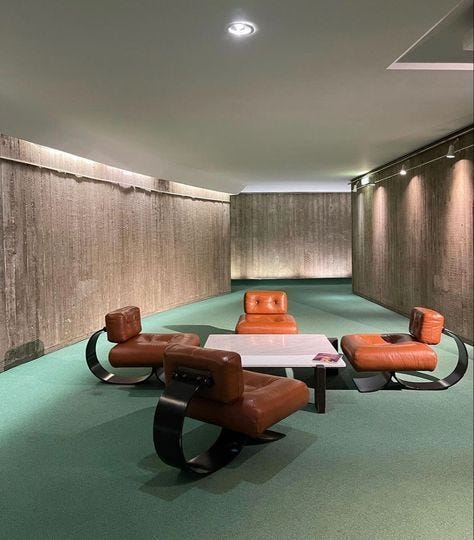
What emerged wasn't simply a style, but a way of thinking about objects: craft as a vessel for memory rather than decoration. The designers who followed inherited that spirit, each reshaping it in different ways.
CRAFT AS INHERITANCE
The 1970s Cubo Armchair belongs to an earlier chapter of that inheritance. Designed by Jorge Zalszupin - a Polish architect who emigrated to Brazil and fell in with Niemeyer - it takes its name literally. A cuboid form, scooped out at its core, reduced to volume and void.
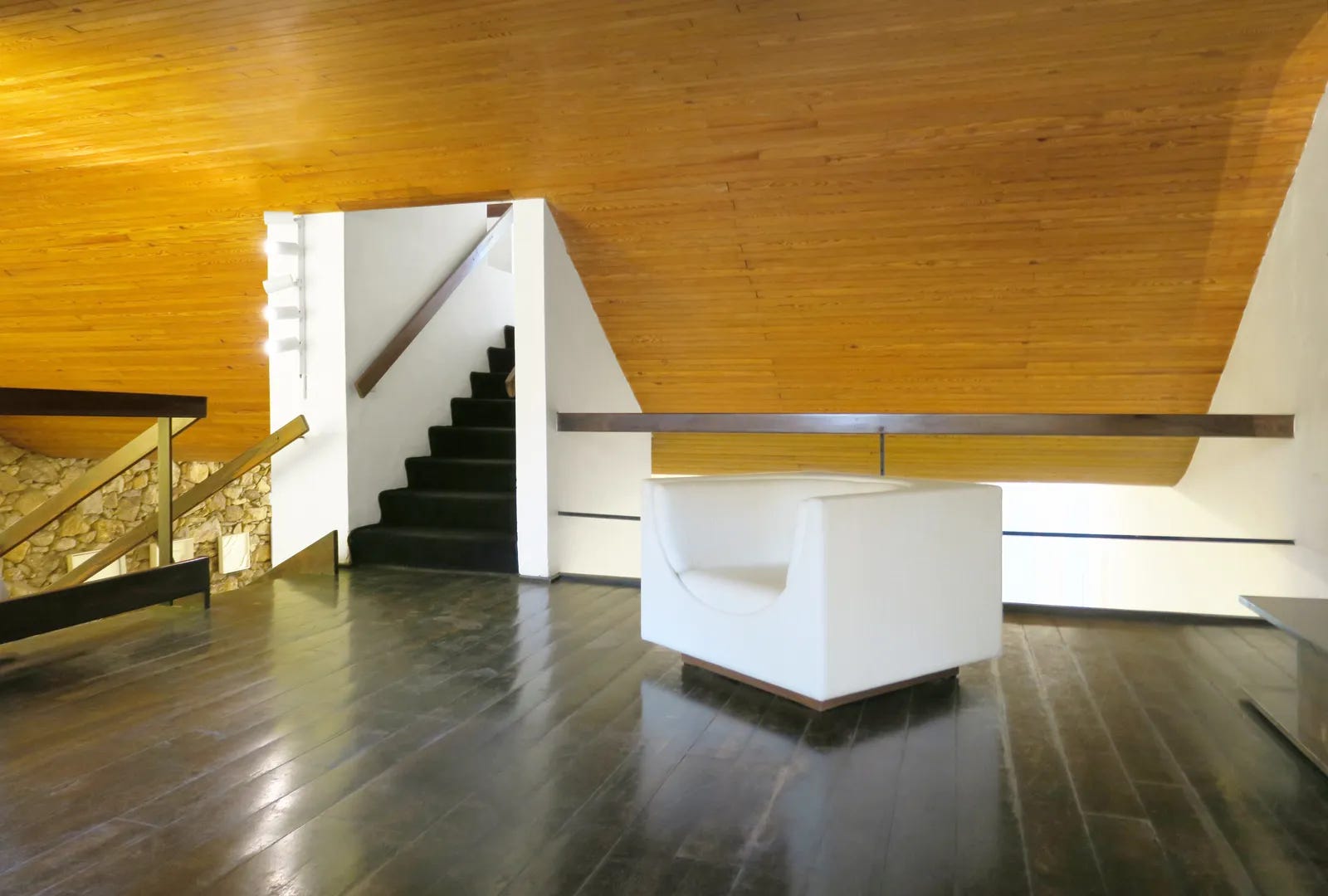
Postwar Brazil gave Zalszupin a career few architects get to build twice. He founded L’Atelier in 1959, drawing on the country’s native hardwoods and its deep bench of skilled cabinetmakers to push modernism somewhere new.
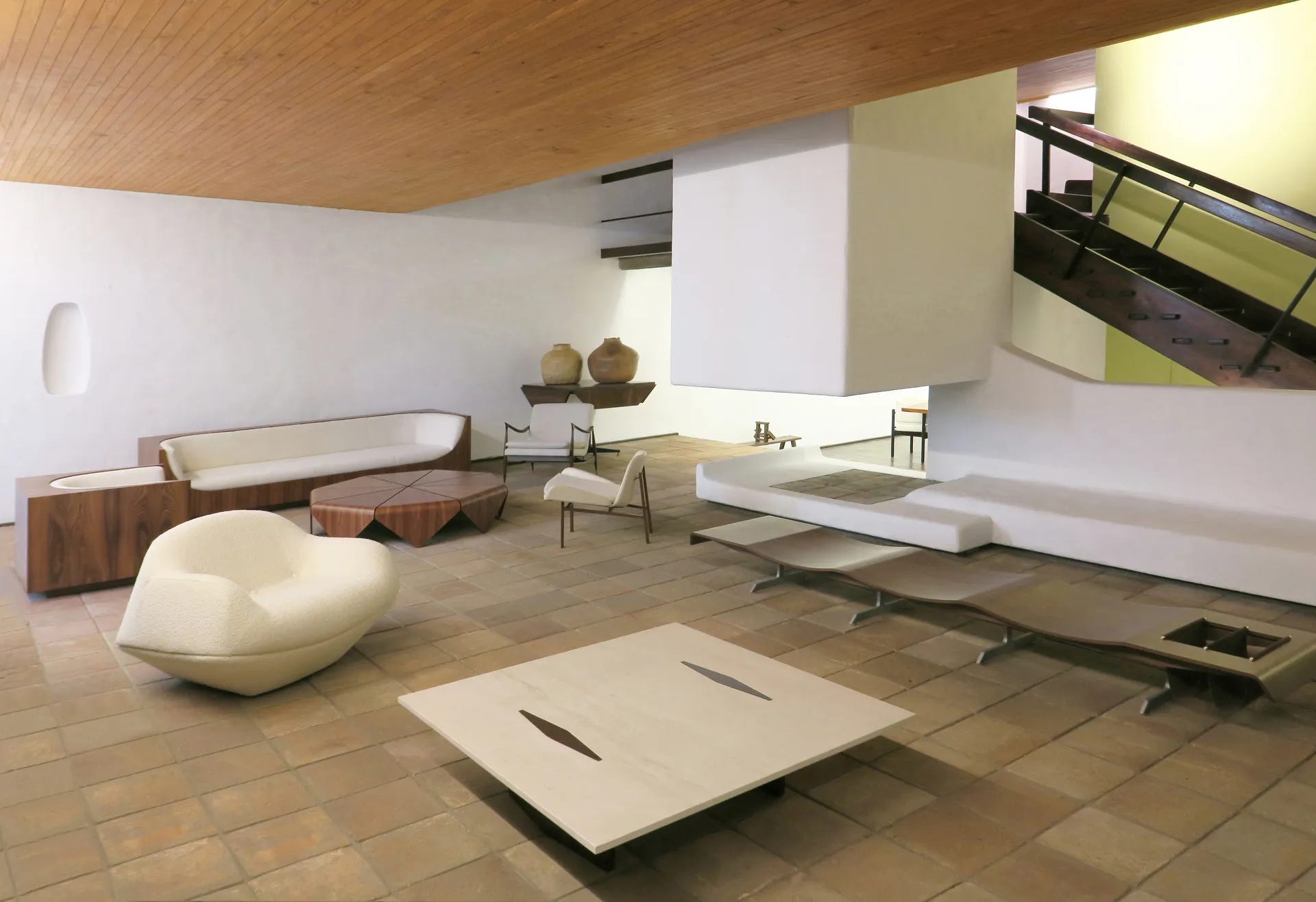
He wasn’t working alone. Jean Gillon left Romania for São Paulo in 1956, and by 1961 had turned from set and tapestry design toward furniture, founding the studio that would grow into Italma Wood Art. His 1968 Jangada chair and ottoman take their name and silhouette from the traditional fishing raft: a trapezoidal rosewood frame strung with woven mesh that cradles a single leather cushion, the whole construction as legible as a knot.
Sergio Rodrigues rounded out the group from his own studio, Oca, founded in 1955. Often credited as the father of Brazilian furniture design - his Mole chair entered MoMA's collection in 1974 - Rodrigues built his Magrini stools and Yara bedside tables from the same jacaranda and leather Zalszupin and Gillon were already working in. Three architects and studios, one shared approach: native wood, visible joinery, and cabinetmakers skilled enough to hold both together.
THE OBJECT AS MEMORY
Sixty years later, the next generation of designers are carrying that approach forward.
PROSA, founded by Julia Rovigo and Gabriel Pesca, treats furniture as a form of research. Their pieces carry traces of cultural and emotional memory, but never through symbolism alone. Instead, memory emerges through construction itself - visible joints, carved surfaces, and materials that retain the evidence of how they were shaped.
Their furniture resists the polished certainty of finished products. Each piece feels closer to an ongoing study, an object that reveals its own making rather than concealing it.
MATERIAL WITHOUT HIERARCHY
Pedro Ávila was born in Brasília, the city built on Niemeyer’s belief that concrete could curve like it was breathing. Working across sculpture, casting, digital modeling, and woodworking, Ávila treats material less as a constraint than as an open question. Bronze, parchment, stainless steel, stone, and wood each retain their own character rather than disappearing into a seamless finish.
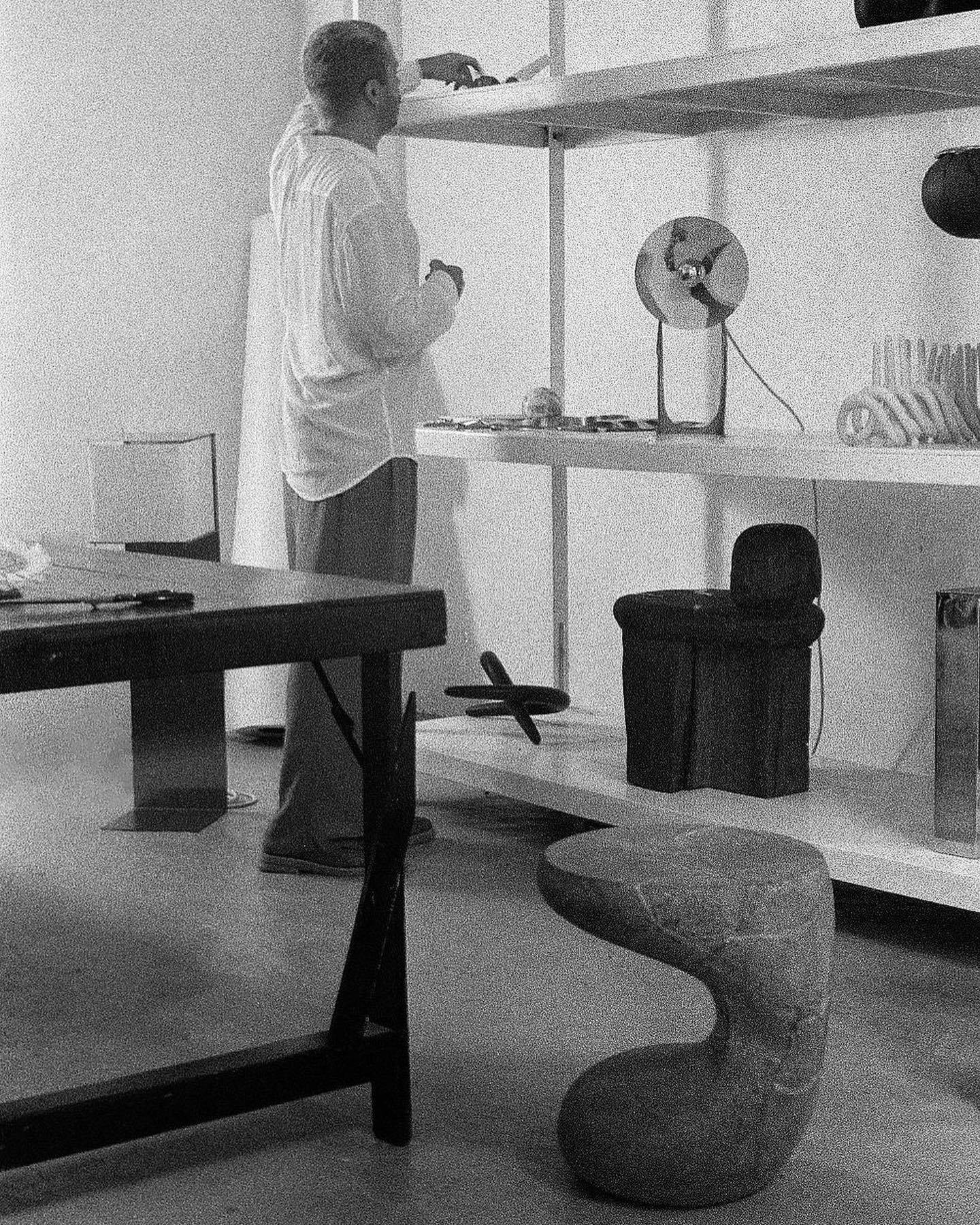
That range grew into a body of sculptural furniture where bronze, stone, metal, and fiber sit inside the same piece, each material left to keep its own texture rather than smoothed into a single finish.
The Libra Wall Lamp, from his Satellite collection, balances a sheet of parchment against a folded stainless steel support held in place by a simple metal scroll. Switched on, the parchment glows softly while the steel throws a faint shadow of its own geometry onto the wall. Rather than hiding the meeting point between materials, the lamp lets each remain legible.
WHAT SURVIVES THE HAND
Sonia Gomes came to sculpture through textiles - self-taught until her forties, working out of Caetanópolis, Brazil’s textile capital. Her practice has always run on improvisation: mending, binding, wrapping, turning discarded fabric into something that no longer looks discarded.
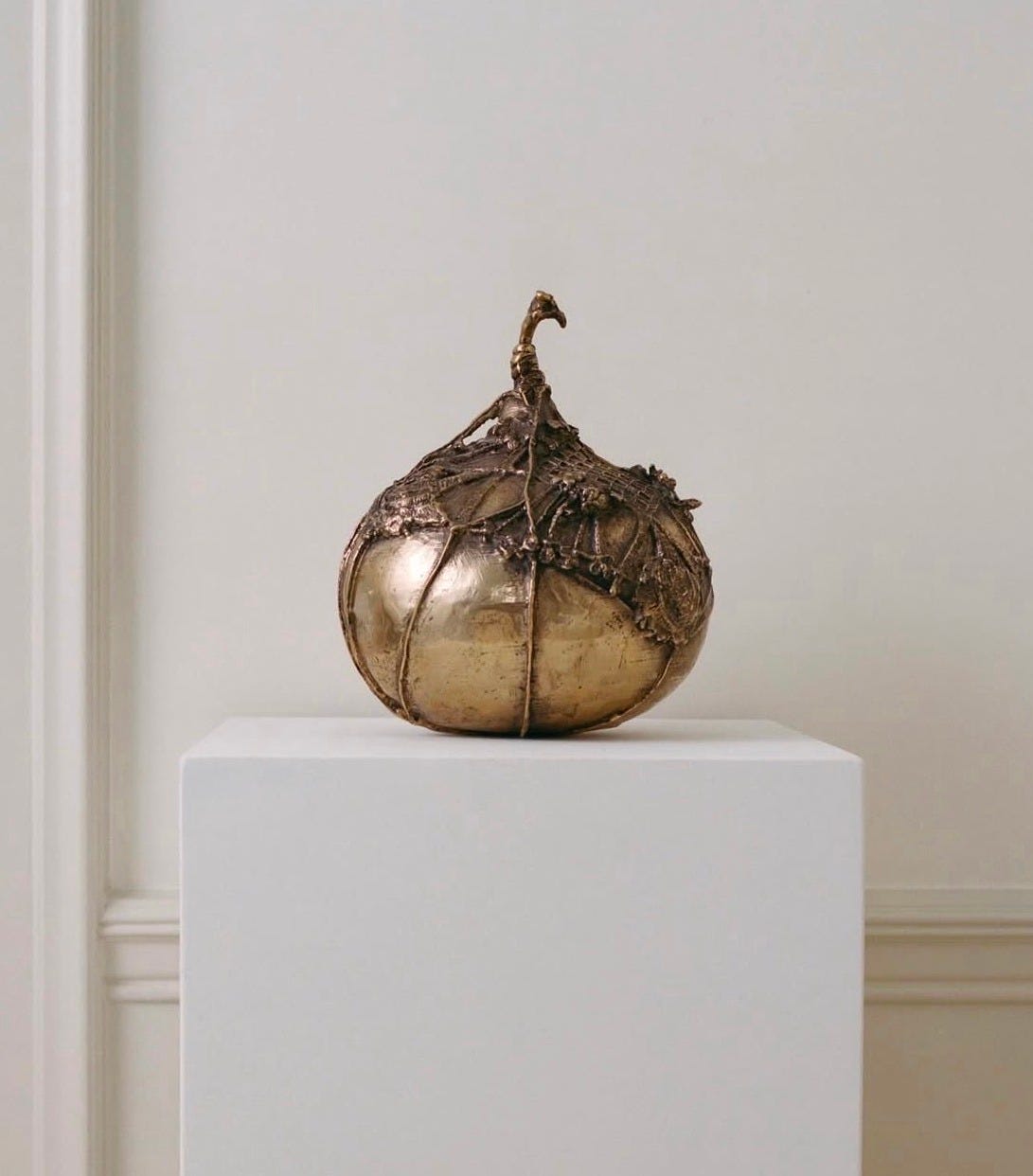
Her candelabra for Side Hustle Gallery pushes that method somewhere unexpected: bronze. What began as fabric wrapped around an ostrich egg - every crease, knot, and stitch worked by hand - is cast permanently into metal.
Some materials remain, some change over time - jacaranda, bronze, parchment, thread. The instinct behind them hasn’t.
Find the full curation of rare vintage and emerging Brazilian designers now on Basic.Space.
Thanks for reading Own The Future™
No posts
Comments
Nothing yet. Say the first thing.
Sign in to join the conversation.