
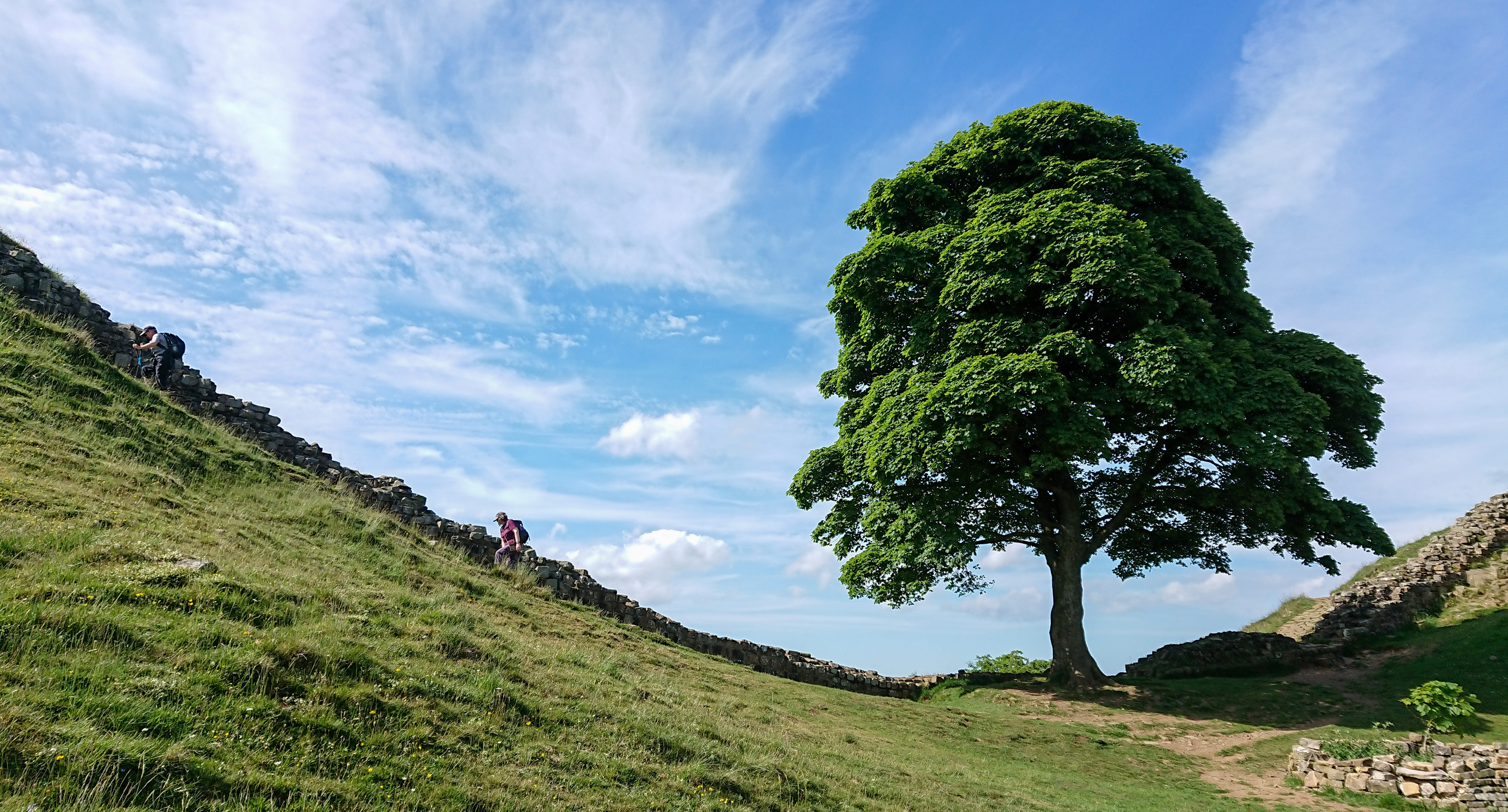
The trial is over. The verdict: guilty. And the tree at Sycamore Gap is still gone. Regrowing, perhaps, but never to be the same.
In the early hours of 28 September, 2023, under the cover of Storm Agnes, two men cut down one of the world’s most famous trees — a sycamore that had stood next to Hadrian’s Wall for a century and a half. When the news began to break that morning, it circled the world. Every news channel carried images of the tree that had famously appeared in Robin Hood: Prince of Thieves, now severed and lying broken in the hollow between two hills.
The outrage was enormous. And the vandals were pleased.
“Here we go,” wrote Daniel Graham in a message to his accomplice Adam Carruthers. And later, in a series of voice notes, Graham proclaimed, “It will be on ITV News tonight,” with Carruthers replying, “It’s on fucking Sky News as we speak.” Their pride was apparent.
It took six months for the crime to come to trial. Before that, I wrote an article on the felling, in which I compared the destruction of the Sycamore Gap tree to the 1997 toppling of the Golden Spruce in British Columbia, Canada.
In that article, I wasn’t able to talk about the motivations of the freshly arrested suspects because we didn’t yet have a motive. And we will most likely never hear the reasons from the men themselves — both pleaded not guilty, and pursued this defence with a collection of lies so transparent and weak that they would embarrass a teenager skiving off school.
The evidence spoke for itself — including the grainy video they filmed of the act, the voice messages that shared their glee at the worldwide outrage, and Carruthers’ proud sharing of the felling video with his girlfriend. It was enough for the jury to find them guilty. But those of us paying attention had been hoping to answer one simple question: Why?
I had been expecting to hear the story of two men disgruntled with hikers and tourists flooding the area — a protest. A grand gesture. But the truth, as far as anyone can understand it, was more pathetic.
Graham, it seems, had built a landscaping business on a piece of farmland close to Hadrian’s Wall. Over the last few years, he’d had complaints from neighbours for polluting local streams and building illegal structures — some of which he tried to hide by bulldozing a wall of earth in front of the property and installing an ornate fence.
He had been living in a caravan on this property for years, but when he finally applied for permission to make his agricultural land residential, his petition was denied, and he was threatened with eviction. Five months later, Graham and his friend Carruthers drove to Sycamore Gap and dropped the country’s most famous tree on top of the country’s most famous wall.
Revenge seems like the only comprehensible motive when the crime is so incomprehensible. But then, maybe it was simply the need to do something so noteworthy that it made the evening news.
Finally, everyone was paying attention to them, even if it was with revulsion.
During the trial, Carruthers expressed disbelief that the crime had aroused such a response.
“It was just a tree,” he said. “It was almost as if someone had been murdered.”
But this is disingenuous. Graham and Carruthers didn’t cut down the Sycamore Gap tree to test out a chainsaw — they deliberately targeted the most beloved tree in Britain. They wanted the outrage and indignation. It was never just a tree. It was a symbol.
But a symbol of what, exactly?
For many, the tree was a symbol of nature’s beauty. For some, it symbolised Northern pride or England itself. For a few, who spread the ashes of their loved ones beneath it, it symbolised love, family, and mourning.
But for Graham? Who knows. Perhaps it was a symbol of government oppression by the authorities that had pushed back against his application to live on his own property. Or perhaps it did represent the beauty of the area — the very beauty that his neighbours accused him of ruining. You can practically hear him saying, You think I’m destroying nature? Hold my beer…
Symbolism isn’t only a matter for artworks. It’s a human reflex. Language is symbolic of the things it describes; the word ‘apple’ is not an apple, it’s just a word. Money is just slips of plastic. Borders are just lines on a map.
Perhaps if these men were fundamentalist Buddhists for whom the world was a fleeting mirage and all things transitory, we might understand a conviction that the tree at Sycamore Gap was ‘just’ a tree. But few would accuse Carruthers and Graham of being profound thinkers.
Grant Hadwin, who felled the Golden Spruce — a genetically rare Sitka spruce with needles that appeared to be gold rather than green — at least acknowledged that a tree could be more than a tree.
He was fully aware that the spruce, known as Kiidk’yaas to the Haida people, was considered sacred. Hadwin titled his fax-cum-manifesto “The falling of your ‘Pet Plant,’” and went on to admit to what he’d done, explaining his hatred of the logging companies denuding the forests while paying lip service to ecology by protecting this unusual tree. It was an anti-greenwashing stance before the term ‘greenwashing’ had even been coined.
Hadwin, while extreme, was trying to encourage a form of responsible forestry at a time when clear-cutting was the order of the day. But he was a lone logger without political clout. No one wanted to listen. And as his frustration grew, he decided that only drastic action would make a difference.
Was he unhinged? Perhaps. By all accounts, he was an intense man who didn’t trust authority. It was a wrong-headed and ill-informed protest, but at least Hadwin had taken responsibility for the gravity of what he was doing. He felled Kiidk’yaas because he knew the tree was important. He knew there would be outrage. He had wanted the nation to question why they valued this tree above the hundreds of thousands of others being cut by loggers.
By contrast, Graham and Carruthers took no responsibility. Nor did they have a message to deliver when they set out to cut down the Sycamore Gap tree. Like Hadwin, they knew the tree was important and respected. But they did not want to raise an issue or make a point; they only wanted to generate public fury so they could laugh about it.
Graham and Carruthers are trolls.
“It’s just a tree” is a smug lie. It is the words of an older sibling who hovers his finger next to his sister, and when she complains, says, “I’m not touching you!” It is the internet troll that insults you and then says it was only a joke. It is the schoolmate who trips you and tells you to watch where you’re going.
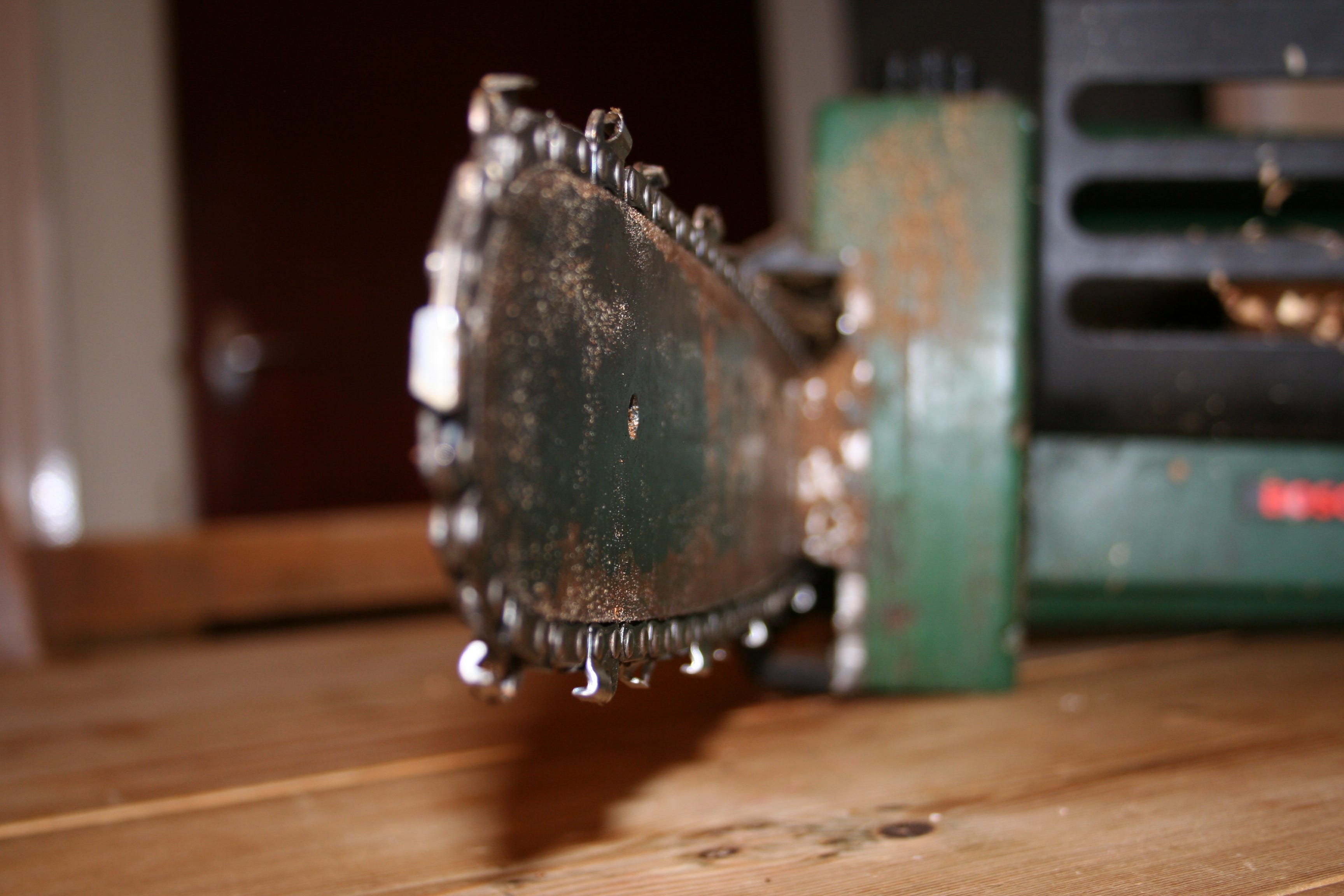
It is both simple and frustratingly impossible to imagine the minds of these men. What is clear from the trial is that Carruthers and Graham felt the crime had been a kind of prank. A good laugh. A practical joke played on those who had the temerity to feel any kind of emotion toward a mere tree.
I’ve met men like them. You probably have, too. Dime-store psychology says that these are small men. Men who feel disempowered or lost. Men who lash out against others as a way of pumping themselves up and feeling important. Men who ease their own misery by creating misery for everyone else.
But does this psychology excuse them? If felling the Sycamore Gap tree had been a protest against over-tourism or an argument against mismanagement in the National Trust, we might conjure up some shred of understanding — some sense that, rightly or wrongly, they did it to draw attention to an injustice.
But the trial gave us nothing of the sort. All we uncovered was a bitter prank committed by bitter men.
I write about community, inclusion, and belonging. And these men were outsiders by most accounts. Could closer community and better social ties have saved them from their own stupidity? It’s very possible. If they hadn’t burnt their ties to the community, other voices may have given them pause, kept them grounded. Instead, it seems as though they fell into a two-person echo chamber, building each other up and egging each other on until cutting down the tree seemed like a perfectly reasonable thing to do. The bold thing to do. The hilarious thing to do.
But to take away their agency by blaming it on family and neighbours is a bridge too far. Graham and Carruthers knew what they were doing. They knew it was wrong. And they still believed they were the smartest people in the room, condescending to tell us all that the sycamore was “just a tree.”
This is the superiority of trolls writ large — whether online or arboreal.
For these men, it does not matter how many thousands of people travelled to see the Sycamore Gap tree, because those people are fools. It was just a tree.
It does not matter that it was a place of beauty and peace, because peace and beauty serve no purpose in the lives of ‘real men.’ It was just a tree.
And it does not matter that couples were engaged there, or that families spread the ashes of their loved ones beneath that tree’s branches, because men like Graham and Carruthers would drive an ATV through an outdoor wedding; they would piss on a gravestone.
But it was not just a tree.
And there is some small justice in knowing that they were shocked at the tsunami of outrage that washed over them. They thought they would have a great pub story: how they cut down the Robin Hood tree and stuck it to the soft-touches. They congratulated themselves on their clever scheme, honestly believing that the outcry would be brief and the consequences would never catch up. They were wrong.
Now, there is a tree-shaped gap at Sycamore Gap, and it, too, is a symbol. A symbol of loss, a symbol of division, and a symbol of the boundless stupidity of angry men. ◾
That was a bit of a rant, I confess, so thank you for sticking with me. I don’t normally like to rant online — there is more than enough of that out there, and it seldom helps anyone but the writer. But once in a while, you have to explore your outrage because, yes, I am one of the people feeling robbed by the loss of this tree, of this place. Not because I have memories of it — quite the opposite. I was a moony, romantic teenager when Robin Hood came out, and when I learned that the Sycamore Gap tree was real and accessible, I too hoped to see it one day.
Also, I am not normally a reader of the Daily Mail — the UK’s trash tabloid. But, since even tabloids are bound by the same strict libel laws as the rest of Britain, I have gleaned the details of Graham’s business difficulties from this article and assume they are at least factually accurate, legally speaking.
I still plan to hike along the Wall one day. But now, I will never stand beneath that tree. And the loss of an imagined future can also be a loss.
What I’m reading: My own novel-in-edits for the fourth time. I am deep into rewriting now, and swinging wildly between love and hate of the process.
And love and hate of the manuscript.
I cannot get through a single page without highlighting or making notes on three separate things. It is brutal, but this is how it goes. I we loved every word we wrote, most of it would probably be garbage.
What I’m watching: Interior Design Masters is in its sixth season, and I love it. Of course, it follows the formula of so many of my beloved British ‘reality’ competitions. Which is to say, it is a competition without the posturing and chest-thumping of American television. Competitors take on a series of interior design challenges — some stranger than others — in the hopes of winning the title of Interior Design Master.
One of the challenges this year was to redesign a dog-training room at Battersea Dogs & Cats Home. It was as surreal as you might imagine, and yet the winning room was astonishingly good.
And it is all hosted by Alan Carr. Honestly, I would watch Alan Carr read the phone book, if we still had phone books. He would make it hilarious.
What I’m doing: Our street recently threw its first VE-Day street party in many years. It was organised almost entirely by one household. A family that is relatively new to the street.
We had about fifty people turn up. More drinks were brought than anyone could finish. More food was baked and cooked and bought than anyone could finish. And even though the participation in the WhatsApp group seemed low and uncertain, people came out in numbers on the day, and the party went right up to the hour that the street needed to be cleared.
I also may or may not have joined a band. That part is a little hazy.
So, once again — be bold. One person, one household, can make things happen for a whole community.
Comments
Nothing yet. Say the first thing.
Sign in to join the conversation.