
Logically, I shouldn’t have read this book. It’s on too many “must read” lists. That’s not my cup of tea (see here why). And honestly, who wants to read about yesterday’s concentration camps, when today’s horrors keep showing up uninvited, 24/7?
And yet, I read it. And yes, there’s a lot of good stuff in it - things I’ve heard from others who’ve read it, and things for which it’s justifiably on so many must read lists.
But there’s also much that remains unsaid – or at least, things I haven’t heard others say. That’s exactly what I am going to do now.
But first, a quick recap for those who haven’t suffered through it yet. Frankl’s book recounts his survival in Nazi concentration camps. It’s a story of resilience and strength in the face of horror.
Later in his life, Frankl, a psychoanalyst, went on to develop a school of psychology, that became known as the third Viennese school of psychotherapy. It places the search for meaning at the very center of human psychology.
By the way, the first two Viennese schools were led by Sigmund Freud and Alfred Adler. Freud believed that human behavior is driven by the pursuit of pleasure – along with the guilt and repression that accompany it. Alfred Adler, in contrast, saw the striving for power and dominance as the core human motivator.
In the concentration camp, Frankl saw first-hand that those who had a purpose for living were more likely to survive. Makes sense to me. Nietzsche had put it long before: “If one has a why to live for, one can bear almost any how.” This “why” is what helps us transcend the now and the present, especially under difficult conditions, and gives strength to reach a better future.
So far so good. My problem began when Frankl suggests that this “why” is the meaning of life. Is this whyuseful? Yes. But is it the meaning of life?
Imagine a convicted killer, whose purpose – his why – is to avenge the person who put him behind bars. It might help him survive prison, sure. But blame my high expectations, that’s not the grand meaning of life I was looking for. It’s too utilitarian, stripped of moral or ethical underpinning.
In Frankl’s defense though, he was writing about survival in a concentration camp. Priorities are different when it’s about life and death. To quote his contemporary, the German playwright Bertolt Brecht, from The Threepenny Opera (1928): “Erst kommt das Fressen, dann kommt die Moral” — or in English, “First comes the grub, then the morality.”
That’s fair. Survival naturally comes first. But problems arise when Frankl generalizes that truth beyond the camp.
The simplest one is this: the challenges one faces, and the skills one needs to survive in a concentration camp, are different from those in everyday life. Just as ordinary life skills won’t get you through a concentration camp, camp survival strategies may not be ideal for ordinary living either. Honestly, I’d be fine if Frankl had titled the book “Man’s Search for Meaning in a Concentration Camp”.
But there’s a deeper problem. This one goes to the very heart of the book.
Most of us, even as children, have asked at one time or another, why we’re here. Sometimes after staring up at a starlit sky and realizing the immensity of the universe, sometimes after the death of a loved one. Or sometime after a different kind of quiet epiphany. That’s a primordial search for meaning we all share.
As we grow up, that search continues. Some lucky ones find an answer. Many, perhaps, never do. Among those who are lucky, the answer is rarely the same. But it is never as simple as mere survival.
Survival is certainly not trivial. But by equating survival with the meaning of life, Frankl does the human spirit a disservice. He is really writing from the bottom of Maslow’s hierarchy (food, shelter, and raw survival) and mistaking it for the summit.
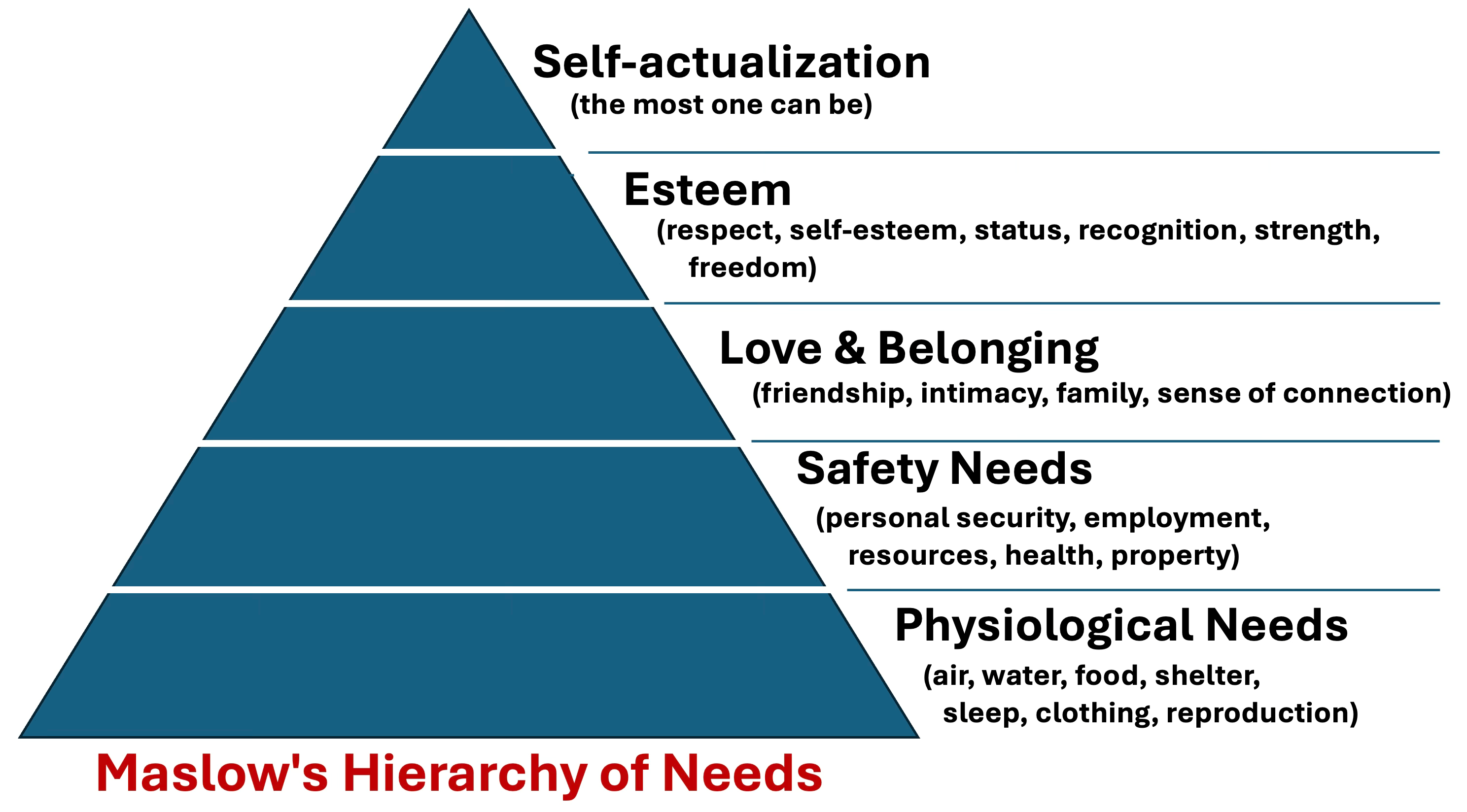
The misguided focus on the bottom of Maslow’s pyramid has consequences that reach beyond the individual searching for meaning. As implied earlier, survival can trump moral and ethical considerations. If that’s the case, wouldn’t it also affect those trying to help? A psychotherapist, for example?
Put differently, is it acceptable for a psychotherapist to put a patient in a “mental bubble” untethered from ethics and morality? If meaning can be detached from moral judgment, then therapy risks legitimizing destructive purposes. A chilling possibility. Then a well-adjusted sociopath is still a sociopath.
I’m not sure if I can pin this problem solely to Frankl or this book. But they’re not innocent bystanders either.
I wrote this essay to practice critical thinking. Did I succeed? What do you say?
Epilogue
The main reason I wrote this essay was not to critique Frankl’s book or explore the philosophy of life’s meaning. I wrote it to practice – and perhaps demonstrate - critical thinking.
Critical thinking is essential, yet scarce. And despite its importance, it receives far less emphasis in our education system than it deserves.
I am neither an educator, nor a pedagogue. And I have no grand prescription for this problem. But I do know what the practice looks like for me: having the courage to challenge conventional wisdom, and then defending that challenge with clear, convincing justification.
If you can do this, then you’ll see more than what lies beyond the obvious. And what lies beyond the obvious is usually as important as the obvious - if not more important in certain cases. BTW, this is one of the methods I use to “deconstruct the matrix”, as indicated in a previous post Reading Like A Drunken Sailor.
New to this publication? Read here what it is all about: WELCOME to Outsights of a Conspecific
If you enjoyed this reflection, you might like my earlier post Reading English with Chanachur, a heartfelt, humorous tale of how a packet of chanachur changed the course of my life .….. or how a card game with my grandfather became a lifelong lesson in questioning conventional wisdom When My Grandfather Challenged the Truth.
I write solely for the pleasure of writing. That pleasure is even greater when others enjoy reading.
If this piece resonated with you, feel free to subscribe (it’s free). I publish about once every three weeks, and you’ll get an email when something new is out.
And if you know someone else who might enjoy this kind of writing, please consider sharing it with them too.
No posts
Comments
Nothing yet. Say the first thing.
Sign in to join the conversation.