
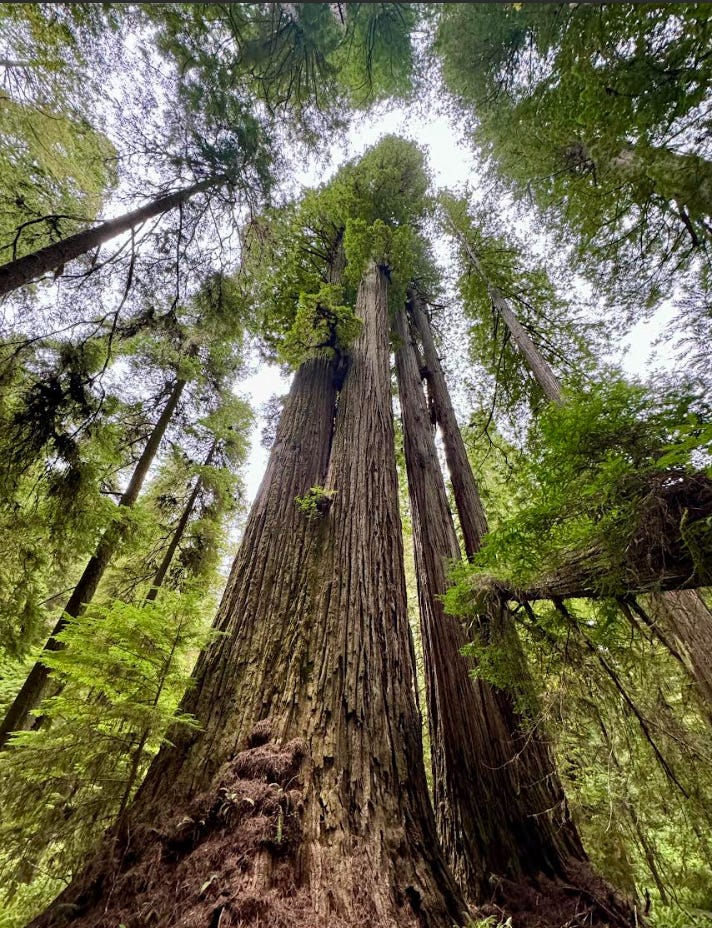
If there’s a perfect month to hike among giants, it’s November. The crisp air, filtered light, and damp forest floor combine to release that earthy redwood scent that only appears after the first real rains. It’s also the time when crowds fade, trails quiet, and the forest begins its seasonal reset.
This past month, I’ve been deep in writing my first hiking book, a project that’s part field guide, part story collection. Every time I revisit a favorite trail through words, it reminds me why I started sharing these places in the first place: to help others feel that spark of awe and connection that only California’s redwood forests can bring.
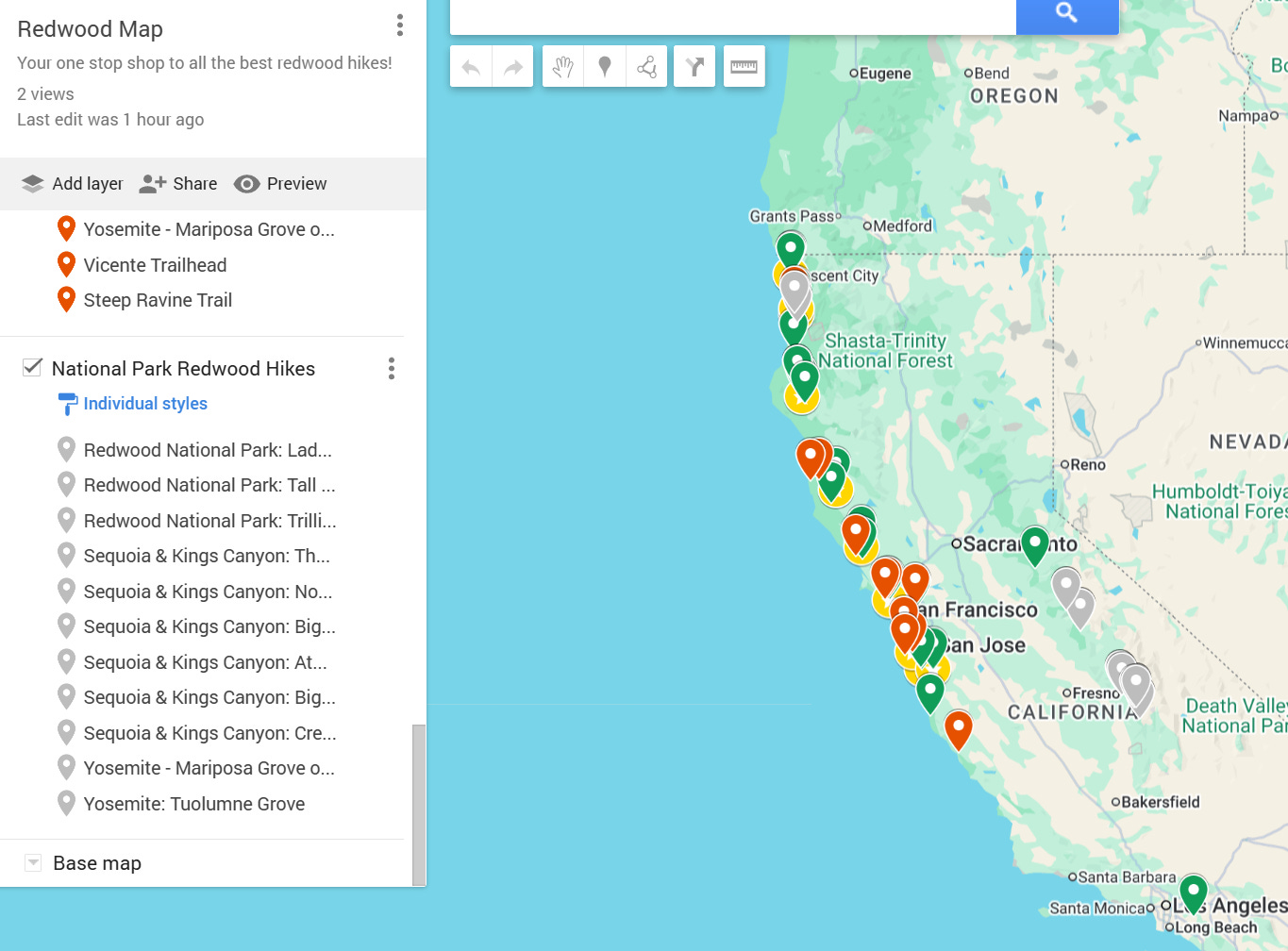
With this month’s feature, I’m also excited to announce the release of my second California Map, focused entirely on the top 45+ redwood hikes across the state. The map includes new filters like easy, hard, and the top 10 must-experience trails, making it easier than ever to plan your own redwood adventure. Each pin includes a description and link to AllTrails.
If you’re not already a paid subscriber, now’s a great time to join. It not only helps me keep exploring and sharing fresh trail ideas, but it also makes a thoughtful, affordable holiday gift for the adventurer in your life for just $30/year or $5/month. And with my brand new California redwood map, there’s never been a better time to upgrade!
Lastly, as I continue building this full-time, I’m actively seeking sponsors for these monthly newsletters, that are now reaching 12,000 amazing trailblazers. If you or someone you know might want to support this growing outdoor community, please reach out.
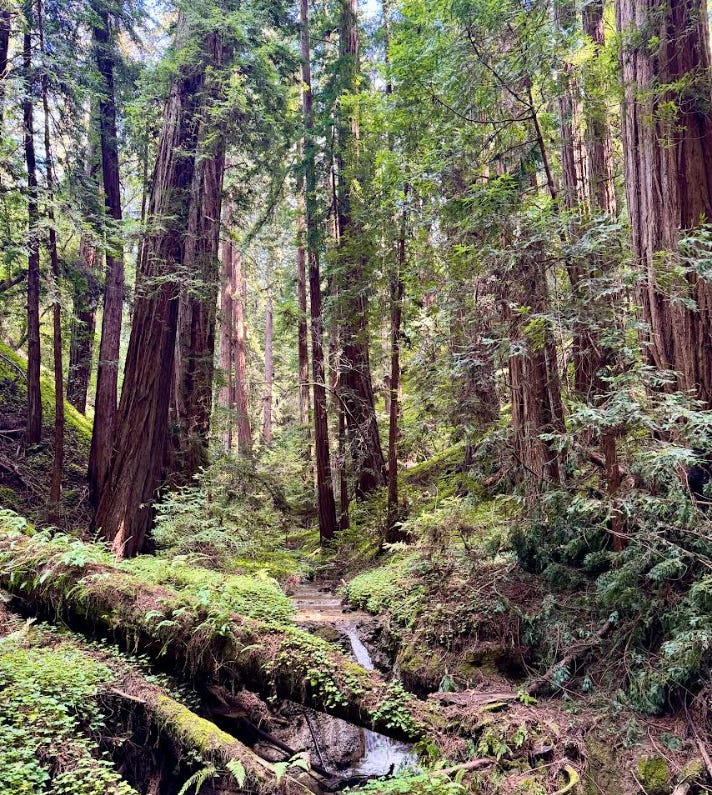
California is home to two of the most extraordinary tree species on Earth:
Coast redwoods (Sequoia sempervirens): the tallest trees in the world, reaching over 370 feet high and thriving in the cool, fog-fed coastal belt from Big Sur to the Oregon border.
Giant sequoias (Sequoiadendron giganteum): broader and heavier cousins that grow only on the western slopes of the Sierra Nevada between 5,000–7,000 feet.
Both belong to the cypress family, but they live in very different climates. Coast redwoods love humidity and fog; sequoias favor snowy winters and dry summers. What unites them is age and resilience, some living specimens predate the fall of the Roman Empire.
“Old growth” forests are those that have never been logged or heavily disturbed. They feature multi-layered canopies, fallen nurse logs, massive trunks, and a rich ecosystem that can take centuries to develop. “Second growth” forests are younger stands that have regrown after past logging. While still beautiful, they lack the cathedral-like stillness and biodiversity of true old growth.
Today, only about 5% of California’s original old-growth redwoods remain. That’s why visiting and protecting these groves is so vital, as they’re living time capsules of ancient Earth.
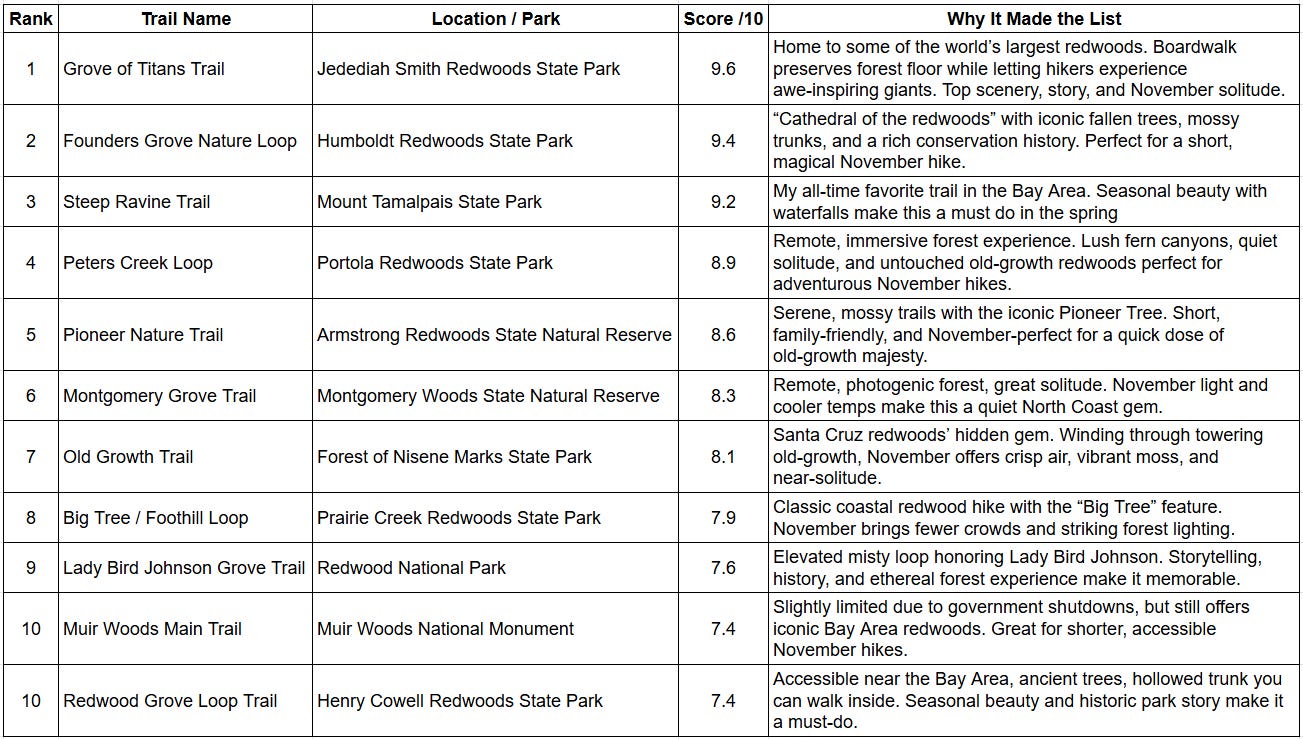
To make a top ten list as objective as possible, I used a scoring system based on five weighted categories:
1. Scenic Beauty (30%) – Visual drama, light quality, and grove composition.
2. Trail Experience (25%) – Path condition and solitude.
3. Historical or Ecological Significance (20%) – Conservation story, age of trees, or unique natural features.
4. Accessibility (15%) – Ease of reaching the trailhead year-round.
5. Wow Factor (10%) – That intangible sense of wonder that makes you stop and just look up.
Each trail earned a composite score, and only one hike per region or park was allowed to keep the list geographically diverse. Keep in mind, this list isn’t about one single impressive tree, so you’re not going to find General Sherman in Sequoia National Park here.
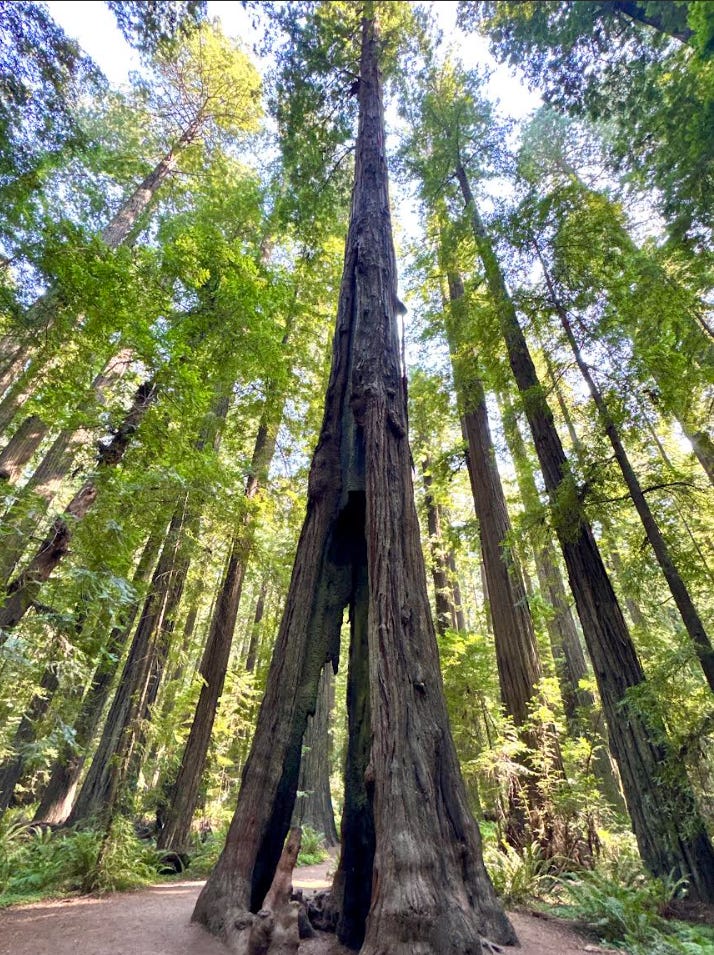
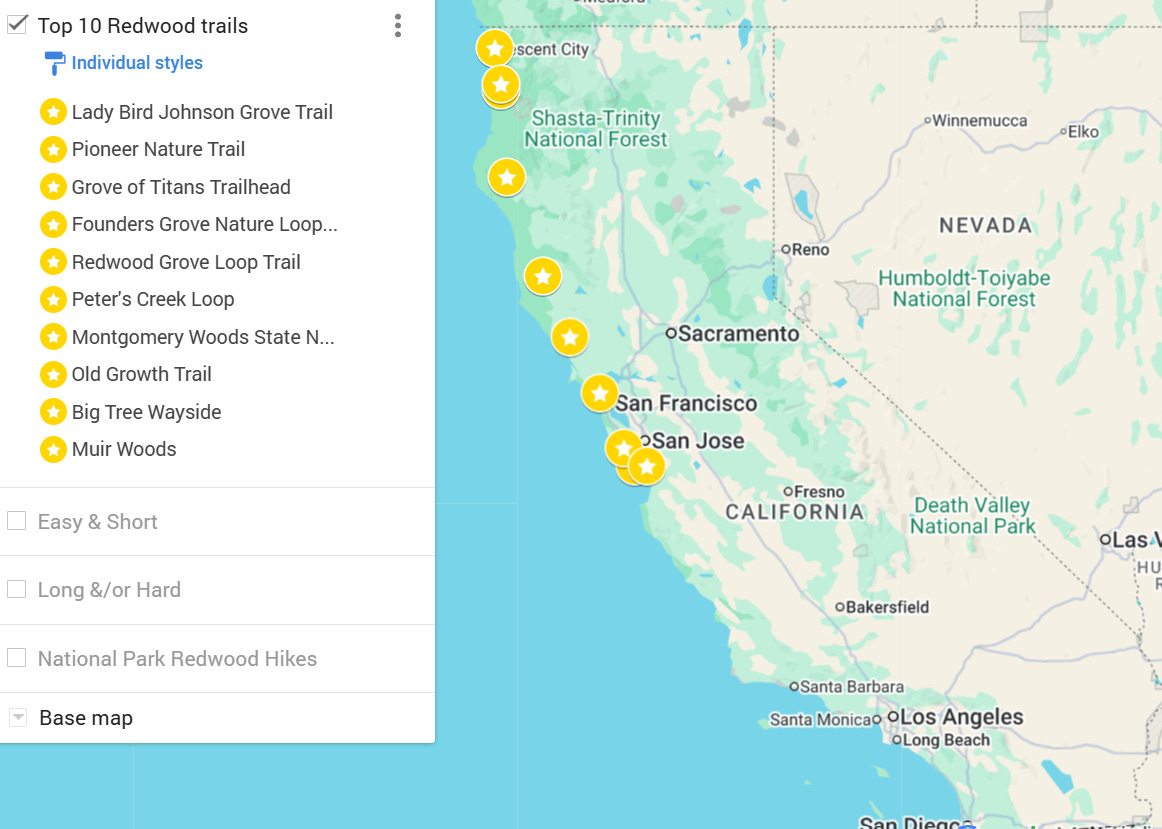
Here’s what my top 10 list looks like on my new Redwood Trail Map:
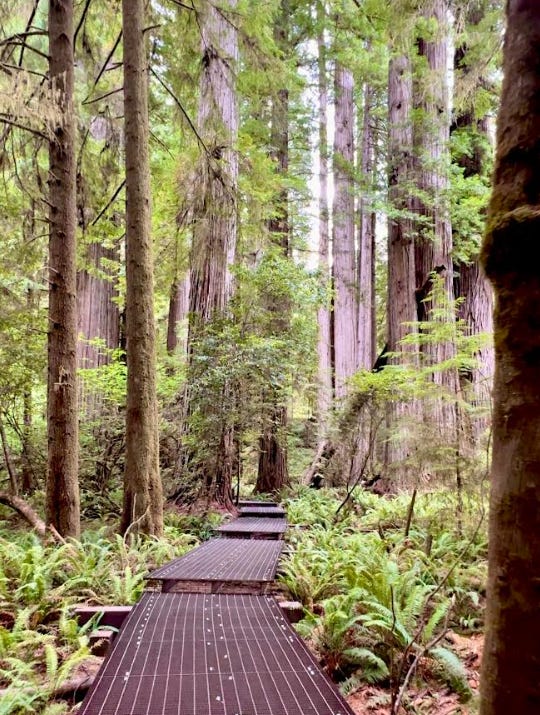
AllTrails link: Grove of Titans
Why #1:
If you want epic, this is epic. Some of the largest known coast redwoods by volume live here. Combine that with the remote northern‐California setting and a boardwalk access portion that gives you the cathedral feel of forest giants, this hike hits high marks.
Story & history:
The grove was long known to native peoples, then re-discovered and only recently opened with sustainable access via a raised boardwalk to protect the delicate forest floor. The narrative is about conservation and “letting the forest tell its story” rather than imposing big infrastructure.
Trail notes:
The trail is ~1.7 miles round trip and very moderate in elevation gain.
Because it’s further north and more remote, November means cooler air, possible damp forest floor and a chance for greater solitude.
Due to limited parking and more subtle access, arriving early with a 4x4 vehicle is key. No parking fee and no dogs allowed.
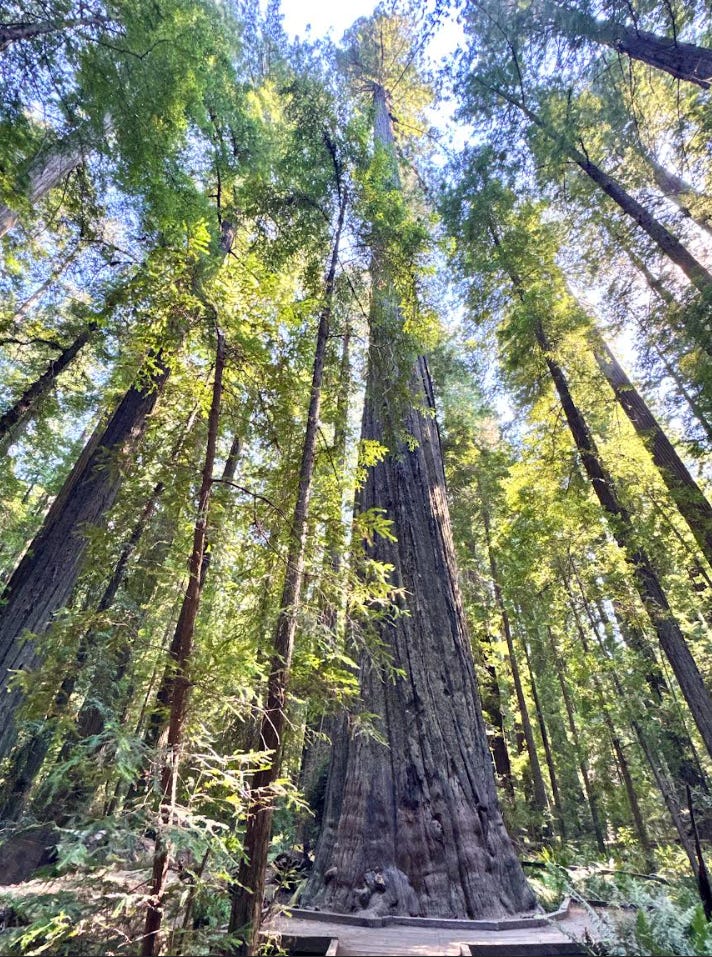
AllTrails link: Founders Grove Nature Trail
Why I ranked it #2:
This is one of the most accessible yet awe-inspiring redwood groves in the state. A well-maintained loop invites you into giant trunks, exposed roots, rich moss and forest floor that feels prehistoric. Because it sits along the Avenue of the Giants corridor in Humboldt, you get a grand experience with minimal extra effort. And as a bonus, you can easily spot an albino redwood tree, uniquely 100 feet up in the air.
Story & history:
The trail features the “Founders Tree” (named in honor of the founders of the Save the Redwoods League) and the legendary “Dyerville Giant”, a massive fallen redwood whose roots now form a dramatic, almost surreal root-widow sculpture.
Trail notes:
The half-mile loop is flat, stroller/accessible friendly.
In November you’ll catch especially nice light as the sun is lower, forest floor leaves may add a warm hue.
Free parking fills early on weekends; no dogs allowed.
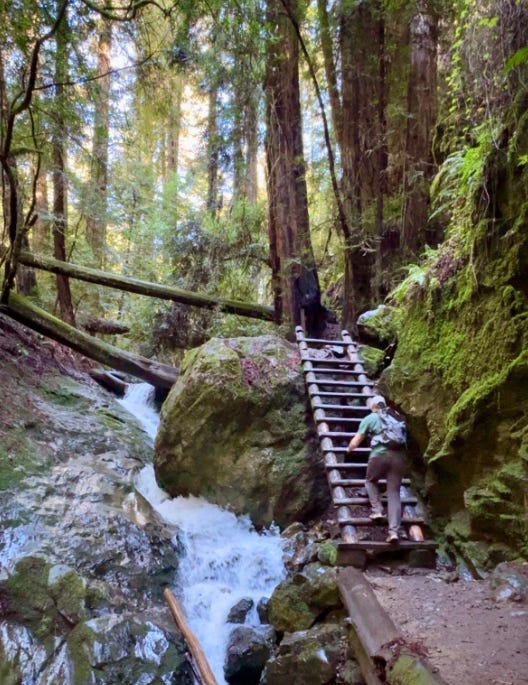
AllTrails link: Matt Davis to Steep Ravine. It’s back open!
Why #3:
This loop is one of California’s most dynamic redwood hikes, blending ocean views, canyon forests, and old-growth redwoods into a single unforgettable route. It’s the perfect balance of coastal drama and forest tranquility, and a clear standout for Bay Area hikers looking for a redwood escape close to home.
Story & history:
Long before it became a hiker’s paradise, Mount Tamalpais was a gathering ground for the Coast Miwok people, whose villages dotted the slopes near present day Stinson Beach. Later, in the early 1900s, it became one of the birthplaces of California hiking culture, home to the legendary Dipsea Race, which is the oldest trail race in America.
Trail notes:
Expect rolling terrain, about 1,600 feet of elevation gain, and a steady mix of ocean breeze and cool forest shade.
Come early on weekends; the Pantoll lot fills fast ($8 day use fee), or start from Stinson Beach for a quieter approach (my preferred starting point).
No dogs allowed.
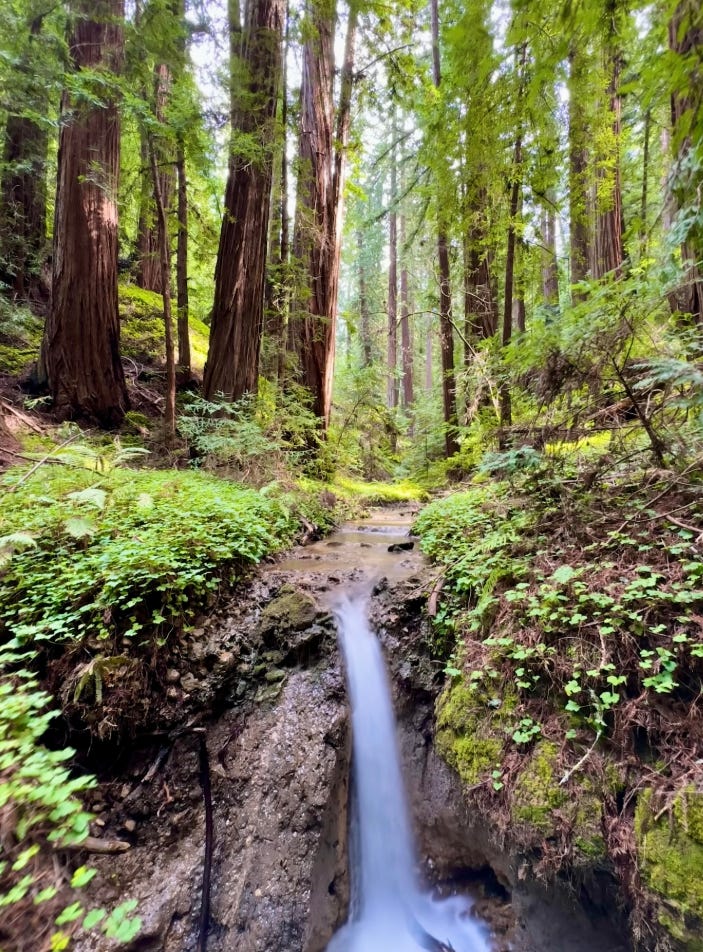
AllTrails link: Old Tree / Slate Creek / Bear Creek / Peters Creek Trails
Why #4:
This one is less about the easy stroll, more about commitment and immersion. You’ll go deeper into the redwoods, into lesser-visited terrain, which means more reward. For November, when you’re game for a longer outing, this one stands out.
Story & history:
This loop takes you through one of the third‐largest old-growth redwood groves in the Santa Cruz Mountains. The hike passes old shingle-mill sites and remote trails that whisper of logging and forest recovery.
Trail notes for November:
Distance: around 12 miles round-trip with fairly significant elevation change.
November means cooler, possible mud near creek crossings. Be ready to climb over large fallen trees that obstruct the trail.
$10 day use; no dogs allowed.
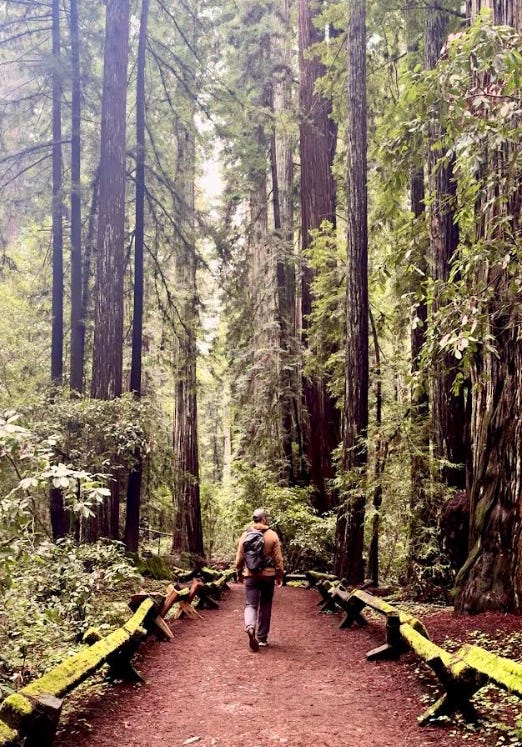
AllTrails link: Pioneer Nature Trail
Why #5:
If you want a shorter, easier, yet still majestic redwood experience (especially ideal in November for a mellow day hike), this is it. Great for families, side-trips, or combining with wine-country stops.
Story & history:
The trail runs through what remains of the primeval coast redwood forest at Armstrong. This easy loop is good for entry-level hikers, kids, or as a warm-up before more ambitious hikes. The site also features trees over 1,400 years old and heights over 300 ft. It’s got the big tree magic without the full day commitment.
Trail notes:
The trail is less than 2 miles round-trip, mostly flat and ADA accessible.
November light is beautiful through the tall trunks, and the crowd levels drop compared to summer.
$10 day use with dogs allowed on leash. Be prepared: it can be very cold in the late fall mornings.
Thanks as always for reading, exploring, and helping me keep this dream alive. November is the redwood forest’s reset button, enjoy some quiet, and take time to consider what your thankful for.
If you know someone who’d like this post, you can share it with them using the link below.
And, if you want to become a supporter of my work, access my California map (and new redwood hiking map), or grab an incredible gift for your fellow adventurer, the links are ready for you below!
Comments
Nothing yet. Say the first thing.
Sign in to join the conversation.