
The Florida Department of Health reported two additional Vibrio vulnificus cases and one additional death in the past week, bringing the totals to 17 cases and 3 deaths.
Cases have been reported from 12 counties: Bay (2), Brevard, Broward, Hillsborough, Lee (2), Marion (2), Miami-Dade (2), Okaloosa, Palm Beach (2), Polk, Santa Rosa and St. Johns (new cases reported in Broward and Bay counties).
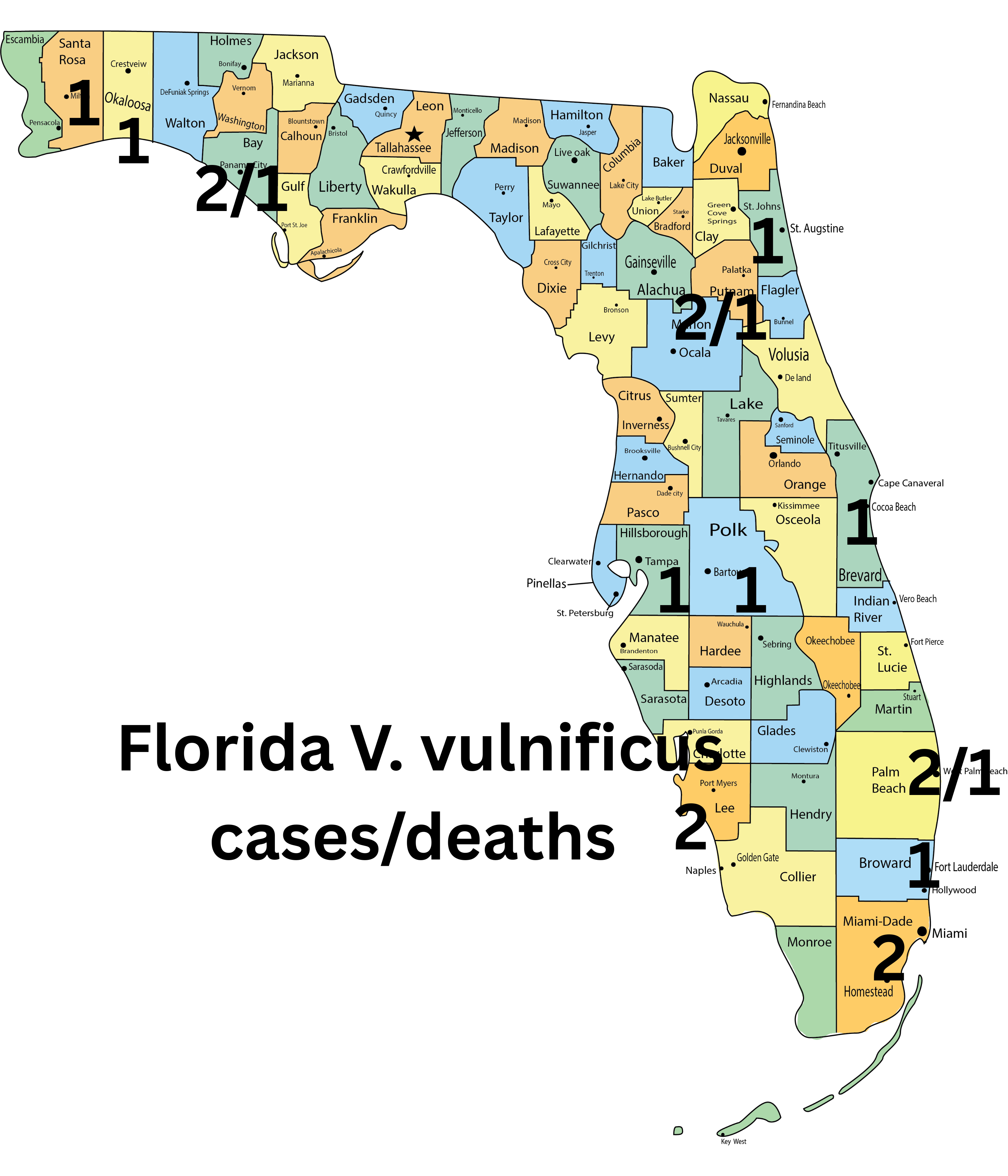
The three fatalities are reported in Marion, Palm Beach and the newest death in Bay County.
In 2025, Florida reported 33 cases and 5 deaths.
Vibrios are gram-negative bacteria that are found in estuarine and marine environments . They colonize filter feeding animals such as shellfish and can also be found free-living in seawater. The optimal growing temperature is between 68-95°F (20-35°C), but it can grow at temperatures up to 105°F (41°C). In addition, the bacterium is halophilic. Given their distribution, most Vibrio vulnificus (V. vulnificus) infections occur in states surrounding the Gulf of Mexico.
People become infected with the bacteria in several ways. One way is by consumption of raw or undercooked seafood or cross-contamination of food with contaminated water. In healthy individuals, the bacteria can cause symptoms of gastroenteritis that generally lasts about three days. However, in those who are immunocompromised the bacteria can infect the blood causing septicemia that can cause severe or deadly infections in other parts of the body. Septicemia can be characterized by fever and chills, occasionally accompanied by vomiting, diarrhea, abdominal pain, and pain in the extremities. Death occurs in an average of 35% of septicemia cases.
Drug-resistant Gonorrhea: An urgent threat to public health worldwide
Those at highest risk for developing septicemia are those who are immunocompromised or have other chronic health problems, such as high serum iron levels or liver disease.
Another way that people can be infected with the bacteria is through an open wound exposure to seawater. Wound infections can be characterized by inflammation at the wound site, which can progress to cellulitis, bullous lesions, and necrosis. Infections can become systemic which can lead to additional symptoms of chills, fever, hypotension, and altered mental status. The health status of individuals can determine the severity of illness, as death or amputations can be a result of wound infections. People with underlying medical conditions may be at increased risk of infection and serious complications.
Comments
Nothing yet. Say the first thing.
Sign in to join the conversation.