
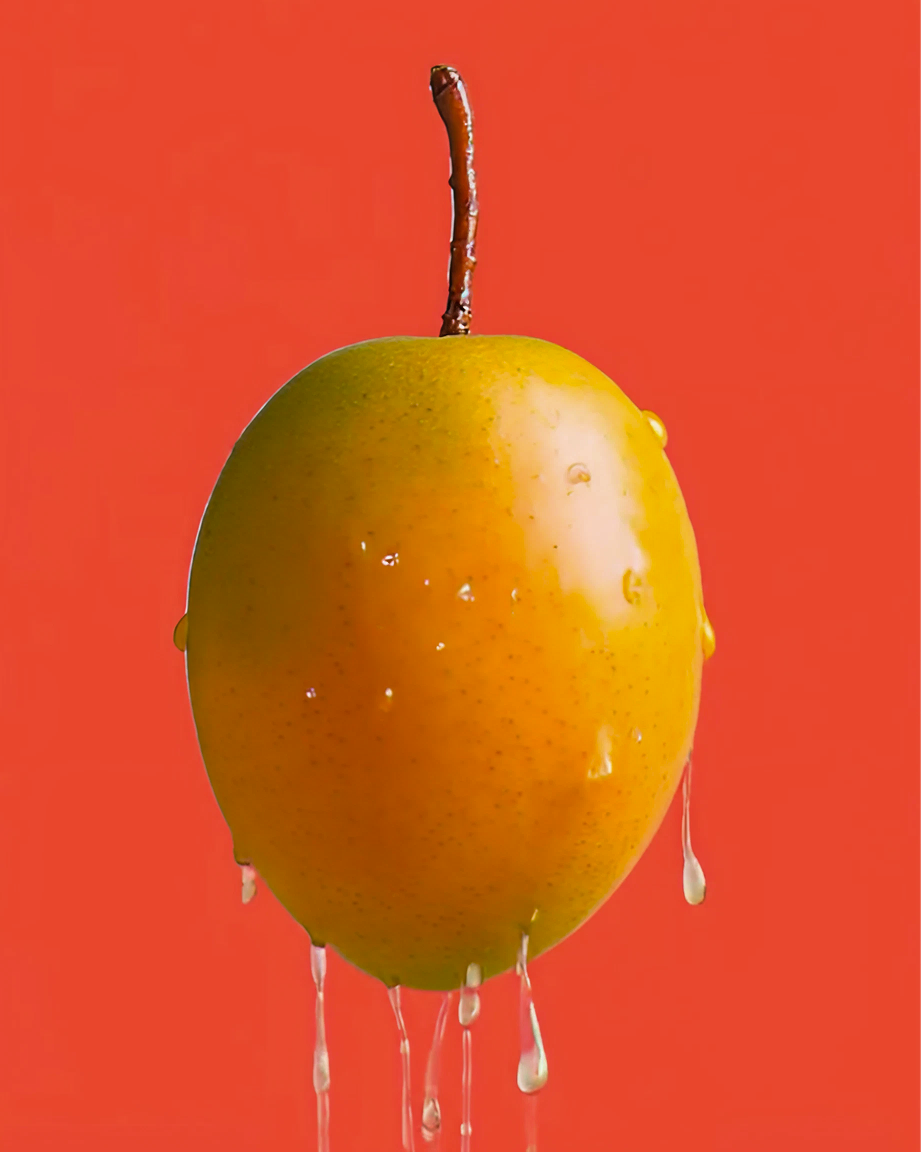
Image produced by Radical Moon Studio
This is a little different for me, and I want to be honest about how this interview came about.
Last week, I was met with a message from founder, CD and talented designer Beena Alvi. Trading under Radical Moon Studio, she sent through her work and asked about the opportunity to be featured on Behind The Brief. I took a quick look, and my AI-senses were tingling. I didn’t spend long thinking, and wrote back that we’re preferentially showcasing non-AI work at present. At this moment, I felt my bias kicking in, and I felt nervous. Beena must have sensed this, asked she me why.
Am I an AI designer? No. So who am I to truly judge? I knew I had a bias. But I also wanted to know more, and specifically the reasons someone might pick up this tool and produce creative work; outside of what my bias had led me to believe.
So welcoming, Beena. And introducing her story to you here. I hope, like me, you can learn a little more from her perspective and experiences.
I am an independent brand designer and creative director, and have been in this space for about 12 years now. I design brands and bring campaigns to life, from visual identities and logo systems to ad campaigns, social campaigns, premium content, and creative concepts. I really enjoy coming up with a crazy idea and taking it all the way through to execution, and really treating projects more like world-building more than brand-building.
I also have an MBA from Boston University, which gives me a bit of a different perspective. I love the creative side, but I’m equally interested in the strategy behind it. For me, good design has to solve a business problem, not just look good.
One thing that’s really fundamental to how I work is culture. I’m constantly paying attention to what’s happening in the world, what people are talking about, what they’re laughing at, what’s happening in the ether, and how those conversations can become part of the work. I think brands are at their best when they feel connected to the moment rather than existing in a vacuum.
Creatively, I like pushing boundaries. I’m always interested in making things feel a little unexpected or slightly absurd in a way that still feels intentional. I love building worlds that people haven’t really seen before and creating work that’s visually rich, something that’s just fun to look at but also makes you feel something.
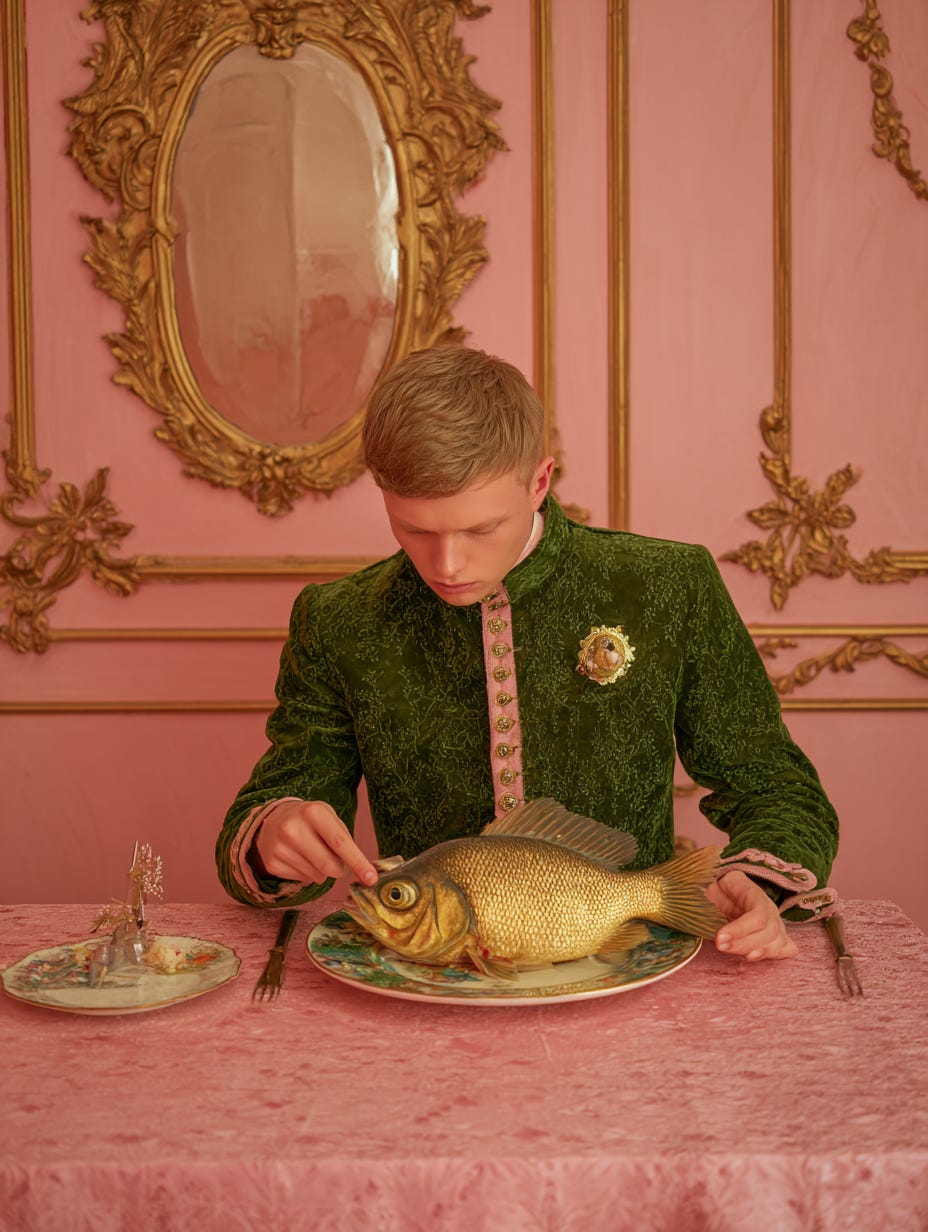
This is such an important question that is really not being asked enough. I think the attitude around AI has become quite binary (either terrible or amazing), but I think it’s a much nuanced world we’re dealing with.
I think there are two big misconceptions. The first is that the human behind the AI output is not deserving of any conceptual credit. But the reality is, if I told any AI machine to “create a colorful image for me that looks like an acrylic painting featuring a mother and her daughter walking in a field”, I guarantee you it will produce slop and something that’s nowhere near what I envisioned. In order to get truly premium content, you have to have strong conceptual and visualization skills, and understand the exact specific terminology to achieve it. You need to understand photo and editing terminology, you need to understand, in this case, the different types of brush strokes; you need to understand graphic design language; and you should be able to describe the exact emotion you want in your characters, how you want their body language to look, how you want their hair to look and move, etc. That is just a glimpse of how granular I can get with my prompting and that’s the difference between a real artist/designer vs. someone who is just relying on AI to do the work for them and leave it up to the machine to “hallucinate” whatever it wants to.
And then, you almost always have to go through dozens of iterations and adjustments and editing before getting a piece of content that’s worth sharing. So the notion that those who use AI aren’t real artists or designers isn’t necessarily true. Cameras were scoffed at by traditional artists because they thought technology was an insult to art produced by hand, and look where we are today. Similarly, I think AI is simply a new means of producing creative work. What sets it apart from real art vs. not, is how you’re using it and how much of your own vision and ideas you’re injecting into the output.
The other misconception is that AI is just plagiarizing/regurgitating other people’s work. That’s actually also not true. Yes, the systems have been trained with millions of pieces of art and content, and various visual information etc. But it’s reductive to say that what it’s producing is just reproductions of existing art. Can it create you a duplicate of a Picasso painting? Yes it can, which is the sad reality, and I personally am not in the business of replicating anyone’s art, BUT if you told an AI machine to “make an image created with translucent watercolor brush strokes”, I think it would be naive to think that whatever it produced from such a prompt would be something plagiarized. What it really is is the system just knowing what “translucent watercolor brush strokes” should look like, and I think it’s important that people understand the complexity of that aspect of AI. I think it’s also important to remember that artists and designers and creators are all drawing inspiration from the world around them. In essence, copying. Sort of. Whether a machine doing it suddenly makes it unacceptable is a different debate I suppose, and one I’d need to give more thought to!
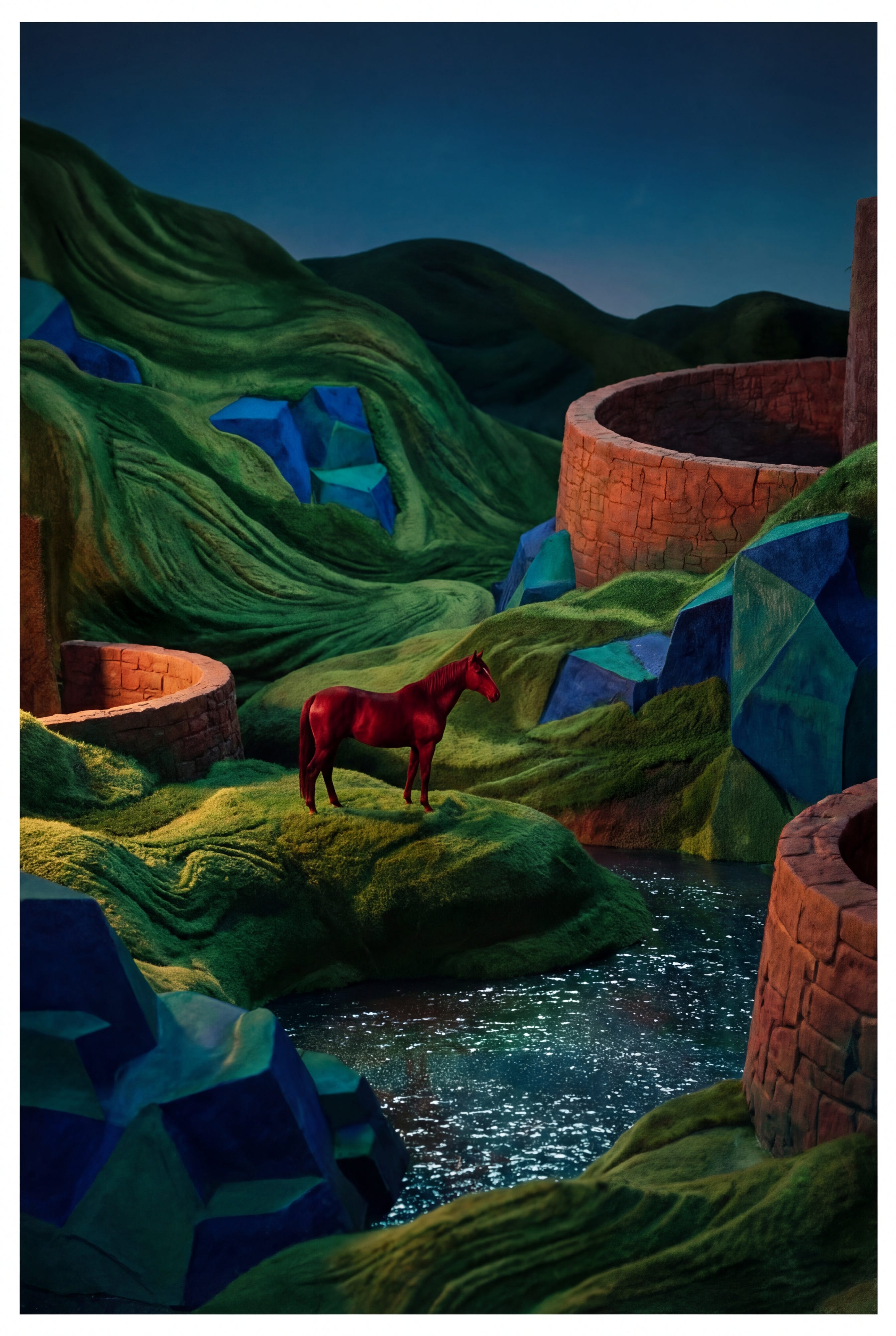
I started using it at the end of 2024. I wanted to create more spec work and create work that was entirely from my own creativity without the interruptions of client requests and feedback. I have carpal tunnel syndrome, so working as a designer, and spending 2 weeks to create a compelling graphic started to take its toll on my hand. At the time, AI artists were pretty new on social media, but getting a lot of engagement and curiosity. Sybille Saint Louvent was actually the first I discovered and I was quite literally mesmerized by her work. It’s all entirely AI, but she’s honest about it, and her work is undeniably beautiful despite it. So, I thought to myself: could I use AI for my spec work? Could this be a way to churn out my creative spec concepts faster and possibly be even MORE conceptual than I’m able to do manually? So I signed up for Midjourney and started testing things out, and it transformed my design world.
I was able to create an image of a man’s head inside a fishbowl without having to adjust his facial expression inch by inch. I was able to build a much more robust and creative portfolio of work, and show clients my capabilities, while still being able to use traditional design tools for my actual paid work. Once I got the hang of AI, I started to test out designing by hand through traditional means, and then using AI as a supplement or enhancer. And also vice versa. And then it hit me that in order to be the best designer possible, I should be able to use all and as many tools as are available in the world of design. Why should I limit myself when the world seems to be expanding? A great example of this is that even if AI produces an almost-perfect image, I almost always have to go into Photoshop and fix (by hand) where AI went wrong. AI image editors degrade the quality of the content, so I have to remain in the practice of hand production no matter what. And then I’ll design a logo in Illustrator, and then put it all together in Canva, since it’s easier and less clunky to use. For AI videos, sometimes they look really weird, so I have to go into Premiere and adjust the color grading, or the movement, or the speed, etc. So now, my days consist of 15-20 tabs and programs open, from Adobe Premiere, to Photoshop, Illustrator, to Higgsfield, to Gemini, to Canva, and I think that, along with real conceptual skills, is what distinguishes a real creative designer from an AI producer who wants to be perceived as a creative designer. Also, the reality is that while some of my clients want AI content, a lot of them don’t, so I have to be able to essentially “do it all”. I often think about these AI explorers and artists who are producing solely AI-generated content. What do they do if a client doesn’t want any AI usage? So I hope this can provide some clarity to people who assume us AI-users are doing nothing but writing prompts! I’ve been a designer and creative director for over 10 years, and a part of me thinks I’ve earned the right to add AI to my toolbox! Haha!
What I also really want to encourage other designers, whether seasoned or brand new, is to not feel like it’s silly to experiment with new tools. I remember there was a phase when designers would make fun of Canva, but it’s a great tool that can be a really useful creative companion. AI is also now in the mix, and is proving to be an extremely useful service to make our work easier and make meeting deadlines far less stressful. Sometimes, I even do my own photoshoots inside my home for clients with my iPhone. Why not? I can take a picture with my phone, then put it through an AI upscaler to look a little more polished. Being scrappy and resourceful is extremely critical in being a good producer. So, I really just encourage creatives to have fun with their work and use everything at their disposal, even if it seems “low brow” or “amateur”.
In general, whether AI or handmade, I don’t copy anyone’s work. I will never try to mimic what artists are doing. I might look at things and think, that color combination looks cool, or I like the placement of the font, but you’ll never see me copying a concept or a very distinct style of art. For example, when people discovered they can make art that’s identical to Studio Ghibli, I swore I would never be among them. That’s actual plagiarism and I’m not in the business of that. So, where I draw the line is to never use AI to duplicate something that exists, but instead to bring to life my own original concepts and designs. I also just think, as far as right now is concerned, AI films with dialogue still look kind of wonky and fake to me, and I’m just not for it right now. When it improves and looks truly realistic, we can talk about it. As far as traditional design goes, I will always need that. AI can spontaneously combust tomorrow, and I still have clients to report to. So I will always need my Adobe suite, and I don’t want to ever become rusty in my ability to utilize it. But like I said, I think utilizing as many tools as possible holistically makes the lives of designers a lot easier.
This is especially important to me and something I definitely think about often, and it’s the reason I primarily use Higgsfield for my AI output, as opposed to any other platform. Higgsfield is hosted in Nebius data centers, and Nebius’ data centers are among the most energy and water efficient in the world. They released a sustainability report in 2024, and it’s quite impressive. When I learned about their dedication to energy efficiency, I stopped using other services and transitioned almost entirely to Higgsfield.
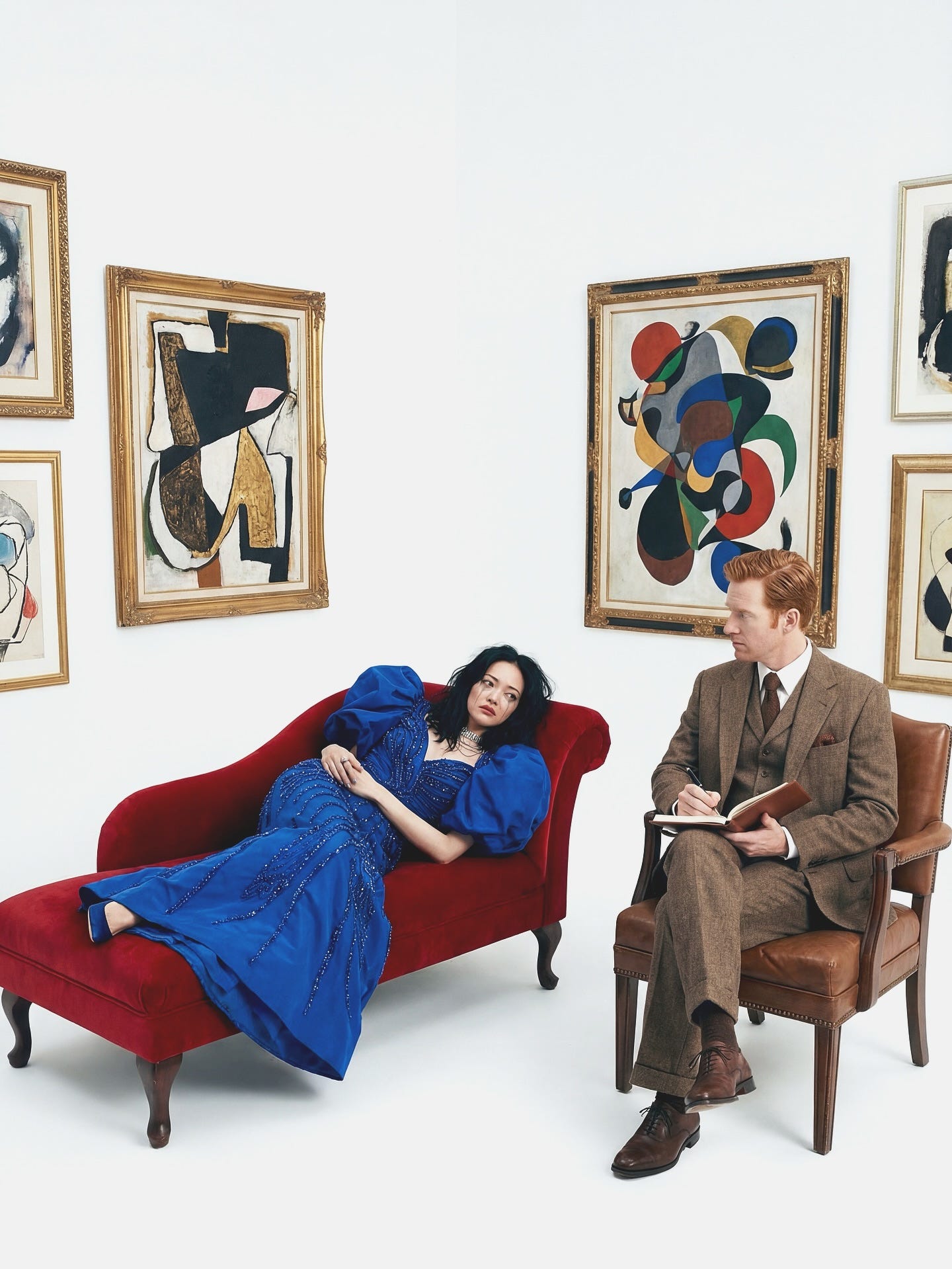
It really depends. For overall, certainly Higgsfield. Higgsfield is a multimodal AI platform, so it hosts all the different models we hear about, like Nano Banana and Seedance and so many more. But it’s quite expensive, so I understand why people don’t even bother. But it’s expensive for a reason. My friend Madani recently launched his own AI service called Mina, and it’s excellent for premium, editorial content. Midjourney is great for social-first content, and can create some really gorgeous content, but very often it’ll give you 6 fingers and just weird elements you don’t want. Getting overly granular on Midjourney often ends up confusing it, so that’s the gripe I have with it. Whereas with Higgsfield, you can be as detailed as you want. Krea is an up and coming tool that’s great, but it’s a lot better for more illustrated/artistic content than hyper-realistic/real-looking content. Kive is also up and coming that is excellent at editorial-style content. Adobe Firefly I find useful only if you’re looking for larger than life, surreal-looking content. Google Gemini unfortunately just doesn’t provide true high res files, so things are always a little pixelated or have some artifacts. But it’s free and quick when you’re in a pinch! I don’t use ChatGPT for any content production, but if I need something edited, it’s the only AI tool that doesn’t degrade the image quality once edited, so I appreciate that. There are probably tools I’m forgetting, but those are all the ones I’ve played around with and my very honest feedback.
- A note; learning more about anyone’s experience and thought process can only enhance our understanding. I’m incredibly grateful to Beena for the conversation, telling us a little about how this industry is formed, building and integrating in traditional design.
Has this conversation changed anything for you?
Renee
No posts
Comments
Nothing yet. Say the first thing.
Sign in to join the conversation.