
“I fear that there is a dark future for the grizzly bear because of the destruction underway by the Trump Administration. If this continues, and what they are doing gets cemented in place, grizzly bear recovery will be dead in a few years. The numbers and range of the grizzly will soon be declining across the Northern US Rockies. If they have their way, we will be living in a smoking ruin of America where our public lands and public wildlife are exploited for the financial gain of the corporate donors who support this administration.” - Chris Servheen, who led grizzly bear recovery for the USFWS for 35 years (Yellowstonian, July 15, 2026)
It’s been quite an awful week for our public lands, waters, and wildlife.
From Trump’s massive shrinkage of Grand Staircase-Escalante and Bears Ears national monuments and the disbanding of the one-of-its-kind intertribal Bears Ears Commission to attempting to open up lands around Chaco Culture National Historical Park to drilling and turning grizzly bear management over to the notorious anti-apex-predator states of Idaho, Montana, Wyoming, the past week was a whirlwind of bad news.
And it wouldn’t be the Trump administration if they didn’t announce another rollback on a Friday.
Exactly one week after declaring that destroying a threatened or endangered animal’s habitat no longer necessarily “harms” it, the Trump administration has now finalized another pair of regulations weakening the Endangered Species Act (ESA)—this time making it easier to withhold protections from threatened wildlife and exclude commercially valuable land from critical habitat.
The Department of the Interior announced the new rules Friday, July 17, describing them as “necessary revisions” that would “strengthen American energy independence,” “improve regulatory predictability,” and return the landmark wildlife law to what the administration (and Project 2025) calls its “original intent.”
In practice, however, the changes revive policies from President Donald Trump’s first term and further subordinate species protection to logging, mining, drilling, infrastructure construction, and other economic interests.
Together with last week’s repeal of the ESA’s longstanding definition of “harm,” the rules attack three of the law’s most crucial mechanisms: preventing habitat destruction in general, protecting species before they become endangered, and preserving the essential places they need to survive.
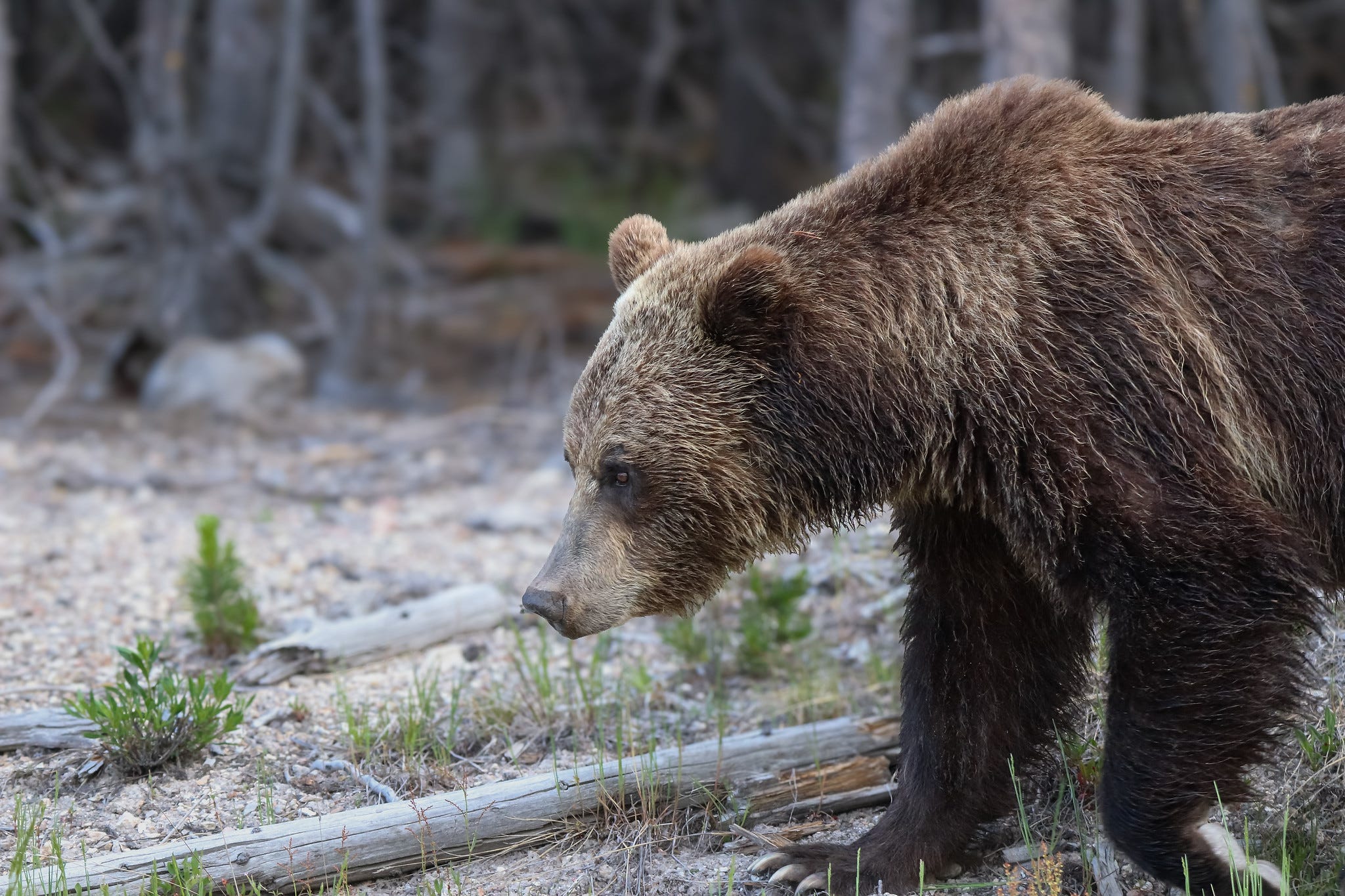
This is nothing less than an all-out assault on the Endangered Species Act itself—and the administration’s eyes are on the biggest prize of all: grizzly bears.
The first rule revision targets threatened species protections (Section 4(d) of the ESA). It eliminates the U.S. Fish and Wildlife Service’s (USFWS) “blanket rule” for threatened species. Under that policy, threatened animals and plants automatically received many of the same protections as endangered species unless the agency adopted a more tailored rule.
Without the protections provided by the “blanket rule,” threatened species are, by definition, likely to become endangered in the foreseeable future. Waiting months or years to negotiate individual protections can allow the very activities driving their decline to continue while safeguards are debated.
The Biden administration restored that approach in 2024 after Trump eliminated it in 2019.
Now, protections will have to be written separately for each threatened species.
It is absolutely crucial to realize here that grizzly bears are listed as threatened—not endangered—under the Endangered Species Act in the lower 48 states.
Alongside the announcement earlier this week that Interior is transferring grizzly bear management to Idaho, Montana, and Wyoming, this new move could be considered as another step toward eventually delisting grizzly bears.
Like all other stuff that’s happened in the past seven days, this is straight out of Project 2025.
The second regulation changes how the government designates critical habitat (Section 4(b)(2) of the ESA). Under the revised rule, Interior officials can exclude particular areas from “critical habitat” designation when the perceived benefits of exclusion outweigh the benefits of protection, provided that doing so will not cause the species’ extinction.
The new rule directs the government to place greater weight on economic costs, national security concerns, and other consequences of protecting habitat.
The distinction between preventing extinction and promoting recovery is crucial here. A species can persist in small, fragmented populations without actually functionally recovering.
Simply put, by treating extinction as the principal limit on habitat exclusions, the administration now allows agencies to sacrifice land needed for genuine recovery so long as some animals remain alive somewhere else.
And that’s the very situation grizzlies in the lower 48 states find themselves in right now. They currently live in genetically separated populations in a few unconnected “recovery zones.” However, under this new ESA rule, if the grizzly bear population is stable in, say, Yellowstone—and therefore won’t go extinct there—no critical habitat would need to be protected elsewhere.
These changes come exactly one week after Interior and the Commerce Department repealed a regulatory definition that had treated significant habitat destruction as an illegal form of “harm” to protected wildlife.
The cumulative effect of these three rule revisions—“harm,” “threatened species protections,” and “critical habitat”—is greater than any individual rule. In a very real sense, this is a gutting of the very ESA protections that make grizzly bear recovery possible in the first place.
Critical wildlife habitat can now be excluded from protection because there are some economic and “national security” costs. Destruction of unprotected habitat may no longer qualify as harm to a species. And threatened species will no longer receive automatic protections while individualized regulations are developed.
The administration is advancing these changes while insisting the ESA has failed because roughly 97 percent of listed species remain protected. But that statistic confuses continued protection with failure.
Species are listed precisely because they face severe, often longstanding threats. Preventing their disappearance is itself one of the law’s central achievements. Interior’s preferred metric also ignores the widely cited finding that the ESA has prevented the extinction of approximately 99% of listed species.
Objectively speaking, the Endangered Species Act is widely successful in doing what it’s supposed to be doing—preventing species from going extinct.
The ESA has been “weaponized to stop almost any new project in America, driving up costs for families, weakening our competitiveness, and undermining our national security,” Interior Secretary Doug Burgum said Friday, adding that “[m]ulti-generational families on America’s working lands care deeply about wildlife, clean air, clean water, and healthy habitat. Along with states, they are the front lines of making recovery possible for endangered species.”
Director of the U.S. Fish and Wildlife Service Brian Nesvik, a long-time proponent of grizzly bear delisting, had his own word salad to add to the announcement.
“In the 21st century, the Service will embrace a data-driven approach to tailor regulatory protections for America’s precious natural resources while recognizing the importance of the American people’s ability to prosper in the land of the free,” he said. “These revised regulations provide an opportunity for the Service and it[s] biologists to cultivate a more cooperative relationship with the American people we serve.”
That language reveals the administration’s underlying premise: wildlife protections are obstacles, and successful conservation is conservation that does not interfere too much with industry.
The Endangered Species Act was built on the opposite principle—that extinction is permanent, critical habitat is irreplaceable, and economic development should not determine which species are allowed to survive.
In the span of seven days, the administration has weakened all of that.
I’ve pointed this out before, but if you haven’t read it yet, I highly recommend reading my piece on the recently announced partnership between the U.S. Fish and Wildlife Service (which is responsible for executing the Endangered Species Act) and the private de-extinction and animal-cloning company Colossal Biosciences.
The short conclusion of all of this is: if a species can never go extinct—if a company has its DNA and can simply revive or clone it—under these new ESA rules, wildlife habitat is not even needed.
By saying that habitat destruction doesn’t harm wildlife, by using economic development potential as a reason to not protect habitat, and by removing protections for threatened species, the administration has also made it much easier for itself to carry out expanded commercial logging and mining in threatened and endangered species habitat—in grizzly bear habitat.
I repeat: these huge rollbacks of key Endangered Species Act rules are a clear attempt to weaken protections for grizzly bears, an explicit goal of Project 2025:
“Meaningful reform of the Endangered Species Act requires that Congress take action to restore its original purpose and end its use to seize private property, prevent economic development, and interfere with the rights of states over their wildlife populations. In the meantime, a new Administration should take the following immediate action:
Delist the grizzly bear in the Greater Yellowstone and Northern Continental Divide Ecosystems and defend to the Supreme Court of the United States the agency’s fact-based decision to do so.”
Once again, note how closely the wording used in the press release mirrors this language in Project 2025—“original purpose,” “economic development,” “rights of states.”
“I fear that there is a dark future for the grizzly bear because of the destruction underway by the Trump Administration,” Chris Servheen, who led grizzly bear recovery for the USFWS for 35 years and is arguably America’s foremost grizzly expert, told Yellowstonian on July 15 in an interview I strongly recommend reading.
“If this continues, and what they are doing gets cemented in place, grizzly bear recovery will be dead in a few years. The numbers and range of the grizzly will soon be declining across the Northern US Rockies.”
“In my 40-plus years of being a conservation practitioner, I have never seen the callous disregard for nature, animals, and wild places that we have in this Administration. Every single policy of this Administration is destructive to wildlife, wildlife and fish habitat and the cherished wild lands we are so fortunate to have in America.”
“If they have their way, we will be living in a smoking ruin of America where our public lands and public wildlife are exploited for the financial gain of the corporate donors who support this administration.”
Thanks for reading!
See you on our public lands and waters,
Bram
Top image: NPS / A. Falgoust
Comments
Nothing yet. Say the first thing.
Sign in to join the conversation.