
On Saturday, July 25, 2026, in Busan, South Korea, a United Nations Educational, Scientific and Cultural Organization (UNESCO) committee added several new sites to its prestigious World Heritage List.
One such site is located in southern Georgia: the sprawling Okefenokee Swamp, which became the 27th UNESCO World Heritage Site in the United States.
These extraordinary public lands and waters are federally protected as the Okefenokee National Wildlife Refuge, managed by the U.S. Fish and Wildlife Service.
It’s the nation’s first-ever national wildlife refuge to obtain World Heritage status, a coveted label that indicates cultural and natural sites of “outstanding universal value” to humanity.
It’s been over three decades since the last land-based natural sites in the U.S. were added to the World Heritage list—those were Carlsbad Caverns National Park and the Waterton-Glacier International Peace Park in 1995.
This recognition puts Okefenokee Swamp on the same level of global significance as other precious natural treasures across the planet, such as the Great Barrier Reef, Okavango Delta, Galapagos Islands, Norwegian fjords, Danube Delta, and the Serengeti, just to name a handful.
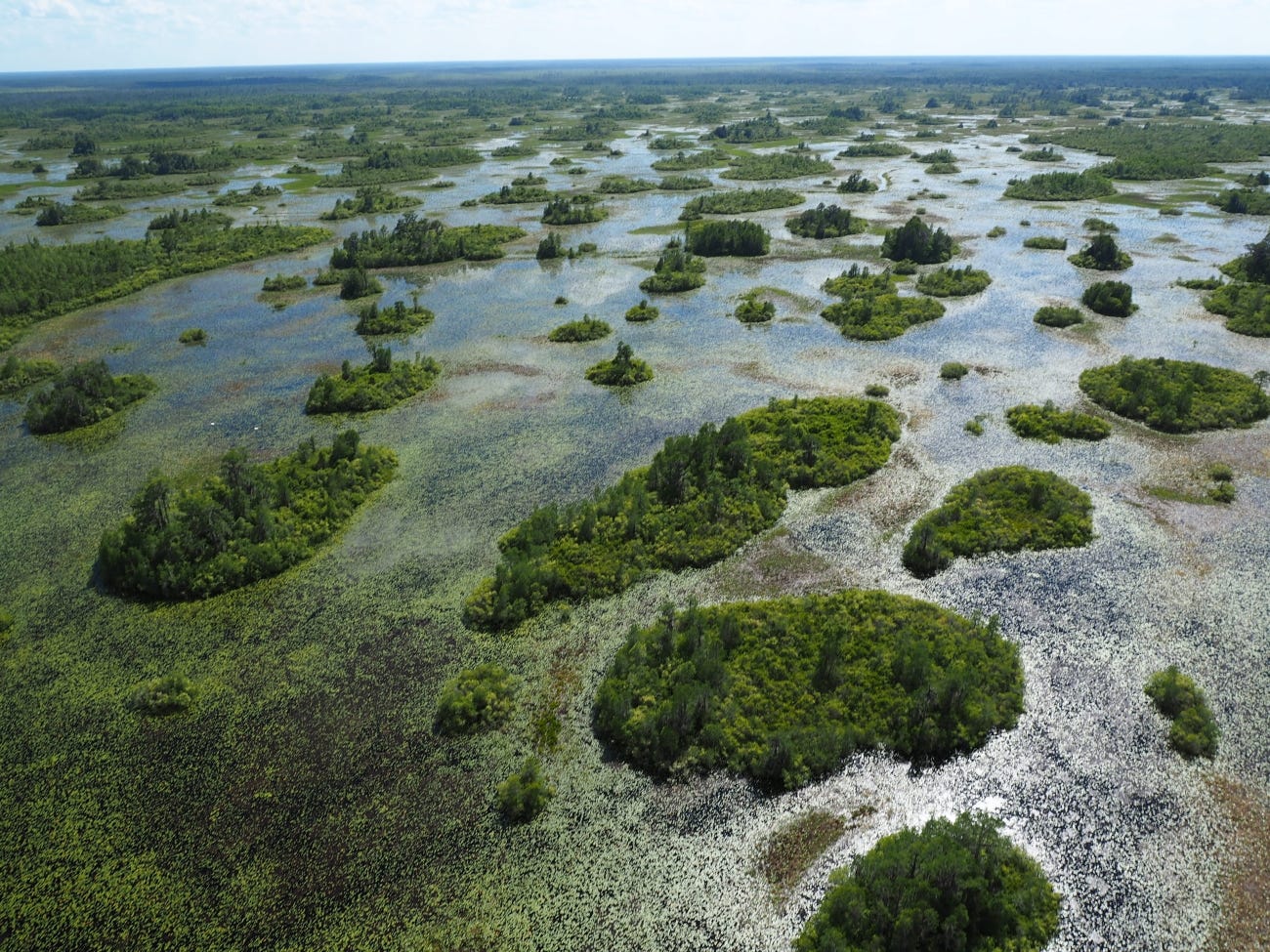
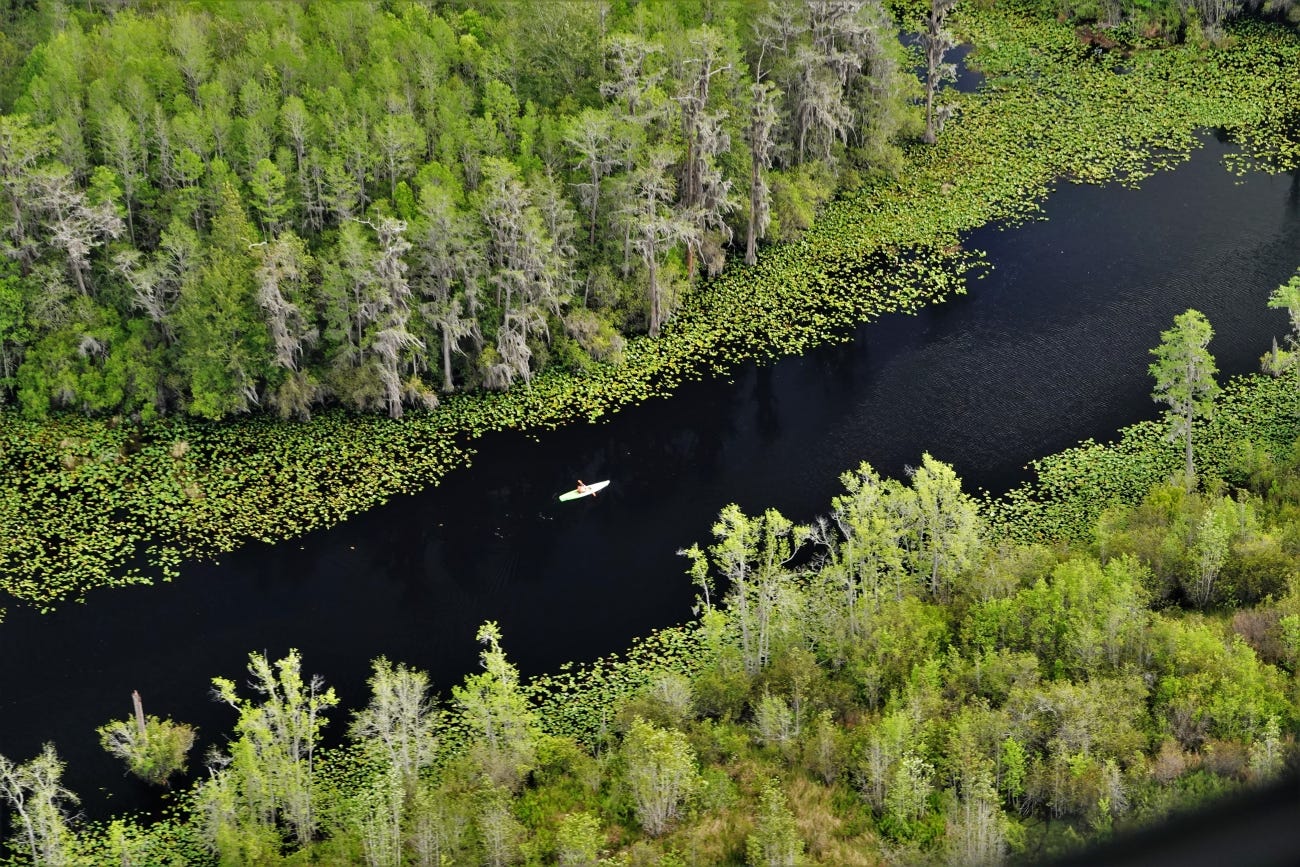
The Okefenokee Swamp is the largest and most ecologically intact precipitation-based freshwater wetland in the United States—a vast mosaic of blackwater channels, cypress forests, floating peat islands, and open prairies stretching across southeastern Georgia and into northern Florida.
Its name, derived from an Indigenous expression often translated as “land of the trembling earth,” refers to the unstable mats of vegetation and peat that shift when you walk across them.
Most of the area is protected by the roughly 407,000-acre Okefenokee National Wildlife Refuge, established in 1937 after decades of logging and failed attempts to literally drain the swamp.
Today, it protects the headwaters of two very different rivers: the Suwannee, which flows southwest into the Gulf of Mexico, and the St. Marys, which winds east toward the Atlantic Ocean.
Although its tea-colored water may appear dark and foreboding, the Okefenokee is exceptionally rich in life.
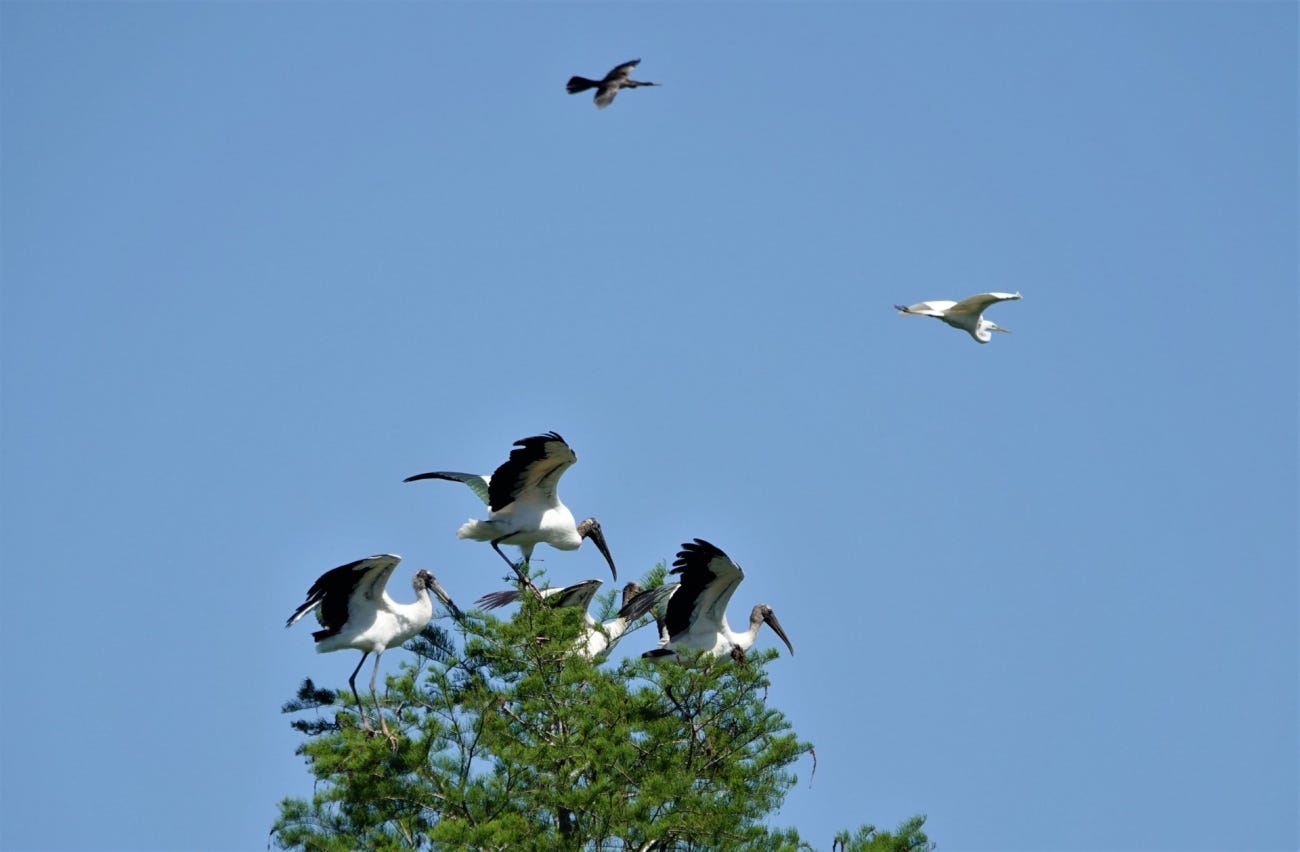
American alligators patrol its waterways, while Florida black bears, river otters, bobcats, and white-tailed deer inhabit its forests and islands. Sandhill cranes, wood storks, egrets, and more than 200 other bird species depend on the refuge. Carnivorous plants—including sundews, pitcher plants, and bladderworts—thrive in its nutrient-poor environment.
Notably, about 354,000 acres (87%) of the national wildlife refuge are officially designated as a National Wilderness Area, the highest form of land protection that currently exists in the United States.
“The Okefenokee is a place where nature still reigns,” Kim Bednarek, Executive Director of the nonprofit Okefenokee Swamp Park—which has worked with the federal government on the refuge’s World Heritage nomination—said in an acceptance speech.
“Across more than 400,000 acres, water, fire, peat and time continue to shape an intact wetland, reminding us that conservation is about protecting the natural systems that sustain life itself.”
Rena Peck, the Executive Director of Georgia Rivers shared the excitement in a phone call with the Georgia Recorder, saying that “[e]veryone’s just thrilled. People from all countries are coming up to congratulate us. It’s just a vision of world peace. You have all these different nations caring about protecting their treasures and sharing those treasures with the world, and the world is recognizing the Okefenokee.”
Some southern Georgia locals, however, have strongly opposed UNESCO World Heritage designation of the Okefenokee for years. All three counties surrounding the swamp are rural and deeply conservative.
With more than 70% of voters in each of the three countries voting for Donald Trump in 2024, you might say this is MAGA country. And as you might expect, they’re not very fond of anything the United Nations says or does.
In fact, in July 2025, President Trump himself announced that the United States would withdraw from UNESCO itself, calling it “at odds with our America First foreign policy.” The withdrawal will go into effect on December 31, 2026, which means the country currently still is part of UNESCO.
Locals worry that, somehow, the United Nations would take over management of their public lands. For the record, that’s absolutely not how this works.
“Being recognized as a World Heritage Site increases a site’s significance to the world,” the U.S. Fish and Wildlife Service explained in 2024 on a webpage dedicated specifically to Okefenokee’s World Heritage status push.
“Becoming a World Heritage Site does not confer any ownership or management authority to the United Nations,” they wrote. “UNESCO only monitors the current conditions and potential threats to the designated properties. The Refuge would continue to be wholly owned and managed by the US Fish and Wildlife Service.”
And indeed, Georgia’s own Republican Governor Brian Kemp recognizes the significance of this kind of recognition, and what it could mean for the local tourism economy.
“For generations, Georgians have enjoyed all that the Okefenokee National Wildlife Refuge has to offer as a valued natural treasure,” he said in a statement. “An important part of our state’s heritage and economy, this is a fitting recognition for the Okefenokee that will further strengthen rural communities that surround it.”
An economic impact report by The Conservation Fund from 2024 backs this up. While about 800,000 people currently visit the Okefenokee Swamp each year, World Heritage status is expected to double that to 1.4 million or 1.6 million visits by 2035. That would generate 700 new local jobs and increase the regional GDP by 1-2%.
Of course the main purpose of the Okefenokee National Wildlife Refuge is conservation, and World Heritage Site status doesn’t change anything to the way it’s managed, but it’s hard to argue against an economic boost like that.
“That’s good for our community,” said Kim Bednarek. “It’s having an extra family come in, stay at a local lodge, camp, eat at a local restaurant, rent a canoe or a kayak.”
In 2023, a bipartisan group of congresspeople from Georgia pushed the Department of the Interior to submit Okefenokee for UNESCO World Heritage designation. One of them was Senator John Ossoff (D), who praised the new designation in a Facebook post.
“For years I’ve worked to protect Georgia’s beloved Okefenokee Swamp from dangerous strip mining, and now, following our bipartisan push, it’s been named Georgia’s first UNESCO World Heritage Site,” Senator Ossoff said. “The Okefenokee is an irreplaceable natural treasure in our state, and this significant designation will help protect this renowned natural treasure for generations to come, promote tourism, and support Southeast Georgia’s economic growth.”
Okefenokee National Wildlife Refuge joins over a dozen other UNESCO World Heritage Sites located on U.S. public lands and waters, including Yellowstone, Yosemite, the Grand Canyon, Mammoth Cave, Mesa Verde, the Great Smoky Mountains, Everglades, Hawaii Volcanoes, Olympic, Glacier Bay, and Chaco Culture.
With regard to the latter—Chaco Culture National Historical Park—allow me to take this opportunity to remind you that you have until Wednesday, July 29 to leave a comment opposing the opening up of its surrounding public lands to oil and gas development.
You can find more information, including a guide on how to write an effective comment, here in my last article.
Thanks for helping to protect our public lands and waters!
See you out there,
Bram
Image 1: USFWS, public domain
Image 2: Dan Chapman / USFWS, public domain
Image 3: Larry A. Woodward / USFWS, public domain
Comments
Nothing yet. Say the first thing.
Sign in to join the conversation.