
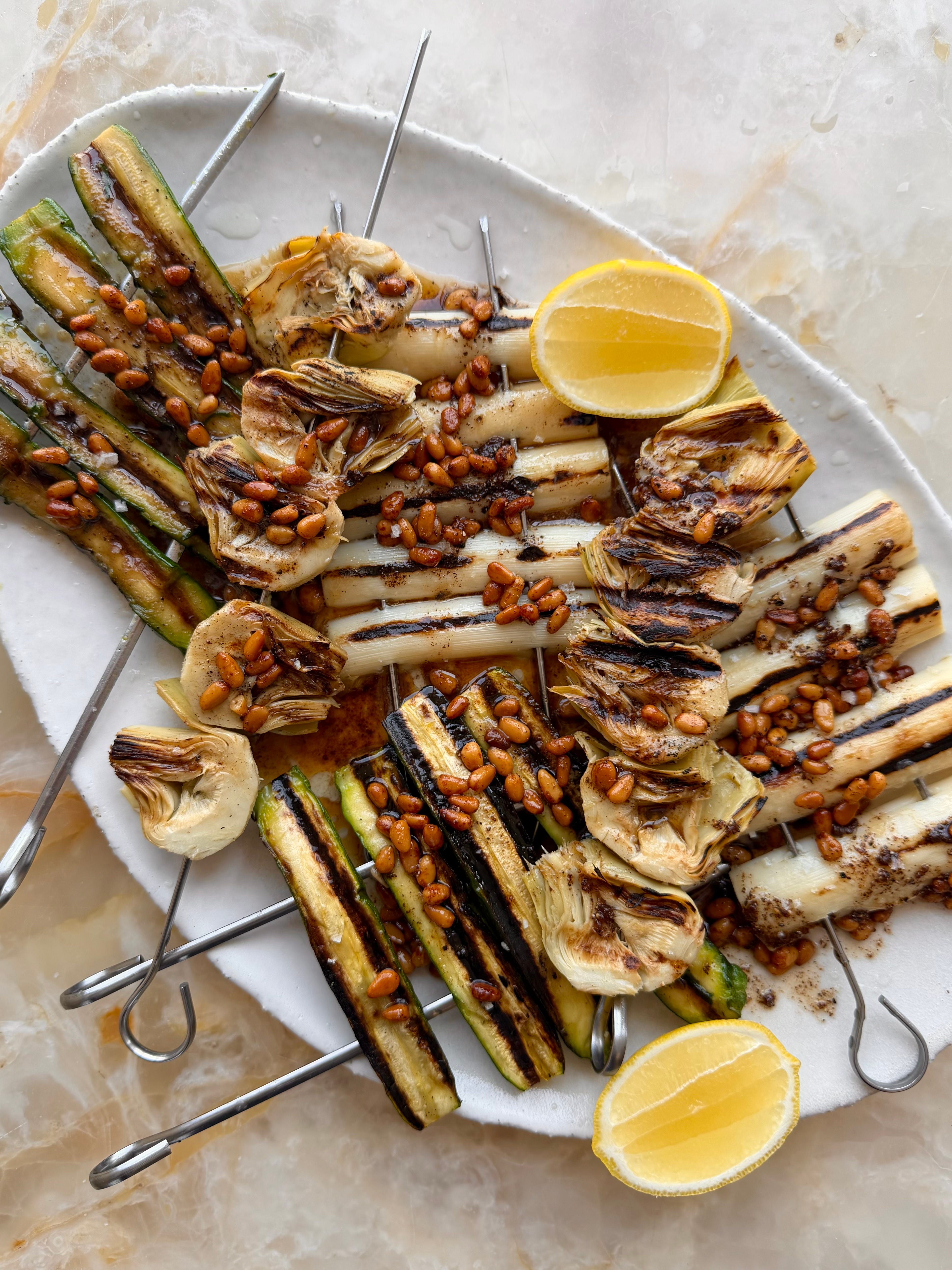
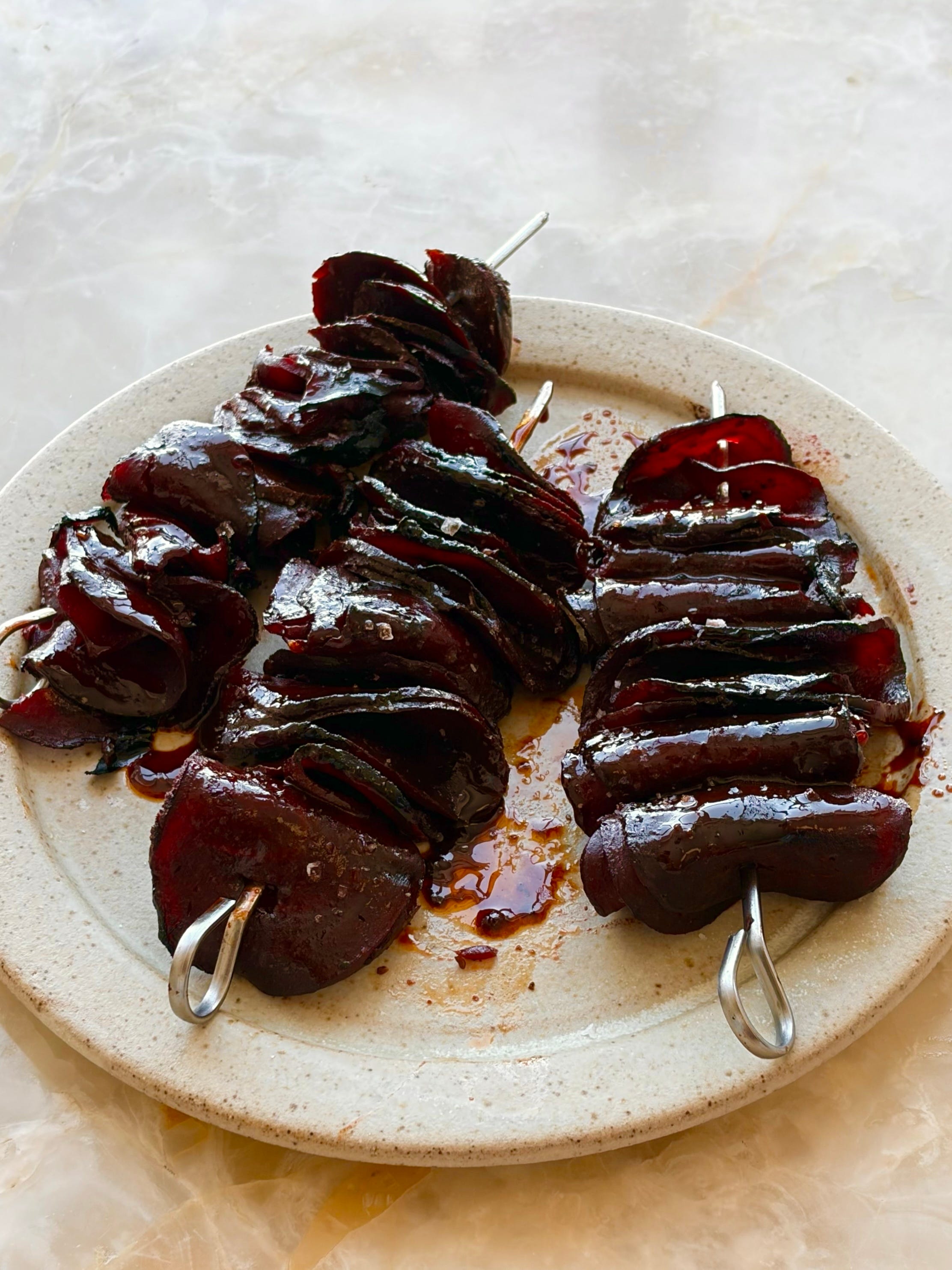
After my recent trip to Japan, I cleared out my cutlery drawer and made space for a large set of bamboo chopsticks (plus some fun ceramic chopstick rests). Out with the old and in with the new, only that I chose to ignore my random collection of loose metal skewers - thin ones, all different lengths, most bent from God knows what.
Each summer, maybe once or twice, they make themselves very useful - for skewers of spicy prawns or marinated chicken, for courgettes, padron peppers, halloumi, or a pile of shiitake mushrooms, all stacked together.
I see so many vegetable skewers that consist of: a courgette coin, a mushroom, lots of different sizes of red pepper chunk, repeat, maybe a wedge of red onion.
I’ve never fully understood the urge to do this - it’s a triumph of visual logic over cooking logic. Courgette, mushroom and pepper all need different things from the heat. By the time the pepper’s picked up any real char, the courgette has gone from crisp to sad and watery, and the mushroom is either underdone and spongy or shrivelled down to nothing. Three separate vegetables having three separate bad experiences, unified only by the stick…
There’s plenty of my kind of skewers in a new book by Helen Graham, dedicated to vegetables.
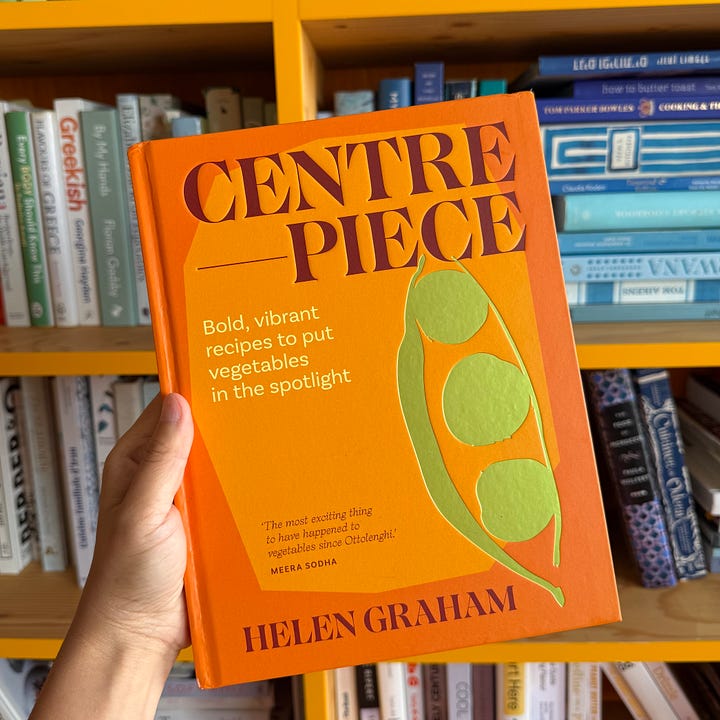
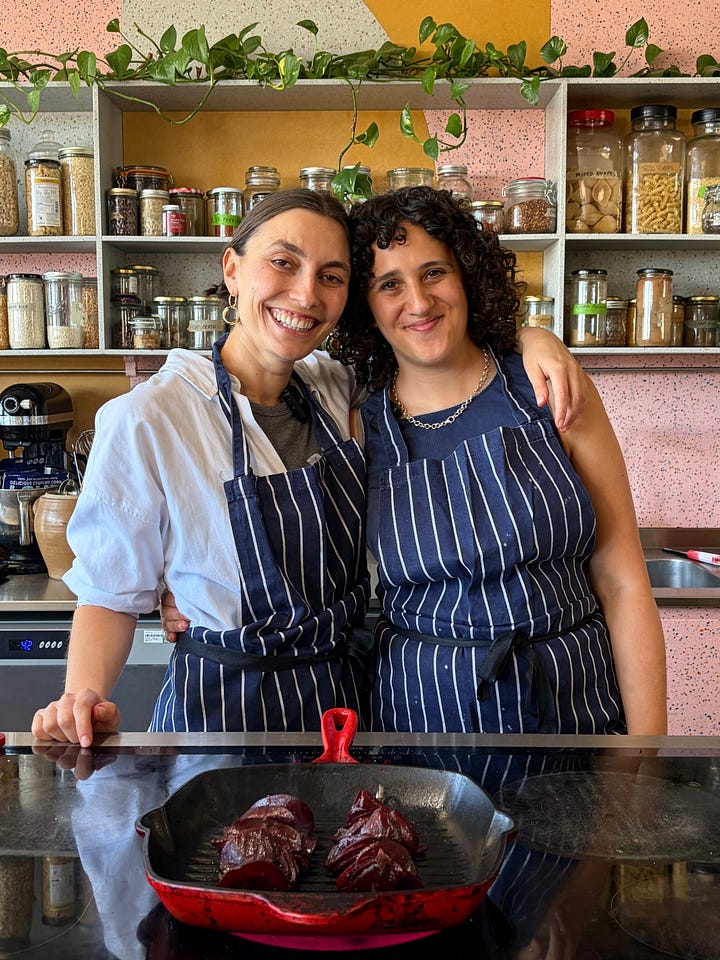
“The joy of vegetable skewers comes from the bits that are jammy, a little caught, caramelised and crisp,” she writes. “What makes all skewers - meat or vegetable - delicious is their imperfections, the variety of textures from areas cooking slightly differently, smaller bits which are crispier than the rest.”
Please think of these words whenever you’re tempted to line things up too neatly.
A few things I do when I think about sticking vegetables onto those thin metal rods. I sort by density, not variety - skewering only things that cook at roughly the same speed, like an all-courgette skewer, or an all-mushroom one - and let each get the attention it needs. I pre-cook the stragglers: a quick par-blanch or par-roast for anything dense, like potatoes or squash, before it goes anywhere near a skewer. And for courgettes and mushrooms, which are particularly thirsty, I marinate hard - even just with lots of chilli, garlic, lemon and oil, it adds a lot of the flavour that direct char alone won’t manage.
When it comes to taking them to that next level, it’s really just about being prepared with a dressing - one good one, made in a big batch, that can do double duty across whatever’s coming off the grill. A batch of aubergines and courgettes, say, all finished with the same spoonful, like today’s baharat brown butter, or the chipotle-date glaze, or just a simple gremolata made from parsley, lemon, garlic and olive oil.
Both of today’s recipes can be done over the hob or on the BBQ (if you’re choosing the former, using a heavy-bottomed griddle pan will get you those same smart black lines). And bent skewers at the back of the drawer will do just fine.
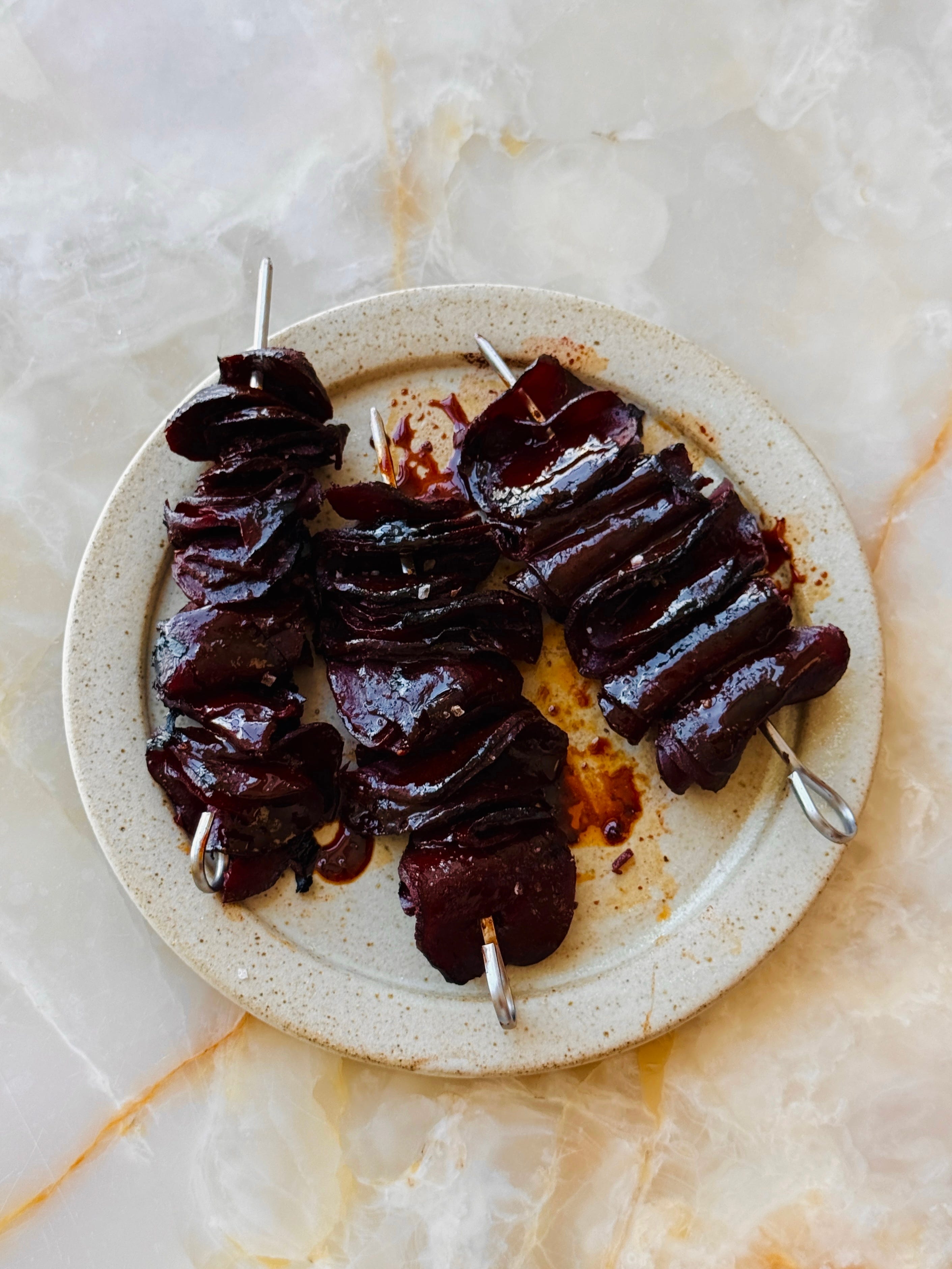
These take almost no time to put together and are arguably the best use for the vacuum-packed beetroot that’s been sitting in your fridge drawer for longer than you’d like to admit. The chipotle brings the smoke, and the date syrup pulls out the beetroot’s natural sweetness and balances everything else.
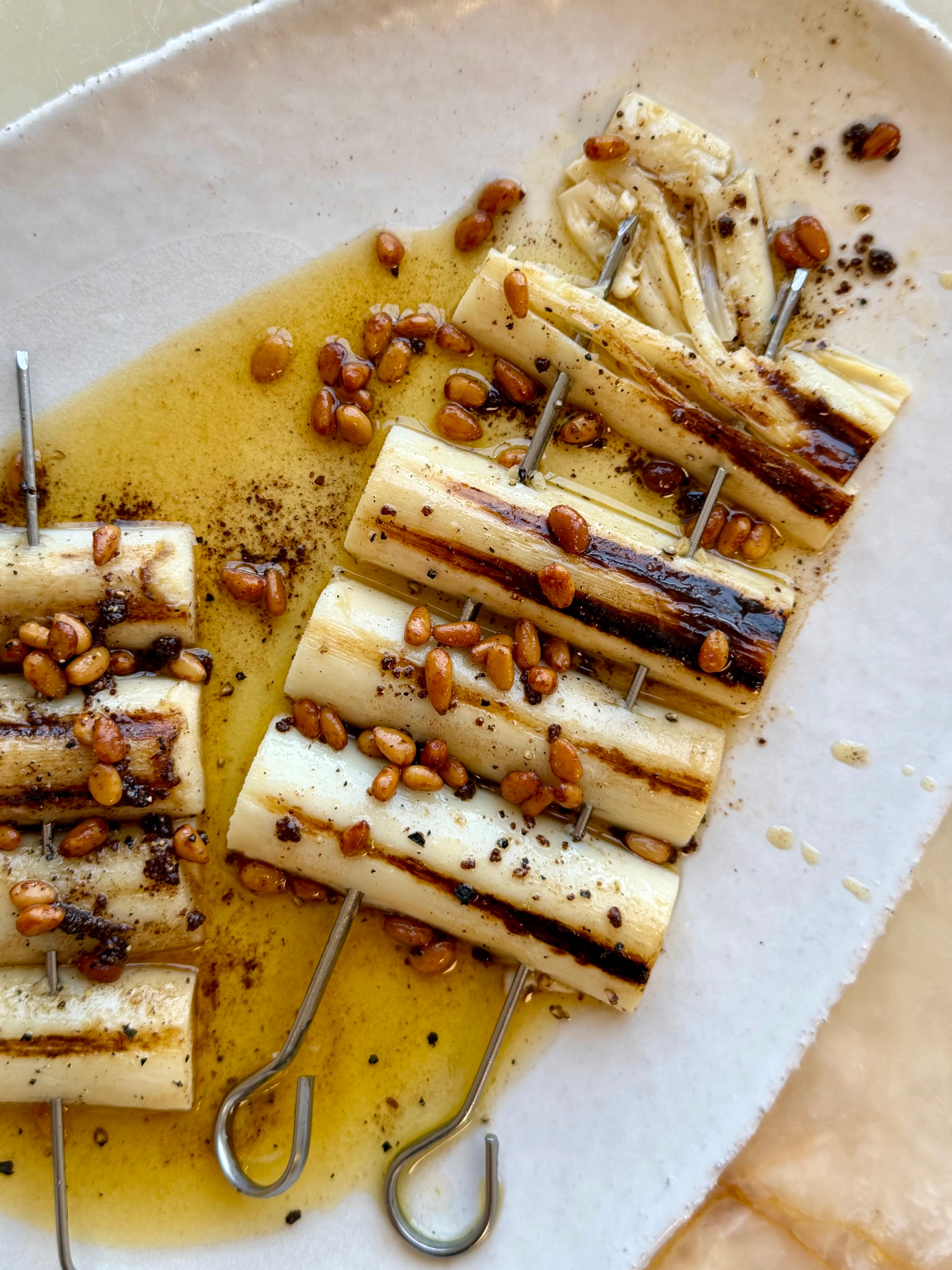
The brown butter is the point here - baharat-spiced and deeply savoury, worth making more of than you need because it works on almost anything: courgettes, mushrooms, tinned artichokes.
We’ve gone with hearts of palm, although we also tested it with one tin of those (instead of two), alongside 200g of baby courgettes and 400g of tinned artichokes (as in the photo above). The palm hearts are worth seeking out if you haven’t used them before. Taken from the inner core of certain palm trees, they’re mild, slightly sweet and tangy, and hold up well on the grill. Look for sustainably sourced tins - they’re widely available in larger supermarkets. Regular courgettes cut into thick coins work just as well if you can’t find any.

Comments
Nothing yet. Say the first thing.
Sign in to join the conversation.