
Together, The Orwell Prize for Political Writing and The Orwell Prize for Political Fiction reward the fiction and non-fiction that best meets George Orwell’s own ambition ‘to make political writing into an art.' This year’s winners will be announced next week, on June 25th in London.
Across the shortlists, our judges are looking for the same qualities found in Orwell’s writing — from courage and independence of thought to political purpose and clarity of expression. In advance of the ceremony, eleven finalists told us what matters most about their books.
Read on to find out what they had to say, and browse both shortlists — including extracts and judges quotes — on The Orwell Foundation website here. Over on Bookshop.org, the finalists have compiled their own reading lists inspired by their shortlisted books. Browse those here.
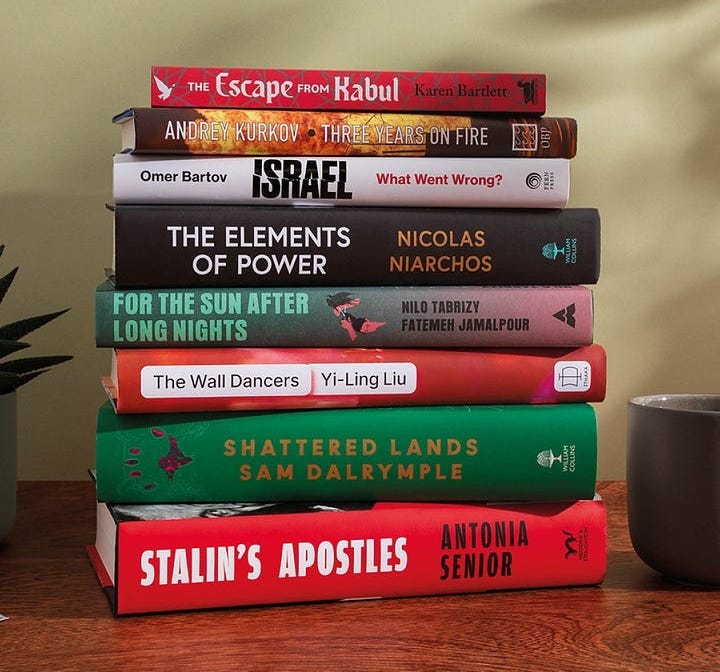
On a personal level, it matters because it is my contribution to the tapestry of accounts concerning this war of aggression against my country and the impact the war is having on Ukrainian society. From a public perspective, Three Years On Fire offers a portal into today’s Ukraine for those with little prior knowledge. I want the reader to glimpse a country in turmoil, but to retain images of individual and collective efforts to steer Ukraine out of this terrible storm.
Andrey Kurkov, Three Years On Fire — Political Writing finalist 2026
Stalin’s Apostles uncovers the role of the Cambridge Five in building Stalin’s empire. The Five have been portrayed in print and on film as glamorous rogues, who perpetrated a heist on a stale establishment. Their betrayals have hitherto been presented as a victimless crime. This Anglocentric, Reform Club version of the story ignores the victims of their treachery, the millions of people in Eastern and Central Europe brought under Stalin’s yoke.
Antonia Senior, Stalin’s Apostles — Political Writing finalist 2026
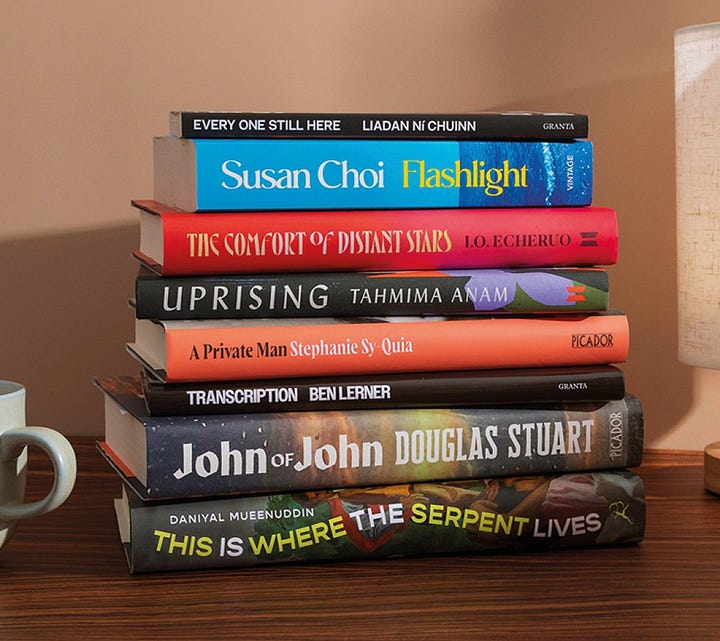
This is Where the Serpent Lives revolves around a powerful and rich feudal landowning family in Pakistan. It describes the lives of the Atars and their friends and allies and rivals and retainers in Pakistan’s cities and on their estate in South Punjab, passing across sixty years of the country’s turbulent history. The book considers the ways that men and women seek to gain and hold power and money and status, not just in Pakistan, but globally; for although the tale is set in Pakistan, these are universal human appetites. The hungry mind and the hungry heart are the same across cultures.
Daniyal Mueenuddin, This is Where the Serpent Lives — Political Fiction finalist 2026
We wanted to tell Iran’s story beyond uranium, sanctions, proxy wars and the realities of war — through streets, dormitories, kitchens, classrooms and prison cells, where history is also made. The book matters because Iranian women’s fight for liberation is neither new nor finished. It is a record of resistance, sisterhood and hope; of a generation refusing to be suppressed in the name of religion any longer.
Fatemeh Jamalpour, For the Sun After Long Nights — Political Writing finalist 2026
Our book follows the first woman-led revolution of our time, platforming and highlighting voices that are often overlooked in Western media. As an investigative journalist, I write as an intentional act of documentation; to etch experiences in the public record. There are few Iranian women journalists in visible roles and I feel it’s my duty to use the space that I’ve been given to do this work, even if that means no longer being able to return to my birth country.
Nilo Tabrizy, For the Sun After Long Nights — Political Writing finalist 2026
Canongate, my publisher, describes the novel as Things Fall Apart meets A Beautiful Mind. Because The Comfort of Distant Stars explores the familiar world through the eyes of a physicist and his enmeshment with ancient Igbo cosmology, it challenges the reader’s perception of reality. With its singular voice, humour and outrage it draws us away from the unstated, but prevalently European, cultural lens with which we are accustomed to view the world and suggests other ways to approach reality, perspectives that are valuable and accessible to us all.
I.O. Echeruo, The Comfort of Distant Stars — Political Fiction Finalist 2026
The Escape from Kabul is about a small, but very important, group of Afghan women – judges. It’s about their eventual, and extremely perilous, escape from the Taliban in the summer of 2021, and the international sisterhood of women who believed in them, and helped them, when the international community largely stood by and left them to their fate. The story matters because it documents their immense achievements and bravery over twenty years as pioneers for women’s rights and justice in their country – as well as the human consequences and aftermath of those caught in the web of global political struggles, wars and invasions.
Karen Bartlett, The Escape from Kabul — Political Writing finalist 2026
There are six stories in this book. Three of them have never been published before. The book’s come together over a few years; it’s felt like a long process, getting here, having them all ready. I was asked before what unifies the stories: I think it’s what people do for each other; I think it’s probably grief.
Liadan Ní Chuinn, Every One Still Here — Political Fiction finalist 2026
I wrote this book after the October 7 attack by Hamas and the devastation of Gaza that followed it. The book matters because it seeks to explain the nature of the events in Gaza, concluding that Israel committed genocide, and because it reconstruct the origins of the violence, going back to the beginning of Zionism in the late 19th century and demonstrating the reasons for its transformation into an increasingly violent and oppressive state ideology since the foundation of Israel in 1948. Finally, the book proposes a path for a better political future for Israelis and Palestinians alike.
Omer Bartov, Israel: What Went Wrong? — Political Writing finalist 2026
Flashlight tells the story of a small family – father, mother, and child – made smaller by catastrophe. One evening in the late 1970s on the coast of Japan, where they are visiting, Louisa and her father go for an evening walk from which only Louisa returns. What appears at first to be an accident turns out to be an outcome of the sorts of historical forces – ambitious empires, amoral autocracies – that impact us all whether we realize it or not.
Susan Choi, Flashlight — Political Fiction finalist 2026
Uprising is about a revolution among a group of sex workers on a sinking island off the coast of Bangladesh. I wrote it because I wanted to remind people of the power and joy of protest. If the women on this island can go on strike – if they can say no to the terrible conditions into which they were born – then so can anyone. This novel is my own personal act of civil disobedience.
Tahmima Anam, Uprising — Political Fiction finalist 2026
Comments
Nothing yet. Say the first thing.
Sign in to join the conversation.