
Last night, Thursday 25th June, we revealed the winners of the 2026 Orwell Prizes at a Ceremony at the Bloomsbury Theatre, hosted by Lord Kim Darroch, Chair of Trustees of The Orwell Foundation, on an evening which also saw Ukrainian writer Andrey Kurkov awarded the Special Prize for “one of the finest bodies of work in contemporary literature”.
The Orwell Prizes aim to encourage good writing and thinking about politics, with our panels of independent judges asked to find winning entries which best meet Orwell’s own ambition “to make political writing into an art”.
The winners of the 2026 Orwell Prizes are:
Winner: Karen Bartlett – The Escape from Kabul (Duckworth Books)
Rohan Silva, Chair of Judges, said:
“For this year’s prize, we especially looked for books that honour Orwell’s commitment to lucid language and intellectual honesty. By both of these standards, The Escape from Kabul smashes it out of the park. It’s taut and crisp, and shines a light on a story that deserves attention. The plight of Afghanistan’s immensely brave female judges in the face of Islamic fundamentalism is a gripping tale – and Karen Bartlett tells it with deep reserves of empathy and compassion. The book is truly Orwellian in the most positive sense, and a richly merited winner.”
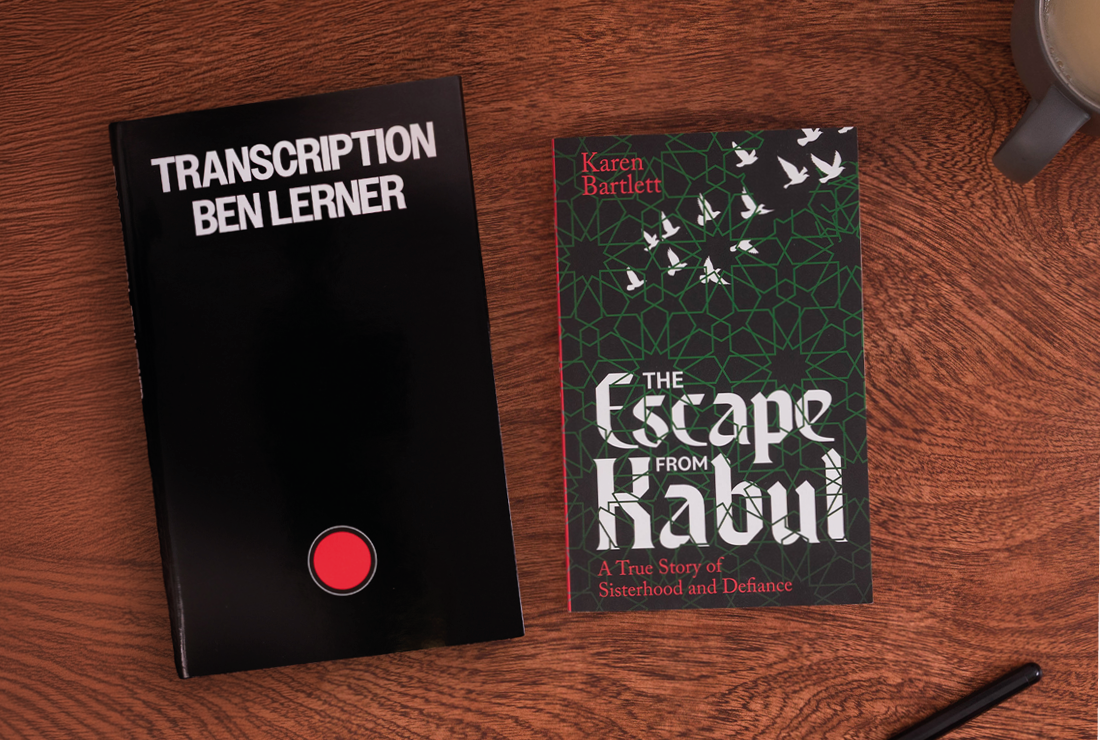
Winner: Ben Lerner – Transcription (Granta)
Fiammetta Rocco, Chair of Judges, said:
“Our shortlist is full of books which explore the world we know and look towards the world we want to see – our winning book needed to encompass both. For a book so slim, Transcription by Ben Lerner does so much. A forensic study of our insatiable appetite for new technology, it explores the unreliable stories we tell ourselves about hunger, love and connection. It is about dying with dignity and growing up in a new world. It’s funny, brainy and timely. Lerner deserves to be a household name.”
Read an exclusive interview with Lerner in today’s Telegraph here.
Winner: BBC Panorama
Greg Williams, Chair of Judges, said:
“It requires a special kind of courage to investigate the state itself: to follow evidence wherever it leads, and however long it takes. Hannah O’Grady and her Panorama colleagues spent years refusing to let allegations of unlawful killing by Special Forces in Afghanistan be buried by institutional silence and their exceptional entry was only the latest step in that story. Bravery, intellectual courage and political purpose are core Orwell Prize values, values which exist to reward work that holds power to account. It is hard to imagine a clearer case.”
Winner: Island of Strangers, The Daily Mirror
Philip Collins, Chair of Judges and editor of Prospect, said:
“The Orwell Prize for Exposing Britain’s Social Evils celebrates the best investigative reporting on our social fabric. As that name implies, the worlds these films enter – from Merseyside to St Mellons – are complex and Island of Strangers celebrates that complexity in our country’s written-off communities, rejecting simplistic stories of despair. Ros, Claire and John have shown us that the truth is almost always more complicated, and more hopeful, than the slogans. Together, they have given us a portrait of a country that, beneath the noise, is still full of people working together.”
In addition to the overall winners, two runners-up were also announced: Hannah Barnes (The New Statesman), for her work exposing the crisis in England’s maternity services, and Katherine Denkinson (London Centric, with Jim Waterson and Polly Smythe) for a series of investigations into the fake stories gaining huge attention and worsening public trust on social media platforms like TikTok.
Winner: London Centric
Michael Gove, Chair of Judges, said:
“London Centric were deserved winners from an incredibly strong field. These articles together are a brilliant example of campaigning journalism, shining a light on outrageous behaviour and one of the most grotesque forms of landlordism. But they also generate a challenge to policy makers, by bringing to life the reality of how dysfunctional our property market is, and what we all need to do to prevent homelessness before it happens.”
Andrey Kurkov was also present to receive the Special Prize, which has been awarded only eight times since 1997, and spoke movingly about reading Orwell for the first time, in banned editions, under the Soviet Union.
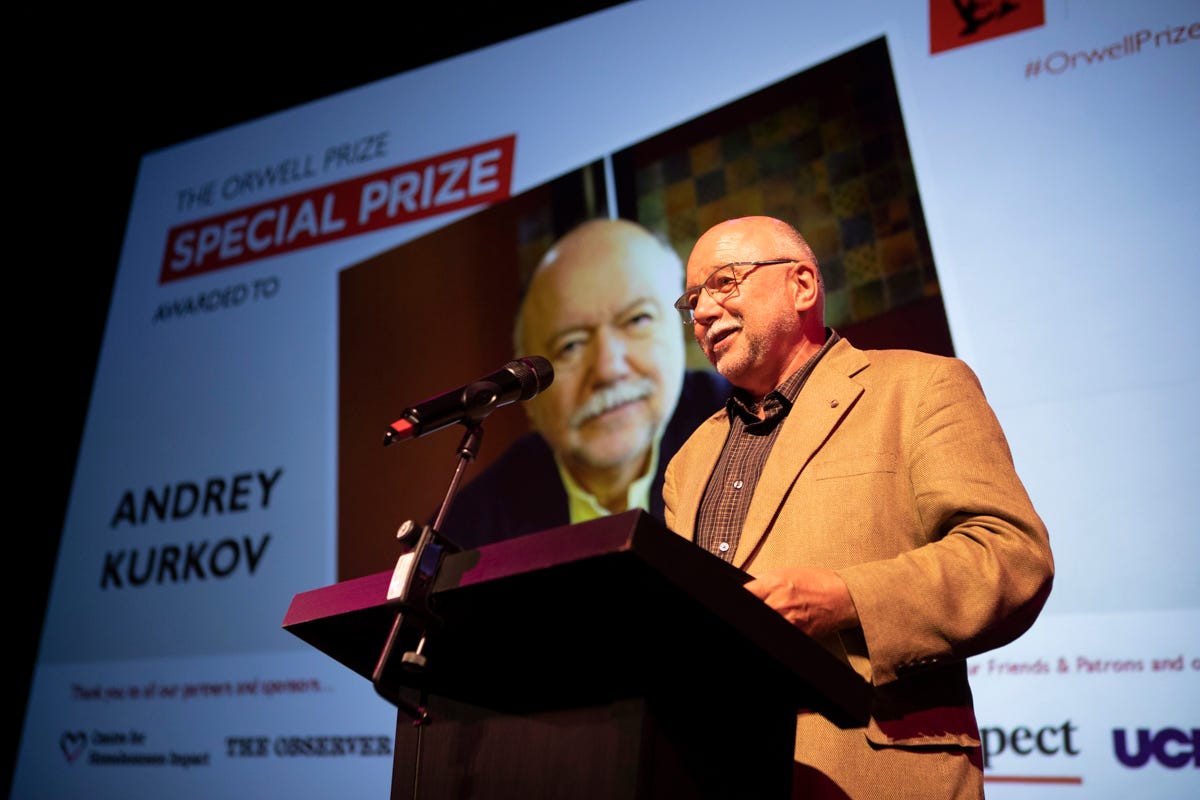
Lord Kim Darroch, Chair of Trustees, said:
“Tonight, we are honoured to have with us the greatest living writer of his nation. As Orwell did, he writes across fiction, non-fiction and journalism. Readers across the world marvel at the beauty of his storytelling and the horrors of the war he describes. Today, people going about their daily lives in Sudan, Gaza, Myanmar and many more besides – are sadly familiar with the realities of war. And so too, of course, are our European neighbours in Ukraine.
Nobody has documented their daily struggle – and the culture, resilience, humour and togetherness emerging from it – as well as Andrey Kurkov. Alongside his diaries and essays, his novels – from the brilliant Death and the Penguin to his recent trilogy set in pre-Revolutionary Kyiv – constitute one of the finest bodies of work in contemporary literature. Orwell’s warnings against the dangers of totalitarianism and war read today as though they were written yesterday. Similarly, we believe Andrey’s books and journalism will endure.”
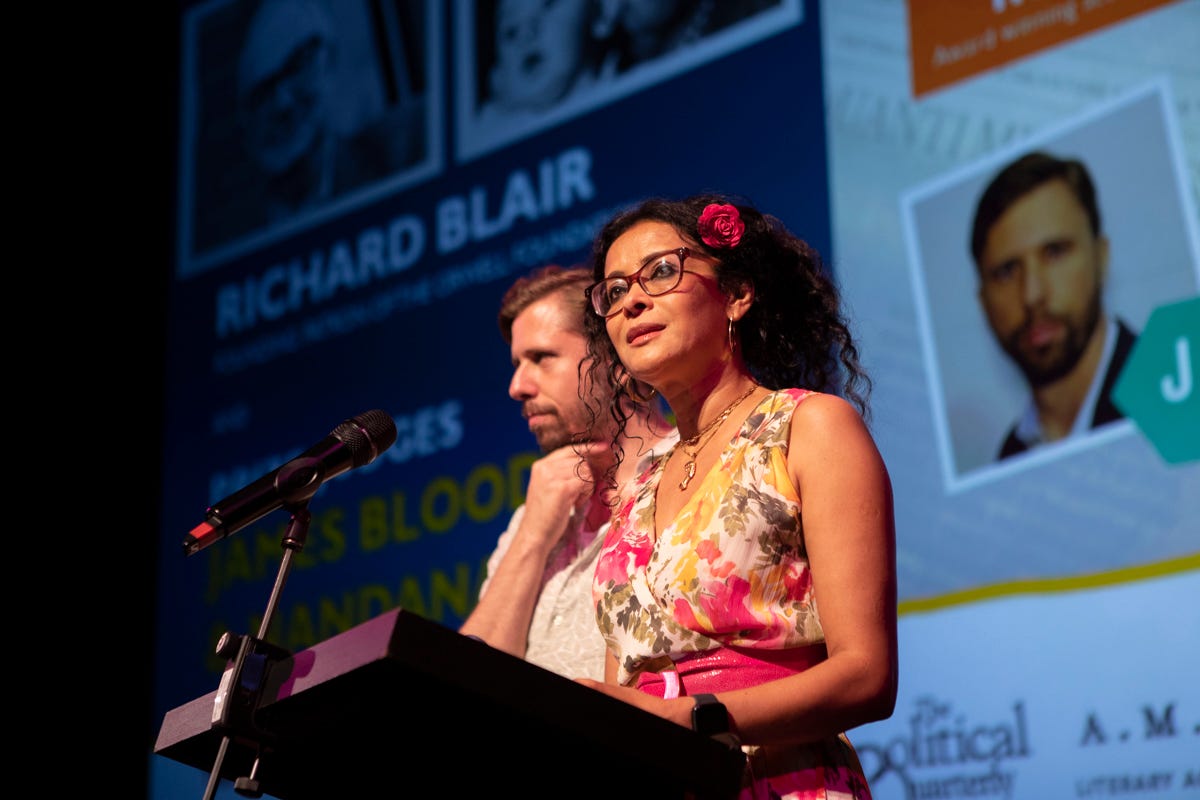
The winners and runners up in the Orwell Youth Prize also attended the Orwell Prize Ceremony and were awarded their prizes on stage by Richard Blair, George Orwell’s son, who was joined by judges James Bloodworth, and Nandana Sen. Sen said:
“I’m stunned not only by the sheer beauty of the winning entries, but also the nuanced political conscience (and global relevance) driving the work of all the finalists. Equally impressive is the spectacular range of genres that the teen and tween writers have chosen to express themselves in — be it fiction, play, poetry, memoir, letters, screenplay, narrative nonfiction, journalistic essays, social media posts, or diary entries. Even within fiction, I was thrilled to read sci-fi, satire, fantasy, naturalistic stories, YA fiction, and parodic tweets, to name just a few.”
This year’s winners will be published in The Observer, marking the start of an exciting new media partnership. Orwell wrote regularly for the paper, and its legendary editor David Astor was his close friend, and among his most important supporters. Winners also receive a cash prize and a set of Orwell books, donated by Penguin Books.
The Crick Prize, for the best essay in the Political Quarterly magazine, was also awarded last night to Lee Jarvis, Michael Lister and Alex Powell for their article ‘Stop in the Law of the Name! Nominative lawmaking, populism and justice,’ which is available to read on the Political Quarterly website here.
The Crick Prize is named after the British political theorist Sir Bernard Crick, who first founded the Orwell Prize with support from the Political Quarterly.
The Orwell Prizes aim to encourage good writing and thinking about politics, with our panels of independent judges asked to find winning entries which best meet Orwell’s own ambition ‘to make political writing into an art’. The Prizes exist to champion creativity and to explore plurality of opinion across books and journalism.
Since the Orwell Prize was awarded for the first time in 1994, the number of categories has grown to include awards celebrating writing and reporting which draws on the full range of Orwell’s contemporary legacy. In 2026, the Orwell Foundation is running six 6 prizes: the Orwell Prize for Political Writing, the Orwell Prize for Political Fiction, the Orwell Prize for Journalism, the Orwell Prize for Exposing Britain’s Social Evils, the Orwell Prize for Reporting Homelessness and the Orwell Youth Prize.
Comments
Nothing yet. Say the first thing.
Sign in to join the conversation.