
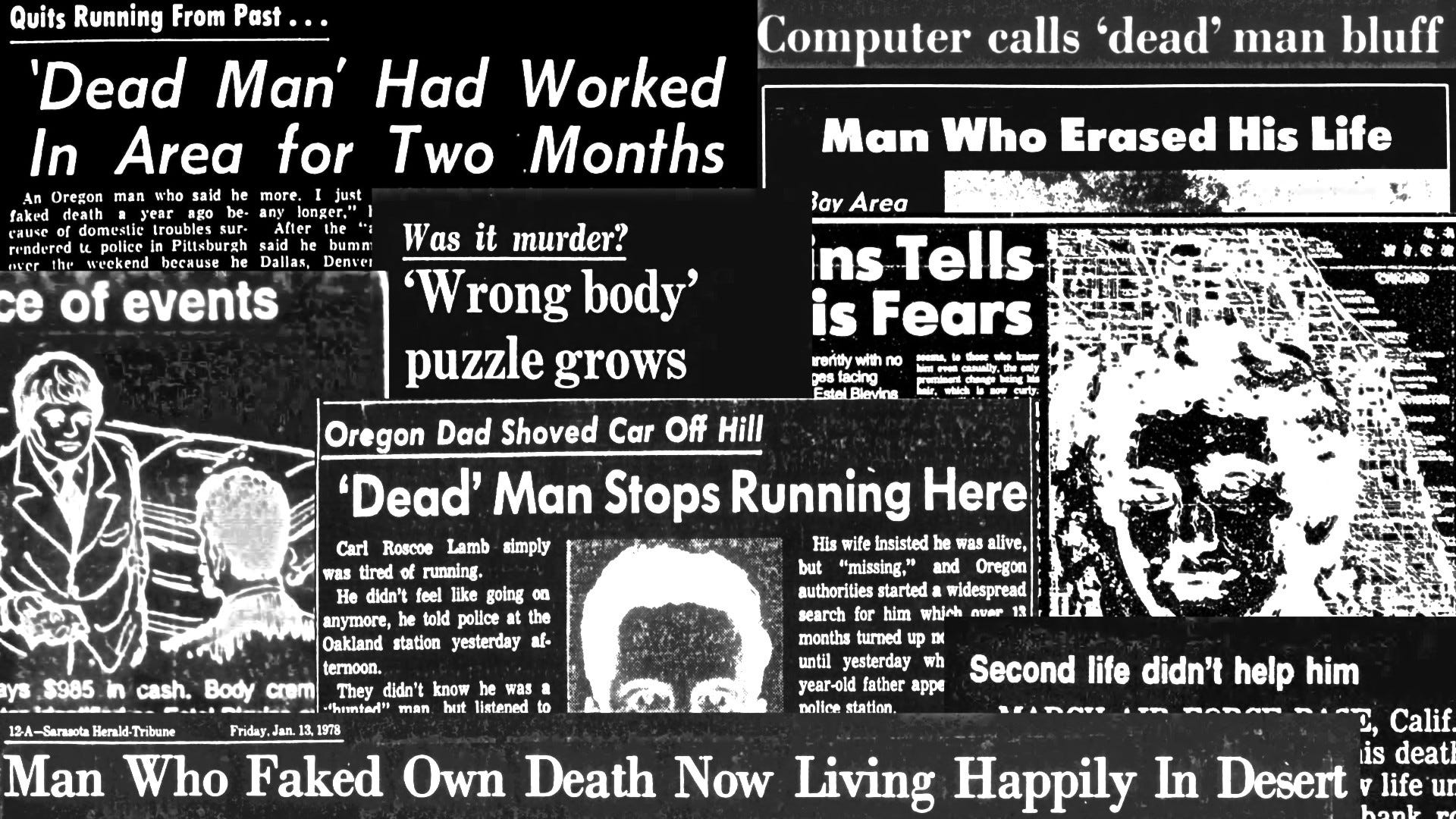
It was 8 p.m. on a Wednesday night in November 1966 and dinner at the Clearfield Curwensville Country Club was over an hour late. Members of the Retail Division of the Clearfield Chamber of Commerce, gathered for their regular meeting, sat restlessly awaiting their stuffed pork chops. Unbeknownst to them, the chops were burnt to a crisp and the cook was long gone. The cook, a man registered with the Pennsylvania Bureau of Employment Security as Carl Coats, was a new hire at the country club. Unfortunately for the club and the Chamber, Coats wasn’t a cook, wasn’t named Coats, and wasn’t supposed to be alive. For the past 13 months, the fraudulent fry cook, whose real name was Carl Roscoe Lamb, had bummed his way from Oregon to Pennsylvania, working odd jobs before finally making it as a short order cook. But back in Oregon, he was thought to be dead. Carl Lamb was on the lam.
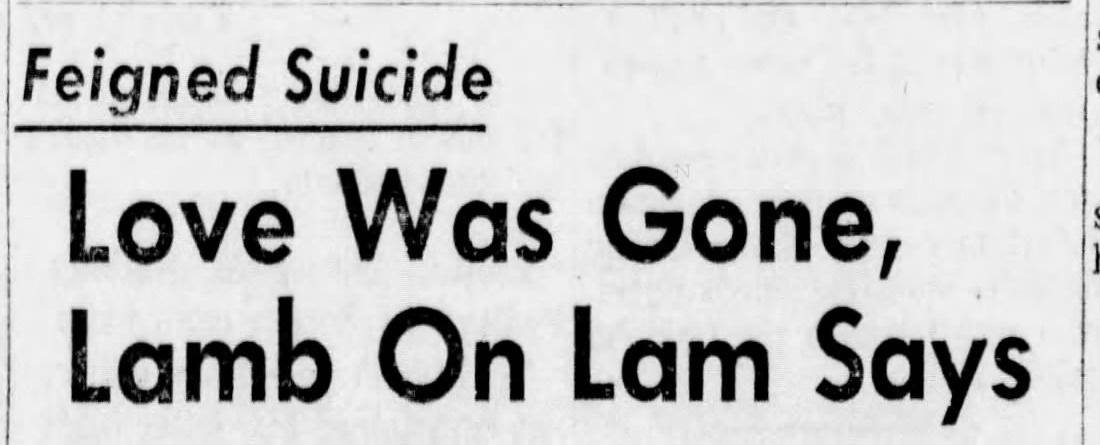
Just over a year earlier, in December 1965, Lamb rolled his car down an Oregon hillside into the Siuslaw River then went on the run with nothing more than the clothes on his back and $30 in his pocket. Police found the wreck and listed Lamb as “presumed drowned.” Broke and exhausted after a year of drifting, Lamb turned himself in at a Pittsburgh police station in January 1967.

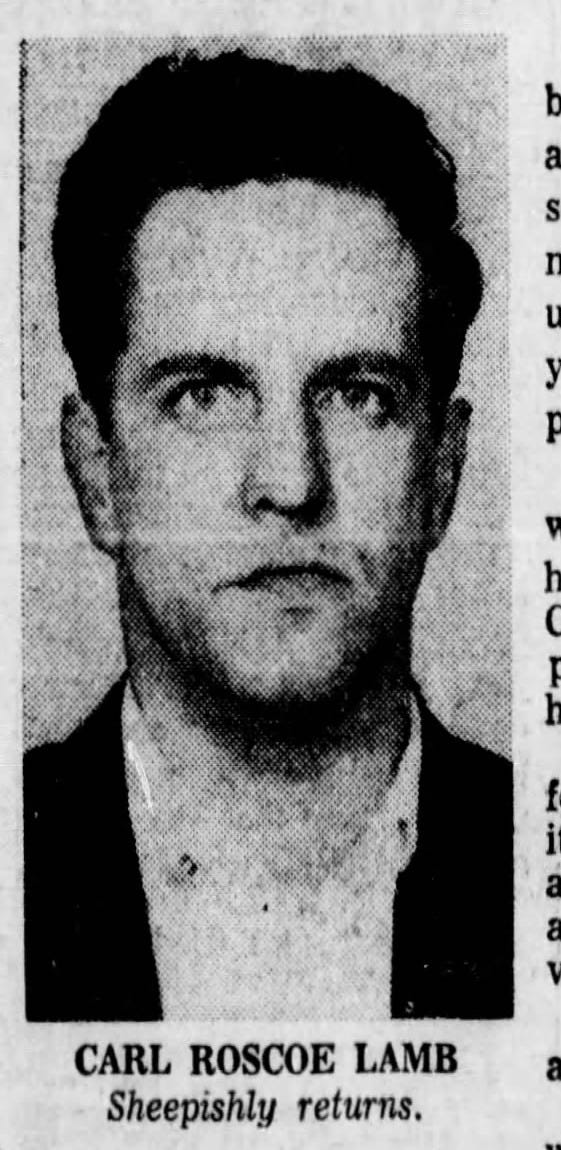
Unsure of what to do with the man, Pittsburgh police booked him on a technical vagrancy charge, holding him until Oregon authorities could make sense of it all. He ultimately returned to Oregon, pleaded guilty to charges of child abandonment, and was given probation.
For as long as there has been death, there has been the allure of faking it. History and pop-culture are littered with the imagined corpses of those who have tried. But from Shakespeare’s Juliet to The Simpsons’ Krusty the Clown, faking one’s death rarely pays off.
While the most common motives of insurance fraud and evading arrest are illegal, simply bugging out on your friends and family is not. In Lamb’s case, had his wife not filed desertion charges, he would have been fined for vagrancy at most. Even tricking your family into thinking you’re dead is not inherently illegal, so long as you don’t break any laws in doing so, such as forgery or filing a false report. Criminality is often intertwined with pseudocide but sometimes there is no money to be gained or charges to be evaded. Sometimes you want to go where nobody knows your name.
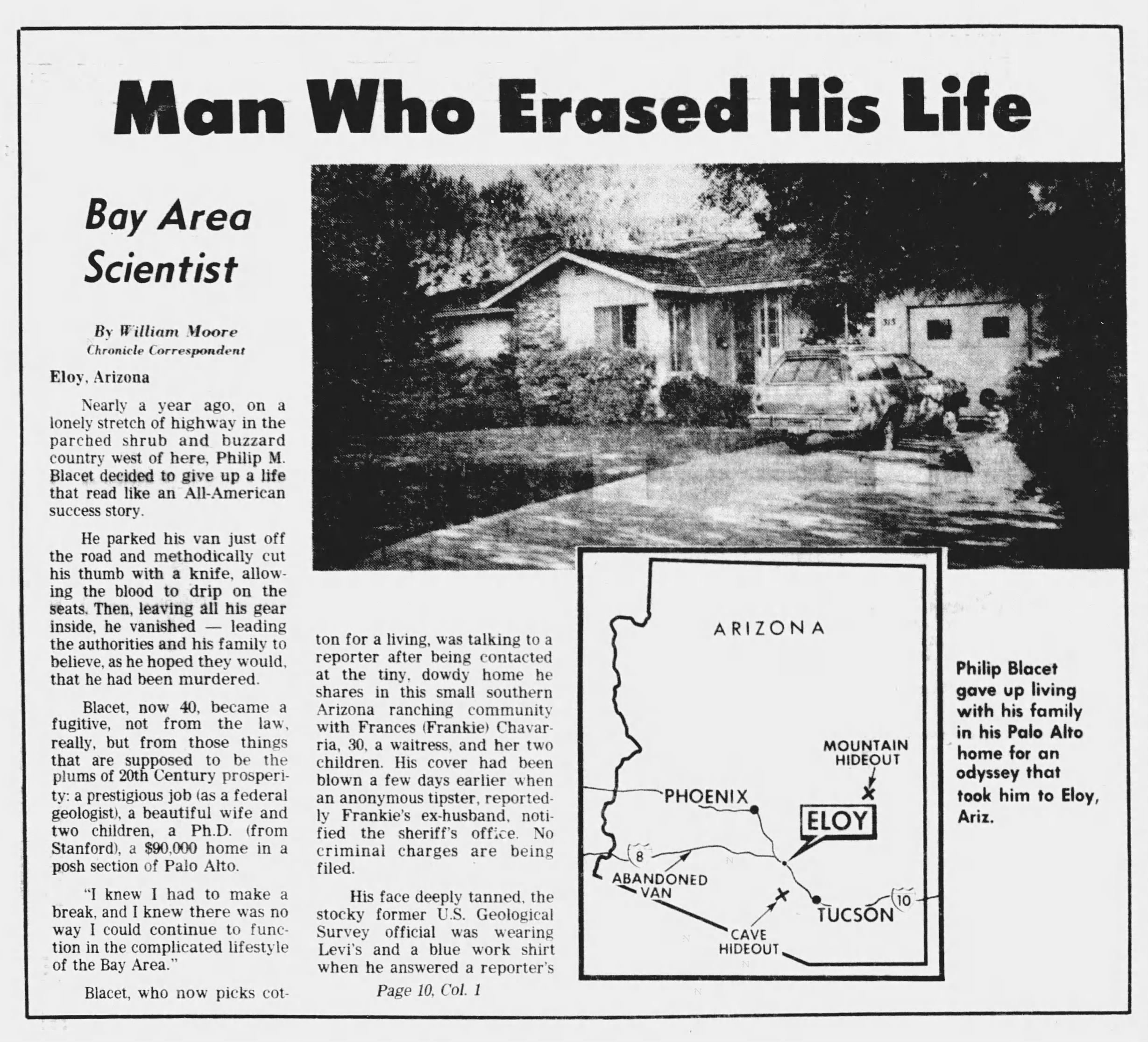
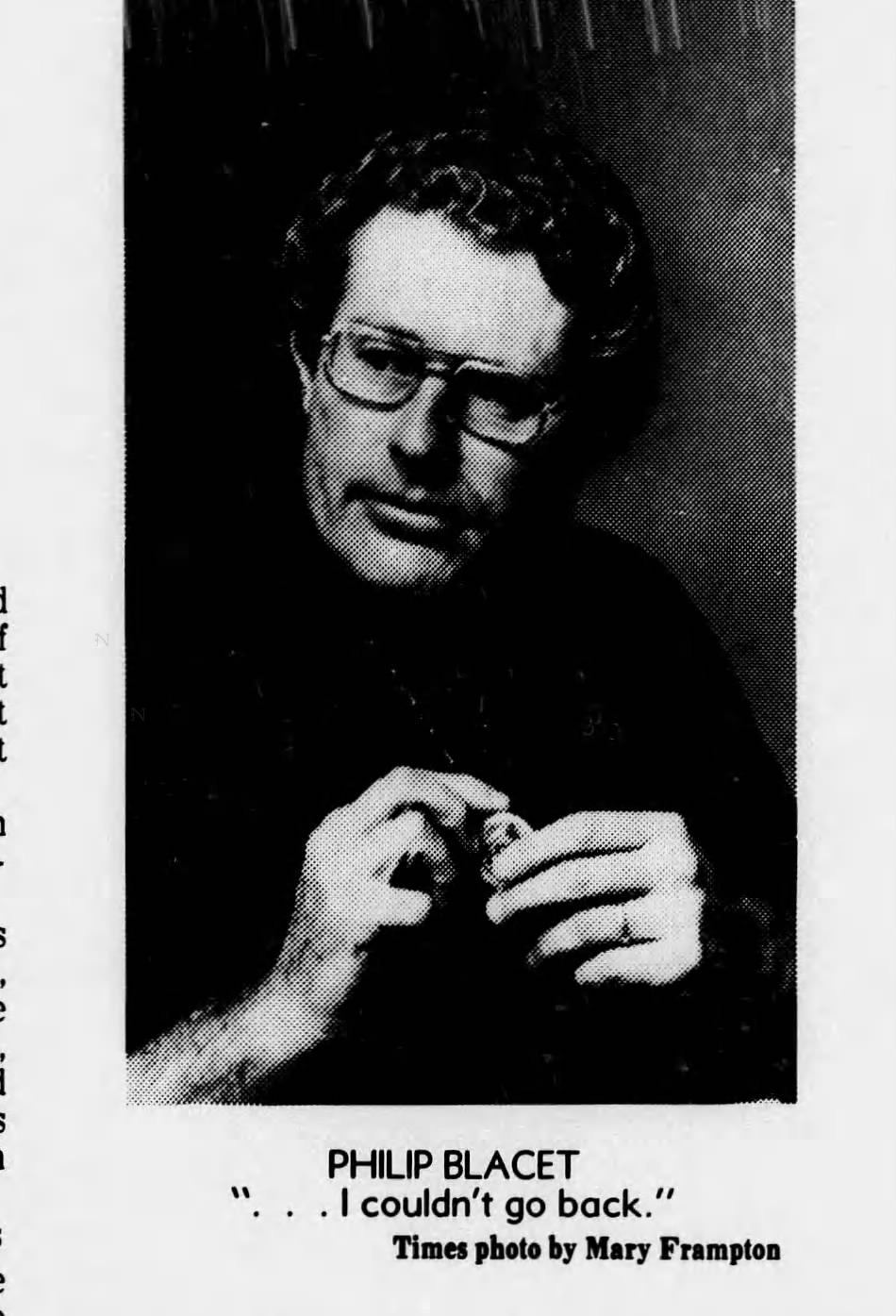
Philip Blacet seemed to have a lot going for him. He had earned a Ph.D. from Stanford, worked a well-paying job as a scientist for the U.S. Geological Survey, was married with two kids, and owned a home in Palo Alto. But his geological work sent him out on the road for long stretches, often leaving him alone in isolated deserts. When at home, he was despondent with the “complicated lifestyle of the Bay Area.” Over time he developed what he called “occupational schizophrenia.” And so, on November 19, 1976, while returning home from several months spent mapping the Tohono O’odham Nation in southern Arizona, Blacet abandoned his van and belongings along the side of the road and disappeared. Before fleeing on foot, he cut open his thumb and dripped blood on the van’s seats, staging a scene that convinced authorities he’d been murdered.
For the next several weeks Blacet hid out in the mountains, surviving on river water and food he had stashed away a month earlier. Eventually, he settled in the agricultural community of Eloy, Arizona where he was taken in by a waitress he had befriended while doing geological work in the area months before. At first, Blacet used an alias, but once it was clear no one was looking for him, he returned to using his real name. For the next 11 months, Blacet did odd jobs ranging from roofing to bartending before taking work operating cotton-picking machinery for $1.25 an hour, or $6.81 today. As a geologist he made $26,000 a year, just under $142K today.

Having broken no laws, and with no one searching for him, Blacet could likely have gone on to lead an anonymous life picking cotton, shacked up with a waitress. But his cover was blown when the waitress’s jealous ex-husband ratted him out to the sheriff. There were no charges to be filed, but a journalist heard the story and showed up at Blacet’s door. The story made national headlines, prompting Blacet’s estranged wife to track him down in Eloy. The couple divorced and Blacet remained in his simpler life with the waitress, even if there were some misgivings.

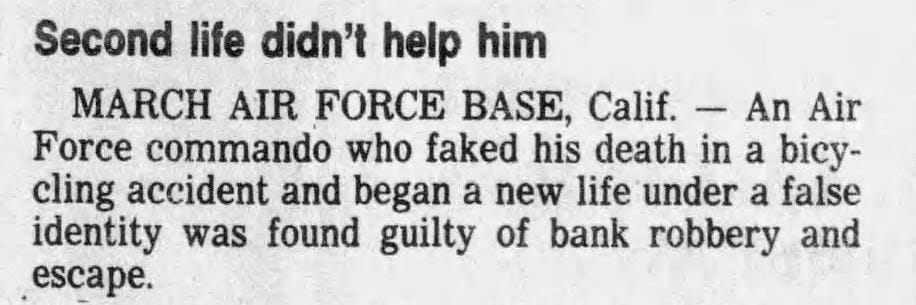
Death is a lot like sex, sometimes you just have to fake it. Promiscuity is often the undoing of second lives, as was the case of James Douglas Pou - that and robbing a bank dressed up as a ninja.

Depending on whom you asked, James Pou was either a daring U.S. Air Force hero, a notorious bank robber, a relentless womanizer, or a troubled victim of post-traumatic stress disorder. If you asked Pou, he might have said all of the above, which was exactly the problem. Facing an Air Force court martial, he claimed innocence “due to mental incompetency because of personalities in charge of me.” His second wife said he was just a pathological liar who would say anything to beat the wrap.
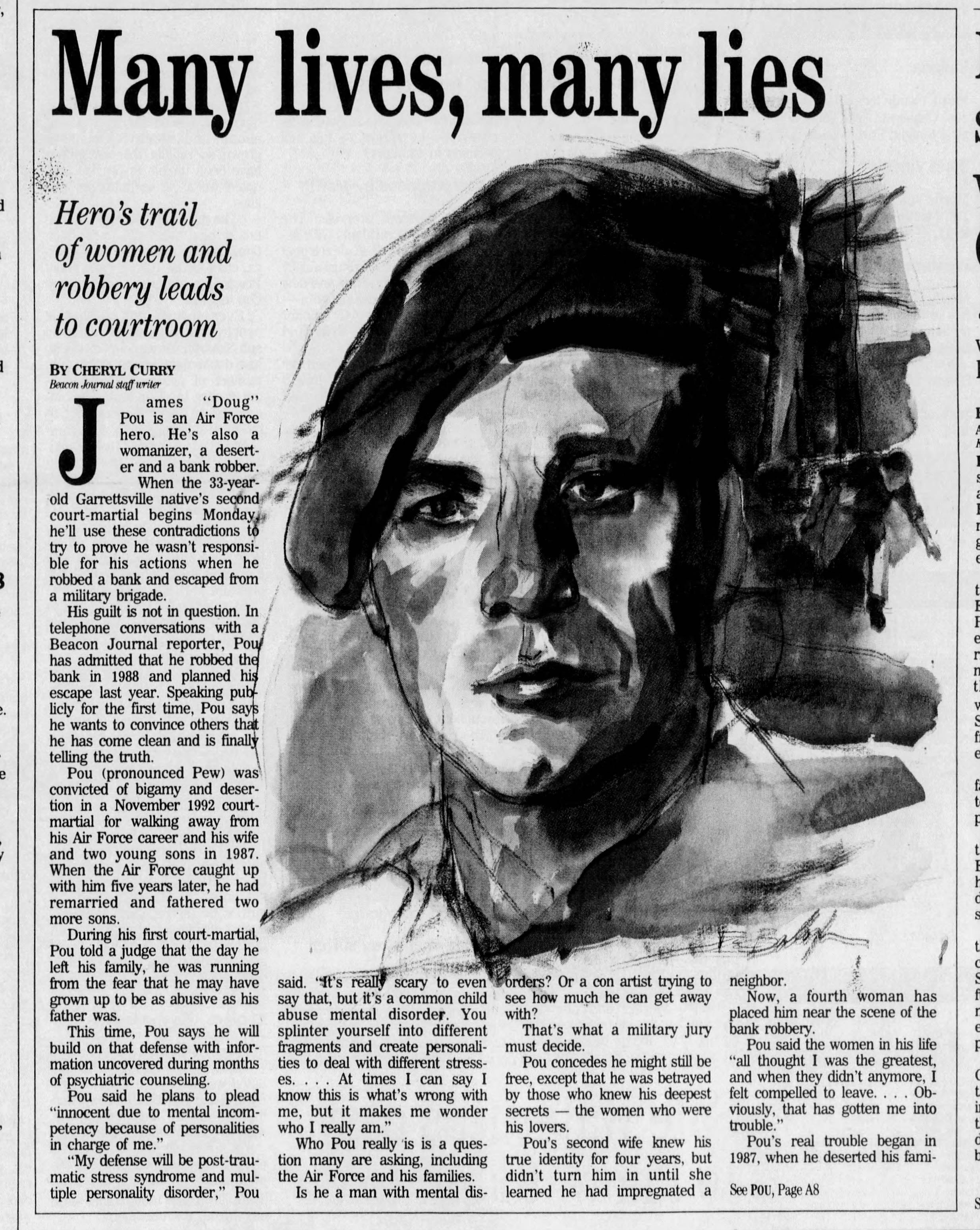
What’s not in dispute is Pou’s membership in an elite U.S. Air Force pararescue unit. Pou’s former captain described his squadron as leading adventurous lives rescuing people from avalanches, ship accidents, and plane wrecks in remote locations. Pou was credited with saving at least 12 lives and his attorney described him as a “certifiable all-American hero.”
In May of 1987, while stationed with the pararescue outfit in Albuquerque, New Mexico, Pou suffered what he described as an “insane moment” when his multiple personalities first emerged. Pou left home early the next morning on his routine bike ride, only this time he stomped on his bike to create the appearance of an accident, left a shoe on a guardrail, then dove into the Rio Grande and swam away, abandoning his wife and two young sons. Pou swam the river, hiked through the woods, then took a bus to San Diego where he sought out a woman he had met in a bar months earlier. He told the woman he was an Australian national working on secret missions for the military (it’s unclear if he employed a fake Australian accent in his new life).
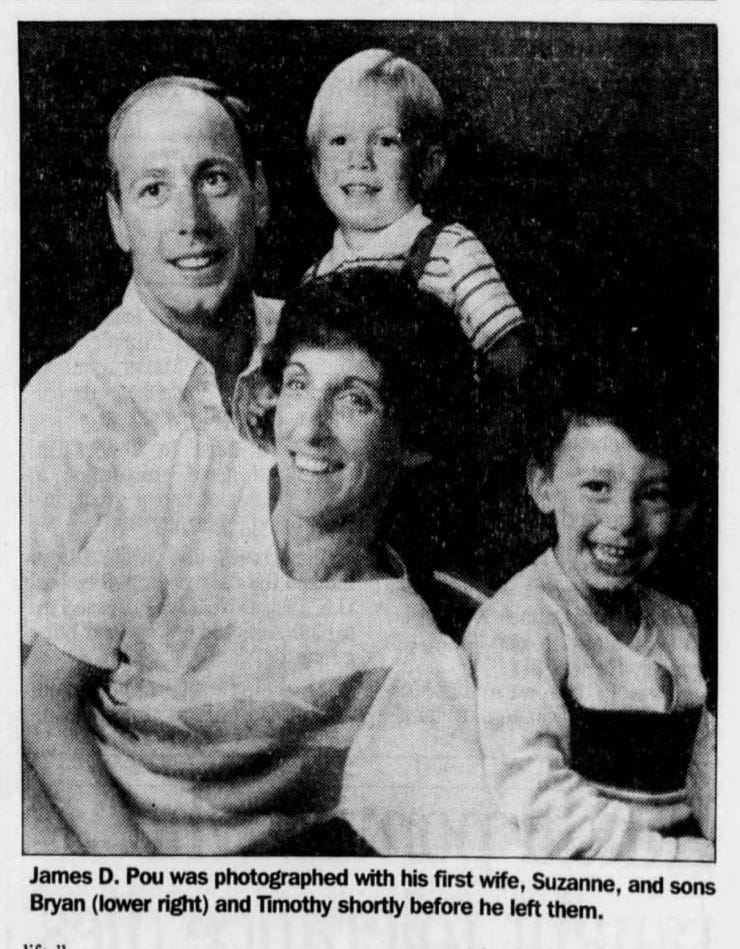
Four months later, Pou, now living as Christopher Keith Riggs, and his new lady friend were married. Pou’s wife took his fake name and the newlyweds soon started a business renovating and reselling homes. Then, after a year, Pou disappeared again, this time returning three months later with a suitcase full of cash.
Pou explained to his wife that he had been paid in cash by the military to leave. In reality, Pou had taken a trip to Texas where he robbed a small bank in Corpus Christi selected for its proximity to heavy woods. Armed with a smoke grenade and samurai sword and disguised in what prosecutors called a “ninja warrior” outfit, Pou took the bank for $40,000 and made his escape. Before returning home, Pou made time to “live it up” with another woman he met in Galveston, buying her jewelry and taking her to expensive restaurants with the money he stole.
Three months after returning to San Diego, Pou came clean to his second wife about his true identity. She kept his secret safe for years and they went on to have a child. In 1991, while she was pregnant with a second child, Pou left again. This time they kept in touch, continuing to work together, but remained separated. Pou worked doing home repairs, sending money to support his second family. Then, in 1992, his wife finally turned Pou in to Air Force officials after learning he had impregnated a woman in the neighborhood whose house he had been working on.
Pou pleaded guilty to desertion and bigamy in November 1992 and received a relatively light sentence of 11 months. While serving time, he was charged for the 1988 bank robbery. The Galveston woman with whom he had had a fling testified against him, as did his second wife. Faced with a second, more severe conviction, Pou disappeared yet again, this time escaping from March Air Force Base where he was being held. Pou claims he made keys to the jail doors from scrap metal, using an air conditioning unit as a grinding wheel. He lived in the woods, surviving on rattlesnake meat and berries. After sixteen days, he turned himself in, deciding he didn’t want to have to look over his shoulder all his life.
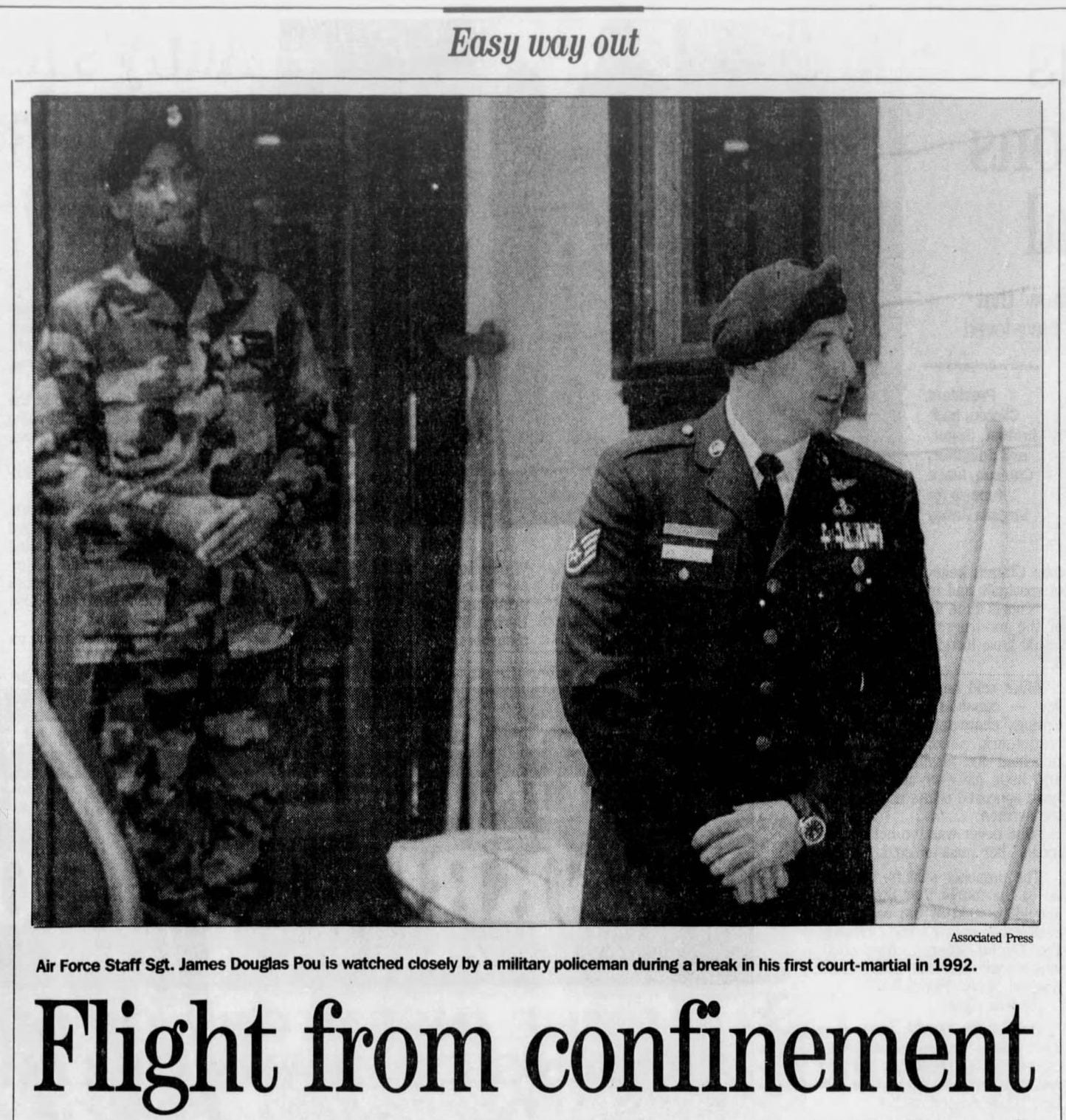
“I know this will make people mad and they’ll think I’m arrogant,” Pou said, “but it would have been too easy to start over again. This time it was either Canada or Mexico, but it was too simple to do it. To cross borders, to re-establish yourself in another name and get new bank accounts. I get sick to myself when I think about going through all that again.”
As Pou learned, faking the death is the easy part. The hard part is staying gone without drawing attention or bumping up against the law. Even if you don’t impregnate your neighbors or rob a bank, random chance might catch up to you like it did for James Smithy in the summer of 1987.

Smithy, a Chicago-area paramedic, evaded check-forgery charges by forging his own death certificate in 1986 and simply mailing it in. The charges were dropped and Smithy might have gone free were it not for a U.S. Census Bureau study on deaths related to drugs and alcohol. Since Smithy decided to give himself a rock star death, listing a drug and alcohol overdose as the cause, a Census Bureau computer selected his case at random. When the Census reached out to the coroner to see whether Smithy had died from drugs or alcohol, officials realized the certificate was the type used for death by natural causes and therefore a forgery.

“The crazy thing is, he had his death certificate filed in July and the renewal of his driver’s license was in October,” said Cook County Medical Examiner Robert J. Stein whose office uncovered the ruse.
Clinging to the material trappings of one’s past self, such as a driver’s license, is the ultimate rookie mistake. Escaping the world of the squares and truly going underground requires abandoning the notion of self, at least on paper. Living large is incompatible with living off the grid. Disgraced New Jersey State Senator David Friedland learned this the hard way.
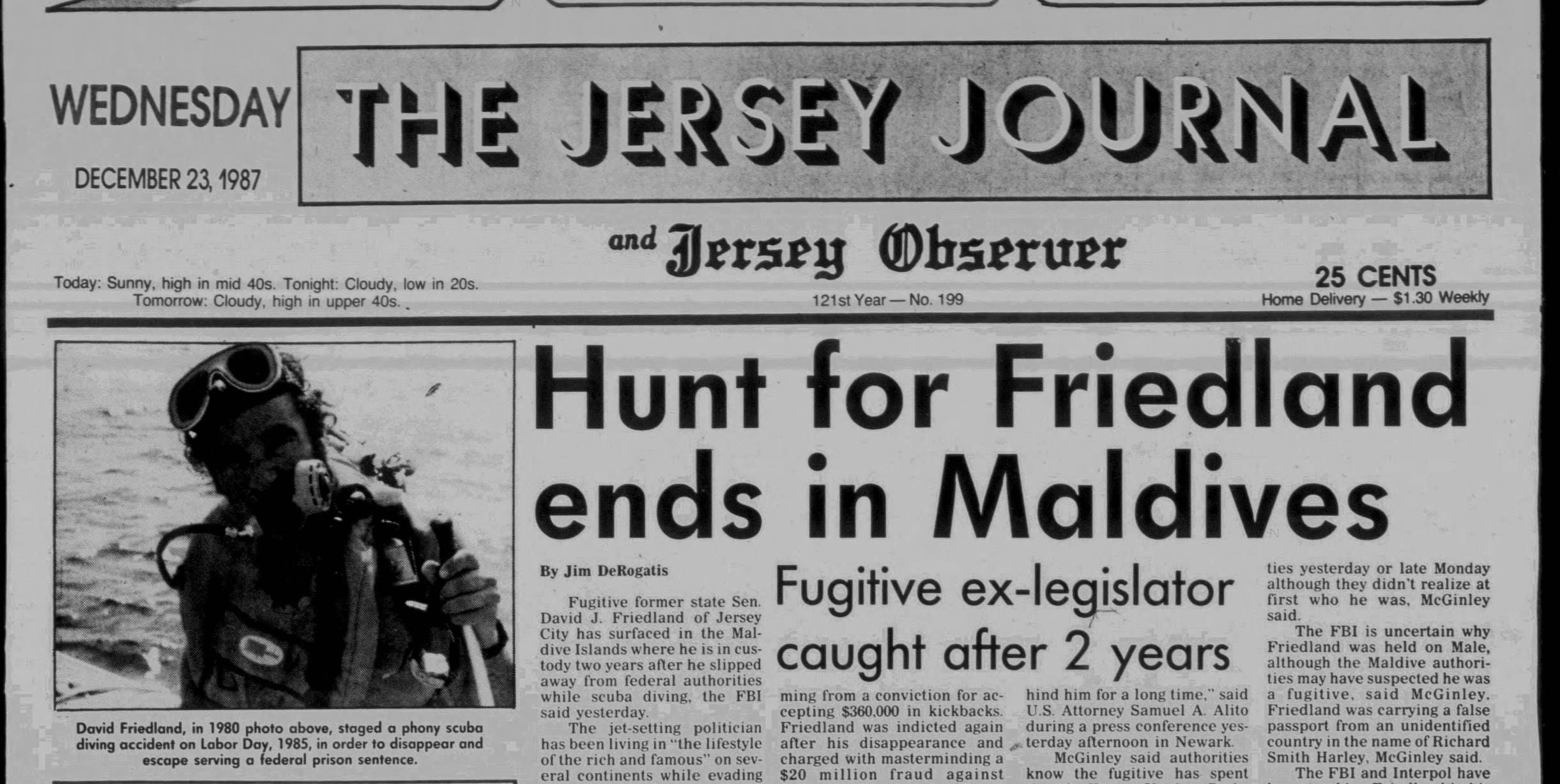
David J. Friedland was once an up-and-coming New Jersey politician. First elected to the General Assembly in 1965, at age 27, the Hudson County Democrat earned a reputation in the legislature as a colorful rogue, but his ethical failings hindered his rise. In 1971, he lost his law license after trying to use his office to get charges against a Mafia loan shark dropped. Following a brief hiatus from politics, Friedland bounced back, getting elected to the state Senate in 1977. Within a year, he was again in trouble with the law. In 1980, he was convicted of accepting kickbacks for arranging a loan from the Teamsters Local 701’s pension fund.
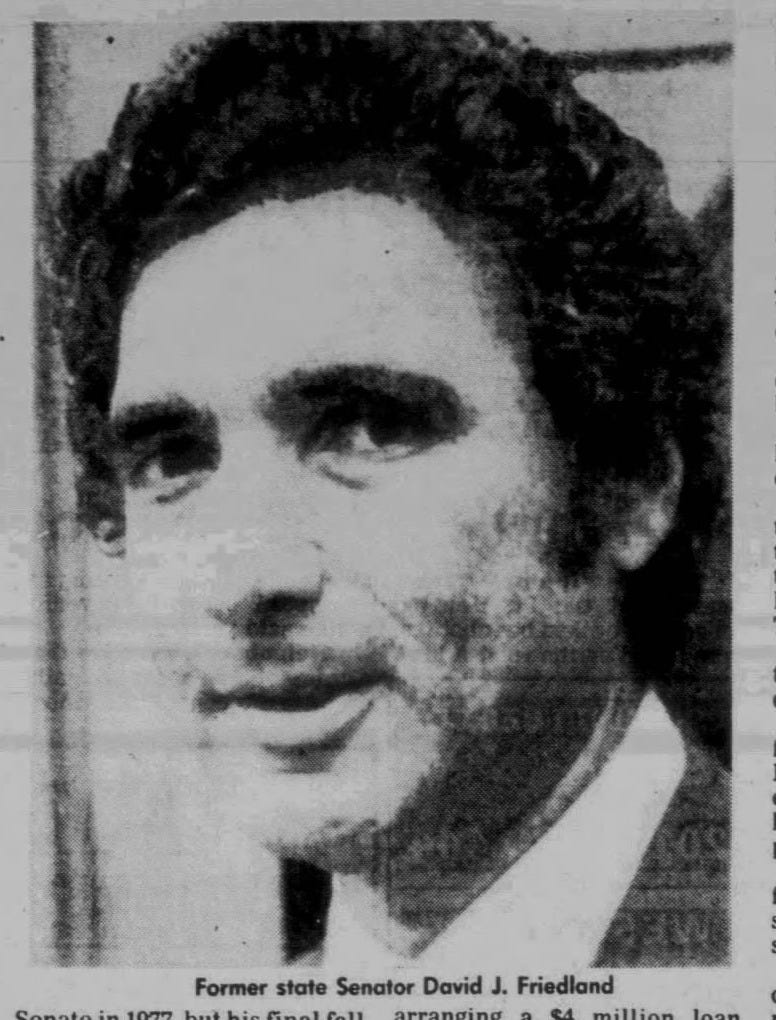
After his conviction, Friedland bargained for his freedom by becoming a federal snitch. He helped secure the conviction of a former corrupt mayor but leniency from the government remained elusive. In 1985, while waiting to find out whether he’d be locked up, he cooked up yet another scheme to bilk the Teamsters. When the U.S. Attorney’s Office told him an indictment was coming, Friedland made his move.
Friedland was an expert scuba diver and knew the Grand Bahama Bank well. Under the guise of fishing for lobsters, Friedland took to the sea, equipped with a lobster bag containing $35,000. He “fell” overboard near Sandy Key in sight of a friend he brought along to unwittingly serve as a witness to his demise. Deep below the water, Friedland had oxygen tanks waiting for him. He remained underwater for hours until the search was called off. He was picked up over a mile away from the dive spot by a Bahamian fisherman he had hired. Back on land, Friedland hitchhiked to a friend’s house to clean up. Soon after, he was boarding a plane to Spain.
As elaborate as his “death” was, officials never bought it and Friedland was charged again for his second kickback scheme. Weeks later, he released a statement through his attorney that he was alive but would not return for fear for his life. Friedland remained on the lam and found himself on the U.S. Marshal’s 15 most wanted list, ultimately claiming the top spot.

Friedland may not have pulled off the most convincing death, but he did well by planning a successful afterlife, perhaps too successful. Effective faked deaths require having a new identity ready to assume, and Friedland had just that. Years before, knowing this day might come, he bought the identity of Ionnis Stogios, a Greek peach farmer dying in a Canadian hospital.
With the law on his tail, Friedland left Spain with his girlfriend to travel the world in a manner authorities compared to “the lifestyles of the rich and famous.” They went on safari in Africa, living in a tent in Kenya before fleeing to Rome. From Rome it was on to Switzerland, then back to Italy, then to Paris.
“Obviously he had enough money to live fairly well,” said pursuing FBI Agent John McGinley. “If you look at these places, none of them were low-cost. They were all first-class places.”
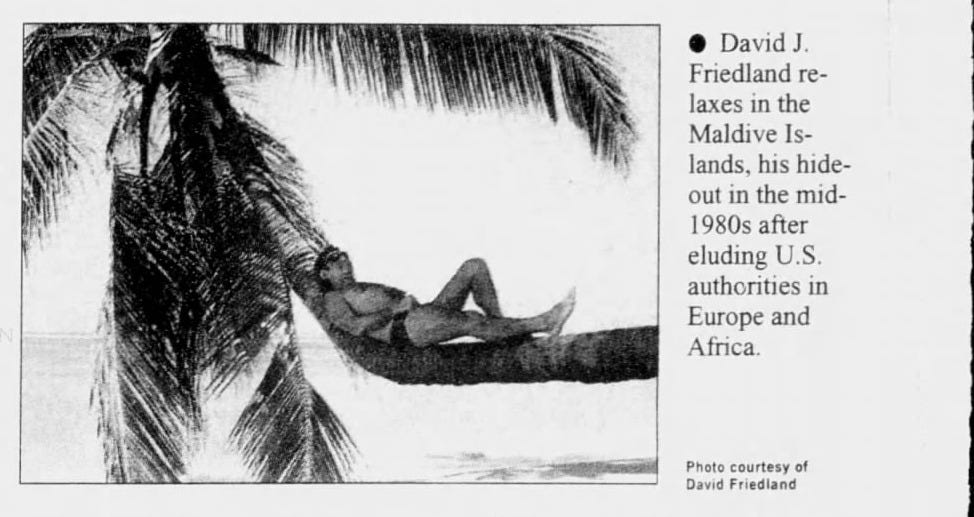
Friedland changed his identity once more, this time becoming Richard Smith Harley. As Harley, he settled down in the Maldives where he started a scuba diving business. The business was so successful it required trips to Singapore to restock his equipment. Pressured by the new competition, a rival shop owner looked into Harley’s passport and found a mercenary with a similar name, Richard Harley Smithie, had entered the Maldives in 1978. The shop owner alerted Maldives security forces who suspected Friedland was part of a group plotting a coup and had gone to Singapore to buy weapons. He was held for days on suspicion then turned over to the U.S. Marshals.
Friedland was returned to the US where he pleaded guilty to a racketeering charge and was given a 15-year sentence. Because of his history as a snitch, he spent much of his jailtime in solitary confinement for his own safety. He was released in 1997 and died in 2022.
“It would play better to say I had a miserable time, but that isn’t true,” Friedland said. “It was fun. Would I do it again to experience that fun? Hell, no.”
Friedland, Pou, and Lamb each employed drowning in their staged deaths; unsurprising as it is one of the most common tactics. The thing about drowning, though, is a body almost always washes up. None of these three had a body to help reinforce their case. A substitute body goes a long way towards ending a search, depending on how convincing the match is and, importantly, how it’s sourced. Going about getting a body the wrong way is a good way to become notorious.
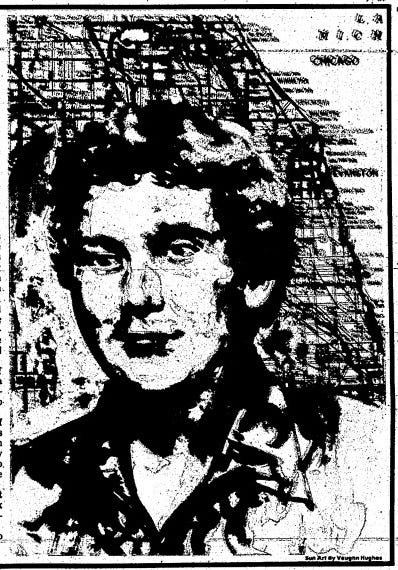
On March 27, 1976, a well-dressed man with dark hair and a roll of cash walked into a Chicago funeral home to order the burial of his brother-in-law who, he said, had drowned in the Chicago River. The funeral director, James McDonald, called the morgue for the body but was told it had yet to be identified. McDonald thought it was strange that this man, who called himself William Hamilton, would order a funeral for a relative not yet confirmed dead. McDonald referred him to the morgue, nonetheless. There, Hamilton identified the body of a man pulled out of the Chicago River as his brother-in-law, Estel Blevins, age 32, of Clearwater, Florida. He then returned to the funeral home, ordered the body cremated, and paid $985 in cash.
“He told me his name was Hamilton and he wanted to bury his brother-in-law, Blevins, whom he didn’t like,” McDonald said. “He was a little aggrieved because the guy was dead and wasn’t being nice to his wife. And mad because he got stuck with the funeral bill.”
The body had been found floating two days earlier in the Chicago River clad only in undershorts and a T-shirt. The coroner determined the man had died from a combination of alcohol and morphine. It wasn’t the type of case given much thought, so the body was cremated as ordered. Eight days later, the results of the fingerprint check arrived from Washington. The body wasn’t Estel Blevins at all; it belonged to Joseph R. Tallarico, a 55-year-old former Navy diver.
Police immediately wondered how Hamilton could mistake this stocky, 55-year-old, grey-haired man, who had not yet decomposed, for his 32-year-old, blonde-haired brother-in-law. Investigators tried to question Hamilton by phone at his home in Michigan, but he clammed up.
Tallarico’s sister, Joy Tallarico, wasn’t buying any of it.
“My brother didn’t drown,” Joy Tallarico said. “He was a professional diver. He had a drinking problem. But if he got drunk and fell in the river, why would all his clothes be off? And what about the morphine? He never took any kind of stuff like that.”
Cook County Coroner Andrew Toman agreed that Tallarico did not drown.
“He must have been doped up and tossed in the river,” Toman said. “There was no water in his lungs. Therefore, he was dead before he ever hit that river.”
Police quickly suspected insurance fraud was at play and that it was Estel Blevins himself that identified the body under the guise of his brother-in-law. They also investigated Tallarico’s death as a murder but clarified there was no evidence that it was.
“This is the most bizarre case I’ve ever encountered,” said Joe DiLeonardi, citywide homicide commander.
The case became clearer when the real William Hamilton finally talked. He told police that Blevins flew to his home in Michigan just after identifying the body in Chicago. Blevins allegedly told Hamilton that he had recently taken out multiple insurance policies on himself, totaling almost $300,000, roughly $1.75M today. If Hamilton went along with his story, Blevins would cut him in “on a piece of the action.”
While the scheme may have been blown, several questions remained, including the whereabouts of Blevins. He had not been seen since his visit to his brother-in-law. The story became a national sensation, dominating headlines and reported on air by Walter Cronkite.
Presented with a picture of Blevins by the Chicago Tribune, funeral director James McDonald confirmed it was Blevins who ordered the cremation.
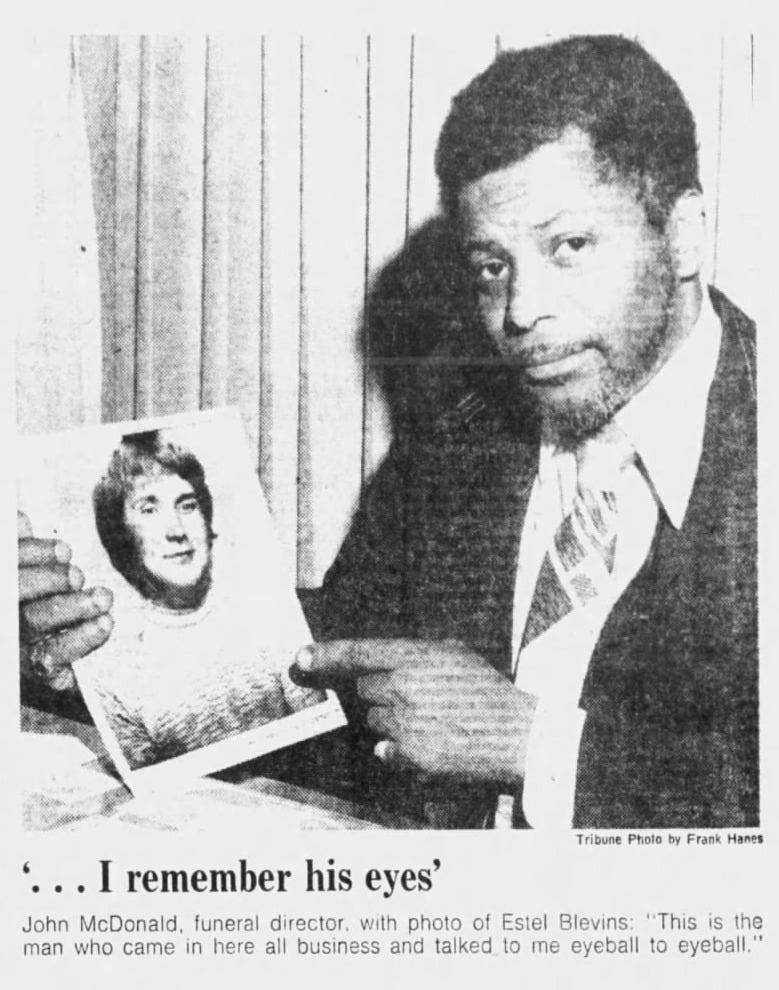
“He came in here and wanted to make it fast,” McDonald said. “The man came in on the 27th of March. My mortgage is due on the 1st of the month and the guy had a grand in his hand. I didn’t ask too many questions.” McDonald was not thrilled to have been taken in by the ruse. “Listen, he fooled me and I’m not fooled easily. I’ve been in this business 17 years. He had a scheme and he used me. I hope they catch this guy and nail him to the cross.”
This was not Blevins’ first disappearing act. In 1962, while enlisted in the Army, he left his post at Fort Devens, Massachusetts and went AWOL. He was found in Michigan driving a car he had stolen in California then taken to Mexico before winding up in Michigan. He was given two years of probation and a less than honorable discharge.
This might not have been Blevins’ first insurance scam either. Chicago police said they had unconfirmed reports Blevins may have collected $5,400 in 1972 on a false auto theft report using a forged title for a Buick he did not own.
Then came a bombshell. On April 18, less than a month since his disappearance, Blevins broke his silence. He sent a handwritten letter to the Chicago police and granted an exclusive interview with the Chicago Tribune.
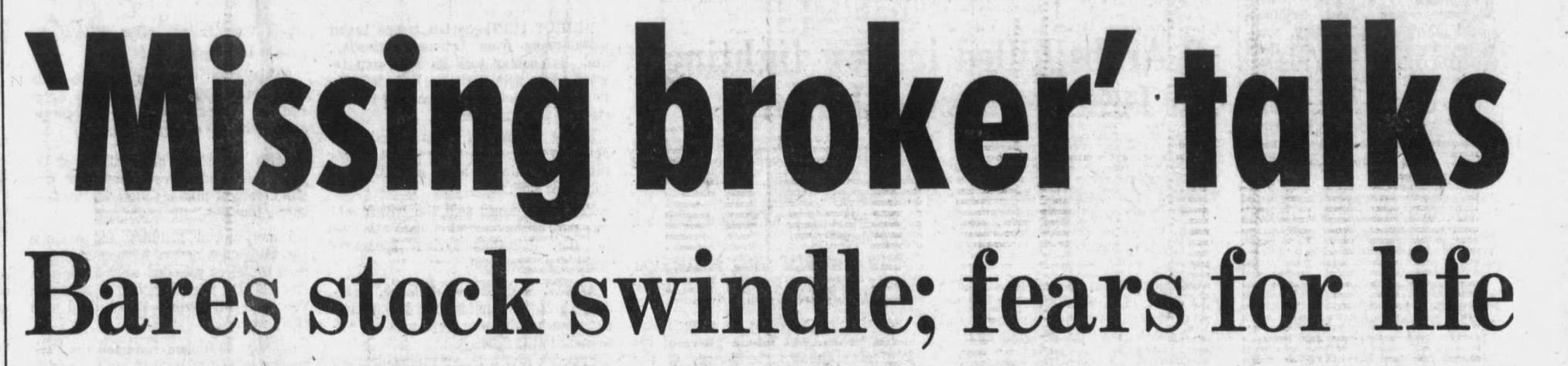
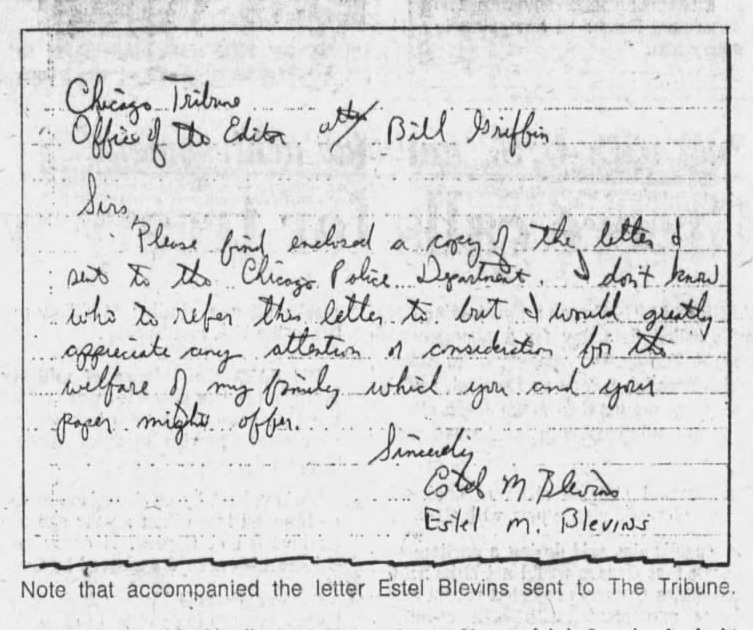
Blevins, a stockbroker at the time of his disappearance, claimed he had left his home in Clearwater, Florida with $50,000 in cash and traveled to Chicago with the intent of purchasing $350,000 worth of stolen securities. He further claimed he was swindled out of his cash at the hand-off and his accomplices believed he had ripped them off and were now out to get him. Fearing for his life, he worked up the plan to fake his death. The insurance money, he said, had nothing to do with it.
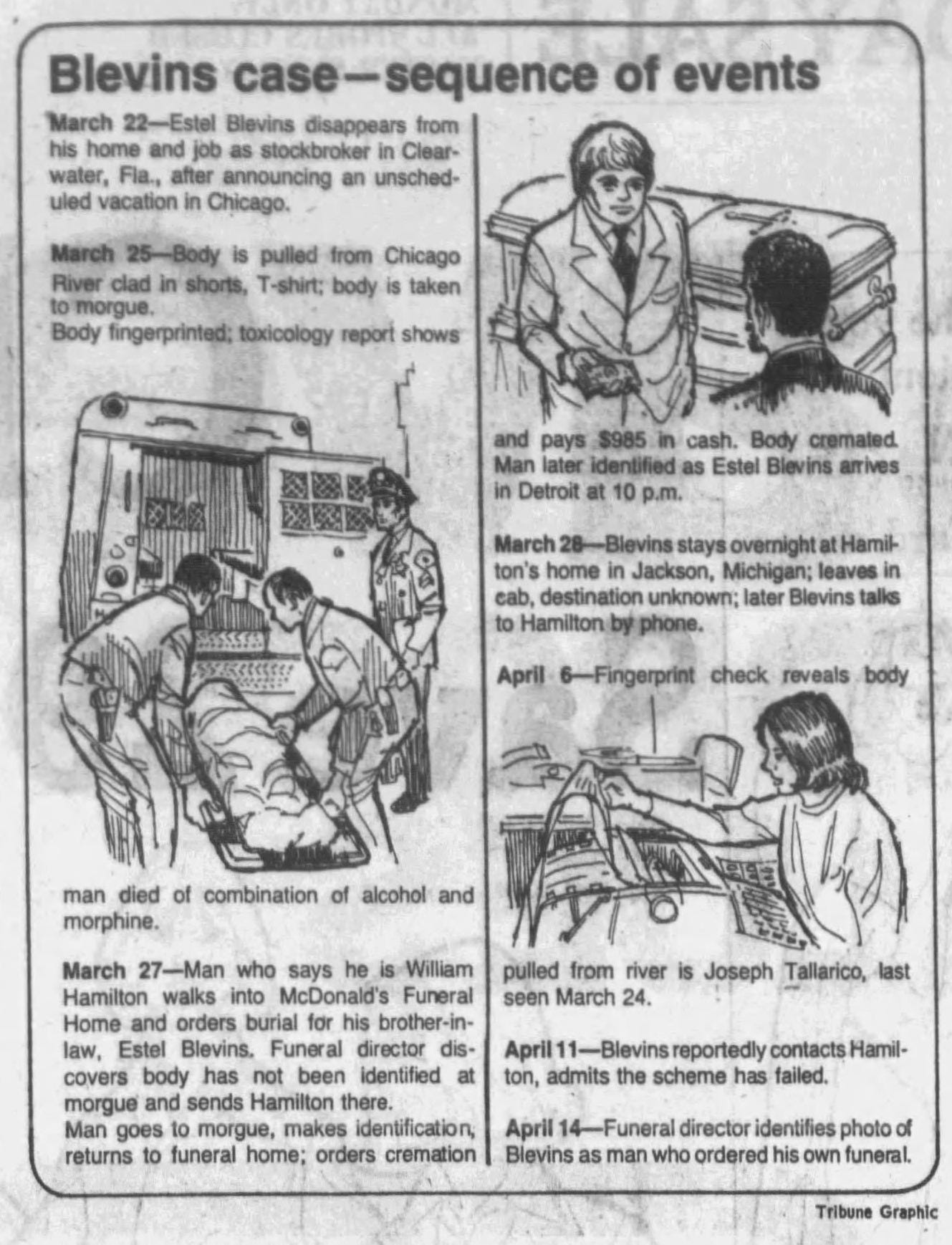
As for Joseph Tallarico, his involvement was random chance.
“I just started calling the morgue and giving them different descriptions of a relative I had thought had died,” Blevins told the Tribune. “Finally, they came up with that 50-year-old man. So I went to the morgue and identified him.”
“I didn’t kill that guy,” Blevins said. “I don’t do weird things like that.”
If there was an insurance scheme, it had not progressed far enough to result in fraud charges. The only crime he was at risk of being charged with was attempted theft of a body, a misdemeanor. Extradition required a felony. Blevins knew this well and pledged to go underground.
“Look, I just want to make money and live a good life,” Blevins said. “If I die, I die. If they’re going to get me, they’ll get me. I don’t want to live straight. Jeepers, if you really think about it, I have no choice.”
The story sank deep beneath the front page as Blevins remained on the run and Chicago authorities remained helpless to do anything about it. In August, reporters in Clearwater, Florida tracked him down near his home. He wasn’t in hiding; he was just hanging around the condo he owned with his wife. Perhaps counterintuitive for a man laying low, he was spotted driving his bright orange-red Opel GT. Stopped at a red light by a reporter, he agreed to an interview.
Blevins maintained his story that dangerous Tampa businessmen were out to get him, but he would otherwise not comment on what happened in Chicago. He said he didn’t have enough money to go on hiding or perpetrating intricate disguises. Clearwater was his home and he intended to stay, which he seemed able to do undisturbed. Clearwater police said there were no charges pending against him and Chicago police had not requested he be picked up. They promised to hold and extradite him if asked.
That September, Cook County finally charged Blevins with theft of a body; however, Blevins could not be brought in to face justice because he was already in jail, arrested the week before for charges stemming from an entirely unrelated scheme.
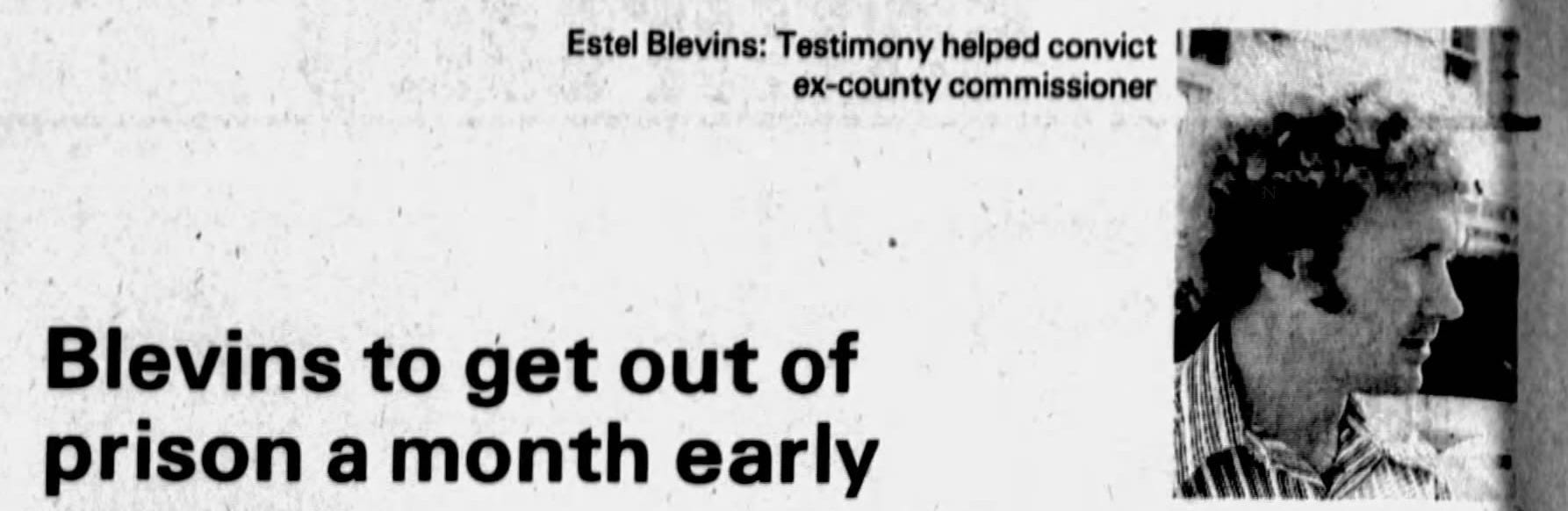
The FBI accused Blevins of plotting with his cousin, who was a Pinellas County Commissioner, and three other men to steal a $250,000 earth-moving machine in Georgia and transport it across state lines. Blevins cut a deal and testified against his cousin. He served five months of a six-month sentence and was released early for good behavior. It had been just over a year since the attempted fake death and he remained wanted in Chicago on the misdemeanor body-theft charge.
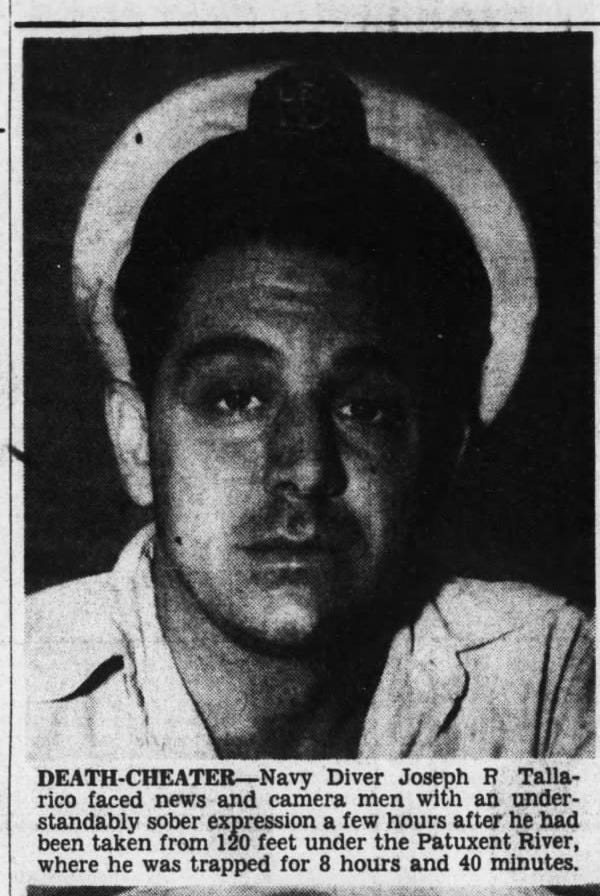
Perhaps most tragic in the case was the complete lack of justice for Joseph Tallarico. As his sister attested, Tallarico was a professional diver. And not just any diver, but one who had cheated death over twenty years earlier. Joseph Tallarico made national headlines for being pulled out of a river on two separate occasions.
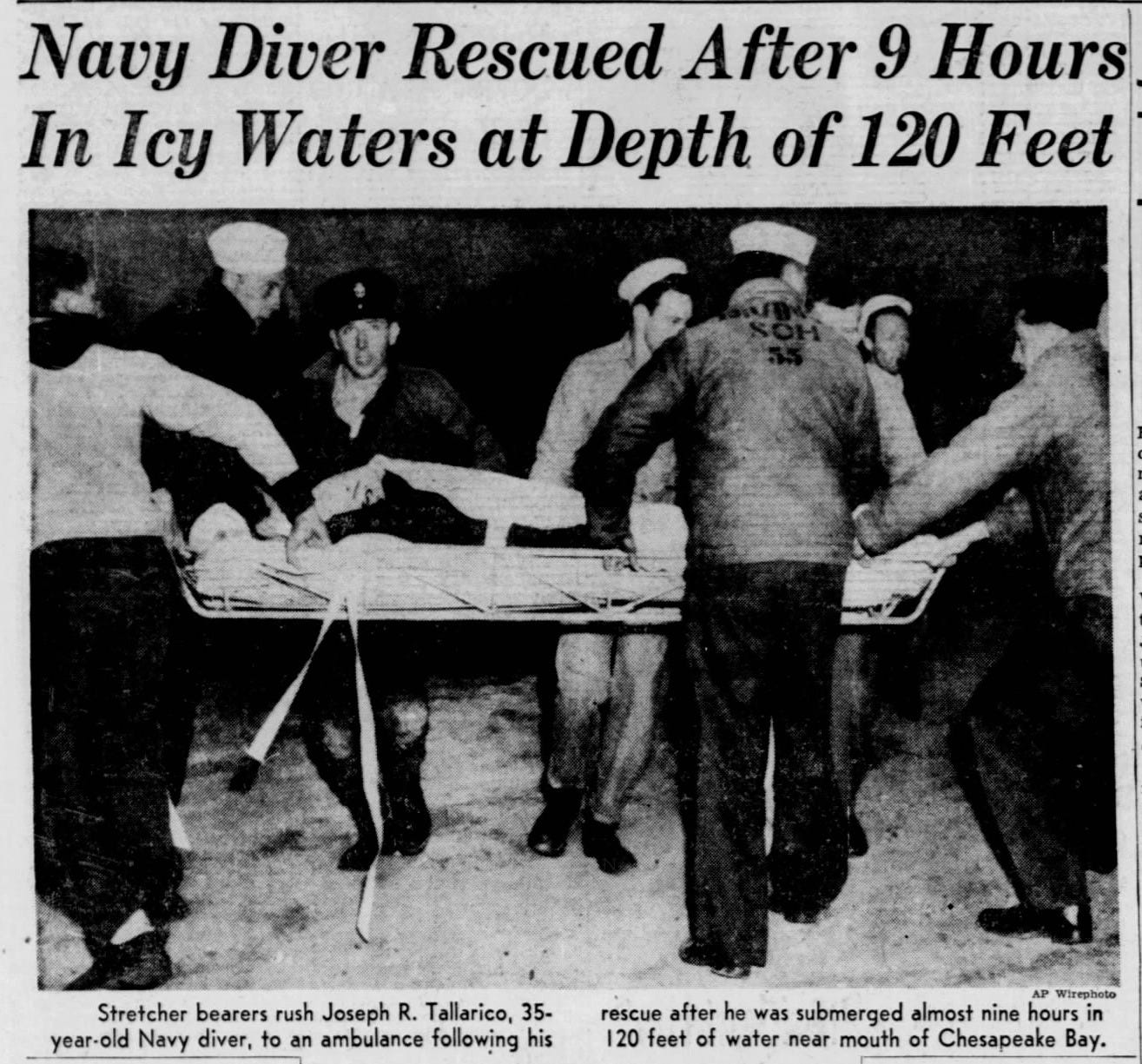
In December 1955, while serving as a Navy diver, Tallarico became trapped in the icy Patuxent River for nine hours. While on a routine mission to attach a cable to an inert underwater testing mine at a depth of over 120 feet, his suit’s lifeline became entangled. A rescue crew was unable to free Tallarico underwater despite four hours of trying, so they had to raise him and the mine to the surface. It took several hours to raise him, going slow to avoid the bends. His only complaint was that it was cold.
“I am quite sure he would not have survived had he not been extremely robust and had he not remained very calm throughout,” his examining doctor said.
Tallarico’s death remains unsolved. Blevins was not a suspect, but his actions likely made an investigation impossible, a fact that seemed to deeply bother him.
“Don’t you find it strange,” Blevins said, “some guy is found dead, boozed and doped up, and nobody really cared? Money talks.”
After his jail sentence, Blevins looked to turn a corner, taking a job counseling drug abusers. Try as he might, he couldn’t shake the cloud of suspicion. In 1985, his history as a flimflam man resurfaced when a plane he owned was mysteriously stolen then almost immediately returned.
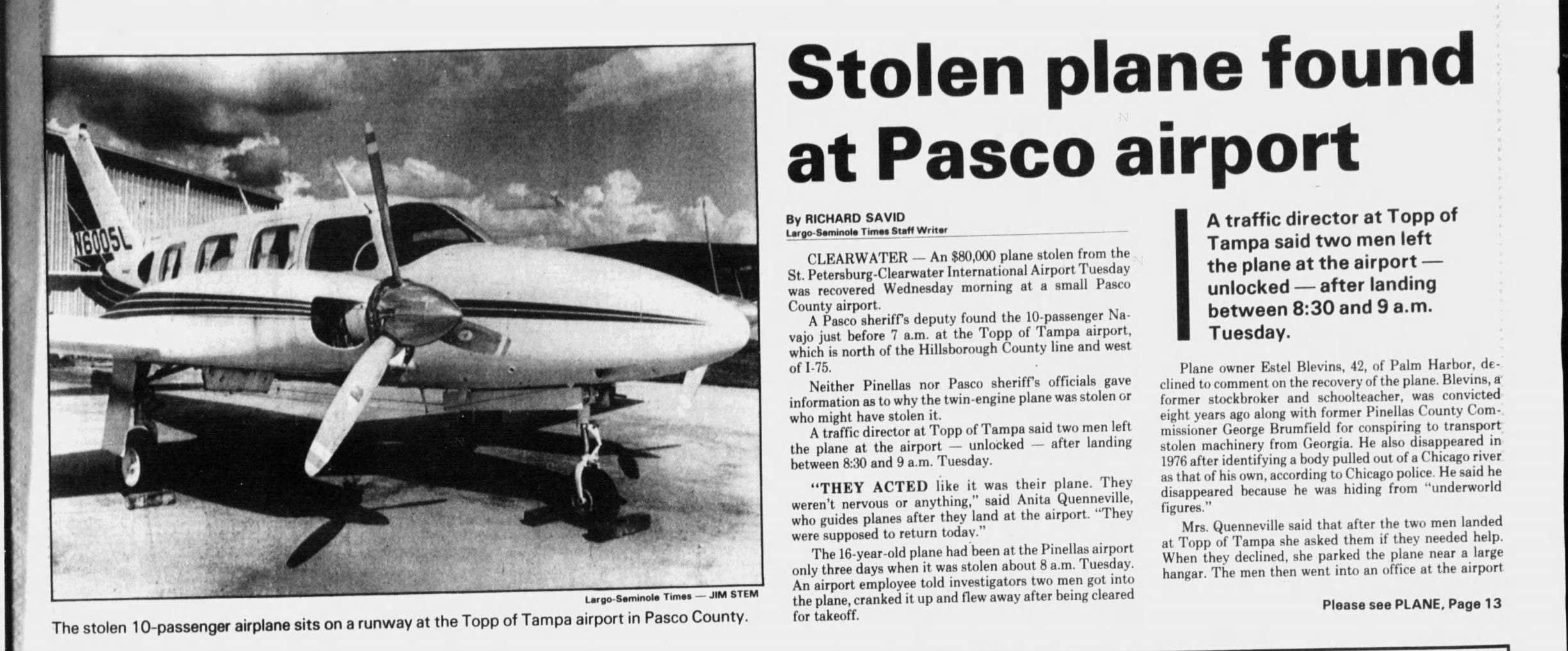
“I think they were just trying to get rid of the plane,” said Anita Quenneville, a traffic director at a small Tampa airport.
In 2004, nearing retirement, Blevins was back in the news for one last scheme. This time he was accused of swindling a civic club in Florida by forging signatures on a document that dissolved the civic association and gave himself control of their clubhouse. After months of legal wrangling, he was finally charged with fraud. As was his wont to do, Blevins disappeared.
U.S. Marshals eventually caught up to Blevins in Niagara Falls, New York where he was preparing to cross into Canada to retrieve money he had stashed in a bank. In a surprise move, and against his attorney’s advice, he plead no contest.
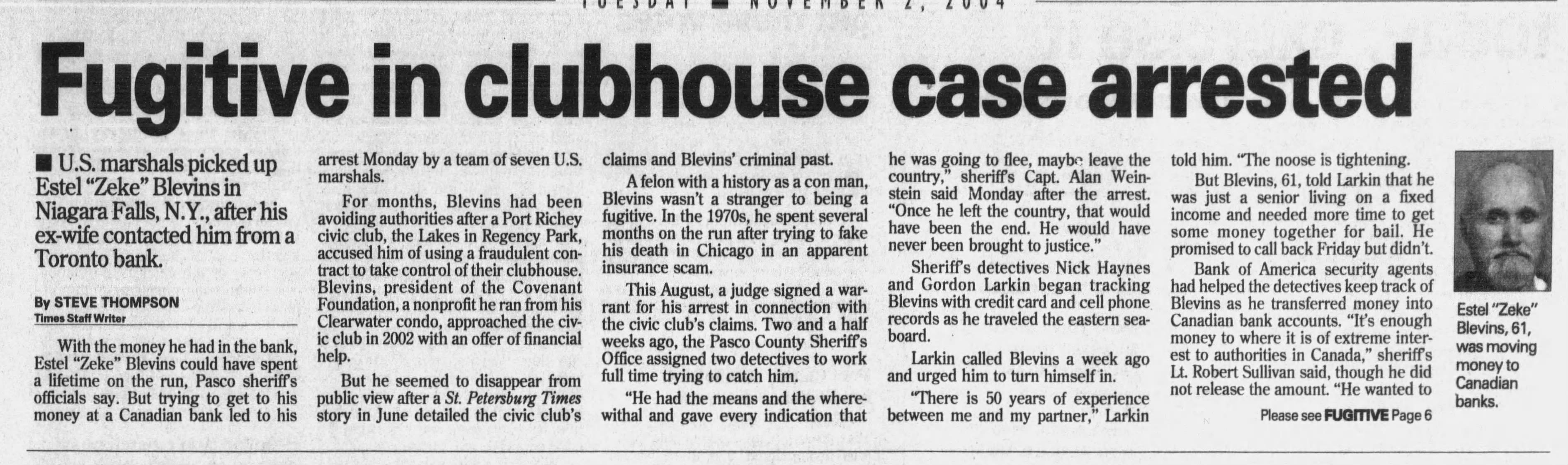
“There’s a cancer here,” Blevins told the judge, “and I’m at the heart of it.”
He received five years in prison, 15 years probation, and was ordered to pay the civic club over $120,000. Naturally, the clubhouse was returned.
As Blevins told the Chicago Tribune back in 1976, he just couldn’t live straight. Born in a mining camp, he struggled early in life. His drive to escape poverty pushed him to the edge, as he rationalized to reporters:
“I’m not going to live on Social Security. I’ve worked for years to get where I was. I believe in money - some people just choose to live the way they do, but when they come to town they don’t stay at the Hyatt, they don’t order from the left side of the menu.
I’m not going to end up like my daddy. He worked 28 years in a mine, and when he got black lung disease they cut him off. Then he went to work for General Motors for 15 years, and they didn’t give him a nickel when he had to leave. These companies don’t care about you. I’m not going to let that happen to me.
I want to use my brains to survive. I’ve got a master’s degree. I studied courses in school so I could always find a way to make money any way I could. I’m not naïve. You’re not talking to a baby.”
Now more than ever might feel like a good time to leave it all behind and go chill out in the desert under a fake name. Sadly, gone are the days when you could just mail in your own death certificate to the county and call it a life. The golden age of faked deaths has come to an end. Modernity, with its ubiquitous digital records, facial recognition technology, and cashless transactions, has made life off the grid just a fantastic dream - never mind finding a body these days.
****
If you enjoyed these tales of fake deaths, be sure to check out the graphic novel, Freddy Reno Went Missing, an OrGiveMeDeath production, available free as a webcomic. Or support the site by picking up a copy in full color print. Check it out here.
No posts
Comments
Nothing yet. Say the first thing.
Sign in to join the conversation.