The 6th GraspOS webinar series will host a session on reforming researcher assessment practices on Wednesday, 29 October 2025, from 15:30 to 16:30 CET. This online event will focus on how the OPUS project is revolutionising the way universities and research funders evaluate researchers and reward Open Science contributions. Traditional research assessment has long concentrated […] The post GraspOS…
The advancement of open science represents one of the most significant transformations in contemporary research culture, yet the path towards meaningful implementation remains fraught with complex challenges. The Open Universal Science (OPUS) project recognised that understanding the existing academic discourse was fundamental to developing effective interventions and metrics for open science…
The transformation of scientific research towards open practices represents one of the most significant shifts in academic culture of our time. The Open Universal Science (OPUS) project, a three-year project funded under the Horizon Europe Programme has systematically mapped and analysed the evolving landscape of open science initiatives across Europe and beyond. This web article […] The post…
ZAGREB, 11 September 2025 – At the PUBMET2025 conference in Zagreb, representatives of the University of Rijeka (UNIRI), Nataša Jakominić Marot and Saša Zelenika, presented their paper Research Assessment at the European University of the Future, outlining the institution’s comprehensive reform in research assessment and its vision for academia’s role in shaping European higher education. As […]…
From the outset, OPUS set out to reform researcher assessment by expanding beyond traditional publication metrics and recognising the full spectrum of scholarly contributions, especially those rooted in open science principles. The main pillar of this effort has been the OPUS Researcher Assessment Framework, a set of qualitative and quantitative indicators co-designed and tested by […] The post…
The Open and Universal Science project was established to support the research and innovation community by changing the way researchers are assessed, and by incentivising and rewarding Open Science within research organisations. This EU-funded project is being delivered by a consortium of eighteen organisations, led by PLOCAN, and has been running from 1 September 2022 […] The post VIDEO: The…
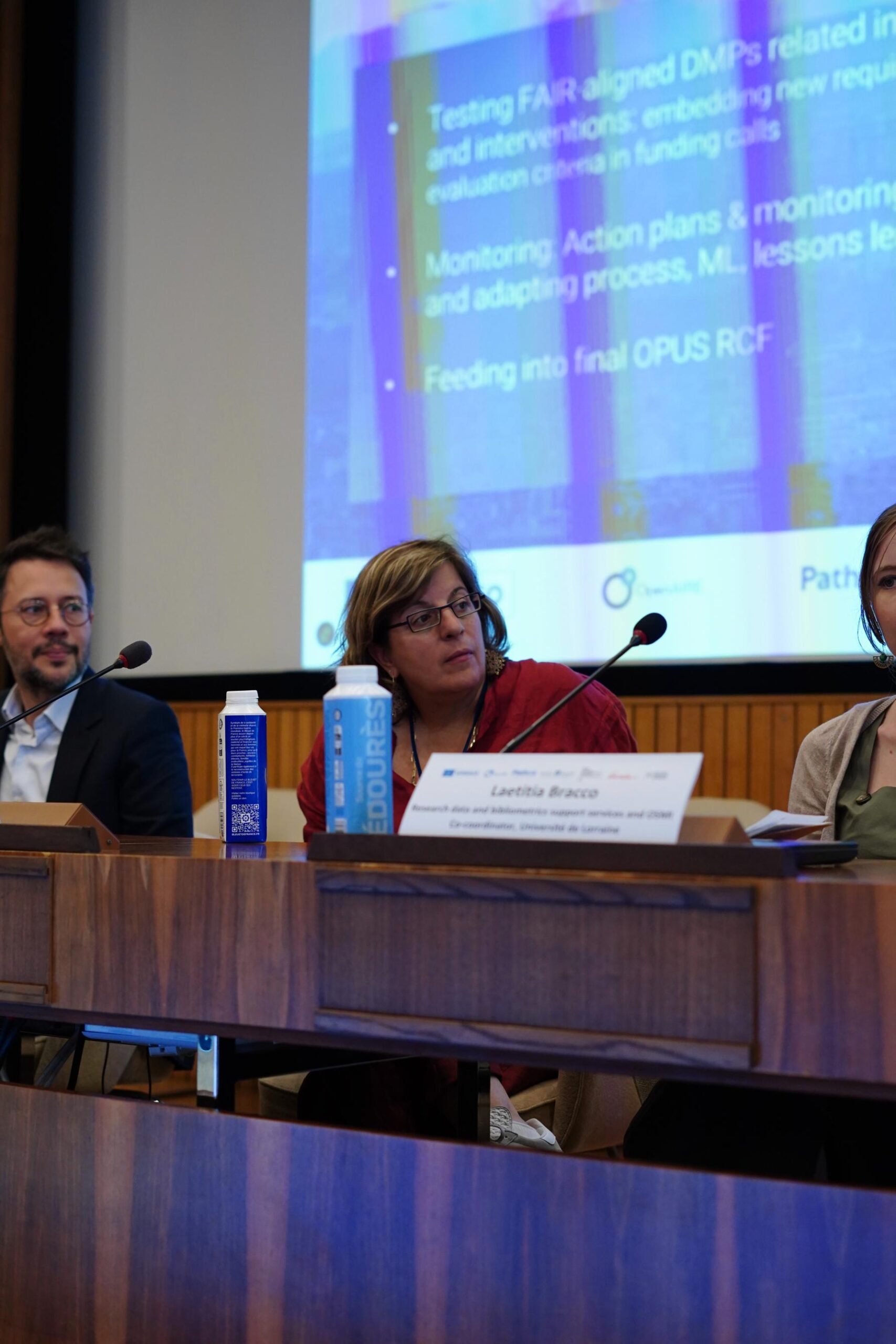
Organised by UNESCO, OPUS, OpenAIRE, and OSMI on 8 July 2025, as part of the Open Science: Monitoring Progress, Assessing Impact conference at UNESCO Headquarters in Paris, a crucial joint session brought together leading international initiatives (projects) to address one of the most pressing questions in research policy: how do we translate open science monitoring policies into real, sustainable…
The OPUS team participated at the Open Science: Monitoring Progress, Assessing Impact conference, which took place on 7 & 8 July 2025, at UNESCO Headquarters in Paris. Over two days at UNESCO Headquarters and online, more than 500 participants from across the globe gathered for the Open Science: Monitoring Progress, Assessing Impact conference, an event uniting policymakers, researchers, and open…
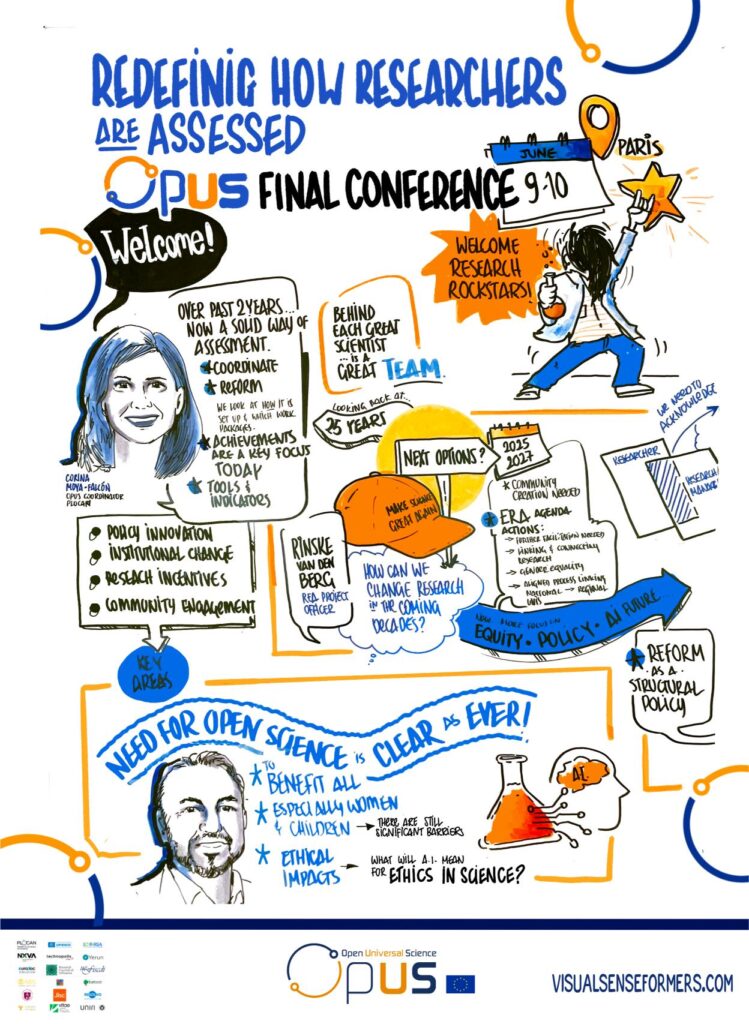
Supporting Open Science at Institutional Level During the OPUS Final Conference held in Paris in July 2025, Juliana Chaves Chaparro, Senior Consultant at UNESCO’s Management of Social Transformations Programme (MOST), presented the OPUS Policy Brief on lessons learnt for supporting Open Science policies at institutional level. Dr Chaves Chaparro brings nearly 25 years of experience in […] The post…
As the European Research Area (ERA) marks its 25th anniversary, it’s clear that the journey is far from over. At the OPUS Final Conference held in Paris in July 2025, Rinske Van Den Berg, Project Officer at the Research Executive Agency, shared her reflections on the evolving landscape of European research and the challenges that […] The post Reflecting on 25 Years of the European Research Area:…