
In this final article on the Straits of Hormuz we will look at:
How landings on islands in the Persian Gulf would occur;
Iran’s ability to retaliate;
How seizing islands in the Persian Gulf would impact the war; and
Which islands should be seized and their attendant risks.
I am hesitant to call anything in this article an endorsement of amphibious operations in the Persian Gulf, but there are certainly things that can be done at acceptable risks levels that would make opening up the Straits of Hormuz and ending the war easier.
In terms of whether the juice is worth the squeeze, the main factor is how Iran will retaliate against whatever troops America leaves to garrison these islands.
I’ve responded to a lot of online commenters to the effect of:
Amphibious assaults in modern war are useless. The transports will all be destroyed by drones. The marines will never reach the beach, and if they do it will be like Saving Private Ryan.1
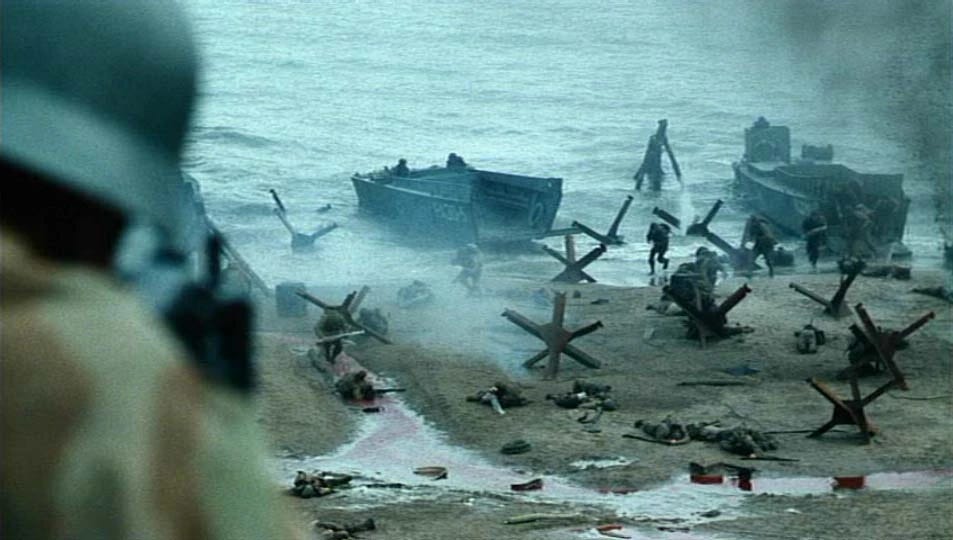
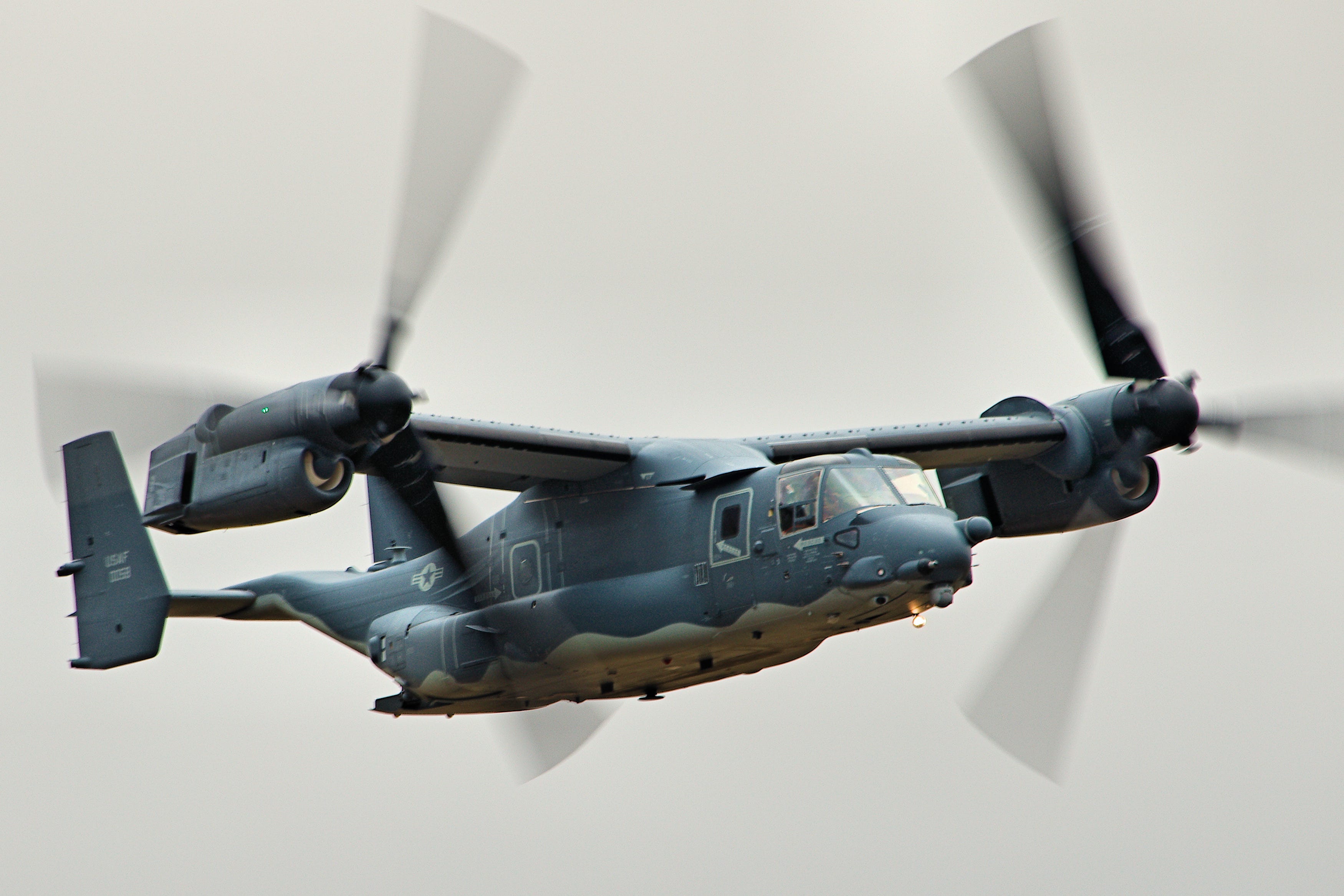
However, modern amphibious assaults are not conducted like D-Day. The key positions on the beach are seized by Special Forces shortly before the main body arrives by sea. The Special Forces arrive by swimming ashore as frogmen, parachuting small teams from high altitude, by helicopter or by Osprey.
There is an example of this approach being used in combat. In the 1982 Falklands war landings at San Carlos the Argentines had a reinforced infantry platoon stationed on a high feature and in the village. A platoon of the Special Boat Service (roughly the Royal Navy equivalent to US Navy Seals) was landed by helicopter 5 km from the Argentine positions. With naval gunfire support they forced the Argentines off the high feature. The Argentines then conducted a fighting withdrawal while being pursued by the SBS platoon. The main body arrived by boat less than 30 minutes later.
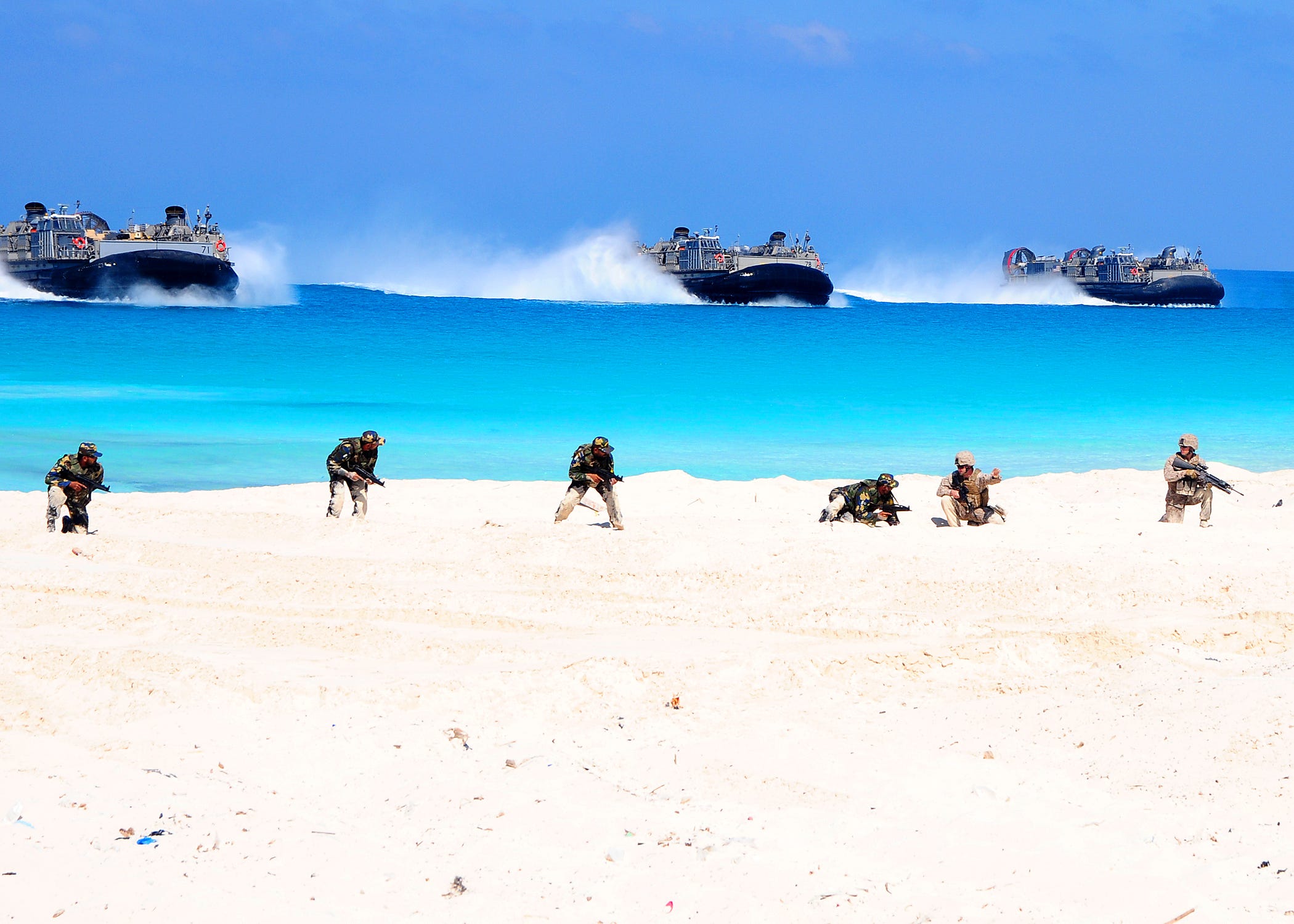
If the landings are conducted by the USMC the main body would arrive on a mixture of LCACs, AVCs and LAV-25s. The LCAC is a hovercraft that is invulnerable to small arms fire, typically travels at 40 knots (46 mph or 74 km/h) and can go past the waterline of the beach before unloading a light marine company in an area with cover from fire. LCACs are typically offloaded from their mother ships at 29-58 miles (46-93 km). However, they can be offloaded at ranges over 115 miles (185 km) from the landing beach.
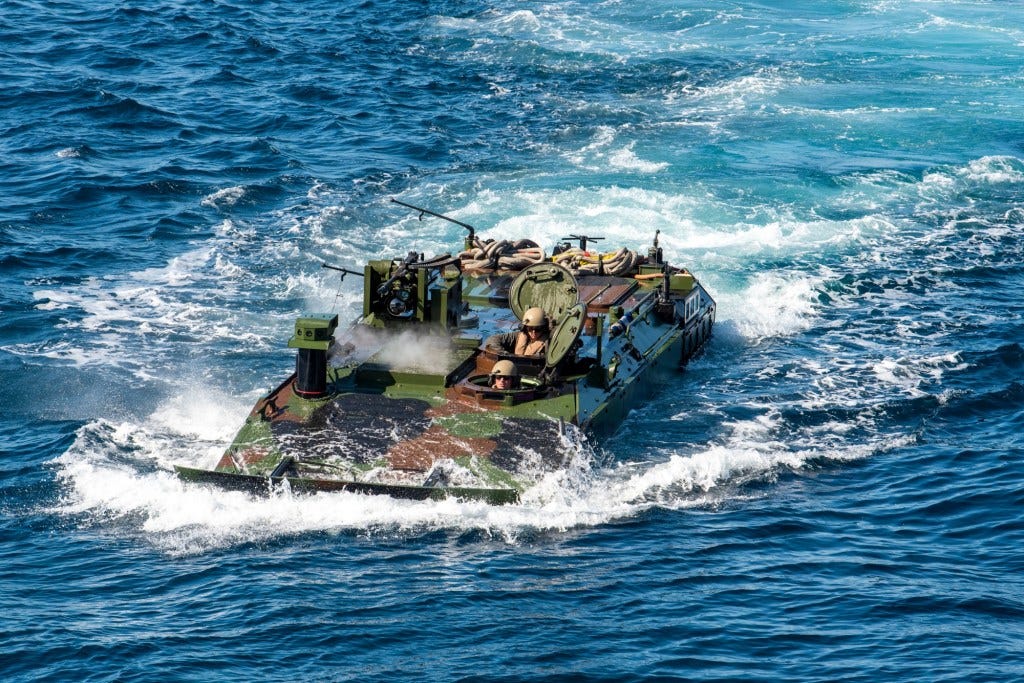
The USMC also has two armored vehicles (the ACV and LAV-25) that can swim at 7-9 Mph (10-14km/h) while carrying a rifle squad. These vehicles are invulnerable to anything up to 25mm cannons and light anti-tank weapons. They can be launched into the water up to 14 miles (22 km) from their mother ship.
This means at night, or during white haze days (about 60% of this time of year) the USMC can offload LCACs, ACVs and LAV-25s at beyond visual range of the islands and bring troops ashore to a beach that has hopefully already been at least partially secured by Navy Seals and MARSOF. If not, the troops coming ashore have armored protection against at least small arms fire.
If Iran switches on their marine radars they would be able to target the LCACs and the Amphibious support ships. However, it’s unlikely Iran would manage to sink these vessels. The LCACs would be well within the air defence missile range of the Arleigh Burke destroyers escorting the amphibious ships. The Amphibious ships are well equipped with CIWS systems. Shahed drones are also not very effective against warships in comparison to ASMs, so Iran’s munitions options would be more limited than against merchant vessels and static targets.
There would be a risk, and with the number of troops on board these ships one hit would mean dozens or hundreds killed. It would also require expending huge amounts of precious interceptor missile stockpiles. But in terms of military operations in the Straits of Hormuz the USN is fairly well prepared and equipped to protect the amphibious landing force.
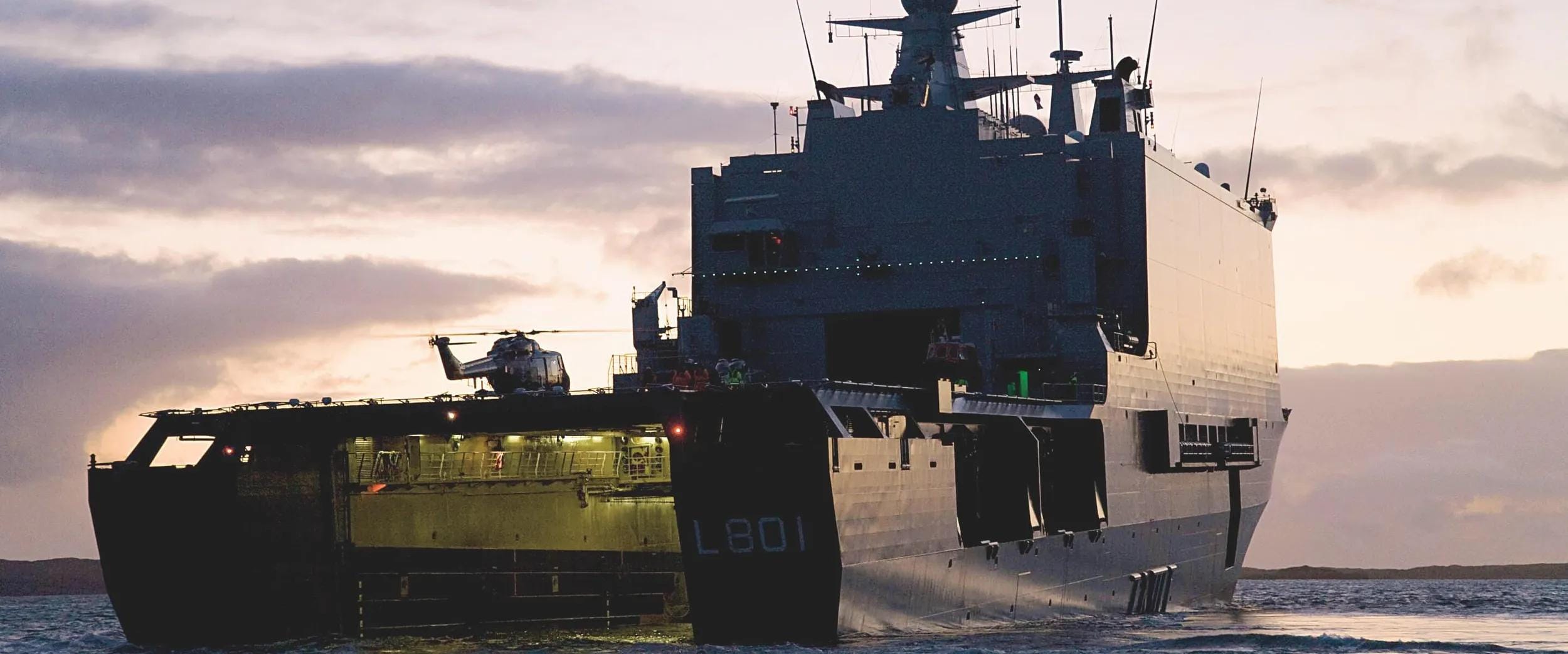
The much bigger threat is to American troops ashore after an island is seized. The large majority of Iran’s plentiful Shahed drones have guidance systems for striking fixed, rather than moving, targets. At the short flight times involved this means anything that stays in one location for more than 10-15 minutes could have a Shahed landing on top of it.
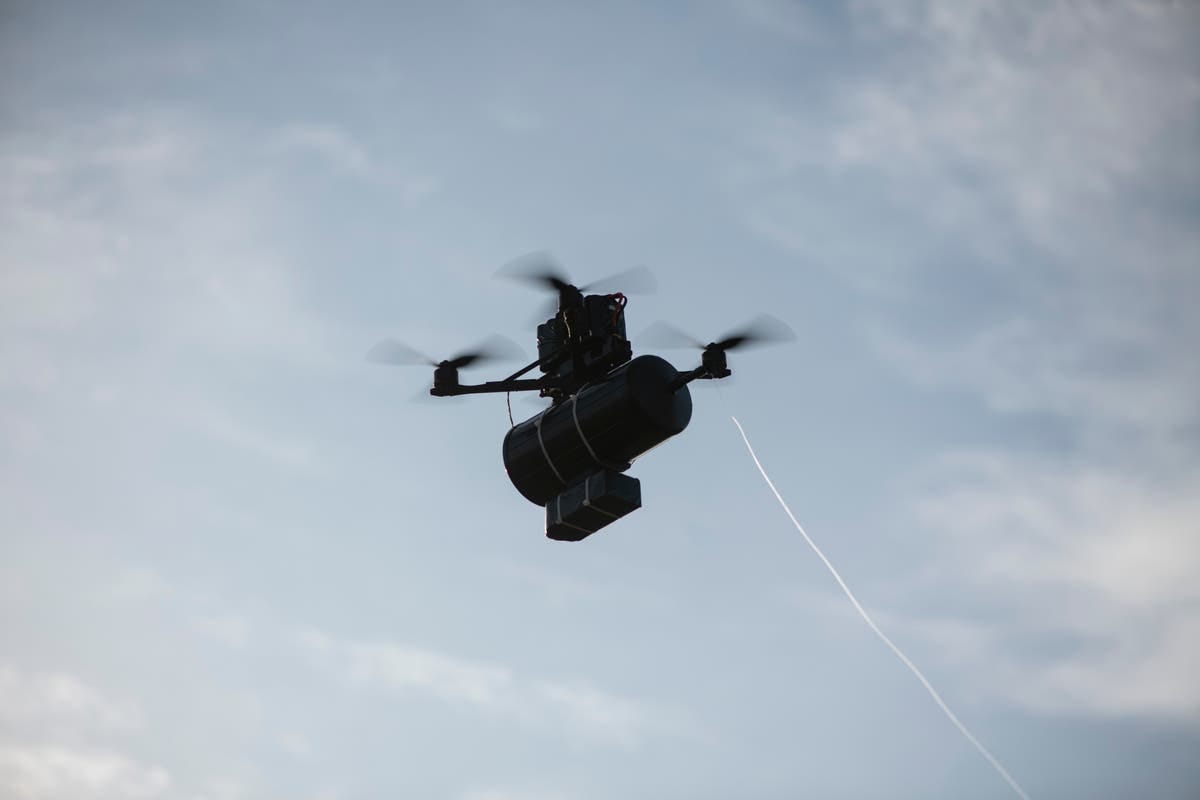
Iran can also use fiberoptic guided FPV drones against some of the islands. During the Ukraine war initially cheap civilian drones had an RPG or grenade strapped to them to use as a makeshift hybrid of artillery and a guided missile. Their range was limited to a few kilometres and they were susceptible to jamming. This led to their carrying spools of fiberoptic cables, as they are immune to jamming and can increase the range, typically to 20-30 km.2 Many of the complications with these fiberoptic drones (like the cable being snagged or cut) would not apply in the Straits of Hormuz, where most of the flight path would be over water.
Finally, Iran has conventional artillery and MLRS that have the range to hit some of these islands. The table below shows the main indirect fire weapons Iran has with a range above 18km.
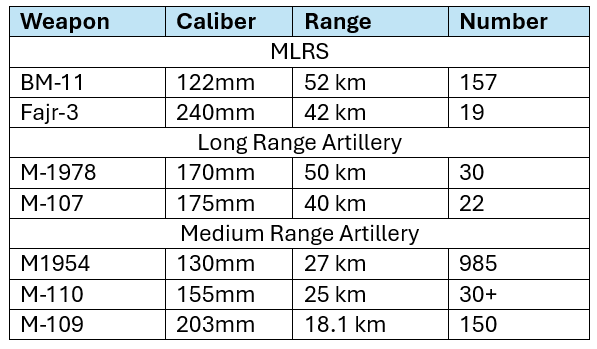
Of these weapons the long range artillery is fairly small in number, so it would be more of a harassing weapon. The two weapons systems with the range and numbers to cause serious problems are the BM-11 MLRS at 52 km and the M1954 Artillery at below 27 km.
Seizing Hengam and Larak would significantly undermine Iran’s observation and firepower at the narrowest part of the Straits of Hormuz. This would require approximately a marine regiment (the same size as an army brigade) to conduct.
Seizing the lane islands is, if anything, more important due their sitting in the middle of the navigable lane through the straits. It’s not necessary to seize Farur to open up an unobserved shipping lane, so it can be left alone at least at first. Seizing the remaining three islands would also require a marine regiment, though these landings could be done in sequence using some of the same troops as for Larak and Hengam.
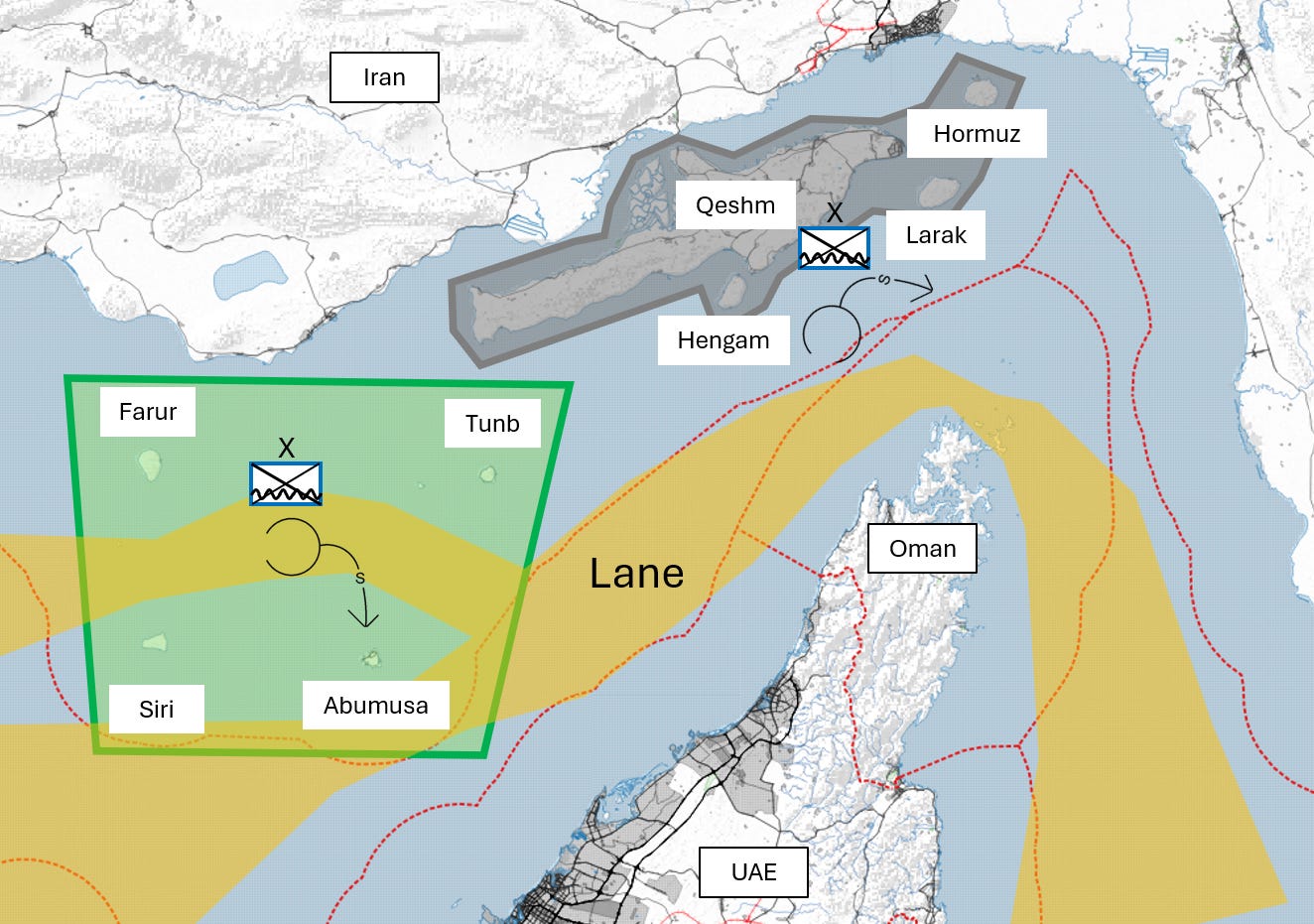
The four lane islands held by Iran effectively expand the choke point of the Strait of Hormuz an additional 150 km. Since Iran holds them, merchant ships sailing through the strait under darkness or on white haze days will be under Iranian visual observation until they pass Siri or Farur, rather than after they pass Hengam. The table below shows the key military information about these islands.

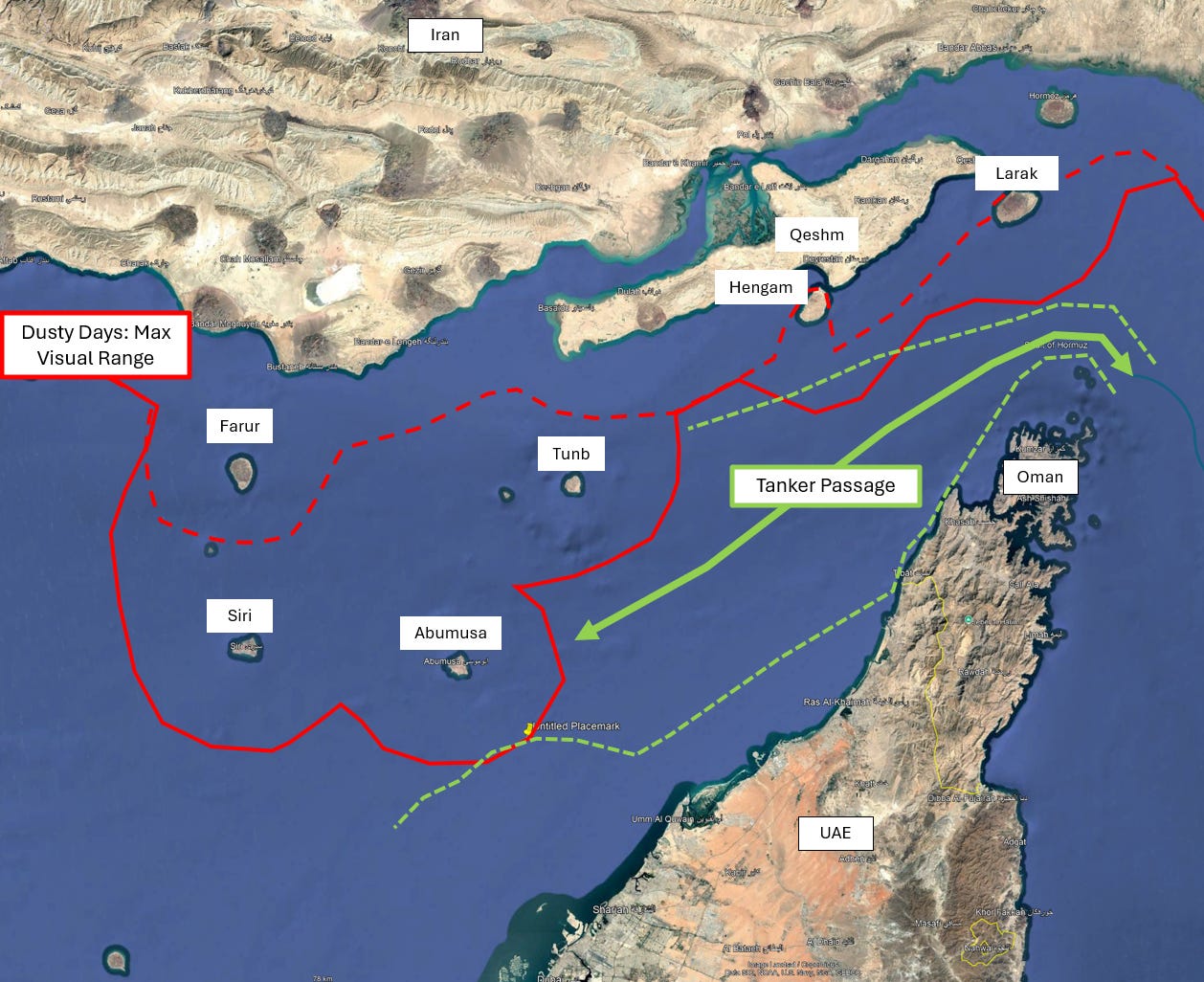
This map shows how seizing these 4 islands would impact Iran’s visual range on white haze days.
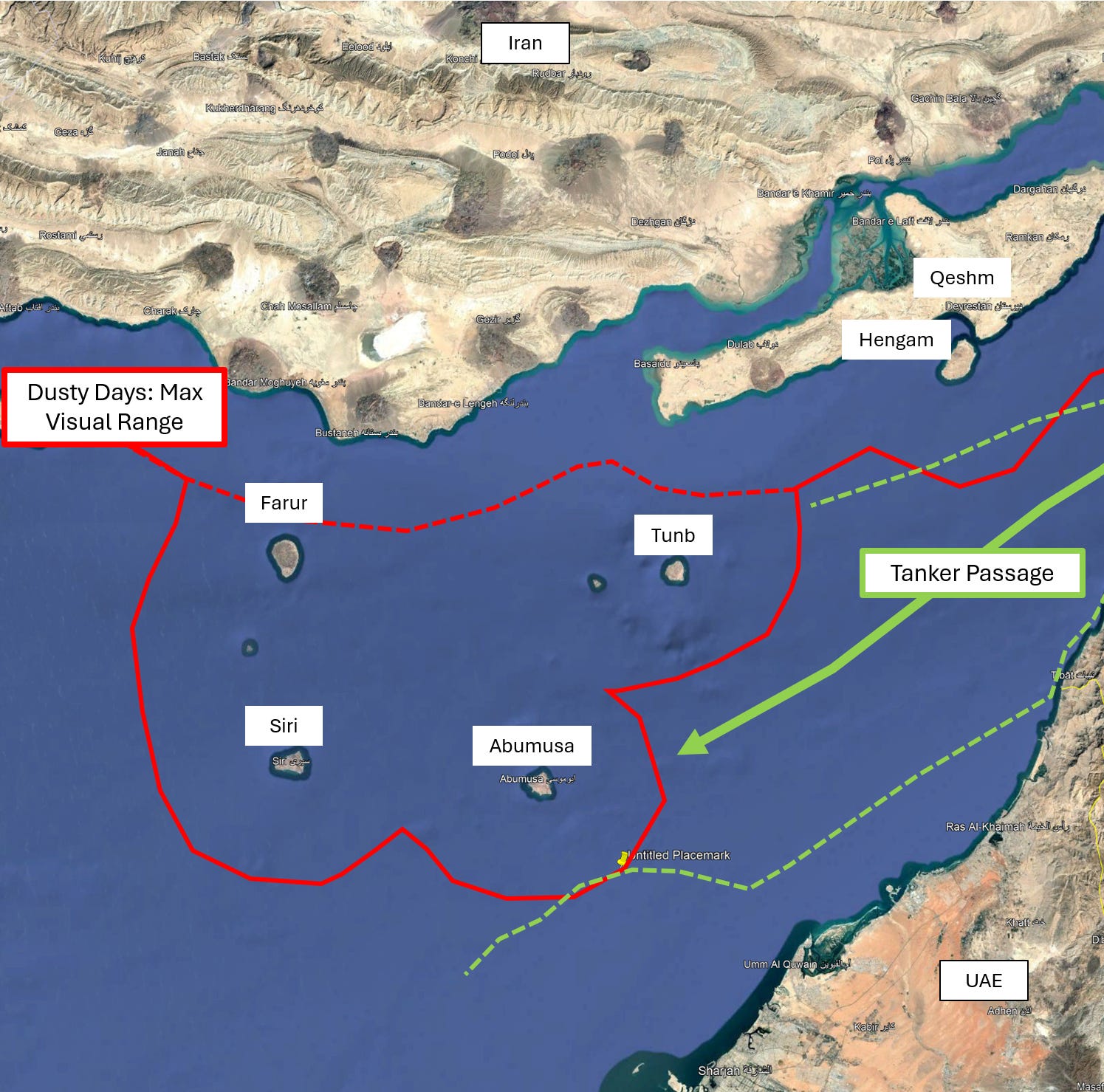
Farur should be bypassed, at least initially. It’s the least important for reducing Iranian visual coverage of the strait. It is also within range of MLRS, long range artillery and some fiberoptic FPV drones. It would require more troops to seize, as it is about twice the size of the other three islands, and does not appear to have much military presence.
Tunb probably cannot be bypassed. It’s too prominently astride the shipping lane and there are Iranian ASM missile launchers based on the island. It is within MLRS and long range artillery range of Qeshm island, but not the mainland. This makes it viable to prevent shelling of Tunb with sufficient counter-battery fire.
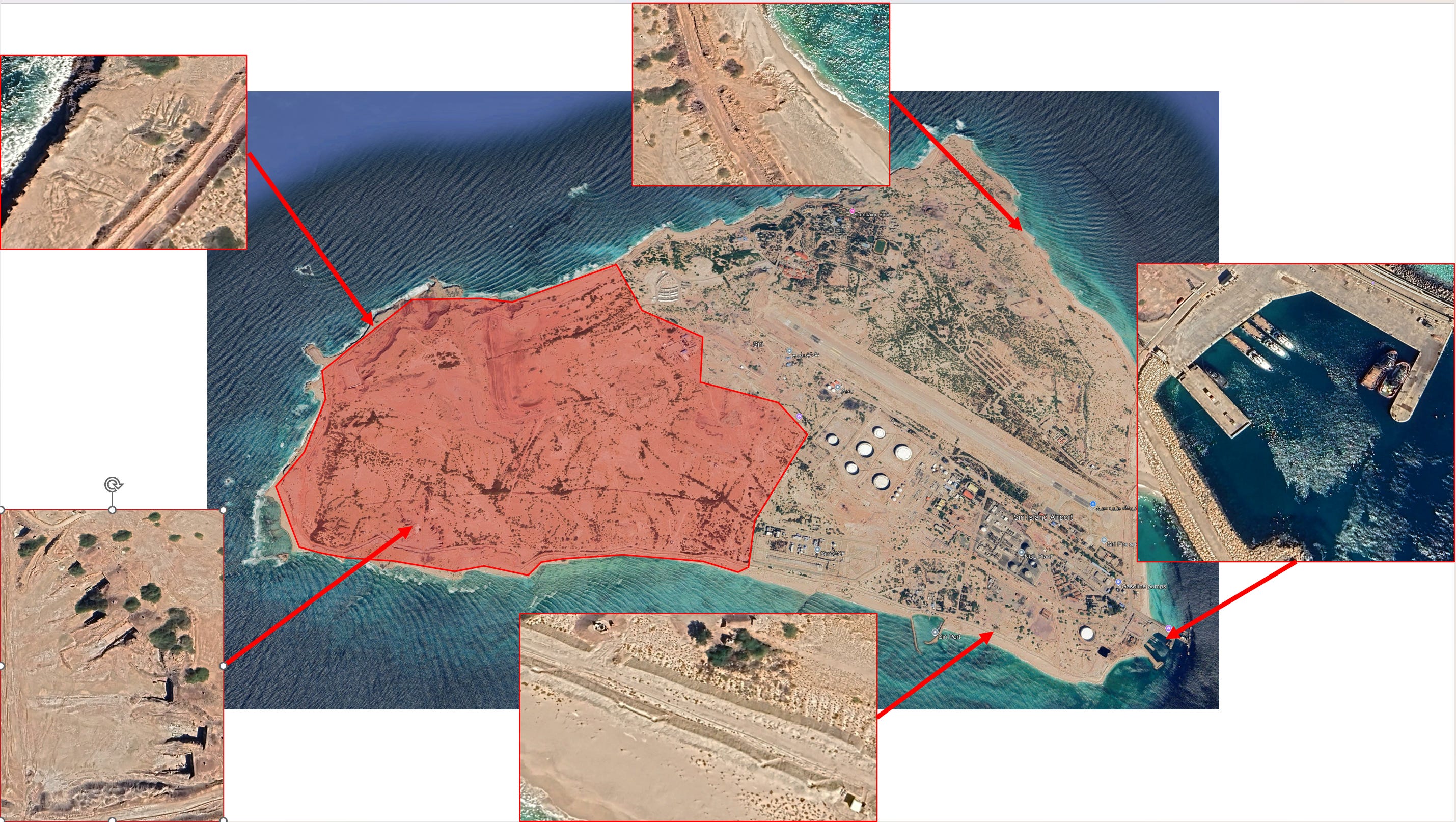
Abumusa and Siri both should be seized. They are well fortified, but also outside of MLRS, artillery and fiberoptic drone range. US troops on those islands would ‘only’ be subject to strikes from long range strike weapons like Shahed drones.
Qeshm is a large island right at the choke point of the Strait of Hormuz. As has been noted several times, Qeshm is about the size of Okinawa. There are two smaller islands that protrude more into the strait, Hengam and Larak.

Invading Qeshm should be ruled out for the near to medium future. It is a division plus sized objective (4-5 manoeuvre brigades). The US currently has 1-2 manoeuvre brigades in the area, and bringing this up to 4-5 would take at least a month or two. Qeshm also has a population of 150,000, including a 38 sq km city of Qeshm. For comparison, Stalingrad was about 250 sq km in 1942 and Avdiivka was about 29 sq km. So while it’s not Stalingrad, it’s a large enough urban area to cause significant problems if the Iranians make a stand there. Qeshm is also under the range of even medium artillery from the mainland.
The US does have the units in the region to seize Hengam and Larak. Hengam is within range of all of Iran’s indirect fire assets from Qeshm, which can be managed with a good counter-battery fire plan. Larak, however, is both heavily fortified and within range of Iran’s MLRS and long range artillery from the mainland. This makes Larak a difficult objective to take and hold.
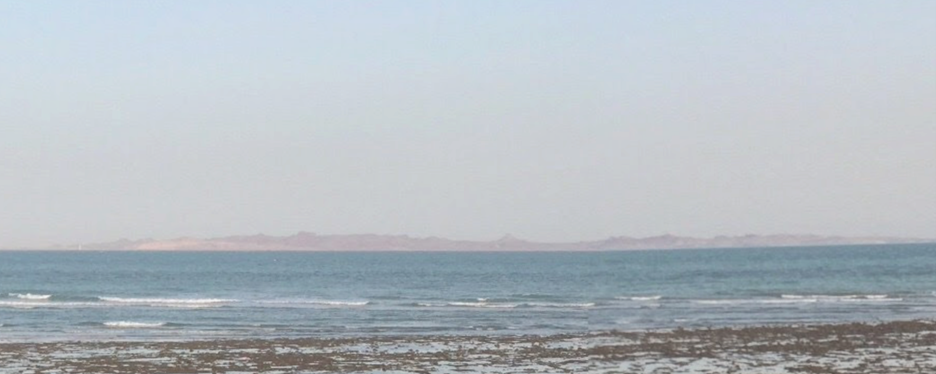
To give a sense of Larak’s location, here is an image of Larak taken from the beach on the city of Qeshm, a city the US does not have the resources in theatre to seize anytime soon.
Larak, however, probably needs to be seized to open up the Straits of Hormuz. It overlooks the narrowest part of the strait. It is dominated by 120m high hills that give excellent visibility into the strait.
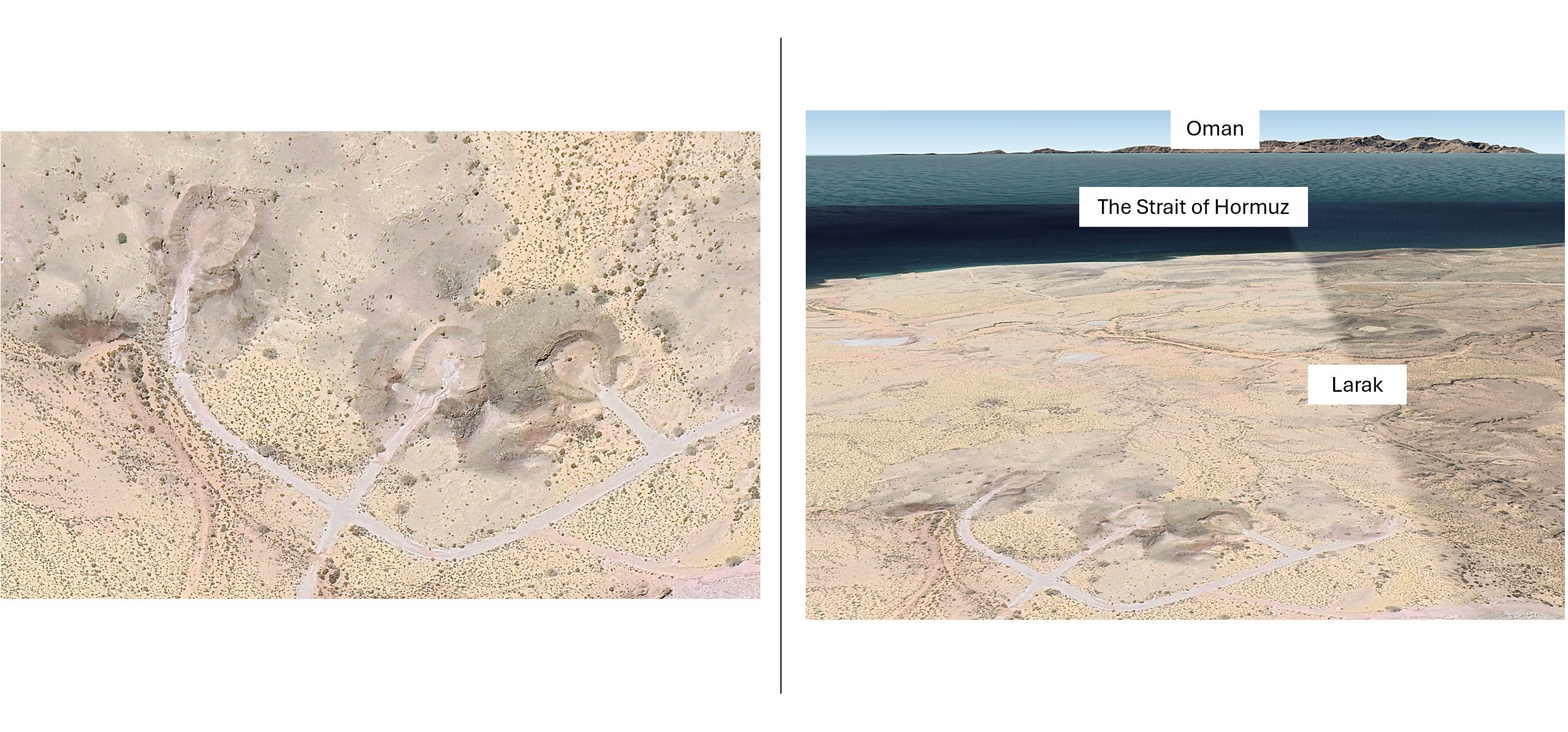
Nearly the entire island is a military base, with entrenchments and ASM run up positions. Given Iran’s use of underground facilities there’s likely a lot below ground that I can’t see on satellite imagery.
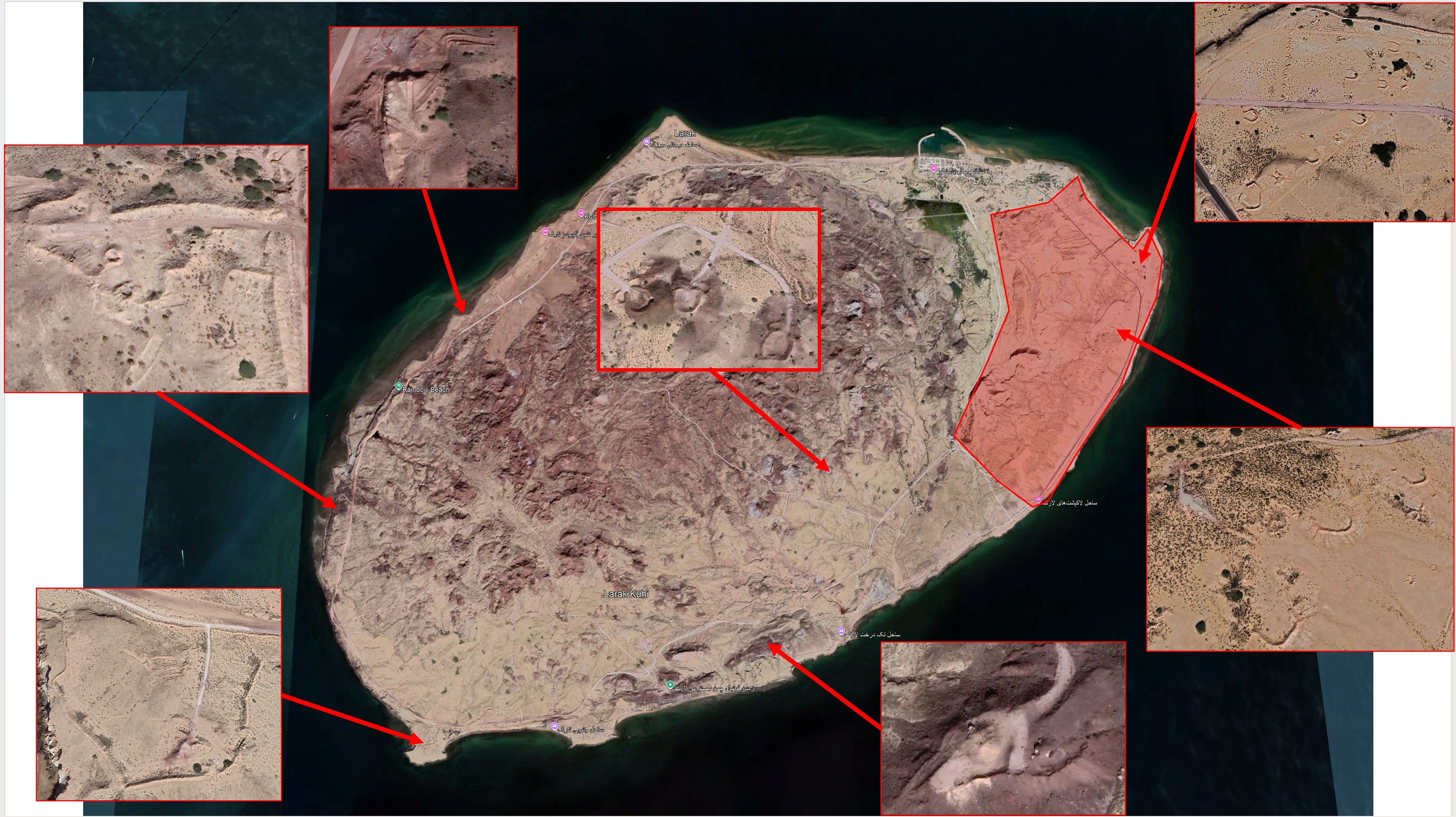
We have also seen that Iran is using passing between Qeshm and Larak as a type of toll booth, so that only ships they approve of can transit the Straits of Hormuz.
Frankly, to open up the Straits of Hormuz Larak probably needs to be taken. However, taking it would leave the occupying garrison exposed to a large volume of Iranian retaliatory firepower.
War sucks and sometimes there isn’t a low risk solution.
Assuming Siri, Abumusa, Tunb, Hengam and Larak are seized Iran’s visual detection range for white haze days would be significantly degraded, as shown in the map below (with the dashed line showing Iran’s range after those islands were seized).
If America controls these islands they could also base air defence systems there. The map below shows the range of stinger missiles and the Ukrainian drone interceptors from the islands. As you can see, it creates an overlapping wall of drone interceptors that Iranian Shahed’s need to cross to reach the shipping lane.
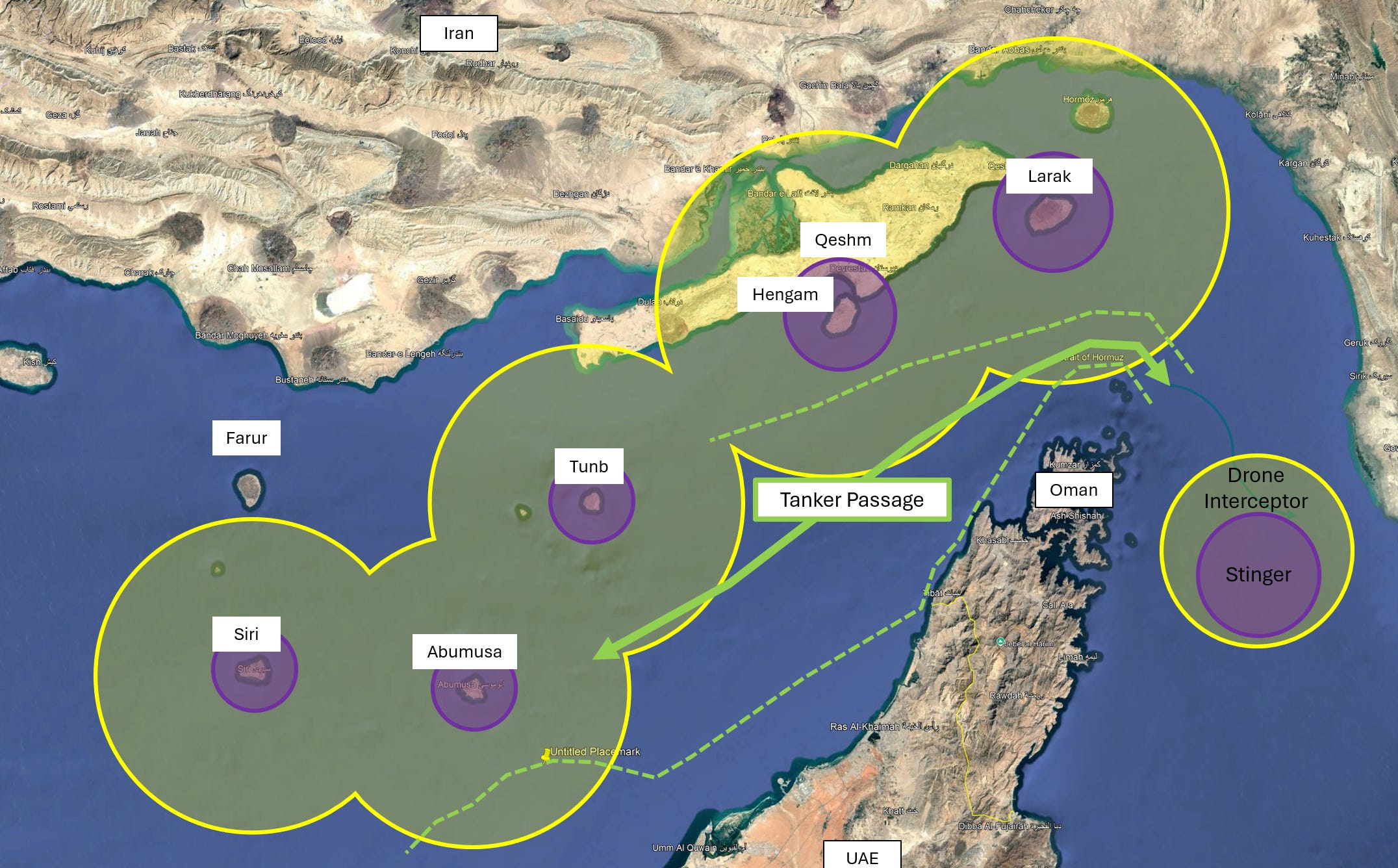
Therefore we have a series of risky island invasions. The landings themselves probably would not result in high casualties, but Iranian bombardment of the garrisons would be a serious problem. This is particularly the case for Larak, but it is also the island that most needs to be seized.
Apparently video games are prescient, because for the last few weeks everyone has been talking about an assault on Kharg Island, and I can’t stop hearing that earwormy game music.
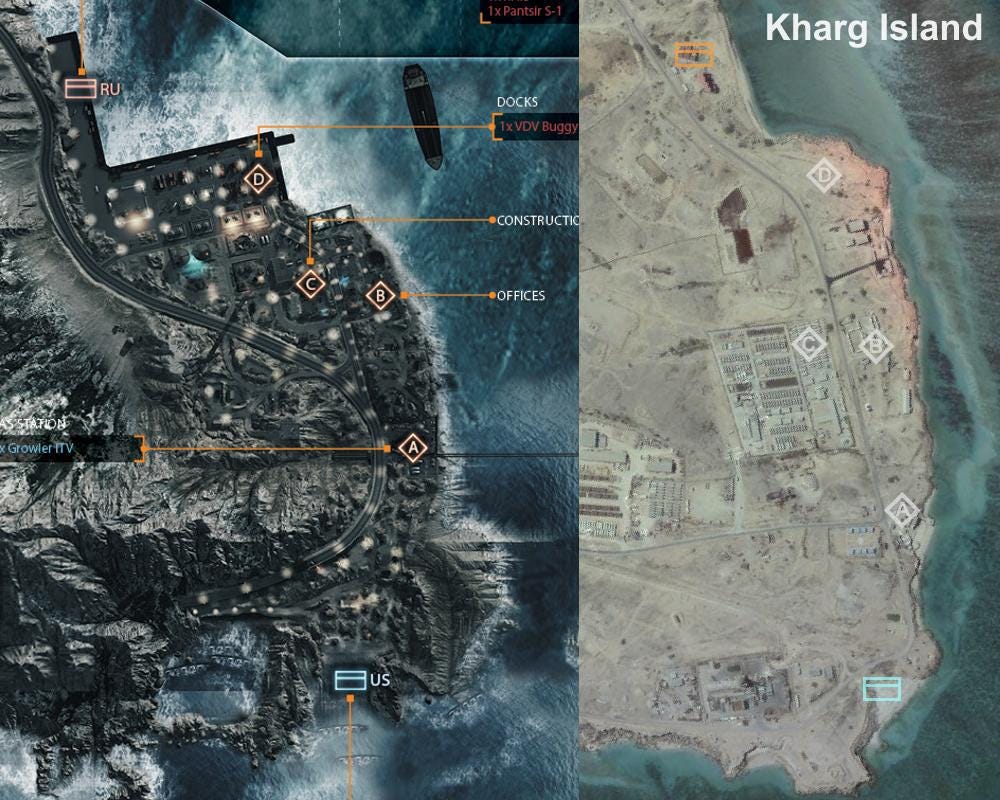
Kharg is economically important, and therefore would be a good bargaining chip for negotiations. Though there’s a certain oddity to seizing Kharg to control Iranian oil exports when the US is giving Iran a special exemption to oil sanctions and doing nothing to stop Iranian tankers exiting the Straits of Hormuz.
Kharg itself is about the size of Hengam and half the size of Larak. However, it is about 80% built up area, making this nearly a brigade sized objective. It is also well fortified and within range of the mainland for everything except medium range artillery.

I don’t think it’s wise to take Kharg island by airborne or helicopter assault. There doesn’t appear to be any viable drop zones on the island. There are only two good company sized helicopter landing zones on the island: the airport in the north, and a sports field in the south. Those two potential HLZs will probably be covered with mines and machine guns. There are three other mediocre to poor company HLZs on the island, but Kharg has so much built up area that small special forces teams are probably the ceiling on air insertion without exposing the troops to significant risk.
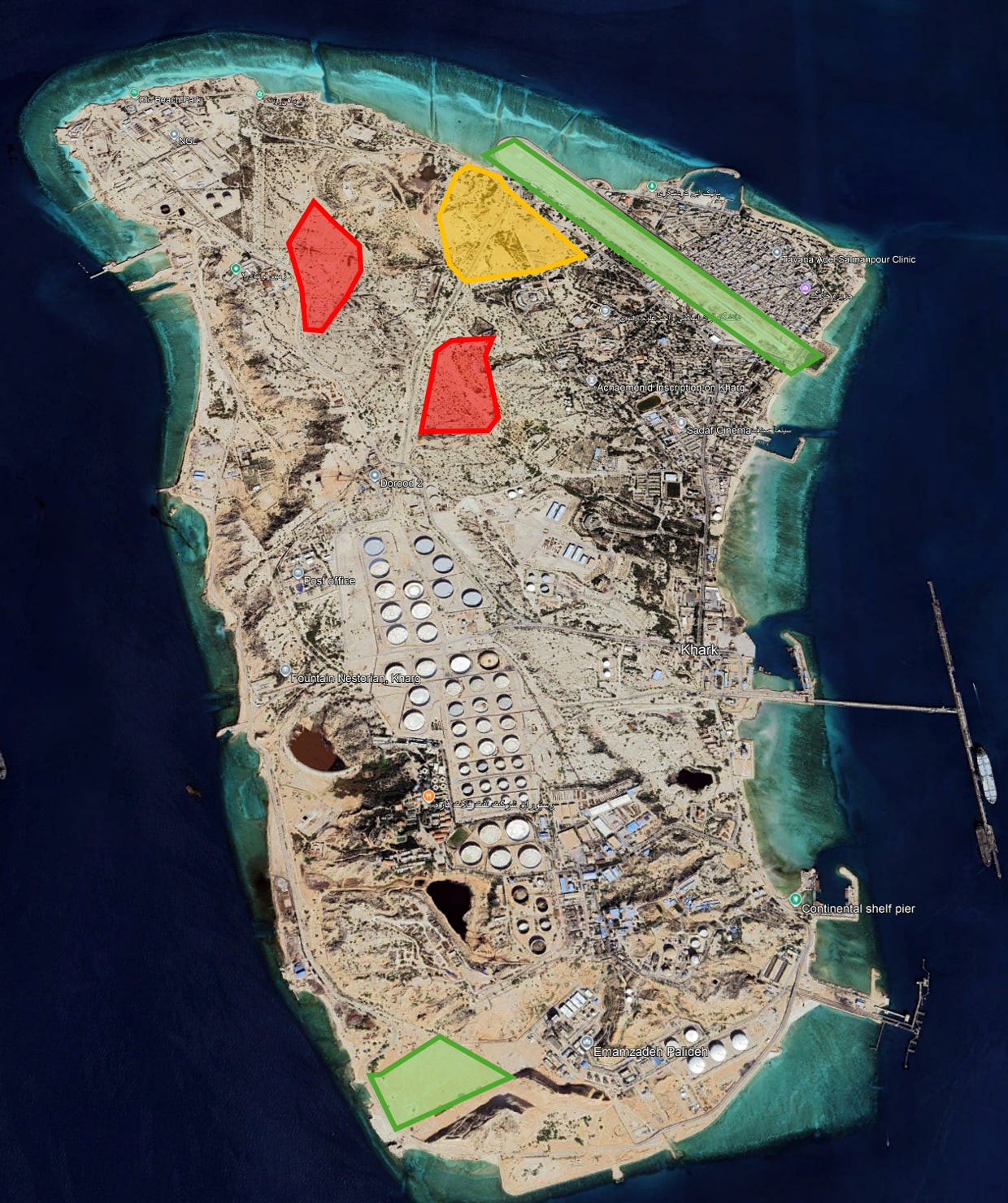
This means Kharg would need to be assaulted from the sea, unless someone is willing to sign off on a tremendous level of risk. This risk could be accepted and it might work. But it’s almost as likely to end with a failed assault and hundreds of casualties.
For Kharg to be assaulted by the sea the US Amphibious ships need to come through the Straits of Hormuz. LCACs could be offloaded around Qatar, but they don’t have the operational range to be launched outside the strait. To launch LSVs the US amphibious vessels need to come within about 25 km of Kharg island. This would make them vulnerable to attacks from the mainland, but the alternative is for the landing force to consist of mostly light troops without support from armoured vehicles.
War sucks and sometimes there isn’t a low risk solution.
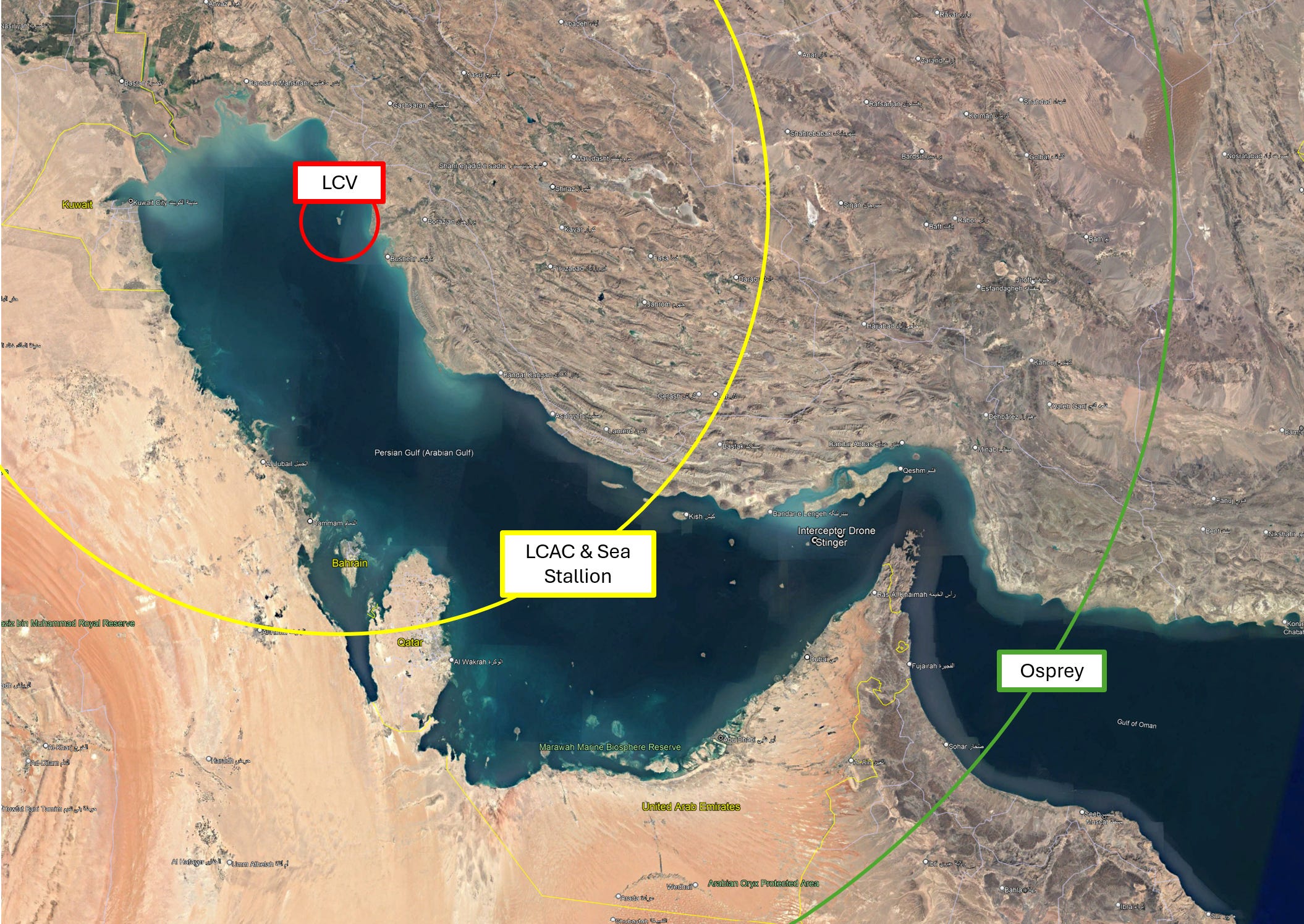
Ospreys can be launched outside the straits, but that means committing to an air assault. Ospreys also cannot carry heavy equipment or vehicles, so eventually ships would need to be brought through the strait to give the MEU the heavy equipment it needed to withstand holding Kharg island.
Therefore I would leave any assault on Kharg island to after the seizing of Larak, Hengam and the lane islands. An amphibious task force could then transit the Straits of Hormuz to support a combined assault from the air and sea. This would have the additional benefit of lessening Iran’s ability to exert pressure on global oil markets. It would also make supporting the garrison on Kharg much easier, both logistically and through supporting them with the navy’s own air defence systems.
America can improve its position in the war by seizing a number of islands in the Persian Gulf. The risks vary from low to very significant, as it means putting ground troops within much closer range of Iranian retaliator firepower.
USMC operations to seize islands in the Persian Gulf would not look like Saving Private Ryan, since amphibious landings haven’t been done that way since the Korean War. Key features would be first seized by special forces, with the main body being brought ashore by a collection of boats and amphibious AFVs that can resist at least small arms fire.
The larger risk of Iranian retaliation would come after the beach landings, with Iran using drones, MLRS, fiberoptic FPV drones and in some cases even artillery to pound the American garrison.
By seizing Siri, Tunb and Abumusa the narrow choke point length of transiting the strait would be reduced by about 150 km. Seizing Hengam and Larak would significantly degrade Iran’s observation and firepower at the narrowest point of the strait.
However, these two islands would come under significant fire from mainland Iran and Qeshm. The US does not have enough troops in the region to seize Qeshm, and even if they did they would then come under the same unacceptable level of fire from mainland Iran.
Seizing Kharg is best either ignored or left as a follow on operation, after the five islands near the Strait of Hormuz have been seized. All these options would improve the US position in the Straits of Hormuz and for the war in general. They would also allow give Iran a lot more options for killing American service personnel.
War sucks and sometimes there isn’t a low risk solution.

As an aside Omaha beach wasn’t like Saving Private Ryan. Although certain companies took up to 96% casualties, the 1st wave suffered about 40% casualties throughout the entirety of D-Day. The first two Regiments ashore (making up the first three waves) suffered 33% casualties on D-Day and 33% casualties on the first two days respectively. The Omaha beach landing as a whole involved 43,250 troops, with about 3,600 casualties (8%), of which 770 were killed (1.7%)
This is horrific, as in most tactical actions you expect below 5% casualties, but it’s not what Saving Private Ryan showed. Famously it has 109 on screen deaths in an opening scene that featured the first two landing waves. Using the ratio of dead to wounded Saving Private Ryan implies there were at least 605 casualties from the first hour. In fact, the Ranger Company and nearby units suffered about 400 casualties in the course of the entire day.
Also, there’s way too many MG-42, the bunkers are far too complex, the ratio of killed to wounded is too high, etc.
There are longer range fiberoptic drones, but these are more expensive and complex to the point that a Shahed is probably a better option.
Comments
Nothing yet. Say the first thing.
Sign in to join the conversation.