
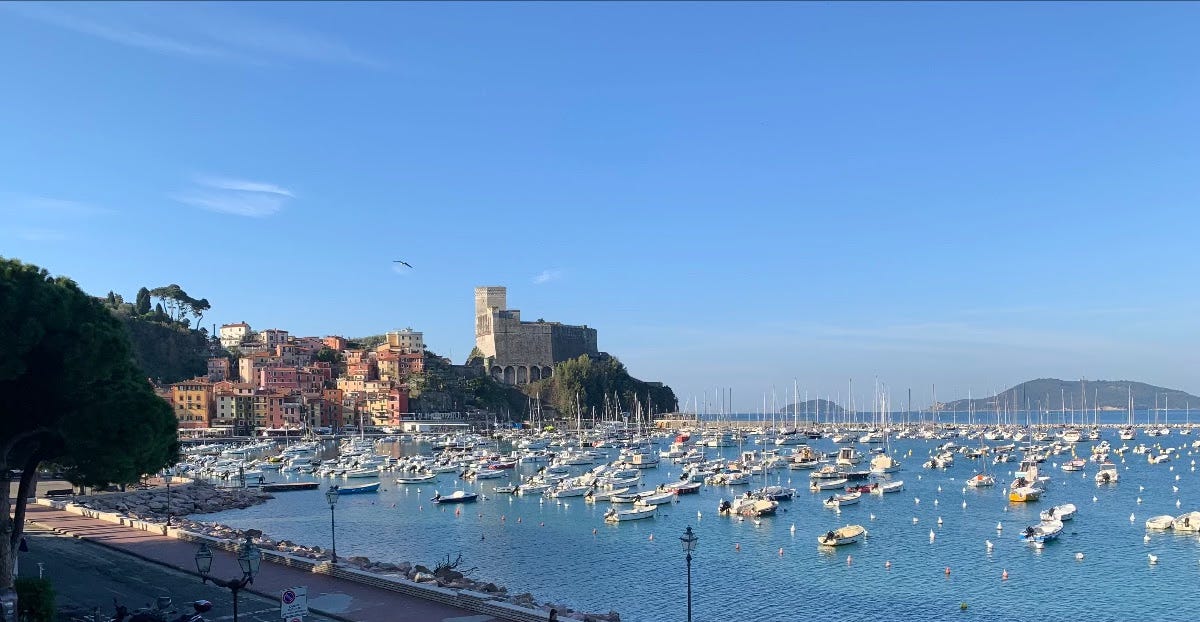
Lerici - marina and castello Picture © Lerici Music Festival
In the English-speaking world Gianluca Marcianó is best known as a theatre conductor, primarily at Grange Park Opera where he has become the natural curator of the Italian repertoire. But in his native Italy Marcianó is the spiritus rector of a very different kind of event — at Lerici, a small resort on the Ligurian coast and the Golfo dei Poeti (Gulf of Poets), where he was born and where, nine years ago, he inaugurated the Lerici Music Festival or Suoni del golfo (Sounds of the Gulf). His aim was to bring classical music to a town with neither an opera house nor a concert hall.
Lerici has always attracted tourists, mostly of the English ‘Grand Tour’ variety: this is where Shelley and Byron swam (and the former lost his life). It remains a popular spot for Italian and British holidaymakers, although its beaches are nowhere near as crowded as Pesaro’s on the Adriatic coast.
I have been a visitor for the last four years. Initially I was invited as a guest speaker, to talk about my career as a music journalist and join a discussion panel with Marcianó and Bryn Terfel, who in 2023 participated in a concert in one of Lerici’s sea-front piazzas. On that first visit I took a boat trip to Porto Venere, gateway to the picturesque Cinque Terre coastal villages, and dined at a restaurant with delicious food and spectacular views over the Mediterranean. In my second year I went to the breathtaking marble quarries of Carrara: from the top of the cliffs, a dizzying panorama unfolds down to the sea at the pretty port of Marina di Carrara.
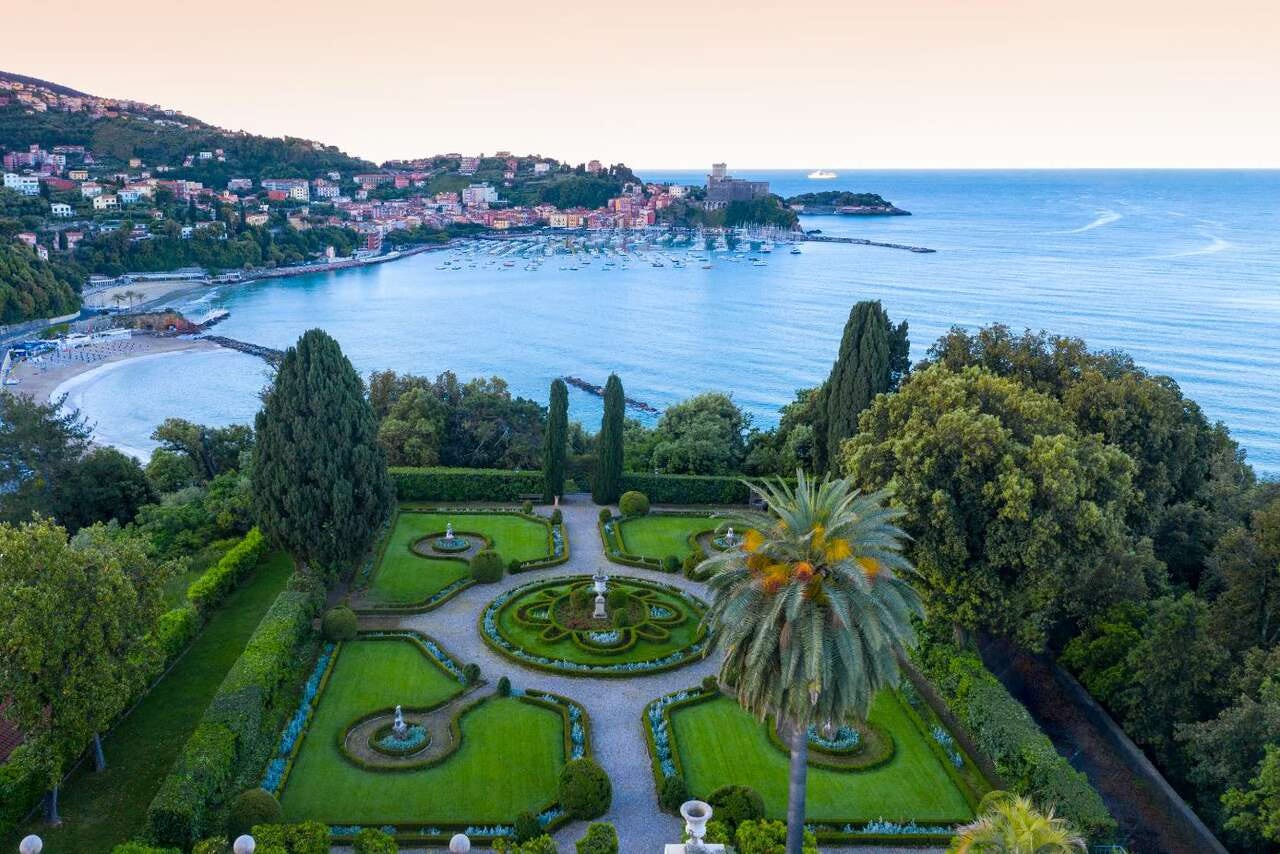
Gardens of the Villa Marigola overlooking the Golfo dei poeti with Lerici’s castello in the distance Picture © Dario Fusale
Even without purpose-built music venues, Lerici itself discloses treasures, not least the ornamental gardens of the nearby hilltop Villa Marigola, the festival’s preferred venue for chamber music and song. The house, now owned by La Spezia Savings Bank, is used for conferences and cultural events, but can claim its own slice of operatic history: the writer Sem Benelli, librettist of Giordano’s La cena delle beffe and Montemezzi’s L’amore dei tre rè, stayed there in the 1920s.
Although both of these operas would be meat and drink to Marcianó, he is unlikely to tackle either of them at Lerici. Operatically the festival has succeeded by keeping things small. In 2024 a remarkable staging of Viktor Ullmann’s Der Kaiser von Atlantis featured singers and players from the Conservatorio La Spezia in a former tile factory at Santo Stefano di Magra, less than 30 minutes from Lerici, while last year Peter Brook’s La Tragédie de Carmen (a butchered travesty of Bizet’s masterpiece) was scuppered by inclement weather and an over-complex lighting plot by a Russian production team.
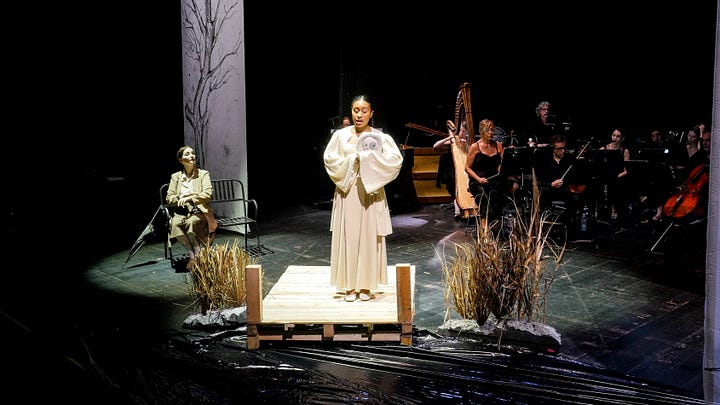
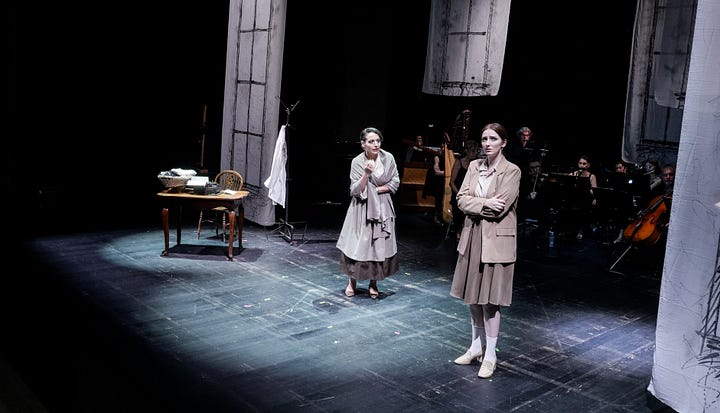
Sofia Savenko (Governess), Jasmine Flicker (Flora); Dilan Saka (Mrs Grose), Savenko (Governess) Pictures © Lerici Music Festival
Lessons have been learned. This year The Turn of the Screw was staged indoors in Sarzana’s exquisite 300-seat Teatro degli impavidi (Theatre of the Fearless!), usually used for prosa (spoken drama) or concerts: a billboard in the foyer revealed that András Schiff had recently performed there. This little theatre has no pit, so the conductor and director, Giuseppe Bruno and Michel El Ghoul, took the bold decision to put the orchestra centre stage. Given that Britten’s haunting sounds for chamber ensemble are crucial to the opera’s ‘scenery’, this gave the performance a unique integrity, harmonising with the festival’s 2026 theme, Musica, Imagine e Parole dall’Acqua (Music, Images and Words from the Water).
El Ghoul’s staging - in his own sets, lit by himself with Victorian-era costumes for the ghosts, 1950s for the ‘real’ characters - concentrated on simplicity, but many of his effects were mightily effective, such as the line-drawn impressions of Bly on translucent curtains, and the ghosts’ heads dimly visible through lighting that gave them a sinister ‘Cheshire Cat’ presence.
James Shouten, brought in at the last minute to sing the Prologue and Quint, has a darker, more heldentenorish sound than Peter Pears or his English successors, but he mastered the tessitura of the ghost’s role deftly, and his grainy baritonal tone, unusual in this opera, suggested Grimes may be on the cards in the near future. Russian-born, German-raised Sofia Savenko sang the Governess with her gleaming soprano, communicating with remarkable textural clarity, as did the unusually young Mrs Grose of Turkish mezzo Dilan Saka, who has studied in Cardiff with Della Jones and Susan Bullock.
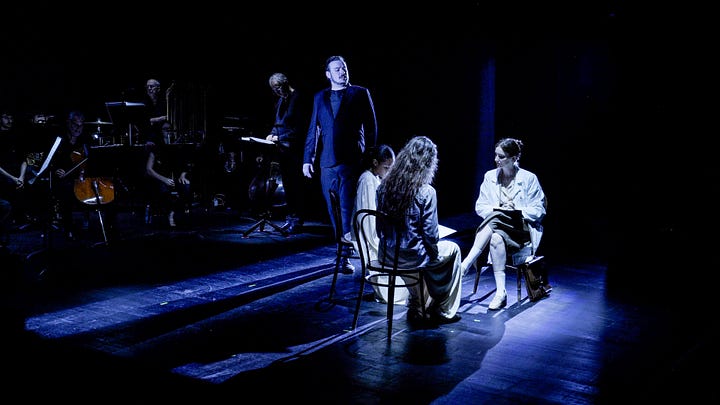
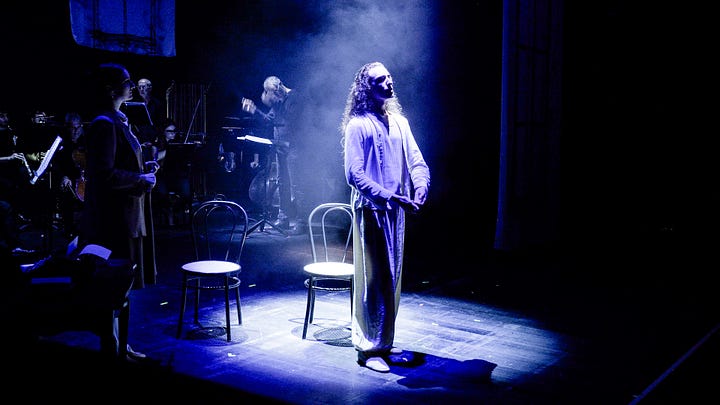
Ceremony of Innocence: Giuseppe Bruno (conductor), James Schouten (Peter Quint), Flicker (Flora) Nicholas Ceragioli (Miles) Savenko (Governess); Ceragioli (Miles) Pictures © Lerici Music Festival
More controversial was the casting of Miles and Flora with young adults. This was done mainly for practical and economical reasons: finding a 13-year-old Italian Miles capable of learning the role in English, or importing a British treble (plus chaperone), would have been prohibitively costly. So the director decided to portray the two pre-pubescent parts as adolescents, looking back at their tumultuous childhood at the mercy of controlling adults. Britten would probably have hated it - especially having Miles sung by the lanky and lean countertenor Nicholas Ceragioli, sporting a hairdo that would get any lad dismissed from school but nevertheless exuding a guru-like innocence. Jasmine Flicker’s more knowing Flora suggested impish devilment from the outset.
The work itself is so structurally sound, built on Bergian foundations but melodically much more immediately accessible, that it can take eccentric innovations. The only sadness was the number of empty seats - in 2024, Der Kaiser von Atlantis filled a smaller venue. But staged opera is still a novelty for this young and ever-ambitious festival.
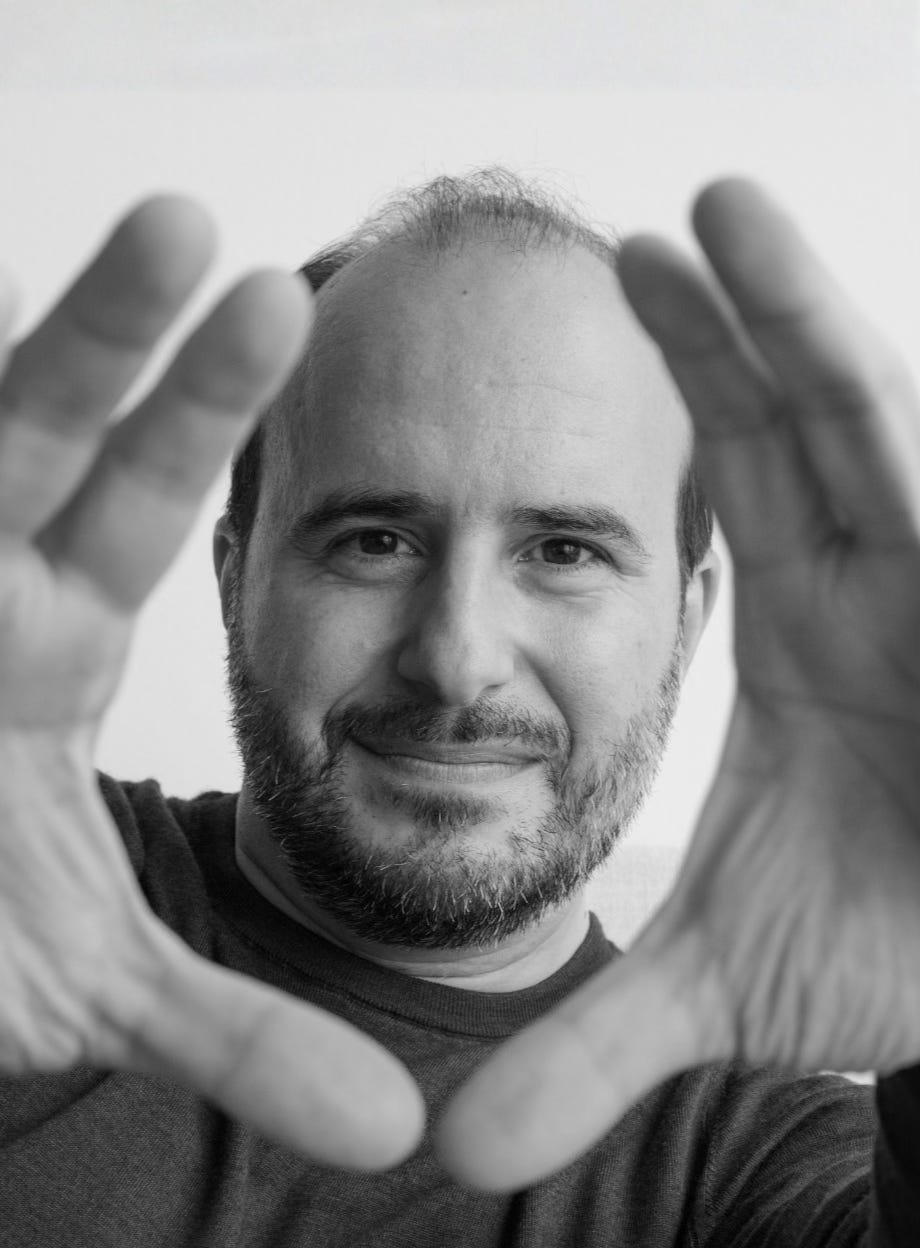
Lerici’s spiritus rector: Gianluca Marcianó Picture © Lerici Music Festival
Marcianó is the festival’s most visible and gregarious figurehead, greeting concert-goers and visitors with equal enthusiasm. I was therefore gutted to have missed his most important conducting engagement at Lerici this summer - the penultimate concert featuring Korngold’s Violin Concerto (Bomsori Kim) and Beethoven’s Symphony No 4 (my favourite).
More popular fare attracted a capacity local crowd to the free (but advance booked) closing concert. This was a magical night under the stars on the ramparts of Castello San Terenzio, overlooking the Gulf of Poets with Lerici’s fortezza in the distance. The programme included film music by Ennio Morricone and Roberto di Marino, with Mario Stefano Pietrodarchi as the bandoneon soloist. But we were also rewarded with a rare Italian outing of Elgar’s Cello Concerto, played with an intoxicating blend of nostalgia and Mediterranean warmth by Miriam Prandi and an orchestra from Genoa conducted by Stefano Vignati.
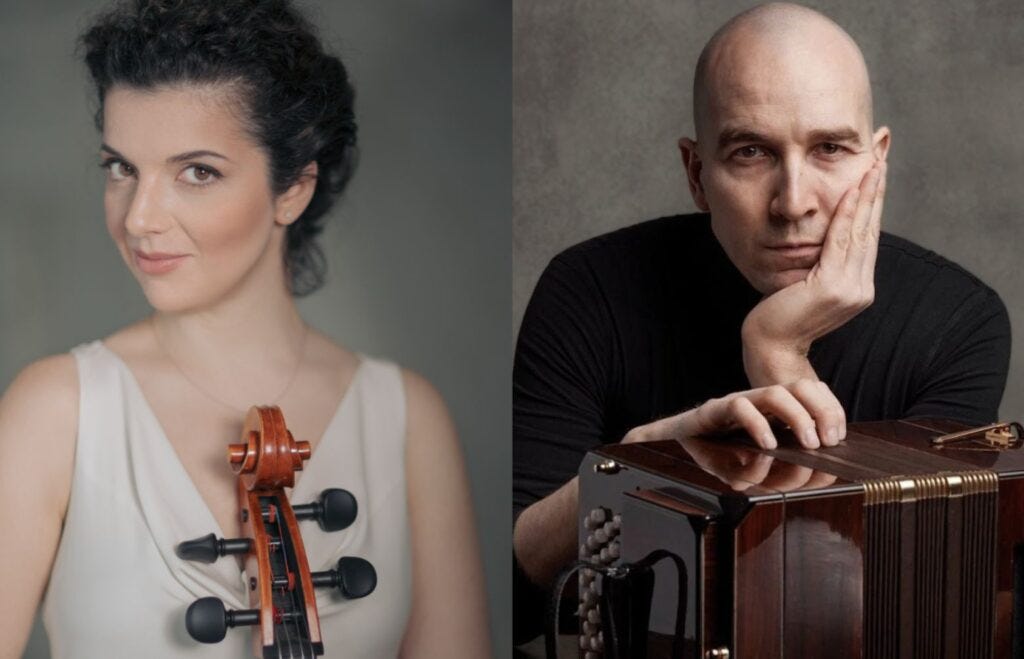
Miriam Prandi, cello, Mario Stefano Pietrodarchi, bandoneon, soloists in the closing concert Picture © Lerici Music Festival
The Turn of the Screw - Britten - Teatro degli impavidi, Sarzana
Conductor Giuseppe Bruno Director/Sets/Costumes/Lighting Michel El Ghoul
Performance attended August 1, 2026
Governess Sofia Savenko Prologue/Peter Quint James Schouten Miss Jessel Melinda Hughes Mrs Grose Dilan Saka Miles Nicholas Ceragioli Flora Jasmine Flicker
Orchestra Del Teatro Carlo Felice, Genoa
No posts
Comments
Nothing yet. Say the first thing.
Sign in to join the conversation.