
Many people believe that God is omnipotent and controls everything that happens. This understanding of God can have significant implications for our lives, especially when it comes to medical decisions such as vaccinating our children. It leads some families to avoid vaccinations because they see God as singlehandedly in control of everything, including their children’s health.
This view can lead parents to think that vaccinating their children is an admission that they do not trust God to protect them. Others may choose not to vaccinate because trusting God to protect their children feels safer than the risk of feeling guilty if their child experiences a side effect from the vaccine.
Parents who believe in God naturally want to trust God. By the time a newborn arrives, her parents have already endured the trials of pregnancy, labor, and delivery. Through that journey, they may have experienced fear, uncertainty, and moments when they felt they could only pray for help. When their little girl arrived, their faith in a God who provides grew stronger. It is understandable that they now want to lean into their faith and trust that the God who gave them this beautiful child will protect her.
This desire to trust God can lead some people to believe that vaccinating their children somehow shows a lack of faith in God. For some parents, this may mean that their faith community may doubt their reliance on God if they choose to vaccinate their children.
Some parents who strongly trust God to protect their children from illness fear that their decision to vaccinate may cause side effects for which they would be to blame. In their minds, if their child experiences a side effect from vaccination, they are at least partially to blame. If their child develops an illness because they weren’t vaccinated, it was God’s will.
Avoiding vaccines is a medical decision. Sometimes parents feel pressure to “decide” how and when to vaccinate their children. This pressure naturally builds during two-, four-, and six-month checkup visits, when vaccinations are recommended. It is important for them to remember that not vaccinating their children is not a default. It is still a decision.
In medical practice, patients must give “informed consent” for surgeries and procedures. It is increasingly common for pediatricians to ask parents to give an “informed refusal” when they want to deviate from the standard vaccination schedule. This reminds us that choosing not to vaccinate is still a decision.
The idea that God is in control is common. We see it in slogans like “God Has a Plan,” “His Will, His Way, My Faith,” and “God’s Got This.” Thinking that God takes care of all of our difficulties and struggles is reassuring. The problem with this line of thinking is that sometimes things don’t go well.
Consider a child who develops leukemia. Her parents and community naturally ask, “Why?” Saying “God is in control” can lead us to wonder whether God intentionally allowed this child to get cancer, raising difficult questions about God’s nature. Why would a loving God choose for a child to suffer or for her parents to endure such fear and grief?
I do not believe God chooses cancer for anyone. Cancer develops when cells grow out of control and genes fail to function as they should. I do think that God is present, calling doctors, parents, communities, and even the body itself toward healing. When these work together, healing can happen.
The same line of thinking applies to vaccine-preventable illnesses. If God controls every outcome and chooses for a child to die from measles, leaving a family to grieve, that picture of God is difficult to reconcile with love.
But I don’t think God controls everything. Love doesn’t coerce or control. I think God is love and loves everyone and everything, calling all creation toward truth, beauty, goodness, flourishing, and overall well-being. God’s goal is healing and life, not suffering and death.
Popular religious thinking often says we should “Let Go and Let God.” This phrase implies that God is in control and that we’re best off standing back and letting God handle things. But Scripture and our experiences tell a different story. They tell us that God calls or draws us toward the good and that we can choose to cooperate with God in working toward that goal.
Sometimes, our bodies, genes, and cells act in ways that undermine health and flourishing. Other times, doctors, medications, immune systems, families, communities, and God work together to promote healing. Vaccination is one way parents can work with their children’s bodies to help prevent disease before it causes suffering.
God always responds in love. Since God is essentially love, God cannot choose to do anything other than love, and love doesn’t control or coerce others.
In one of his most beautiful and famous passages, Paul describes love as patient, kind, and free from envy, boasting, arrogance, and rudeness. He says love is not irritable, keeps no record of wrongs, and does not “insist on its own way” (1 Corinthians 13:4-5, NRSV). Although Paul wrote about love more broadly, this passage is often read at weddings, where we imagine idealized interactions between spouses who do not insist on their own way but instead cooperate with rather than control their partner. Paul’s description of love is not limited to human love. It also applies to God’s love, which is patient, kind, and humble and does not insist on its own way. Love does not insist on its own way by controlling others.
Sometimes Scripture seems to portray God as controlling. At other times, Scripture presents God as a loving guide. When Scripture offers us different images of God, we are left with the task of interpreting it, which requires humility, wisdom, discernment, and faith.
When I look at Scripture as a whole, I see God guiding rather than controlling. Several of Israel’s most prominent leaders hesitated when they received God’s call. Moses offered many reasons for God to send someone else. Gideon questioned his readiness to lead and God’s commitment to Israel, asking for many signs to validate his selection. Jeremiah hesitated when God called him to be a prophet because of his youth and lack of speaking experience. God responded to each of them with reassurance, persuading them rather than coercing them to lead.
For Christians, Jesus’ life offers deep insight into God’s character. He said, “Anyone who has seen me has seen the Father” (John 14:9 NIV), and his interactions with people offer many examples of guidance without control. He invited his disciples to follow him. He showed kindness and acceptance toward Zacchaeus, inspiring Zacchaeus to make amends for what he had taken. He gently guided Peter back into their relationship after Peter’s stark denials. Sometimes his guidance wasn’t followed, as when he engaged with the rich young ruler, who left without taking Jesus’ lead.
Jesus recounts God’s patient efforts to guide the people of Judea through the prophets. With sadness in his voice, he said, “Jerusalem, Jerusalem, you who kill the prophets and stone those sent to you, how often I have longed to gather your children together, as a hen gathers her chicks under her wings, and you were not willing” (Matthew 23:37). For centuries, God called the people, yet they didn’t follow.
God’s guidance is persistent and loving, continually calling all parts of creation to work together toward flourishing, including doctors, nurses, medications, and vaccines.
One way God has guided our world is through exploration, the growth of knowledge, and the development of new technologies. Across many fields, technological advances have created new possibilities for flourishing. Technology is not inherently good, but when guided by wisdom and love, it can become an instrument of healing, protection, connection, and shared well-being.
Human creativity is one way creation responds to God’s call to greater well-being. While not replacing God’s work, scientific and technological advances can become part of our cooperation with God as we seek to reduce suffering and help life flourish.
In modern medicine, vaccines are a technology that has substantially contributed to health and well-being. It is impossible to calculate the full impact of vaccination since the first smallpox vaccine was developed over two hundred years ago. However, a recent World Health Organization study estimates that vaccines have saved at least 154 million lives between 1974 and 2024. Because so many of those lives were saved in infancy and childhood, researchers estimate that vaccination saved about 1.2 billion years of life.1
Vaccines are one way human knowledge and medical care can participate in God’s work toward health and well-being.
Vaccinating our children shows love most directly by protecting them from illness, suffering, and death. Parents commonly take preventive measures to protect their children from harm. We use car seats, insist on bicycle helmets, install smoke detectors, and place newborns on their backs to sleep. Vaccines are one way we anticipate and reduce the risks our children may face.
Vaccination also helps protect others, including children too young for certain vaccines, people with medical vulnerabilities, and unvaccinated children in the community. Love looks beyond our immediate family and considers our neighbor’s well-being.
When we vaccinate our children, we are not placing our faith in medicine instead of God. We vaccinate them because we love them, want to protect them and our neighbors, and promote overall well-being. Vaccinating our children can be a faithful response to God’s call to love our children and our neighbors.
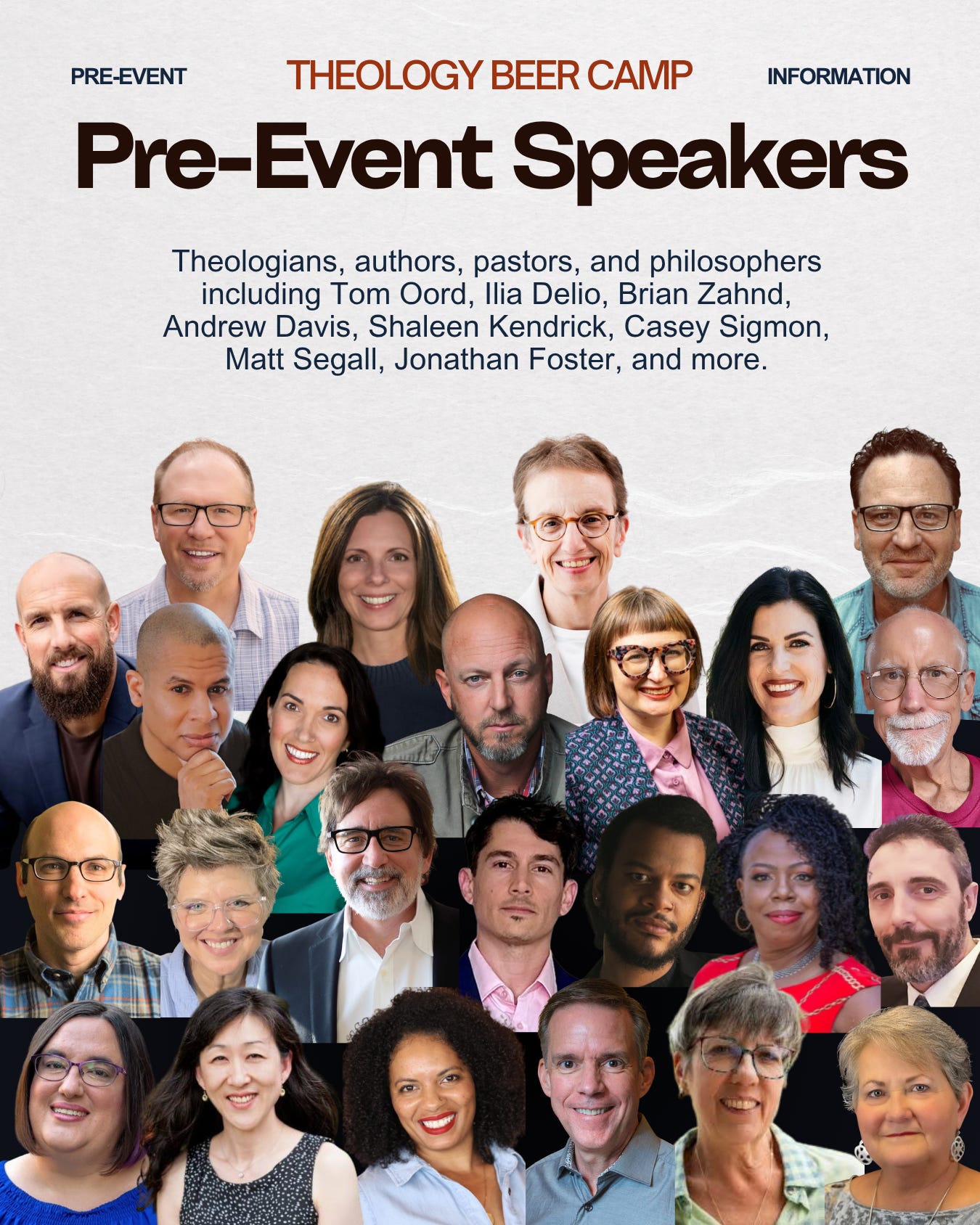
I will be giving a presentation along with my friend John Pohl about vaccines, theology, and love at the Theology Beer Camp Pre-Event on October 8th.
I hope you can join us!

Andrew J. Shattock et al., “Contribution of Vaccination to Improved Survival and Health: Modelling 50 Years of the Expanded Programme on Immunization,” The Lancet 403, no. 10441 (May 2024): 2037–316.
image: ChatGPT
No posts
Comments
Nothing yet. Say the first thing.
Sign in to join the conversation.