

I have had many conversations with parents about vaccines. Most of those discussions are straightforward. Parents often ask which vaccines their child needs, which illnesses they prevent, what side effects may occur, and whether multiple vaccines can be safely given during the same visit.
Other conversations are more complicated. Sometimes the concern is primarily medical. A parent may have read or heard that a vaccine may cause autism, infertility, immune problems, or other harm. Parents may distrust pharmaceutical companies, government agencies, or the medical profession. And sometimes, parents are skeptical of vaccines for reasons related to their religious beliefs.
I have spoken with parents who have faith-based reasons for being hesitant about vaccines. They have various concerns. One parent may worry that vaccination shows a lack of faith in God. Another may have ethical concerns about how a vaccine was developed. Another may have been taught that introducing certain substances into the body violates its sacredness. Still another may see vaccines as part of a larger spiritual or political deception. They may reach the same decision but for different reasons.
A helpful article by Hanne Amanda Trangerud groups these reasons into five categories of religious vaccine skepticism.1 Her categories are not exhaustive or meant to suggest that religion generally opposes vaccination. She emphasizes that vaccine beliefs vary widely within religious traditions and that the major faith traditions do not generally prohibit vaccination. Her categories help us understand the different kinds of reasoning that can make vaccines religiously troubling for some people.
Although earlier research had identified various religious concerns about vaccines, Trangerud’s article offers a helpful framework for distinguishing among them. Religious vaccine skepticism is not a single belief. It takes several forms. Her article recognizes that religious concerns about vaccinations are complex. Here is my summary of her five categories of religious vaccine skepticism.
The first kind of skepticism comes from a fundamental conflict between vaccination and a person’s worldview.
Modern medicine understands that infectious diseases are caused by microorganisms such as viruses and bacteria. Vaccines help prevent infections by preparing the immune system to recognize and resist these organisms.
Not everyone understands health and disease in those terms. Some religious communities believe that illness is primarily spiritual. Disease may be understood as an illusion, the work of evil spiritual forces, the consequence of fear or unbelief, or something that should be addressed only through prayer and faith. Other spiritual or alternative health systems may explain illness as blocked energy, bodily imbalance, or other forces that leave little room for the usual scientific account of infection and immunity. Within such a worldview, vaccines may not merely seem unnecessary. They may seem misguided or spiritually harmful.
More facts about vaccine effectiveness may not resolve a disagreement rooted in two very different accounts of reality.
A second form of skepticism begins with trust in divine providence. A parent may believe that God alone determines whether a child becomes sick, remains healthy, recovers, or dies. Vaccination can then seem like an attempt to prevent what God has chosen or to control an outcome that should be left in God’s hands.
For some, the issue is trust. Receiving a vaccine may feel like admitting they do not trust God to protect them.
For others, doing nothing feels morally safer. If their children get sick, they may regard the illness as God’s will. But if a vaccine causes a side effect, they may feel personally responsible because they chose the intervention.
This is a deterministic way of understanding God. It leads people to accept negative outcomes as divinely ordained and to view human efforts to change them as unnecessary or wrong. Belief in providence does not always take this form or lead to vaccine refusal. Many religious people believe deeply in God’s guidance while also seeing medicine as one way God provides care.
The real theological question is not whether God is involved in our health. It is how divine action and human responsibility fit together.
A third concern is ethical. People whose concerns fall into this category do not necessarily oppose vaccination in general. They object to specific vaccines because of concerns about how vaccines are developed, or because they fear vaccination may encourage behavior they believe is wrong.
I often hear this concern when parents express worry about fetal cell lines originally derived from abortions performed decades ago. Some vaccines have been developed or tested using descendants of these cell lines. Christians who strongly oppose abortion may believe that allowing their children to receive these vaccines would make them morally connected to the techniques used to develop these cell lines.
Parents from different religious backgrounds might be concerned about the use of animal products in vaccines, especially if an animal is deemed sacred or harming it is morally wrong.
Other parents may worry that vaccinations could inadvertently give their children permission to push their moral boundaries. The human papillomavirus (HPV) vaccine, for example, protects against a virus commonly transmitted through sexual contact. Some parents fear that administering the vaccine signals approval of premarital sexual activity or may encourage adolescents to become sexually active.
This objection is not primarily rooted in fear of side effects. It comes from a desire to remain faithful to a moral conviction. Helping people overcome these types of concerns requires addressing the underlying ethical or moral issue. A medical explanation alone may miss the actual concern.
A fourth form of skepticism focuses on purity. Many religions teach that the body has sacred significance and restrict items that are considered unclean or forbidden.
In those situations, concerns about vaccine ingredients can come up. People from some backgrounds may want to avoid vaccines that contain products derived from pork or beef. Others may prioritize the biblical idea of the body as a temple and worry about vaccines introducing toxins, chemicals, or other impurities into it.
This category is similar to the one regarding ethical concerns, but the emphasis is different. The question is not primarily whether an animal was treated wrongly. The concern is that receiving a prohibited or impure substance may defile the person’s body or violate a religious obligation.
Addressing these concerns may require help from religious authorities who can clarify the tradition’s beliefs about restrictions and the value of preserving life.
The final category concerns conspiracy beliefs. In this form of skepticism, vaccines are not merely viewed as unsafe or unnecessary. They are seen as potential attacks on a religious community.
The alleged purpose of vaccination may be infertility, population control, infection, surveillance, genetic alteration, or spiritual corruption. For example, during the COVID-19 pandemic, some Christians linked vaccines to the “mark of the beast” in Revelation. Sometimes, religious minorities have feared that governments or foreign powers have used vaccination campaigns to weaken or eliminate their communities.
Sometimes, these beliefs develop in communities where trust has already been broken. There may be a background of discrimination, medical mistreatment, political exploitation, or neglect. Rumors built on top of a deep-seated sense of betrayal can appear believable.
Addressing concerns rooted in potential conspiracies against particular religious groups is complex. The real challenge is rebuilding trust, and that can be a slow process.
Parents who raise religious objections to vaccines often do not fit into a single category. A parent’s concerns may reflect several of these categories. Religion may be the reason for the concern, or it may be the way people express concerns that originate elsewhere.
Two people from the same church may reach opposite conclusions about vaccination while appealing to the same beliefs.
One may say, “I trust God, so I do not vaccinate.”
Another may say, “I trust God, and vaccines are one way God helps us protect our children and love our neighbors.”
One may say, “Our bodies are temples, so I will not put vaccines into my children’s bodies.”
Another may say, “Our bodies are temples, so I will protect my children’s bodies from preventable disease.”
Even people with common religious backgrounds do not always reach the same conclusions about vaccines. Individuals’ beliefs can be deeply personal and must be addressed carefully.
I strongly support vaccination. Throughout my career, I have seen vaccines prevent illness and death, and I strongly encourage all of my patients’ parents to vaccinate their children. I have also learned that addressing vaccine hesitancy sometimes requires more than presenting medical data.
This is especially true when parents connect vaccine hesitation to faith. Understanding parents’ specific concerns and where they came from is essential.
Each type of concern requires a different conversation. Offering more safety data will not change a theological belief about providence. Discussing scientific data about cervical cancer may not connect with a parent who cannot imagine their sweet twelve-year-old ever being exposed to HPV.
Helping someone move beyond vaccine skepticism is not always possible. Even after careful, respectful conversation, some parents remain unconvinced. They may not be ready to vaccinate their children.
Change is more likely when we listen closely enough to understand the concern underlying the conclusion. Then we can identify shared values and offer explanations with humility. If we try to bully or coerce people into agreement, we are more likely to deepen the resistance we hope to overcome.
Conversations about vaccines can be difficult and do not always result in agreement. We love best when we begin by seeking to understand before we answer. That kind of faithful presence can build trust and open possibilities for greater well-being.
In the next two posts, I will address the two categories of concern I hear parents express most frequently. Some parents are concerned about God’s sovereignty and believe that since God is in control, vaccinating their children shows a lack of trust in God. Others worry about moral issues surrounding vaccine development or think vaccines may permit sexual behavior they believe is wrong. Both concerns deserve careful theological and ethical attention.
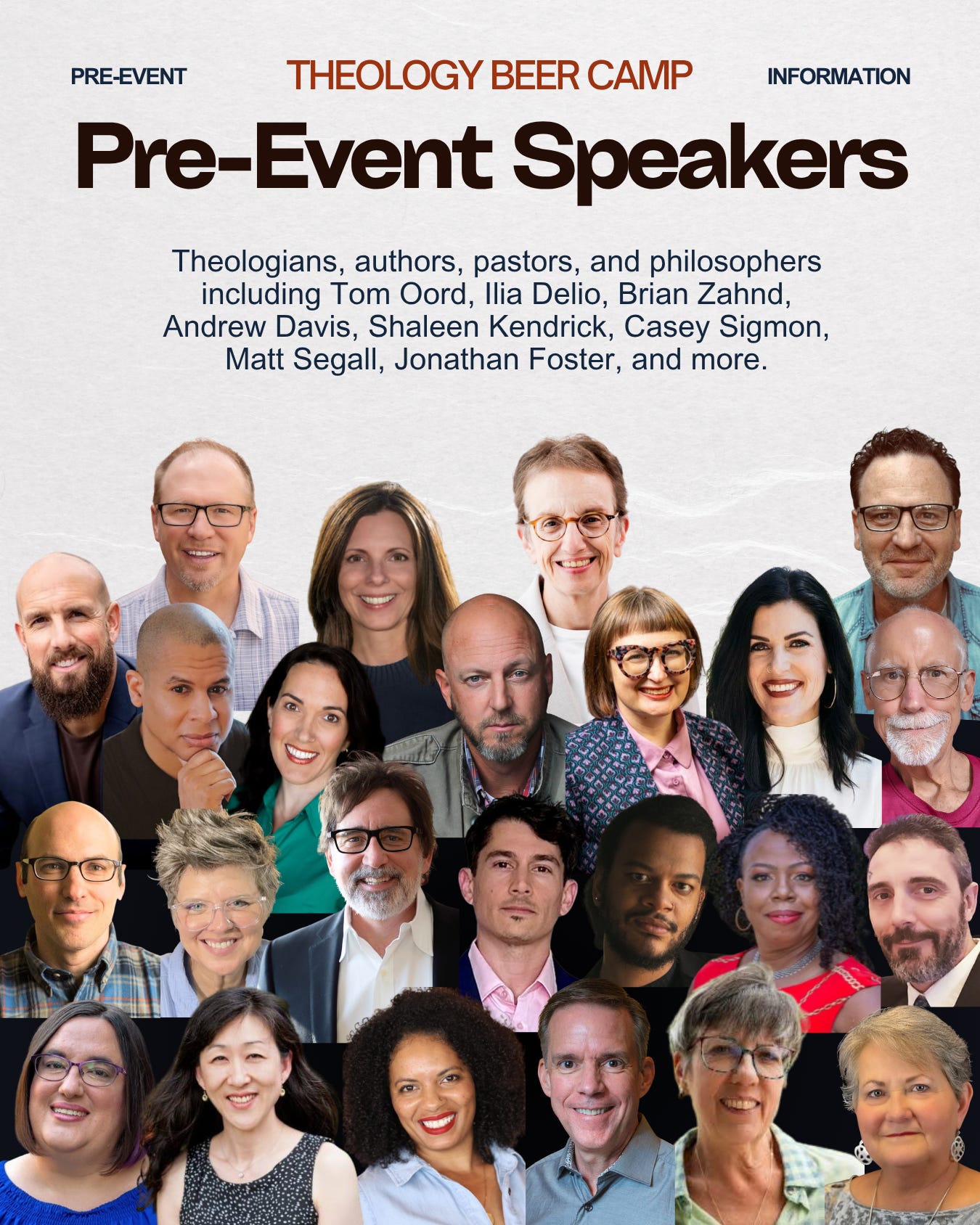
I will be giving a presentation along with my friend John Pohl about vaccines, theology, and love at the Theology Beer Camp Pre-Event on October 8th.
I hope you can join us!

Hanne Amanda Trangerud, “‘What Is the Problem with Vaccines?’ A Typology of Religious Vaccine Skepticism,” Vaccine: X 14 (August 2023): 100349, https://doi.org/10.1016/j.jvacx.2023.100349.
image: ChatGPT
No posts
Comments
Nothing yet. Say the first thing.
Sign in to join the conversation.