
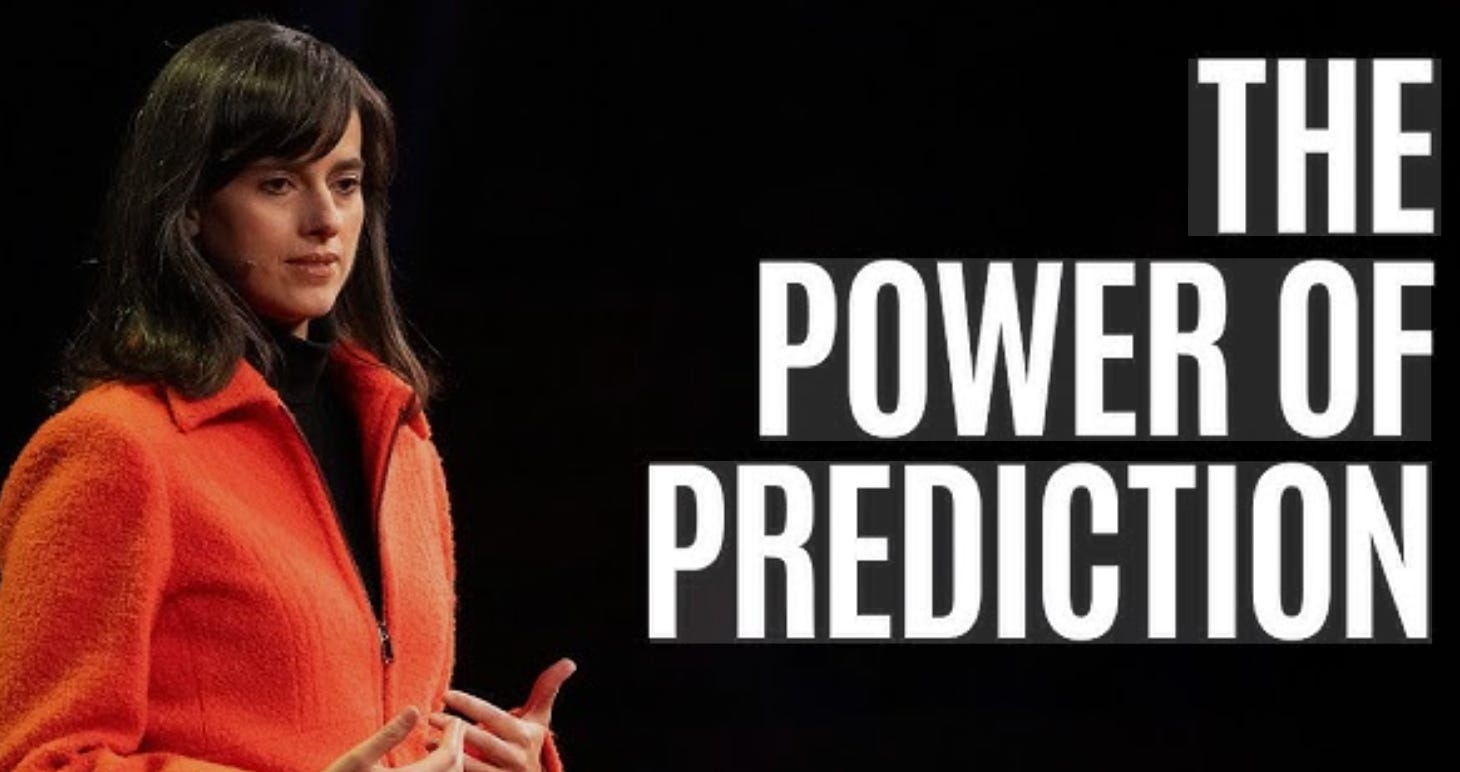
“Predictions are power moves much more than they are attempts at acquiring knowledge.”
In 11 CE, Augustus prohibited private consultations with astrologers in Rome and banned questions about anyone’s death. The decree was not a literary gesture. It was a measure of state security, issued by a man who had earlier benefited from the very practice he now feared. Augustus had used astrology to dignify his own ascent. Once power was his, the same instrument looked less like destiny and more like evidence for the next claimant. Earlier, Tiberius had tested astrologers on Rhodes. Those who failed could be thrown from a cliff. One astrologer, Thrasyllus, survived because, when asked to read his own prospects, he answered that he was in grave danger. Tiberius accepted the answer and kept him.
Carissa Véliz’s book, Prophecy begins its real work, not with artificial intelligence, but with the old rooms in which frightened rulers paid clever men to speak about tomorrow. The book is not about fortune-telling as a quaint human weakness. It is about prediction as a political act. It asks who gets to speak about the future, who must live under that speech, and why the most useful alibi of prophecy is its claim to be only looking for truth.
I think this is the right question for our age because we have been trained to ask the wrong one. We ask whether the prediction is accurate. Véliz asks a more dangerous question: what does the prediction do? A forecast is rarely idle. It rearranges expectation. It directs attention. It gives permission. It frightens, licenses, excludes, markets, disciplines, hires, denies, triages, prices, and ranks. It may look like a statement, but it often behaves like an instruction.
That is the unsettling force of the book. Prediction is not merely a technical practice that went astray when engineers found too much data and too little humility. It is one of the oldest forms of command. Its costume changes. The priestess at Delphi gives way to the astrologer, the astrologer to the social statistician, the statistician to the machine-learning system, the machine-learning system to the executive on a conference stage announcing that software will soon perform the work of whole professions. The voice changes. The social operation remains recognizable.
The old prophet had smoke, stone, ritual, and delay. The new prophet has cloud infrastructure, venture capital, government contracts, slides, and a supply of human data acquired with an innocence that rarely survives inspection. Modern predictive power did not arrive clean. It was built through surveillance, scraped lives, weak consent, and the quiet exploitation of people too tired, poor, sick, lonely, or distracted to resist becoming inputs. I do not say this to sneer at technology. That would be too easy, and also false. Prediction is indispensable. We predict weather, epidemics, troop movements, credit risk, delivery times, hospital admissions, energy demand, crop yield, and the probable behavior of strangers approaching us on a dark street. A creature that could not anticipate would not survive long enough to write philosophy, let alone ignore it.
But Véliz’s point is sharper than the usual warning against overconfidence. Predictions are not facts. The past can be evidenced. The present can be inspected. The future has not happened. A claim about it may be disciplined, calibrated, useful, responsible, and still remain a guess. This is not a small philosophical housekeeping task. It changes the moral status of many decisions now treated as administrative routine. If a person is denied a job because an algorithm scores them as risky, they are not being judged on what they have done. They are being governed by what someone, or something, expects them to do.
That small shift is the door through which much of the modern world now passes. The applicant does not meet the employer. The tenant does not meet the landlord. The patient does not meet the person who set the triage threshold. The defendant does not see the full machinery that helped assign risk. A score appears. A door closes. In medicine, the violence of this can be immediate. A forecast that a patient is unlikely to survive can help make survival less likely, because scarce care is redirected elsewhere. Everyone involved can sound reasonable, even bored. The system did not say the person should die. It said resources should follow probability. Civilized cruelty has always liked a passive verb.
Véliz insists that predictions have five traits the naive view tends to miss. They are guesses. They are shaped by desire. They are entangled with power. Some are impossible. Some are harmful. The list looks simple until one notices how much of institutional life depends on pretending it is not true.
The desire inside prediction deserves special attention. The fantasy of modern forecasting is neutrality. We imagine that once a procedure becomes computational, it has escaped appetite. Yet many predictions are made by institutions that already know what future they want. A social media company predicts engagement because it wants engagement. A lender predicts default because it wants profit and protection from loss. A police department predicts crime because it wants control, budget, legitimacy, and the public performance of vigilance. A technology chief predicts mass automation because the market often rewards a prophet before history has had a chance to embarrass him.
The machine may not have ambition, but the institution does. The code may not crave, but the firm can. The model may not boast, but the founder can appear in a black T-shirt, or a fleece vest, or some other garment of secular priesthood, and explain to presidents, prime ministers, and investors that the future has already chosen his product. At that point we are not listening to science alone. We are listening to salesmanship with a server farm.
Here the book’s ancient stories do more than decorate the argument. They discipline it. Alexander of Abonoteichus, the second-century prophet with his speaking snake Glycon, is not simply a comic episode from the museum of credulity. He is a business model. He staged revelation, gathered questions, manipulated seals, destroyed records of failed prophecies, rewrote his own archive, and sold dread back to the frightened. Lucian exposed him. The oldest lesson is not that people in the past were foolish. It is that people under uncertainty are vulnerable, especially when fear and hope arrive together.
I find that almost tender, though not comforting. Human beings are not ridiculous because they want to know what will happen. They are exposed. A parent waiting in an emergency room wants a forecast. A farmer watching the sky wants a forecast. A founder signing a lease wants a forecast. A government facing war wants a forecast. A woman wondering whether the man beside her will become dangerous wants a forecast. Prediction begins in prudence before it becomes an industry.
That is why bad prophecy is so powerful. It takes one of our real strengths, the ability to anticipate, and turns it into a system of dependence. Véliz is especially good on this moral inversion. The more anxious the public becomes, the more attractive the prophet becomes. The more attractive the prophet becomes, the more authority prophecy gains. The more authority prophecy gains, the more the future is treated as something already allocated by those who claim to see it.
And then the future starts obeying.
This is where the book moves from epistemology into politics. A prediction about rain does not cause rain. A prediction about a bank run may help produce one. A prediction that a neighborhood is declining may withdraw credit, insurance, investment, care, and attention until the neighborhood declines. A prediction that a child is unlikely to succeed may alter teaching, expectation, discipline, and patience. A prediction that a person is dangerous may change how police approach him, how judges sentence him, how employers reject him, and how he learns to see himself after every ordinary path has been narrowed.
The prophecy calls itself descriptive. It can become prescriptive. It tells others how to act. In the process, it steals from the person judged by it that fragile political commodity without which citizenship becomes theatre: the chance to surprise.
This, I think, is the central democratic argument in Véliz’s book. Democracy requires uncertainty. Not ignorance, not stupidity, not romantic anti-science, but real openness about human action. An election whose outcome is fixed is not democratic. A trial whose verdict precedes the evidence is not justice. A school system that grades the child before the child has struggled is not education. A labor market that screens out the apprentice because the apprentice lacks the profile of someone already formed is not meritocracy. It is aristocracy with better data hygiene.
The fight over prediction is therefore not a quarrel between poets and engineers. It is a quarrel over moral jurisdiction. Who has authority over the unfinished person? Who may convert probability into treatment? Who profits when uncertainty is removed from the lives of the weak and preserved for the strategies of the strong?
Ancient rulers understood something we have forgotten. They feared astrologers because a prophecy could disturb power. Today, many prophets face no equivalent danger. If a model harms a person through a bad prediction, the person may suffer while the institution explains that the procedure complied with policy. The ancient seer risked the cliff. The modern scoring system risks a quarterly review.
I am not recommending cliffs. I am recommending responsibility. That is apparently the extreme position now.
There is also a more intimate argument in the book, and it may be the more radical one. Véliz does not merely ask how states and companies should regulate predictions. She asks how a person should live when surrounded by systems that want to forecast, classify, and nudge them. Her answer is not a retreat into ignorance. It is a recovery of agency through curiosity, courage, good judgment, and refusal.
Refusal is most important when prediction becomes a seduction. A personalized feed says: you are the kind of person who wants this. A recommendation engine says: you are the kind of person who will watch that. A dating system says: these are the people available to your measured self. A career platform says: these are the roles likely to accept you. The convenience is real. So is the narrowing. One begins with suggestions and ends with a life pre-sorted by a thousand little oracles, each very helpful, each asking only for one more piece of the person.
This is why surveillance and prediction belong together. Surveillance supplies the raw material. Prediction supplies the claim of necessity. Together they create a machine for reducing people to inferred futures. Véliz calls surveillance and prediction digital technology’s original sins. I think the phrase is right because it restores moral seriousness to a field that often hides behind product language. A world in which every action is recorded so that every future action can be guessed is not merely efficient. It is a world in which freedom must ask permission from analytics.
The defenders of such systems will say the old methods were worse. They will be partly right. Human judgment has always been biased, lazy, tribal, vain, and frequently corrupt. The pre-algorithmic world was not a republic of angels making fair decisions by candlelight. It was often a shabby arrangement of prejudice, paperwork, and lunch. But that is not a defense of automated prophecy. It is a warning. If injustice existed before measurement, measurement may harden it, accelerate it, conceal it, and make appeal more difficult.
The new oracle is not terrifying because it is always wrong. It is terrifying because it is sometimes right in ways that strengthen its authority when it is wrong. A model that predicts enough successes earns the right, in bureaucratic practice, to injure the exceptional case. The individual becomes an acceptable remainder. The machine does not need to hate him. Hatred would almost be reassuring; at least hatred has a face. Statistical disregard is cleaner. It can deny the harm while completing it.
This is where Véliz’s defense of the unforeseeable becomes more than a comforting humanist gesture. The unforeseeable is not a defect in the administrative order. It is one condition of liberty. The unexpected mind, the late vocation, the changed life, the sudden discipline, the comic rescue, the act of courage no one budgeted for, the apprentice who becomes the master, the failing city that rebuilds, the frightened citizen who says no at the crucial hour, all of these depend on a gap between probability and reality. Prediction is most dangerous when it tries to close that gap before the person has had a chance to act.
Prediction hates that gap. Power hates it even more.
Yet the book is not anti-prediction. That would be childish, and Véliz is not childish. She wants a wiser practice of forecasting, one alert to method, legitimacy, institutional incentives, and harm. Some predictions are necessary. Some are merciful. A weather warning can save a town. A medical prognosis can help a family prepare. A supply forecast can prevent waste. A public health model can buy time. The question is not whether to predict. The question is whether the prediction respects the human being who must live under its consequences.
There should be rules for this. Not every future deserves to be guessed in public. Not every guess deserves administrative force. Not every score deserves obedience. A prediction used against a person should carry duties: explainability where possible, contestability where necessary, proportionality always, and accountability when harm follows. A society that can audit its restaurants more seriously than its predictive systems has chosen its stomach over its citizens, which is at least consistent, if not noble.
The book’s philosophical turn is therefore practical. Truth, virtue, and beauty are not ornamental alternatives to prediction. They are restraints upon it. Truth reminds us not to sell guesses as facts. Virtue asks what kind of people we become when we govern others by forecasts. Beauty, at its best, resists reduction; it preserves the human appetite for what cannot be priced, scored, optimized, or made useful by Friday. I know that sounds unfashionable. Perhaps. Some unfashionable things have survived because they were right.
Véliz’s criticism of utilitarian and effective-altruist styles of reasoning follows from this. Any ethics that leans too heavily on predicted consequences risks becoming prophecy with better manners. It may begin with generosity and end with a spreadsheet deciding whose suffering has the highest strategic value. Consequences count. Of course they do. But when consequence prediction becomes the whole of ethics, principles become inconveniences, persons become units, and uncertainty becomes something to be conquered rather than respected.
This does not mean we should abandon calculation. It means calculation needs companions it cannot dominate: rights, duties, character, judgment, humility, humor, and the stubborn dignity of the particular case. A civilization that cannot say, “Even if your model is right, you may not do this,” has already mistaken power for wisdom.
The most appealing passages in Véliz’s argument are those that treat curiosity as a civic virtue. Curiosity is not the same as data hunger. Data hunger wants to capture, infer, retain, compare, and sell. Curiosity wants to meet without owning. It accepts the other person as unfinished, and therefore not yet available for final sorting. The difference is not soft. It is political. A curious society leaves room for encounter, accident, revision, and play. A predictive society prefers profiles. The curious person asks what might be learned. The prophet asks what can be inferred. One opens a conversation. The other closes a file.
There is a reason humor keeps appearing in the book. Humor is one of the mind’s ways of defeating false inevitability. A joke breaks the expected path. It turns the solemn machinery of prediction against itself. The tyrant and the fraud both dislike laughter, especially laughter that arrives at the exact instant their authority requires silence. Lucian understood this when he went after Alexander and Glycon. Satire was not a decorative weapon. It was a civic instrument, sharpened by ridicule and aimed at false awe.
I think this is why the book’s argument finally feels bracing rather than bleak. It does not ask us to become less intelligent, less technical, less ambitious, or less prepared. It asks us to become less obedient to the people who profit from making tomorrow sound settled. It asks us to notice the moment when a forecast begins to behave like an order. It asks us to protect the human right to become unlikely, which is not a sentimental right at all, but the civic form of the unforeseeable.
That right will not protect itself. It will require law, institutional design, professional standards, public pressure, and private abstinence from systems that feed on our predictability. It will require leaders who understand that a model is not a moral agent. It will require companies that can distinguish customer service from behavioral capture. It will require universities brave enough to teach uncertainty not as embarrassment but as intellectual honesty. It will require citizens who do not hand over their biographies simply because the interface is smooth.
And it will require writers. Lucian did not defeat Alexander by building a better snake. He wrote. He recorded the trick. He made the prophet visible as a man with props, assistants, records, and a business plan. In every age, one duty of prose is to remove the incense from power.
I finished Véliz’s book thinking not of Delphi, or Augustus, or the algorithmic machinery humming behind ordinary transactions, but of a young person before a screen being told, gently, almost efficiently, what kind of future is probable for them. The humane answer is not to smash the screen. The humane answer is to make sure that somewhere nearby there is a teacher, a parent, a mentor, a friend, a library, a joke, a blank page, and a door left open for the life no one predicted.
Stay curious
Colin
Comments
Nothing yet. Say the first thing.
Sign in to join the conversation.