
Two days of flânerie in Paris left me with moments full of awe. I didn’t realize how much I’d been starved for them. Now that it’s peak European summer, I’ve been committed to slowing down and stripping away any form of unnecessary consumption (including the many happenings and temptations around me). I’d felt so full of stuff and empty of anything essential that it took me a few weeks to find the ground again. Through moments of utter boredom and nothingness, between nagging existential questions (they are still here) and the mundane.
So when I arrived last Monday afternoon in the city of love, to celebrate a friend’s birthday, I felt open enough to receive—and savor—awe all around.
The pale and proud façades at any corner. Tiny balconies that make you want to pour yourself a glass of Beaujolais and light a cigarette. Side-by-side tables at any terrace, designed to observe and people-watch (which I can do all day).
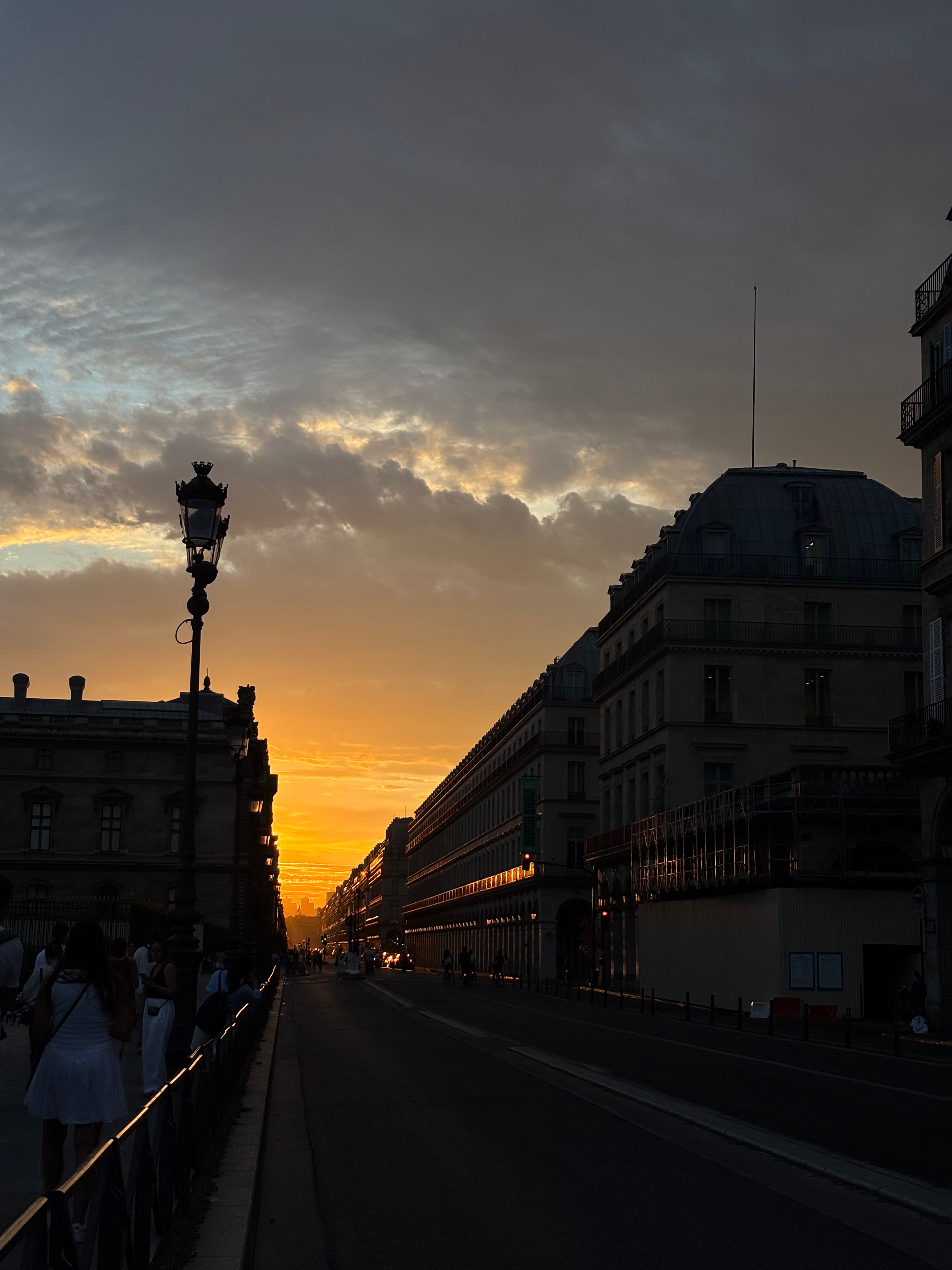
And: a burning sky that devoured half the city and drenched it in golden light, making me walk backwards so I wouldn’t miss a second of it. It’s so beautiful! I kept exclaiming, because I didn’t know what else to say, while also thinking of the scorching heatwaves and raging wildfires in other parts of France, and across Europe.
There was awe.
An emotion that often gets misunderstood as something positive. But perhaps, it’s far less categorizable and monolithic, yet equally powerful if we want to change the way we feel, think, and live in the world we’re in.
If we want to reattune ourselves with the living—and dying—systems that we are a part of.
On that, here is my conversation with Laura Francois, a socio-environmental impact strategist, facilitator, and the director of Awe Exchange, a nonprofit laboratory pioneering awe-based changemaking and developing what Laura calls Systems Feeling: a felt, relational approach to systems thinking that grounds the polycrisis in emotions, connection, and emergence. She also co-published her first anthology, IMAGINE: Embracing Chaos and Possibility in an Era of Climate Crisis.
Listen to this episode on The Oneliness Podcast! (Spotify | Apple)
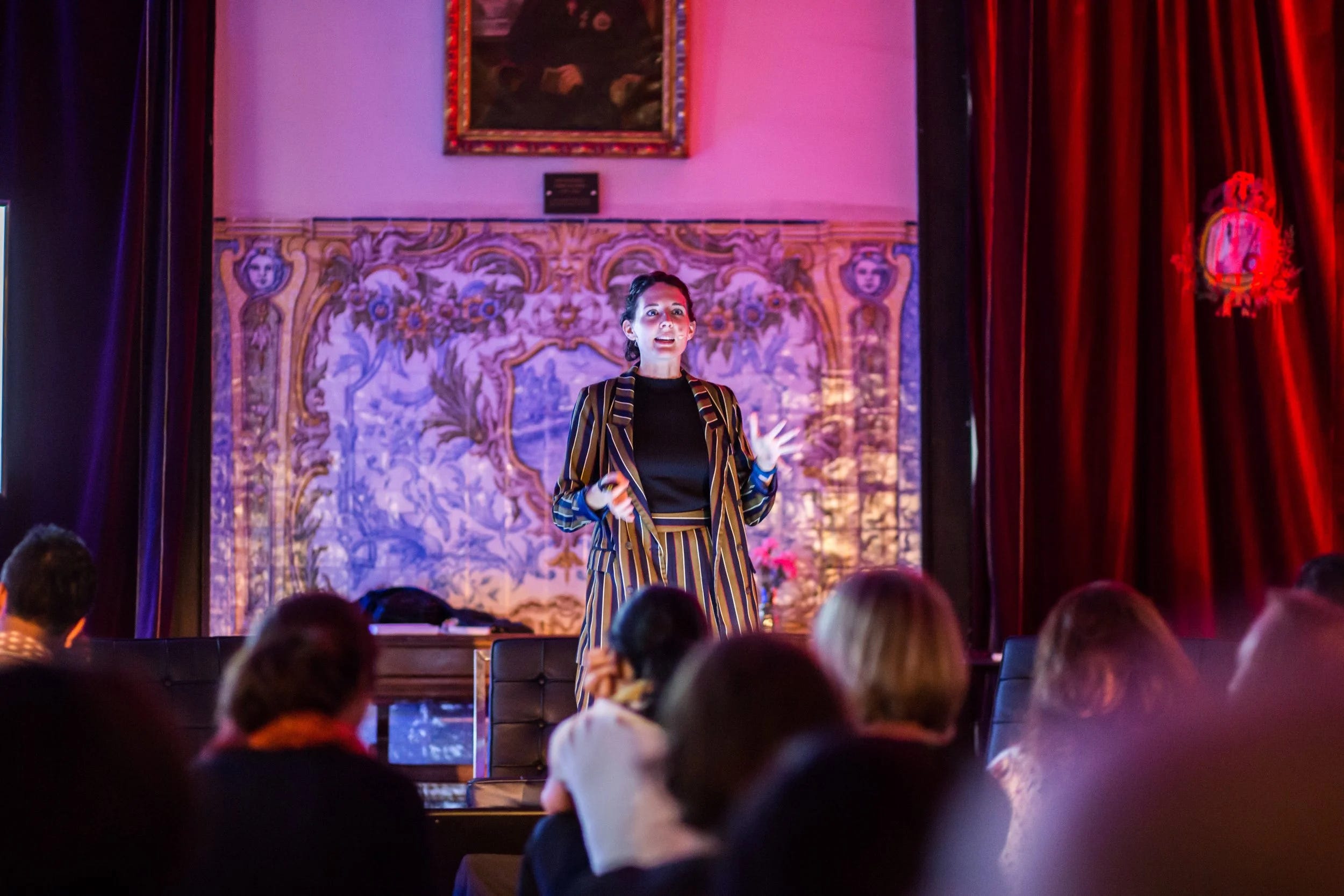
We met in 2019 in Lisbon when I was working for House of Beautiful Business, and Laura François joined us as a speaker. I felt (no pun intended) awe when I met her on and off stage. Since then, our friendship has been expanding like the branches of a tree, not least because we clearly both feel drawn to tend to the unspeakable, the felt, and the deeply relational.
Laura has spent over a decade working at the intersection of impact strategy and climate action, on garment factory floors in Cambodia and Vietnam, in boardrooms and communities across Southeast Asia, North America, and Europe. A core part of her work always revolved around the measurable and quantifiable: impact reports, frameworks, data. And over time, she witnessed and experienced firsthand the burnout and fatigue that come from not being able to fully reach into people’s hearts and minds for change.
“Sometimes the reading can make us feel even paralyzed. Like, what am I supposed to do? I watch the documentary, I see the walruses dying. Okay. And now what? And so these moments of awe — they anchor us in this ability to kind of move forward without so much of that paralysis.”
Her work today has become a response to that: bridging systems thinking with systems feeling to reconnect and attune, within and with all of life.
“Systems feeling is absolutely nothing new. It is deeply steeped in traditional ecological knowledge, indigenous wisdom, this idea that we are interconnected, that has been around forever. But it is a relinquishing of this idea because I think we’ve forgotten it, or we don’t bring it into the practice of environmental work or even social movement work — this idea that to understand a system, we have to map it out, we have to be able to intellectualize it. And that is true. But the challenge is when you map it out, you don’t feel what you felt by that piece of water. You feel what you would feel when you looked at the spreadsheet. And that’s challenging because the most important work needs to happen when we feel that interconnectedness.”
Thank you for your support!
If this resonated, share it with someone you care about. Leave a rating wherever you listen, and make sure you follow Laura’s work at laurafrancois.com.
With love, as always,
Monika
Comments
Nothing yet. Say the first thing.
Sign in to join the conversation.