
How often have you found someone missing in a room you’re in?
As a team of young social justice leaders, we are often thinking about the (somewhat cliché) metaphor of building a new table if you find you don’t have a seat. But how exactly does one go about building this new table?
To extend the metaphor, where does one find the materials for the table, and how many places does it have? How many legs? Where do we put it? In reimagining and indeed redesigning inclusive systems (which are both the means and the end), it is critical that we examine and challenge how power, capacity, and will are held among the people that make up said systems. Welcome to the August 2025 edition of One Future Post. In this issue, we explore what differentiates doing inclusion from being inclusive - critical reflection, thoughtful resourcing, fostering belonging, and investing in collective leadership capacities. I encourage you, dear reader, to reflect on a version of a question I asked at the UN’s ECOSOC Chamber at CSW69 - when we talk about leadership, we must also ask which leaders, and what politics, are moving forward.
Love,
Vandita Morarka
Founder and CEO, One Future Collective
For team One Future, July was full of opportunities to build and connect with our community, ask critical questions about inclusion and decision-making at an institutional level, and collectively assess the future of feminist leadership work.
In the latest edition of #NoRightAnswers at the Feminist Leadership Hub, developed with FAIR SHARE of Women Leaders, feminist consultant Sharanya Sekaram joined our Founder and CEO, Vandita Morarka, for a deep, honest conversation on what it means to resource feminist work with care, integrity, and political clarity.
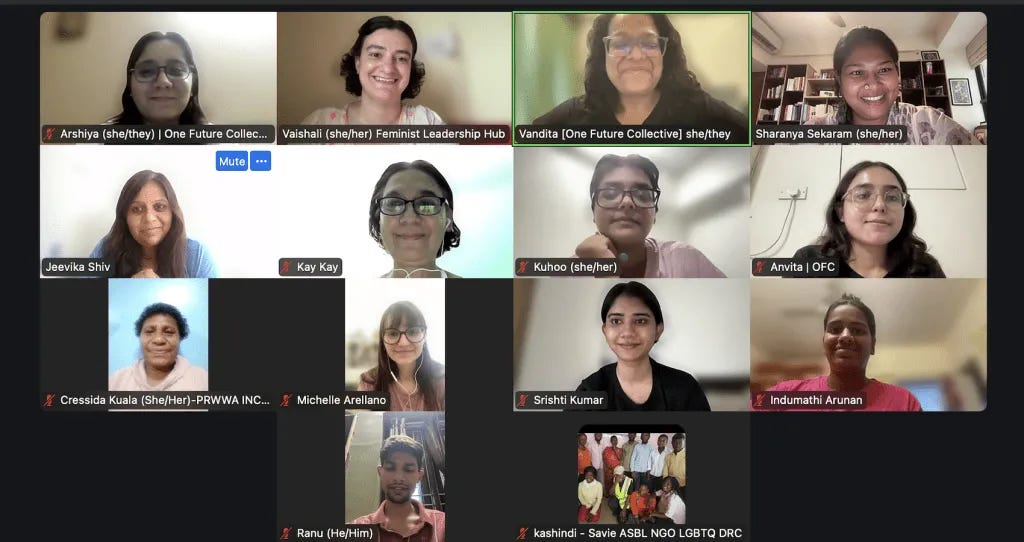
Here’s what we discussed:
👉🏽 Resourcing movements beyond money - including with care, access, knowledge, and lived experience
👉🏽 Navigating ethical trade-offs and power dynamics
👉🏽 Confronting the political nature of funding decisions, especially around visibility and perceived "radicalism" or utility of certain types of work
👉🏽 How funding frameworks shape the futures of our movements
👉🏽 The importance of naming tensions and contradictions as part of feminist practice
Read more about these reflections in our blog post on Reimagining Resourcing in Feminist Movements.
#NoRightAnswers is a conversation series for feminist leaders to hold space for questions that have no easy answers, especially those that cause cyclical stuckness or are avoided in feminist work. Join the Feminist Leadership Hub to be a part of the next edition.
Nurturing the leadership capacities of people and communities encourages them to care for themselves and each other and emboldens them to navigate opaque, inaccessible, and oppressively hierarchical institutions. Put simply, you’re more likely to be able to confidently challenge a faulty system when you know how it works and how to ethically survive in it.
This is why, this month, we took every opportunity we could to meet up with you!
We asked our alumni and community members - Do you know how to ‘adult’? Nearly 100 OFC community members joined us over four weeks for an exclusive series of ‘Adulting 101’ sessions, held virtually. Here’s what we explored:
✅ Income tax filing, led by AdvantEdge
✅ Good investment practices, with PeakAlpha
✅ Understanding health insurance, with Ditto
✅ Know your rights: for queer folks
Speaking of survival - we often talk about resilience, but what about anger? For our community-centred Open Healing Space this July titled ‘Fire in the Belly: Sitting with Anger, Grief, and Resistance’, we explored the theme of anger, an often taboo emotion that we may carry within us - hidden, apparent, old, and new. Anger can be personal and collective, and may often fuel action and resistance.
Not part of our alumni community yet, or want to join an upcoming space? Reach out to community@onefuturecollective.org.
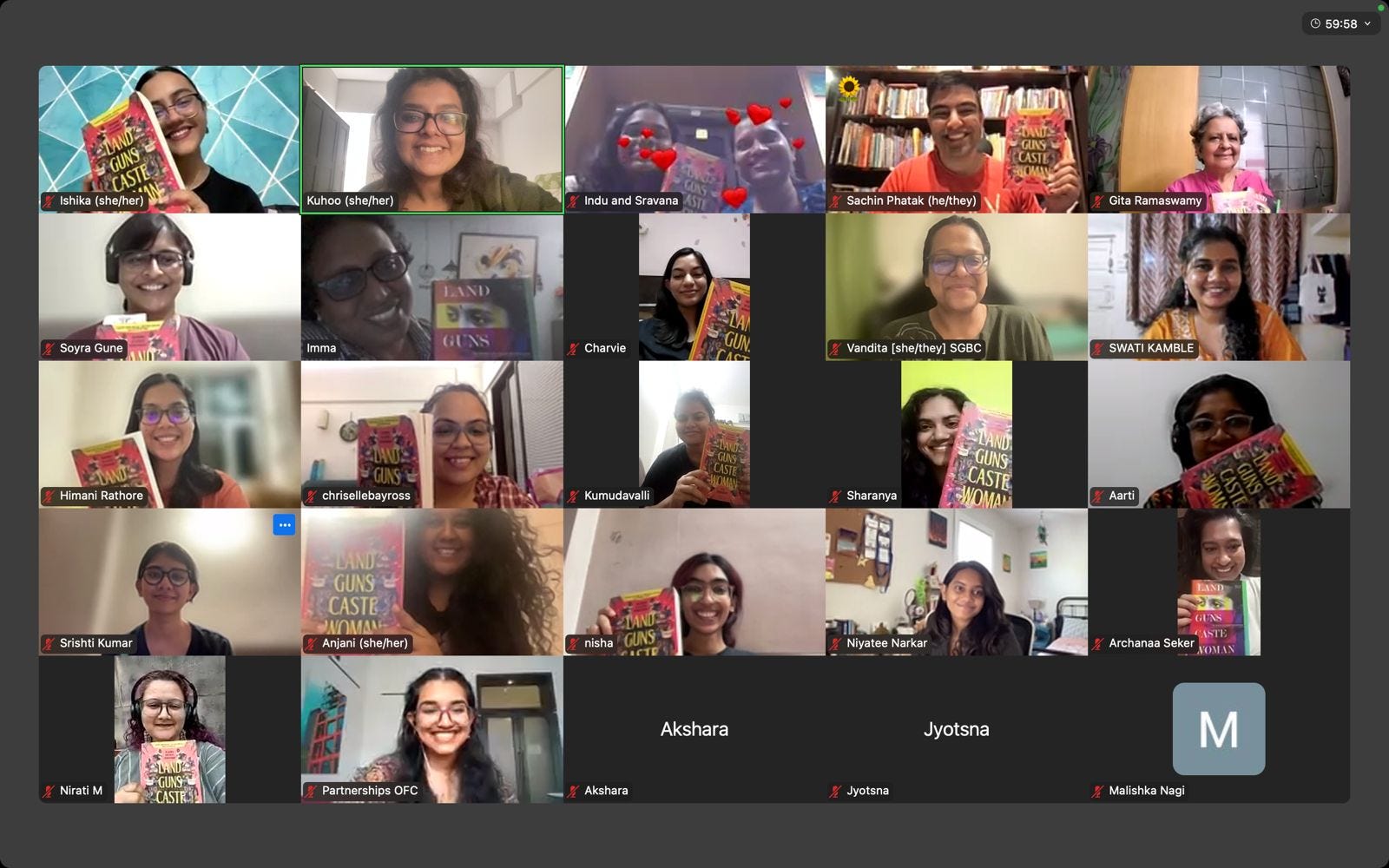
Navigating ourselves and learning how to tell our stories within systems not eager to listen is a process fraught with anger, tensions, and hope. Members of the Sanskari Girls Book Club discussed this and more with Gita Ramaswamy, author of Land, Guns, Caste, Woman (our book of the month!), for our July virtual meetup.
Gita spoke openly about writing her life into a political memoir, navigating what to reveal, and the kinds of responses the book has received from younger readers. Together, we explored the role of regional publishing, the politics of translation, and the ideological silos that shape how we read and relate to literature. In this insightful session, we reflected on solidarity across movements, the tensions within NGO-led activism, and what it takes to build cross-caste feminist spaces in upper-caste-dominated English circles.
Join the Sanskari Girls Book Club and catch up!
Finally, we were so excited to meet and speak with so many old and new faces at our stall at the Satrangi Mela, a queer fest organised by Social Offline in Delhi on 20th July, 2025!
But it’s not all about building people power. Inclusive and just institutions that last are based on systemic change, brought about by challenging and reconstructing traditionally unequal norms that disadvantage and hinder the leadership capacities of minoritised communities.
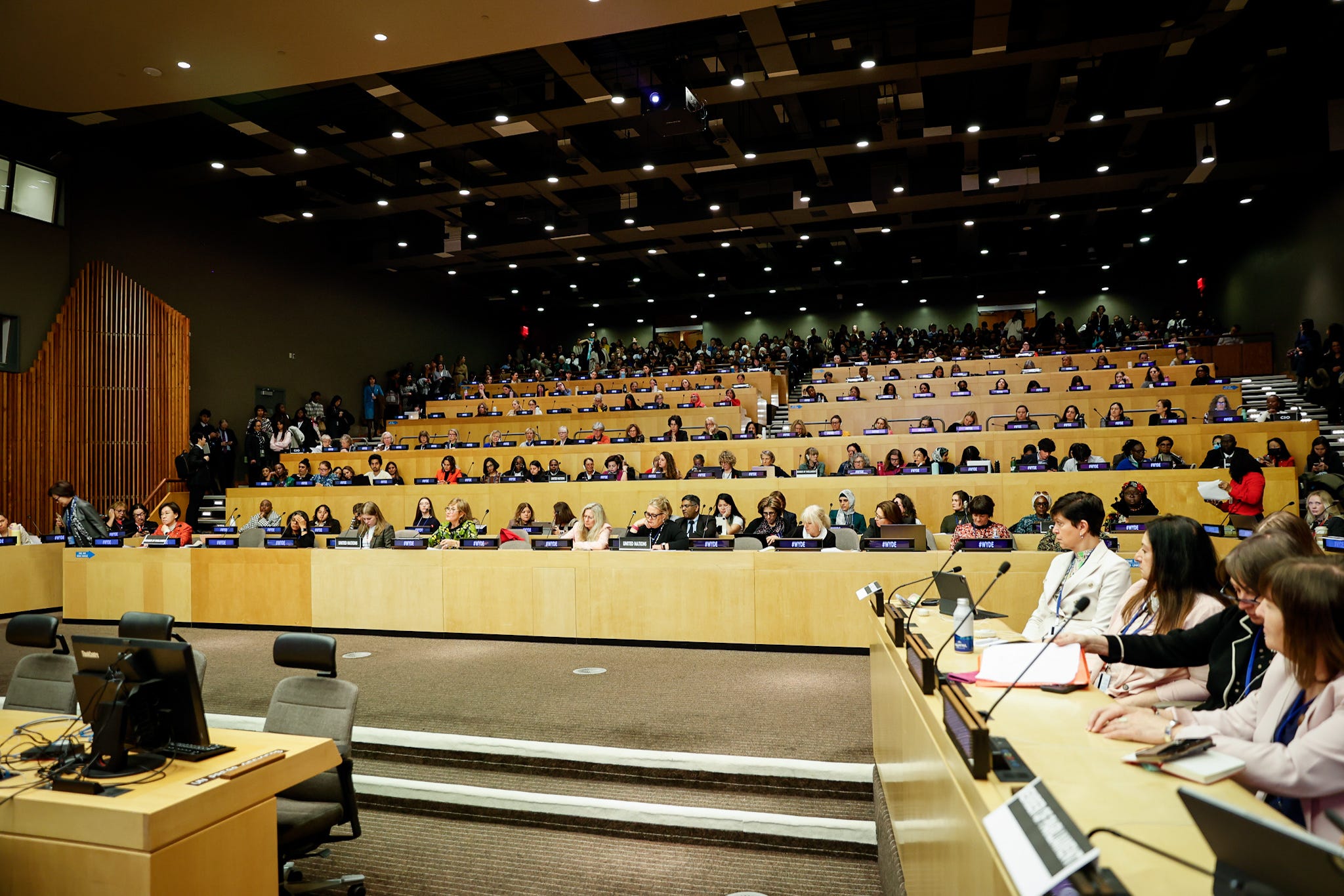
Vandita participated in a vital side event at CSW69, titled ‘Transforming Norms: Advancing Women’s Leadership’, hosted by the Women and Youth in Democracy Initiative (WYDE) and supported by the EU, UN Women, and other global partners. This powerful gathering, held at the UN’s ECOSOC Chamber, brought together policymakers, parliamentarians, youth leaders, and civil society representatives to address the urgent need to shift discriminatory social norms that hinder women’s leadership and political participation. Vandita, representing One Future Collective, contributed key insights on navigating systemic barriers and fostering inclusive feminist leadership, particularly in the South Asian context. Some strategies they spotlighted are:
💡 Finding unlikely allies
💡 Investing in safety nets
💡Building coalitions like the Urban Feminist Civil Society Network
Watch the conversation below! ⬇️
Moving commitments to action begins with critical inquiry. Here’s an example: in July, we finished a comprehensive gender audit for Fortify Health, where we assessed and reviewed the organisation’s internal policies, workplace culture, structures, and practices through a gender lens. This included identifying gaps, strengths, and opportunities for fostering a more inclusive and equitable environment, and providing actionable recommendations to support institutional transformation.
Need support for a similar institutional transformation? Work with us! Check us out or reach out to consulting@onefuturecollective.org.
Phew, what an exciting month! We are excited to continue putting our learnings on critical engagement into action and see where we go.
Our work this month led us to reflect deeply on the themes of restrictions, access, inclusion, and taking charge. Take this journey with us - ask and answer your own questions with this month’s curated collection of art and action resources.
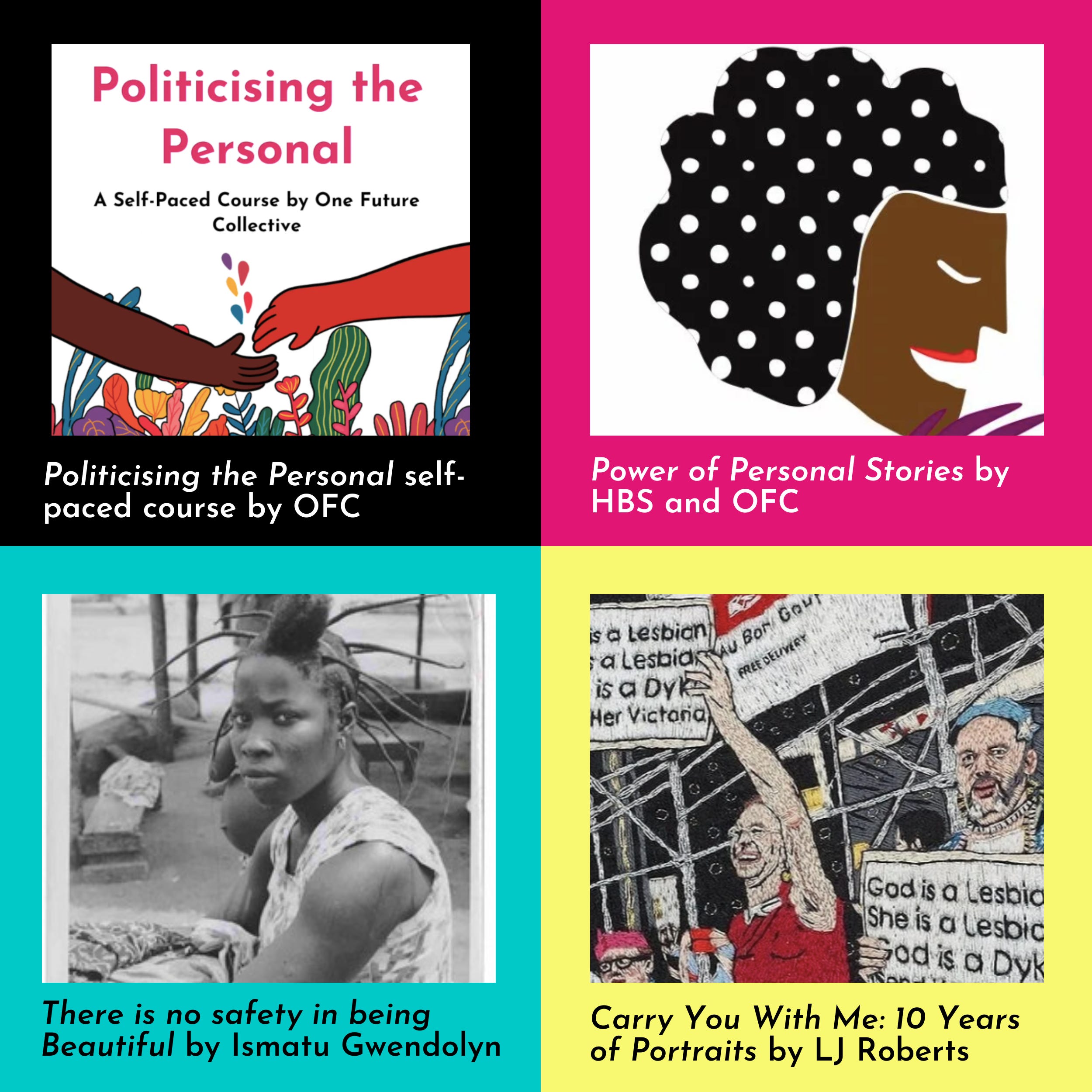
Check out these resources and more!
Sign up to join the Feminist Leadership Hub, and be a part of the our conversations with #NoRightAnswers, where upcoming sessions will discuss Feminist Values and AI.
Thank you for reading this volume of One Future Post, curated by Karishma Shafi! Please subscribe to this newsletter to be notified of all upcoming volumes.
This newsletter is now also available on LinkedIn, where you can also subscribe. Feel free to share your feedback and suggestions in the comments and share this volume among your circles!
Comments
Nothing yet. Say the first thing.
Sign in to join the conversation.