
Think about the last time someone walked past you, and your first thought was, “What perfume are they wearing?”
Perfume is more than a luxury - it’s a form of self-expression and intimacy.
And for today’s consumer, fragrance has become part of their identity. The perfume industry is undoubtedly thriving, with global sales projected to reach €88.7 billion in 2026. A signature scent can reveal just as much about someone as the clothes they wear, the music they listen to, or even their coffee order.
Brands are joining the trend too. Beauty giants like L’Oréal, The Estée Lauder Companies, and LVMH continue to expand their fragrance portfolios, while brands like Glossier have built cult-like followings around scent. At the same time, a new wave of niche fragrance houses is reshaping the category with more personal, artisanal, and story-driven approaches.
So gone are the days when perfume was simply the finishing touch. Today, it’s a market of personality and mood - and consumers are investing in it more than ever.
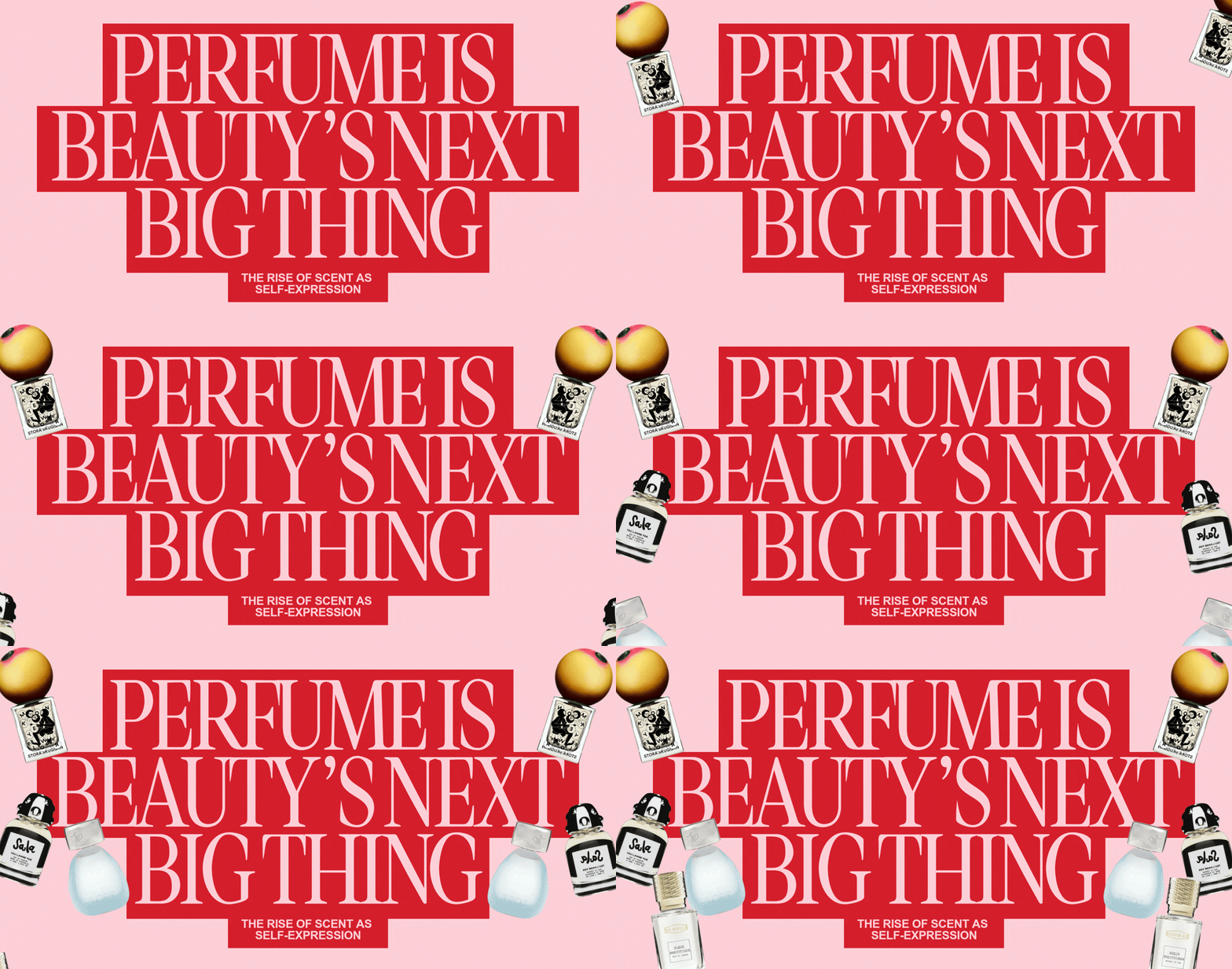
Fragrance has evolved from a finishing touch to one of the most personal forms of individuality. Just like fashion and music, the scents we wear have become another way of communicating identity without saying a word.
But scent is also deeply emotional. Borrow your best friend’s perfume for the day, and suddenly you smell like them. Spray your partner’s fragrance on your hoodie before they leave, and somehow they feel a little closer. Long after a moment has passed, scent has a way of bringing people, places, and memories back almost instantly.
Maybe that’s why fragrance resonates so deeply with consumers today. It doesn’t just help us express who we are - it reminds us of the people we love, the places we’ve been, and the versions of ourselves we never want to forget. In many ways, perfume has become less about smelling good and more about feeling something.
It’s also why we’re seeing consumers move away from the idea of one “signature scent” and towards curated fragrance wardrobes. Just as we dress differently depending on the occasion or vibe, we’re beginning to wear fragrance in the same way - layering scents and switching it up with the weather or mood. Often, a big part of someone’s personality could be their very own perfume collection.
So far in 2026, there’s been a rise in popularity of this particular trend, coined “scent stacking.” And this applies to different types of methods too. From mixing and matching body washes, lotions, mists, oils to ouds and perfumes.
With Gen Z’s spending on fragrance increasing up to 26% in 2024, social media has also played a huge role in product discovery and identity exploration. People on TikTok and Pinterest romanticize smelling good by treating daily perfume routines like “that girl” self-care rituals and aesthetic collectibles, whilst creators urge you to find one unique smell that defines what you would want to be known for. In fact, platforms like TikTok influence 45% of U.S. social purchases. The hashtag #PerfumeTikTok alone has amassed 6.4 billion views.
So, why now? Why are more consumers investing in fragrance than ever before?
Part of the answer lies in how we define luxury today.
With rising economic uncertainty and emotional stress, maybe buying a nice body mist feels like an easy way to treat yourself when big luxuries cost *a bit* too much. It triggers deep nostalgia and gives people a sense of control and joy when the world feels… not so good.
After all, I know we LOVE a moment of adding little luxuries to our collection.
To add, splurging on fragrance can act as an essential, accessible self-care item. Remember seeing your favorite influencer tucked into bed with the cutest pink Victoria’s Secret set, LED face mask on, book in bed, and a candle or incense lit up? Emotional resonance plays a significant role, as 80% of consumers now select perfumes and spend based on their ability to enhance well-being.
This is especially true with younger buyers, where a lot of spending happens impulsively and based on their mood. Bad day? Retail therapy will fix it. Flunked a test? Comfort food and show ON. Going for a date? Best outfit and smelling good, check.
Of course, consumers aren’t the only ones driving this shift. Brands have completely reimagined the way fragrance is marketed, sold, and experienced. You can now almost see visuals so good, you want to grab it through the screen.
The market for “sensory nostalgia” is booming, driven by sweet, comforting notes like caramel and buttery vanilla, with projections placing its value at $23 billion by 2026. And this ties in perfectly with how brands position their products - Sol de Janeiro has found success by appealing to Gen Z with lightweight, gourmand scent mists designed for everyday lifestyle.
Miu Miu also launched Miutine, a premium eau de parfum featuring wild strawberry and brown sugar, capitalizing on the food marketing, sensorial trend. How can we forget those ice cream-like PR packages!
Undoubtedly, brands like Glossier and Phlur continue to resonate with younger consumers by rethinking how fragrance is marketed too; building communities around feeling and storytelling. Their affordable price, product formulations, and social-first approach have transformed fragrances like Glossier You and Missing Person into fan favorites.
Naturally, other brands have taken notice. Lifestyle-led names like Gisou and Summer Fridays have expanded their viral beauty lines into dedicated fragrance collections, introducing multi-sensory hair perfumes, body mists and fine fragrances that extend beyond skincare or haircare. Rare Beauty has also entered the category with its first eau de parfum, while an increasing number of celebrities like Bella Hadid, are launching fragrance lines of their own - further cementing scent as an extension of personal branding and lifestyle.
Even Gap has revived its fragrance range, tapping into the iconic ‘90s nostalgia for a new generation. It reintroduces four scents - Dream, Grass, Heaven, and Om - upgraded to eau de parfums, alongside a brand-new fragrance called Harmony. This further amplifies the idea of the booming industry.
One thing all of these line-ups have in common - from Sol de Janeiro, Glossier and Phlur to newer launches from Gisou, Summer Fridays and Gap - is accessibility. Today, you don’t necessarily need to splurge $100 on a luxury bottle to smell good. These modern fragrance brands have opened up the category to a much wider audience, offering lower price points without making the experience feel any less aspirational.
With that being said, if all this perfume talk has convinced you to start your own scent wardrobe, I’ve got you covered.
Perfume brands you should know:
Stora Skuggan
Stockholm-based niche fragrance house Stora Skuggan is known for its surreal, slightly mysterious approach to perfumery, creating scents that feel more like stories than traditional fragrances. Definitely one for anyone looking to move beyond the usual crowd-pleasers.
Ex Nihilo
A Parisian fragrance house with a cosmopolitan team behind it. My personal fave, Lust in Paradise is a fresh, luminous floral with peony, lychee and pink pepper, making it an easy introduction to the world of niche fragrance without feeling too intimidating.
Lore
Lore takes a more conceptual approach to scent, creating fragrances that feel personal, atmospheric and slightly unexpected. The kind of brand you’ll want to keep in your back pocket when someone inevitably asks, “Wait, what are you wearing?”
Perhaps the rise of fragrance isn’t really about perfume at all.
It’s about a generation looking for new ways to express themselves - through the things they wear, read, listen to and, increasingly, the way they smell. In a world where so much of our identity exists online, fragrance offers something refreshingly personal. It’s invisible, deeply emotional and entirely your own.

The best things we’ve read, watched, and listened to + news from the internet
Connor Storie in the new Fall 2026 YSL campaign is perfection!
I really liked this piece from The Guardian on the copy-paste summer, kinda chic trend and template-slop saga.
Business news: Béis gets acquired by Samsonite, Lemme ventures into the longevity space with their new NAD+ supplement, big week for Alex Cooper shutting down her beverage brand but reaching a $500M valuation for her media business.
Comments
Nothing yet. Say the first thing.
Sign in to join the conversation.