
Content feels like a lot right now. The bar for what’s considered good is higher than ever. Algorithms have changed so significantly over the last year. And while you’re trying to figure out what works right now, it changes again. Honestly, I don’t blame anyone for feeling like they’re constantly one step behind.
But then you look at the brands that aren’t, and you notice something: they’re not posing more than anyone else, and often, they’re not spending more either. They, however, figured out the number 1 rule on socials: you have to be interesting first, and brand second.
Most branded content still comes from one of three instincts that no longer work:
The first is treating content like product photography. Beautiful lighting, beautiful styling, product front and center, zero reason for anyone to actually stop scrolling, let alone engage with it. For content to perform well, it needs to be made with your audience in mind.
And second is jumping on trends for the sake of jumping on trends. A format is popping off, so it must work for you too, right? (Fake apology letters or team childhood pics, anyone?!) Hoping on trends without an actual point of view reads as noise, and people can tell.
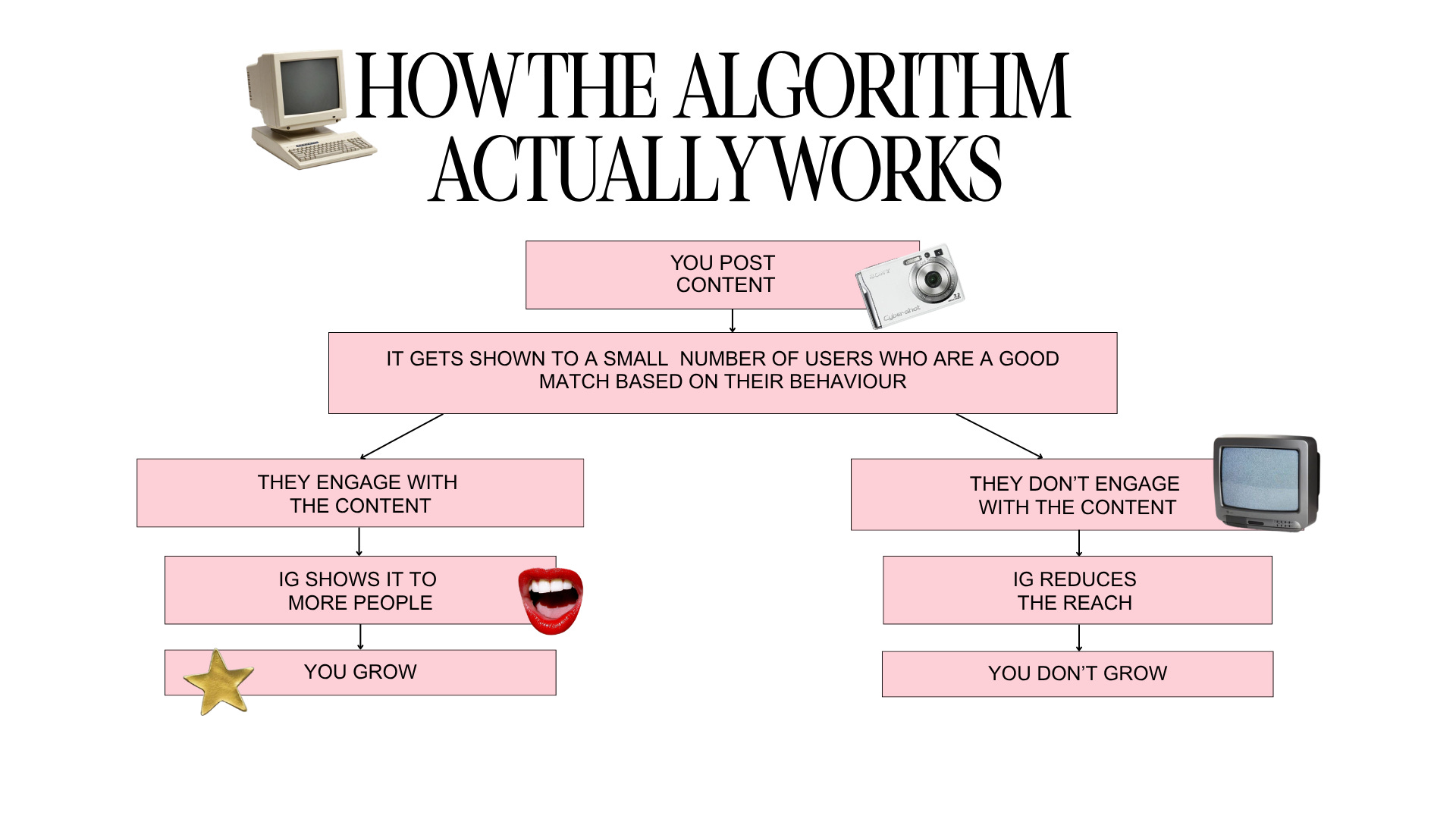
We need to talk about the social media algorithms to understand how to create great, effective content. Think of the algorithms as a reflection of your audience.
Every time you post a piece of content, it gets shown to a small sample first, maybe a few hundred people it thinks are most likely to care. If they watch, comment, share, or save, it shows more people. If they scroll past or don’t engage with the content, it stops there.
This is why an account with half a million followers can post something that gets 1,000 views, and a brand-new account can hit a million views in a week. The algorithms now reward relevancy more than anything else.
And so the job now is “make something worth stopping for.” Every brand is now a media company on socials, and the social content brief changes from what we want to say about our product to what our audience would find interesting to watch. And then you can leverage the reach and brand love you created by entertaining people to conversions.
Loewe is the perfect case study of a brand that understands socials. In a time when the majority of luxury fashion houses struggle to gain relevance with younger audiences, Loewe won the internet generation over.
The difference isn’t the money - obviously, they have huge budgets but so do their competitors. It’s that Loewe studied what works on TikTok and reshaped how a luxury fashion brand shows up on socials.
A recurring storyline is the brand’s surrealist personality that translates well on socials. Artichoke bag? Pineapple shoes? They got it!
They understand that humour is SO important on socials and they’re not afraid to poke fun at themselves or just be silly.
And they’re leveraging creators to create cultural relevance too - their UGC content strategy is the best in the game. They often work with TikTok superstars (example here and here) and let them do what they’re great at…while wearing Loewe.
None of these work on their own. It’s the layering, research into storyline, into culture, into language, that turns a fashion house into something people genuinely cannot stop talking about.
Below, for paid subscribers: how to create engaging content, the content formats the best brands are using, what to do when your content isn’t working, and the rules every social media team needs in their toolkit.

The best things we’ve read, watched, and listened to + news from the internet
Gap does it again and collaborates with Hailey Bieber on a ’ 90s-inspired campaign. So good!
Rare Beauty tapped Ella Bright from Off Campus as their first-ever celebrity ambassador, and the internet went wild!
Loved this piece from Jia Tolentino for The New Yorker about our obsession with plastic surgery and perfect looks and how it makes us disconnected from reality. You can also watch Jia speaking on the topic here. “Everyone is hot, and nothing is erotic” is such a great way to describe the current mood.
OpenAI released its new merch, and “tasteslop” is probably the best way to describe it.
My favorite content find of the week: What’s Your Process? on TikTok. Interviews with founders, professionals, and creatives on their process. So fascinating! I came across this interview with LORE’s founder, Melanie Bender, on my FYP and ended up watching the entire archive.
Comments
Nothing yet. Say the first thing.
Sign in to join the conversation.