
This Substack is by David Perrine. I write about architecture, aesthetics, design theory, and philosophy. If you enjoy my work, please consider subscribing.
Edits by: Kimberly Rooney 高小荣
I have avoided discussing AI on this Substack for a few reasons. For one, there is already a rich discourse around AI on this platform, much of which I already agree with. Ignoring the tech-stackers, most writers and readers here agree on the serious environmental, artistic, and copyright issues that AI possesses. Critiquing AI further would be preaching to the choir and thus, I did not mind letting better, more experienced writers tackle the subject.
However, silence on this issue, especially as an art/design-oriented creator, unfortunately communicates a satisfaction or at least a tolerance of the ways AI has been used throughout the industry.
It is also difficult to discuss AI generally because its applications are so broad. In some domains, AI is genuinely productive, such as its use in medical research, accelerating scientific discovery, and improving accessibility tools. In others, its implications are ethically inexcusable: expanding surveillance capabilities, intensifying military technologies, displacing workers, enabling large-scale plagiarism, and destabilizing educational infrastructure.
To add complexity, some people choose to gatekeep the conversation further. For example, a common point I hear from the tech-stackers is that artists and designers love to critique AI but they themselves do not understand how AI works or they ‘admit’ to not using it. Thus, their opinions are invalid. Understanding how AI works does not equate to grasping its effects in other industries. I trust artists’ and writers’ opinions of AI because this technology affects them more directly. It makes no difference to the validity of their experiences if they understand how AI works or not. For example, I don’t need to understand the precise workings of the U.S. health care system to have been denied necessary medical care.
From what I have observed, tech people find AI fascinating, useful, or even beautiful. Similarly, one may find viewing a tornado from afar to be beautiful. An ecologist may even consider the potential ecological benefits of tornadoes such as seed and nutrient dispersal, or forest health. A physicist may be fascinated by the visual play of forces in nature. An artist may find tornadoes fascinating for their formal gestures and sublime qualities. But finding a tornado visually beautiful, or being fascinated in how they work, or even their ecological benefits does not change the fact that tornados kill people in their paths.
That being said, I occasionally see specific uses of AI within my domain to which I feel comfortable discussing. This article is one of those case studies. Thank you for reading, and I hope you enjoy.
🦆
- David
Today, I will be discussing Chicago’s new Cultural Stadium (CS) development project. According to the CS website, CS is “a collection of initiatives—united by one vision: to inspire, guide, and harness the power of arts and culture to shape a downtown that unites people, sparks creativity, and embodies the heartbeat of the city.” The team behind the CS insists that the projects will evolve to meet future needs as well.
They continue by arguing the power of arts and culture as a tool for renewal, citing precedents such as Bilbao’s Guggenheim by Gehry, the transformation of ‘overlooked spaces in Melbourne, and the elevation of Glasgow’s ‘creative legacy.’ The website does not elaborate on the Melbourne or Glasgow precedents so I can only guess what they are referring to. I found some evidence of a Melbourne urban revitalization project from the 1980s, but I cannot be certain this is what the CS is referencing. In the case of Glasgow, I have no idea.
The CS has an absolutely stacked line-up of directors, including: Lou Raizin (President and CEO of Broadway in Chicago), Joe Ferguson (President of the Civic Federation), Michelle Boone (Pres. & CEO of the Poetry Foundation), Tony Karman (Former Pres. of EXPO Chicago), and lastly, the capitalist behemoth, Cary McMillan (Chairman at True Partners Consulting, Independent Director at Hyatt, and Independent Director at AMERICAN EAGLE OUTFITTERS INC.)
The project also has a series of ‘advisors,’ including Terry Clark (UChicago), Reed Kroloff (Dean of IIT’s Architecture College), Phil Enquist (UIC), Greg Cameron (Pres. & CEO of Joffrey Ballet), and Meredith O’Connor (Executive Managing Director JLL).
Many design firms are involved in some way (unclear how exactly as of yet) including seven large design offices, most notably SOM, and Perkins&Will. Both firms are considered industry leaders.
Included at the bottom of the page is a collection of 105 notable partners: Rick Bayless, Tom Ricketts, Maurice Cox, Edwin Eisendrath, Sarah Herda, Susan Manilow, Rebekah Scheinfeld, David Schwimmer, and Phil Enquist, among others. I am unsure how Friend’s cast member David Schwimmer is contributing to this development project, but considering genAI’s systematic erasure of artistic and creative provenance, I am glad to see he is credited.
Behind the partners and the mission, The CS website lists a collection of projects, which in theory carry out the above stated mission. Each project page is identical, including a single image, a general project location, a 2-3 sentence description, a listed partner/designer, and a short grading table which lists the benefits of each project. The projects are graded on four parameters:
Increases tourism
Improves quality of life
Engages community
Creates jobs.
Each parameter is graded on a scale from 1 to 3, 3 being the best.
The CS project has been covered extensively by mainstream media sources (all positively) since its public introduction back in January 2025, including multiple stories in the Chicago Tribune, MSN, and CBS News.
According to insiders at various development firms in Chicago, many of the projects listed are remarkably close to getting funding, and other development firms are using proximity to the CS to acquire city funding for other projects, not listed on the website. Thus, as a preliminary development project, it has already been quite successful, given the partners involved and the likelihood of funding.
Now onto AI.
It is hard to find anything on the CS website that was not fully generated by AI. Every piece of text, the diagrams, the renderings, even the grading table. The images were not even slightly cleaned up after their generation and still possess many obvious problems.
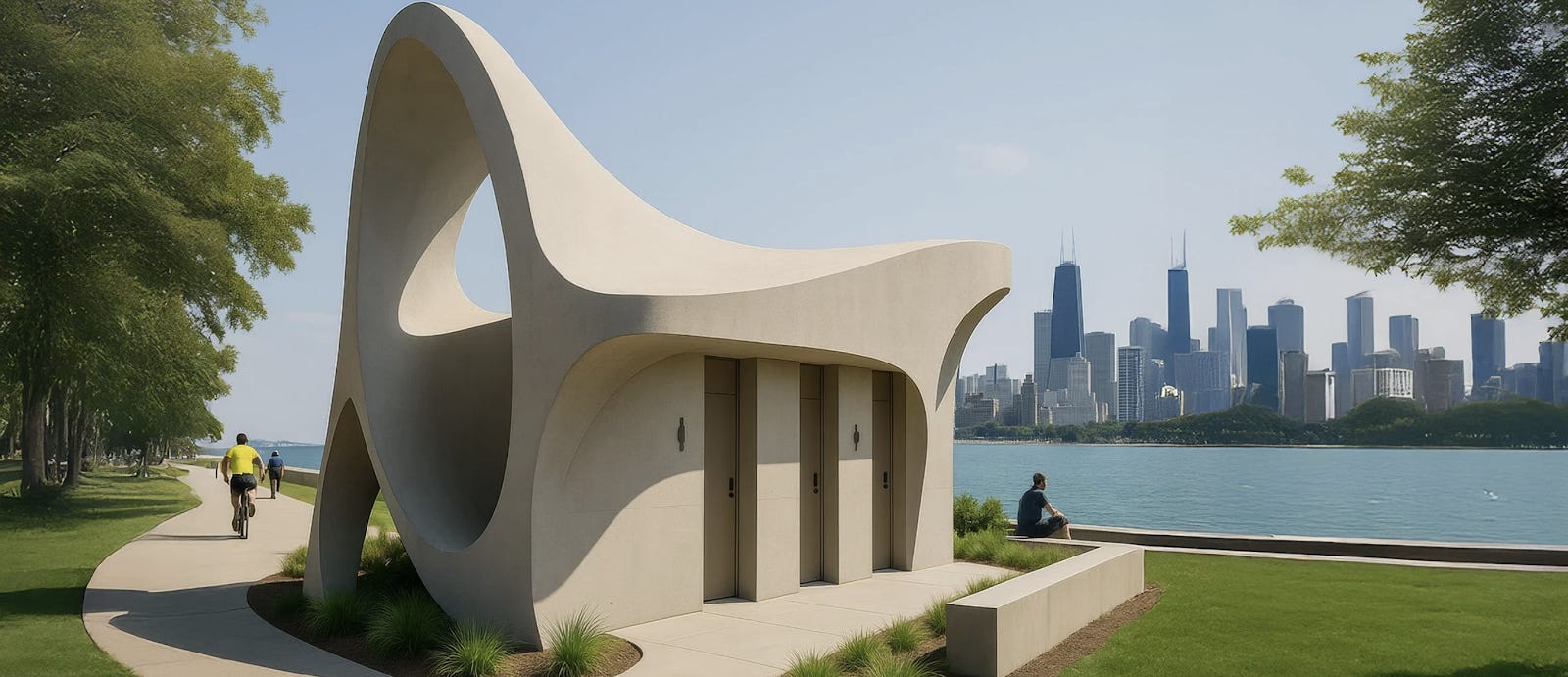
For example, The Pause project, depicted above, shows a new public bathroom, on the infamous Chicago Lakefront Trail. The location shown in the ‘rendering’ does not exist. There is no place along the lakefront where the skyline is visible from across the lake. Additionally, the bathroom signs were not even edited after generation to show a men’s and women’s bathroom. The rendering also shows the sun high in the sky in the north-west. This sun location is impossible for Chicago. In addition, the design, if one can call it such, is hardly controlled. What has dictated the nature of each curve? Does each contour follow a specific radius? Typically, these questions are answered during the design process to ensure buildability and usability, but such workflow was ignored. Anyone who has played with Midjourney for any amount of time has produced similar forms. The project is partnered with architecture firm Perkins&Will.
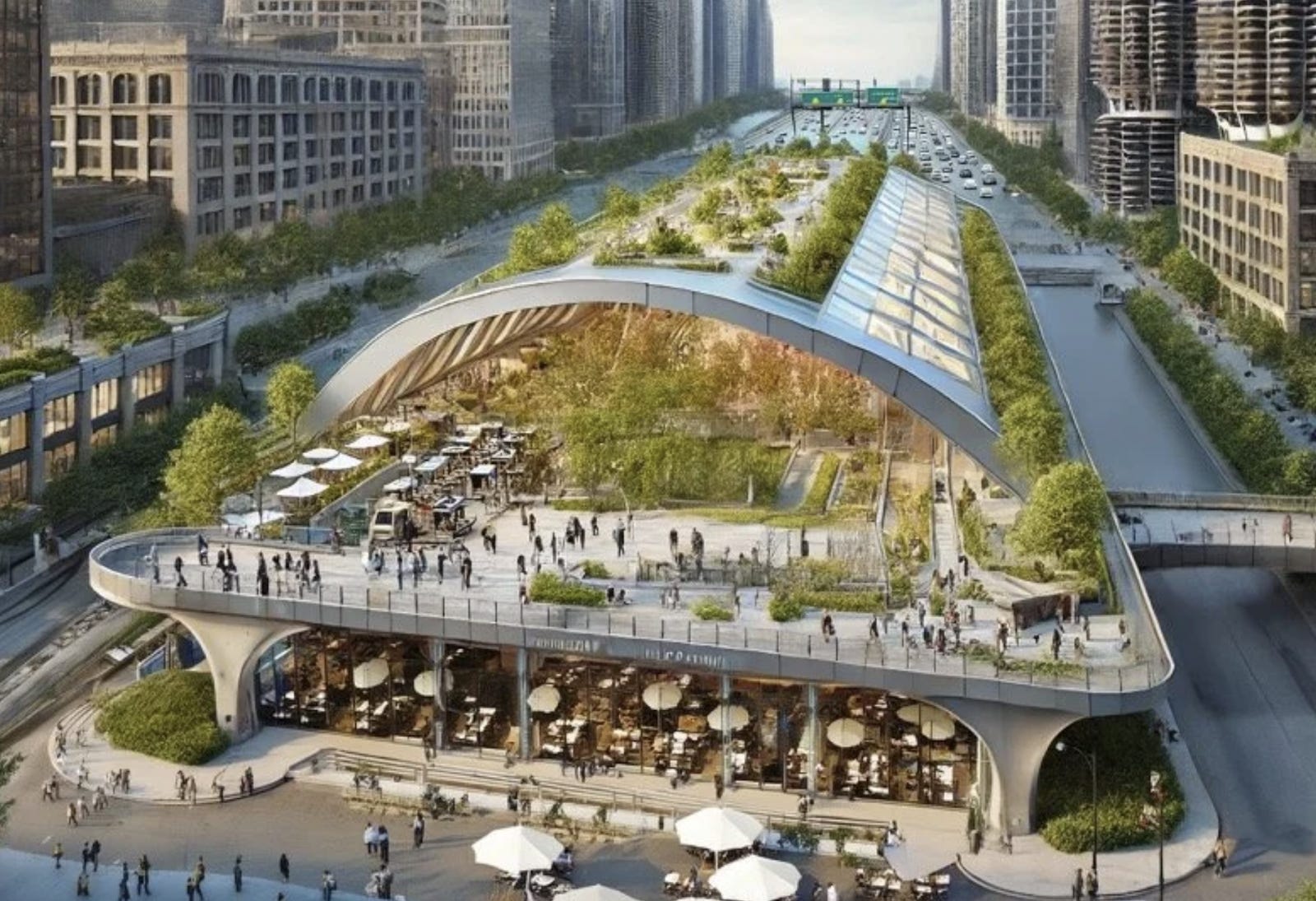
Next, the above project depicts some sort of park space with what appears to be a restaurant below. The structure looks like it is floating in the river, given the wide-open space, its proximity to Marina City Tower complex, and the bridge seen in the lower right corner of the image. But when looking behind the ‘park’ it appears this intervention was placed in the middle of a highway?
The point is that these images were produced so lazily that it hardly feels worth it to deconstruct them. To call them designs or renderings feels insulting to the entire design profession. These images are slop in its most archetypal form: lazy, noisy, generated images with zero substance or rigor.
Additionally, the projects have serious conceptual issues. For example, the ‘PARKing’ project aims to add “life, foot traffic, and artistic value to overlooked spaces” by reimagining the upper levels of parking structures as cultural destinations. They are expecting tourists to climb parking garages to look at art on their roofs. This is obviously dangerous and impractical. Despite this, according to the projects grading, the project will:
Increases tourism: 3/3
Improves quality of life: 2/3
Engages community: 3/3
Creates job: 1/3.
How will the project accomplish these goals? No one knows, and there is no elaboration. What do these numbers even mean???
Bogglingly, the Design Museum of Chicago has decided to partner with the CS for this project.
Every single project is like this. There is some generic AI-generated mission, a grading chart which makes zero sense with no elaboration, an undeveloped, Midjourney-generated image, and some high-profile partner/architect who has attached their name to it. Yet somehow, the CS initiative has generated significant media attention and coverage for its importance and aesthetic quality.
This, of course, raises the questions: What importance? What aesthetic quality? In design school, it is taught that the production of drawings and images IS the design process, and thus, a critical step in making real-world progress. We learn through creation of images. Developers and clients trust architects based on the images and drawings we produce because of the effort required to produce a complex rendering with thoughtful, comprehensive consideration of form, function, scale, context, lighting, detailing, and countless other parameters.
This is not the case with genAI, and especially with these images which were generated with little care or refinement. The images remain complex on the surface, but the design process has been removed.
Are clients and developers not yet awakened to this sleight of hand? Do they not understand the disrespect to and destruction of an artform? Regardless, It doesn’t matter if they are aware or not. They are incentivized not to care. Our markets prefer speed and ROI.
Perhaps it is a tall request to ask people who are not artists or designers to understand the importance of the process, of participating wholly in the act of creation, of learning by doing. We still shouldn’t let them off the hook for lazy thinking, but perhaps it is more understandable why the deficiencies of genAI wouldn’t immediately turn them away.
But, given all this dysfunction, lack of design process, and grossly childish analysis, why have some of the most important names and institutions in Chicago’s design scene chosen to partner with them? Why is SOM, a leading design firm, who with Gordan Bunshaft is responsible for masterpieces such as the Yale Rare Manuscript Library, willing to partner with the CS?
Additionally, why is the Dean of IIT’s College of Architecture, Reed Kroloff, named as an advisor? I have had brief conversations with him, and I can sense his sophistication and understanding of the field. I do not understand why he would associate himself and, by proxy, The Illinois Institute of Technology Architecture School with such lazy and dangerous design practices.
Slop Works.
These projects are far more likely to get funding than their competitors in Chicago or any other urban city center. They have managed to partner with large offices, who when approved, will move forward with the actual design of these interventions. Will the interventions look or work as intended? Definitely not, but funding will already have been achieved.
I am reminded of the lofty marketing practices of Bjarke Ingels as I write this. In the mid to late 2010s, Ingels revolutionized how architecture was communicated to the public, catapulting himself to the pinnacle of our field in the public eye. He communicated architecture through logical diagrams, which showed how his works had been designed. The result of these diagrams and his process would supposedly produce buildings which were formally novel, functionally strong, and most importantly, easy to digest for the public.
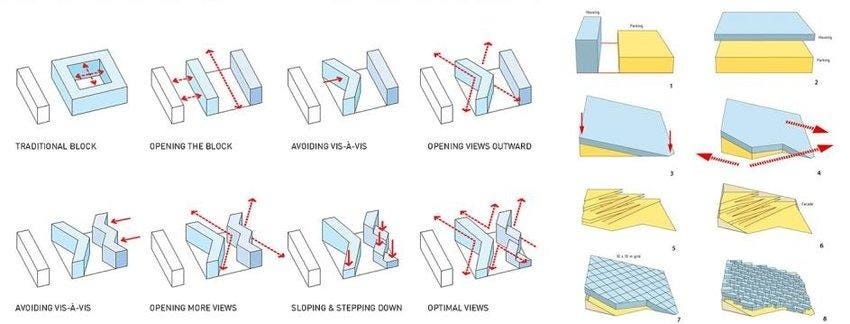
The diagrams, however compelling they may have been, are not architecture. Not even close.
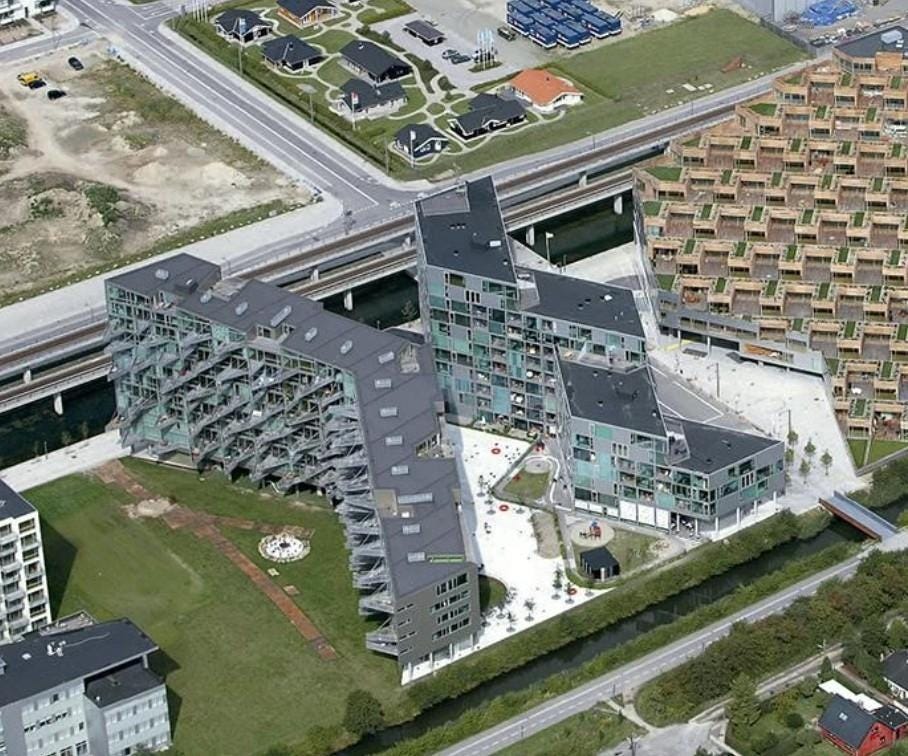
They represent a romantic potential for the marrying of form and function, nothing more. As a student, I was entranced by such propositions. Today, I understand that the success of an architectural product is dependent on much more, and that a compelling story does not equate to a successful building. Architecture becomes a success or a failure during the detailing process. The VM house by Bjarke Ingels Group from my observation has not aged well. But it’s too late. Funding had been secured and the project was built.
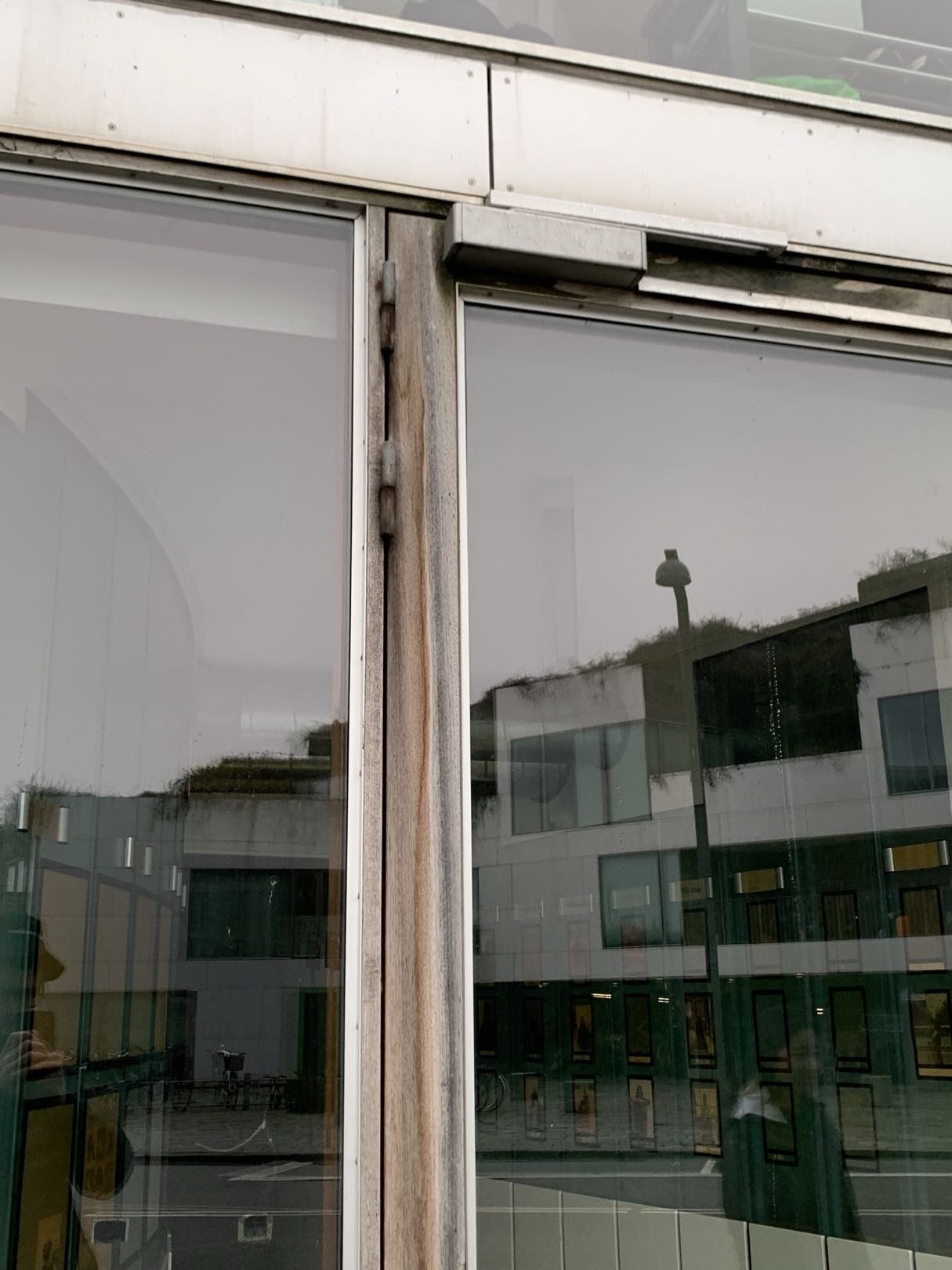
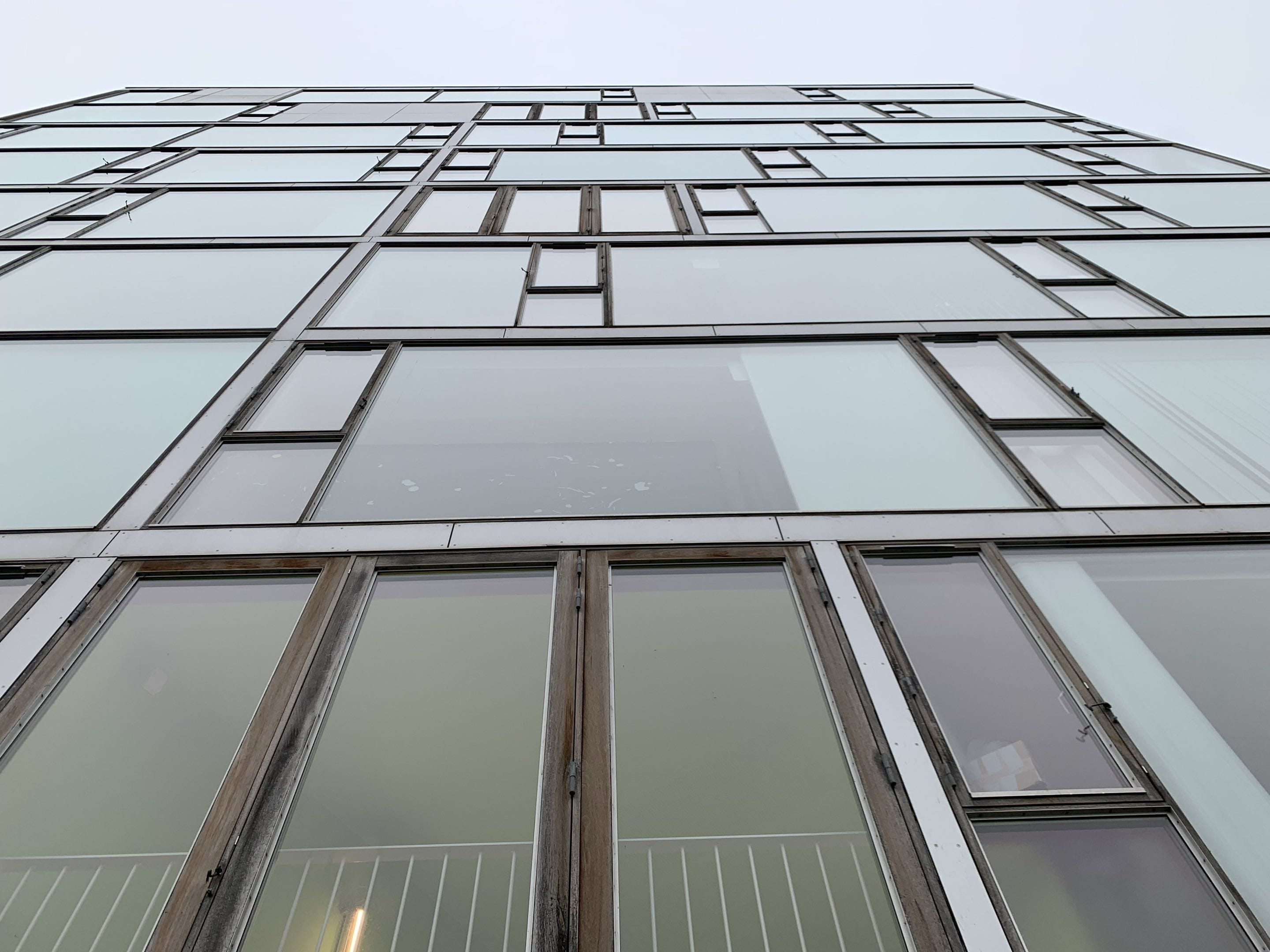
It is common knowledge that BIG constantly over-promised with their diagrams, renderings, and budgets early in the firm’s history.
We were warned about this about 70 years earlier. Philip Johnson observed a modernist culture which was becoming increasingly interested in the production of picturesque drawings and renderings.
“But the next one is still with us today although, here again, the Crutch of Pretty Drawing is pretty well gone. There are those of us—I am one—who have made sort of a cult of the pretty plan. It’s a wonderful crutch because you can give yourself the illusion that you are creating architecture while you’re making pretty drawings. Fundamentally, architecture is something you build and put together, and people walk in and they like it. But that’s too hard. Pretty pictures are easier.”
- From his essay: “The Seven Crutches of Modern Architecture”
Today, the production of pretty images has become increasingly accessible and economically expedient due to advances in computing and the introduction of AI products.
My argument here is that one cannot simply remove the design process and expect a high-quality product. AI is not a tool being used within the design process. It is eliminating the design process. This lack of rigor will hurt the city. Because such little analysis takes place before the securing of funding, these projects are destined to be over budget, delayed, and dysfunctional to its mission. The design process is slower, is more laborious precisely because the production of the images itself is, in part, the analysis needed to define, understand, and justify the project.
Thank you for reading.
Comments
Nothing yet. Say the first thing.
Sign in to join the conversation.