

While Europe is still dealing with the fallout from last week’s Russian terrorist attack at Germany’s Leipzig/Halle Airport and revelations, literally on the same day, that Russian intelligence plotted to assassinate the head of a German drone manufacturer, Sweden announced Monday that it had disrupted yet another Russian intelligence operation.
This operation was directed by Russia’s Foreign Intelligence Service, the SVR, and involved an agent working inside a foreign diplomatic mission in Sweden who had been recruited to gather information on Sweden’s “decision-making” and relationships with other countries. According to Sweden’s Security Service, Säpo, the information was intended to support Russian influence operations aimed at exploiting polarizing issues and discrediting Sweden, NATO, and the European Union.
Säpo hasn’t revealed which foreign diplomatic mission the recruited agent worked for, but Swedish counterintelligence had been watching the operation closely, documenting meetings around Stockholm between the agent and two Russian intelligence officers where information and gifts were exchanged. “We have been able to monitor what happened at these meetings between the individuals involved, what was said and what assignments were given,” a Säpo spokesperson told Reuters.
Deputy head of operations Christoffer Wedelin said Säpo believes it successfully stopped the operation before Russia could achieve its goal. “Our assessment is that we have prevented the Russian intelligence operation. They have not succeeded in their mission,” he told journalists. All three reportedly had diplomatic immunity and have since left Sweden.
The SVR wanted this information to identify where Sweden’s divisions and vulnerabilities lie so Russia could exploit them later. It’s the same old KGB playbook that Russia has used for decades across the globe, finding the cracks within countries, between allies, and inside organizations like NATO and the EU, then exploiting and widening those divisions while creating new ones wherever possible. Sound familiar, America?
Sweden is hardly alone in dealing with Russia’s escalating operations across Europe. Just days ago, Lithuania warned that Russian intelligence could use captured Ukrainian drones in false-flag attacks against critical infrastructure in NATO countries to sow confusion, divide the alliance, and undermine support for Ukraine. Then yesterday, Romanian forces destroyed two Gerbera-type drones found near the massive Neptun Deep gas project in the Black Sea; their origin has not yet been established, although Ukraine confirmed they were not Ukrainian.
Then there is Germany, where last week an explosive-laden drone carrying Semtex was discovered at Leipzig/Halle Airport near a Ukrainian Antonov cargo aircraft in an operation U.S. intelligence assesses was carried out by Russia. The device failed to detonate, preventing a far more serious attack, and two days later, two more unidentified drones were spotted flying over a Bundeswehr base in Mechernich.
German Interior Minister Alexander Dobrindt described the Leipzig attack as a “new quality of danger,” which is an understatement considering this terrorist attack was not even Moscow’s first attempt at the airport.
In 2024, an incendiary package caught fire at DHL’s Leipzig logistics hub as part of a wider Russian military intelligence operation involving explosive parcels. The package was supposed to be loaded onto another flight but, thanks to a delay, it detonated on the ground, preventing a potentially deadly attack. U.S. intelligence later linked the operation to the GRU and concluded that Russia may have been conducting a test run for eventually placing similar devices onto cargo planes headed for the U.S. and Canada.
And that wasn’t even the only Russian operation Germany was dealing with. Last week, German media revealed that Russian intelligence had plotted to assassinate Stefan Thumann, head of drone manufacturer Donaustahl, allegedly using a Ukrainian man and Romanian woman who spent months surveilling Thumann, his home, and company before they were arrested earlier this year. If this sounds familiar, it should: in 2024, U.S. and German intelligence disrupted another Russian plot to assassinate Rheinmetall CEO Armin Papperger, whose company is a major supplier to Ukraine.
Meanwhile, last month, Italy expelled two Russian military attachés after authorities uncovered a case involving former Italian intelligence officials accused of spying for Moscow, while in May, Austria expelled three Russian diplomats suspected of espionage, bringing the number Vienna has expelled since 2020 to fourteen.
Also last month, U.S. and allied intelligence agencies warned that the FSB’s 16th Center was actively targeting critical infrastructure networks across the U.S. and Europe, while the EU and UK sanctioned Russian intelligence officers, hackers, and entities involved in cyberattacks, espionage, and influence operations.
After Russia launched its genocidal full-scale invasion of Ukraine in 2022, European governments finally began taking much broader action against Moscow’s intelligence networks, expelling hundreds of Russian diplomats, many of whom were intelligence officers working under diplomatic cover. It was long overdue, but those expelled were only a fraction of Russia’s agents operating across Europe. Moscow adapted, relying more heavily on criminal networks, proxies, and disposable agents for everything from intelligence gathering and surveillance to arson, sabotage, and assassination plots.
Disrupting these operations and expelling agents is important, but Europe is still largely responding instead of going on the offensive. Stopping Russia’s operations only after they are already underway is not enough, especially when for every one uncovered, many, many more remain under the radar.
Something Is Setting Off Alarm Bells Across NATO
·
Aug 8
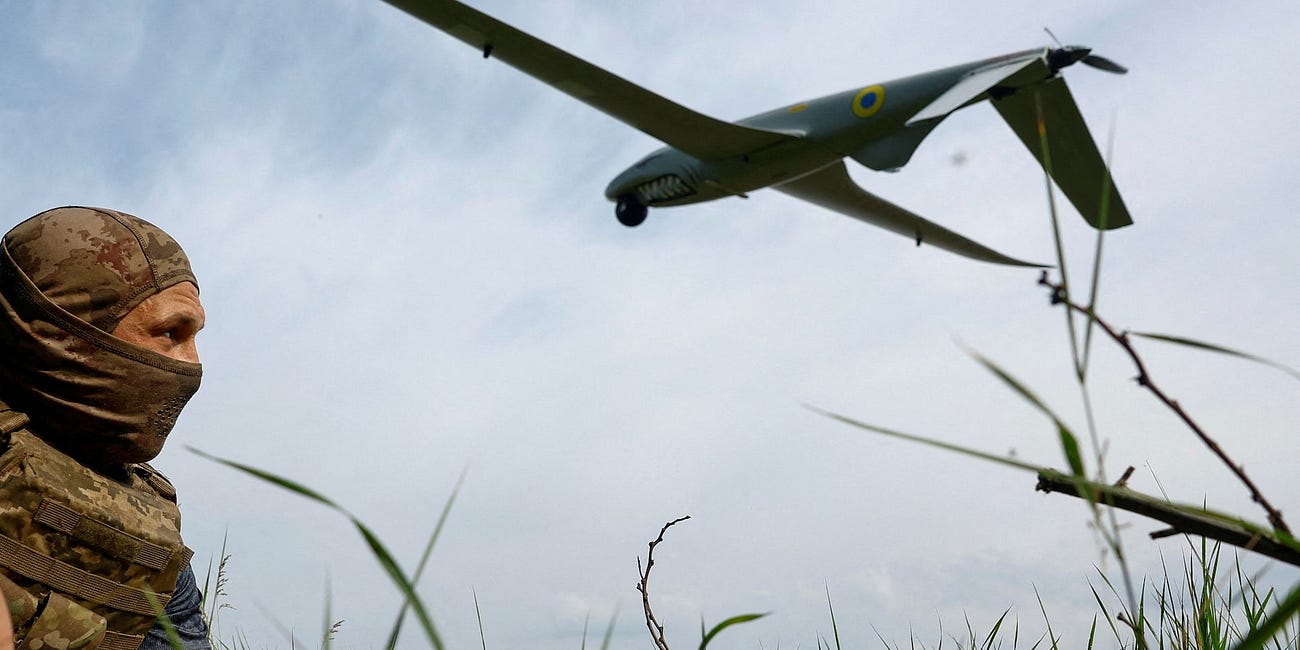
Within hours yesterday, Lithuania and the U.S. put out warnings that Russia may be preparing to test NATO with a limited attack on one of its members. Lithuania’s Defense Minister Robertas Kaunas said they had intelligence that Russia could carry out attacks against critical infrastructure in the Baltic region and could use Ukrainian-made drones for these attacks. “We are talking about a potential false-flag operation where a fake Ukrainian drone could be used,” he warned. “That’s the most realistic current scenario.”
Comments
Nothing yet. Say the first thing.
Sign in to join the conversation.