

Yesterday, I wrote about the unusual NATO activity along Europe’s eastern flank. In an unannounced operation, U.S. F-35s, surveillance aircraft, aerial refueling tankers, and the U.S. Air Force’s new EA-37B Compass Call electronic warfare aircraft were all spotted in a show of force around Kaliningrad, Poland, and the Baltic states. As with many important things, this received no Western media coverage, though Russian media was quick to report on it.
The NATO operation resumed today, expanding farther along the eastern flank. And with alarm bells going off across Europe for weeks over the possibility of a Russian military attack against a NATO country, new reporting from Germany may explain some of what NATO is doing and how it is preparing.
According to Bild, NATO has developed a three-part plan for how it would respond if Russia launched an invasion. The fact that we are even hearing about this plan is a story in itself. NATO reportedly sees value in Russia knowing how the alliance would respond, hoping that it will serve as a deterrent.
The first part of the plan is based on what Russia has already done in its genocidal invasion of Ukraine. NATO expects Moscow could follow the same playbook, beginning with missile and drone strikes before sending in ground forces. NATO’s priority would be to stop those attacks, using fighter jets, missiles, and drones to take out Russia’s missile and air defense systems.
And this is where Kaliningrad becomes important. Russia has spent years building up its military capabilities there, something I documented back in 2018 and 2019 as Moscow moved Iskander missiles into the region and upgraded its nuclear weapons storage facilities. NATO is well aware of what Russia has built there, making the amount of activity around Kaliningrad over the past two days worth watching. Then there is its location, wedged between Poland and Lithuania and directly across from the Suwałki Corridor, one of NATO’s more vulnerable points.
Another part of the plan deals with the scenario should Russian ground forces continue advancing. One option would be to create an “autonomous zone” along the borders with Russia and Belarus, where drones and unmanned military vehicles could be used to slow or stop Russian forces without permanently stationing NATO troops there.
If all of that doesn’t stop Russian forces, NATO forces would carry out operations inside Russia, striking military and logistical targets, including airfields, defense factories, bridges, and railways being used to support the invasion. The alliance is also considering an “air bridge” to move drones and robotic systems into Russia, where they could be used against military bases and airfields.
And not that it needs to be said, but the goal is not to occupy Russia. NATO is a defensive alliance, and its goal would be to push Russian forces back across the border.
Now back to these NATO operations. While most of yesterday’s activity centered around Kaliningrad, Poland, and the Baltics, today the operation expanded farther east. A NATO E-3A AWACS spent much of the morning over Poland before moving toward the Polish-Belarusian border, while a German military aircraft conducting surveillance flew along the borders with Russia and Belarus. Farther south, a French E-3F AWACS was seen near Moldova, and this is just a sample of operations. And NATO may not be done yet, with signs that the mission could continue tomorrow.
Another thing that is not getting enough attention is a recent Telegraph investigation. Reporters identified ten Russian military facilities where new launch pads are being built for some of its most advanced long-range attack drones that are capable of reaching deep into Europe. What is worrying is that these sites seem to be permanent and could remain operational for years, and they do not look like they are being built for use in Russia’s genocidal invasion of Ukraine.
With so many fast-moving developments and Russia continuing to escalate, we still don’t know what prompted this week’s operation. NATO conducts exercises and surveillance missions along its eastern flank all the time, but they are usually announced ahead of time, especially with tensions this high. But with this mission there was no announcement and when pressed, NATO and the U.S. military issued standard statements that provided no explanation.
We also don’t know what U.S. and European intelligence agencies are picking up, or how all of this connects. But after years of monitoring Russia’s operations around the world, and watching similar activity ahead of its 2014 invasion and 2022 full-scale invasion of Ukraine, I would not dismiss this. Russia is continuing to escalate, while NATO’s warnings are growing louder and more frequent. Meanwhile, the alliance is responding with a very visible show of force. And then there is Trump, relentlessly attacking America’s allies while showing fealty to Moscow and giving Russia every reason to question U.S. resolve. We are heading into even more dangerous and unstable times.
I’ll continue monitoring and update as new developments come in.
Why Was NATO So Active Around Kaliningrad Today?
·
Aug 18
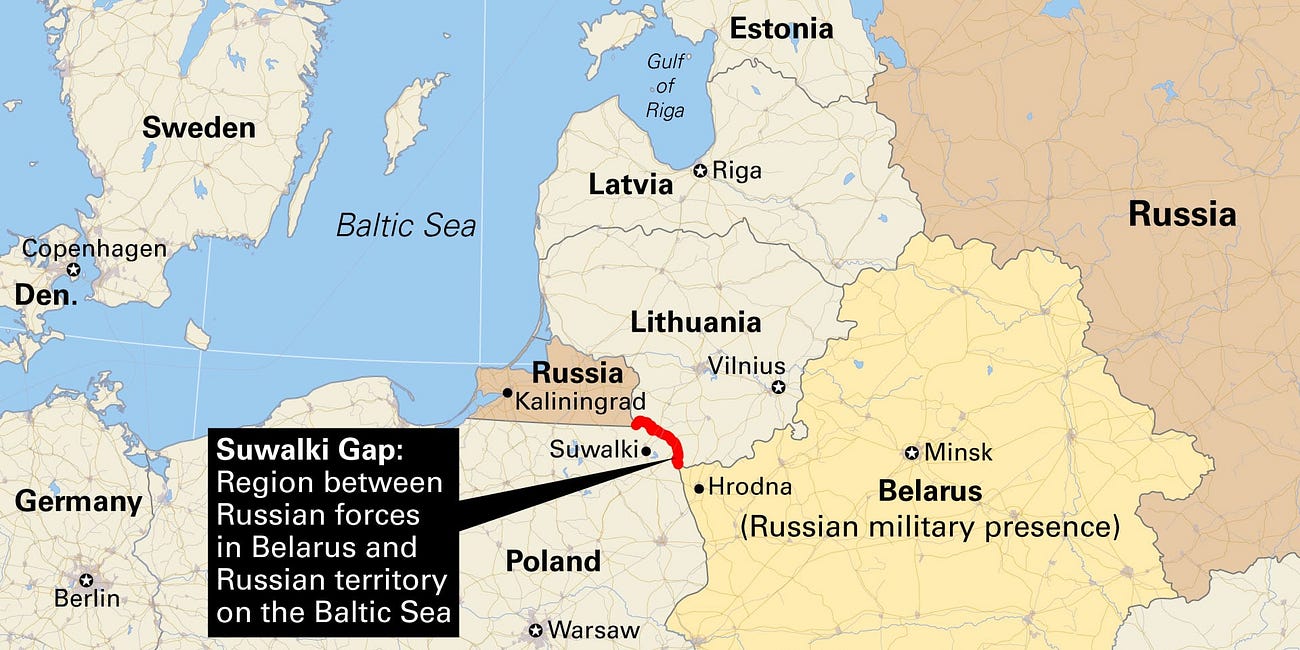
For several weeks, U.S. and European officials have been sounding the alarm over intelligence that Russia could be preparing to test Article 5 with a military attack against a NATO country, possibly even a ground incursion from Belarus or Kaliningrad. These warnings have me particularly worried about the Suwałki Corridor, which I have been warning about for years. The narrow stretch of NATO territory between Belarus and Kaliningrad connects Poland to Lithuania and the Baltic states and has long been considered one of NATO’s most vulnerable points.
Something Is Setting Off Alarm Bells Across NATO
·
Aug 8
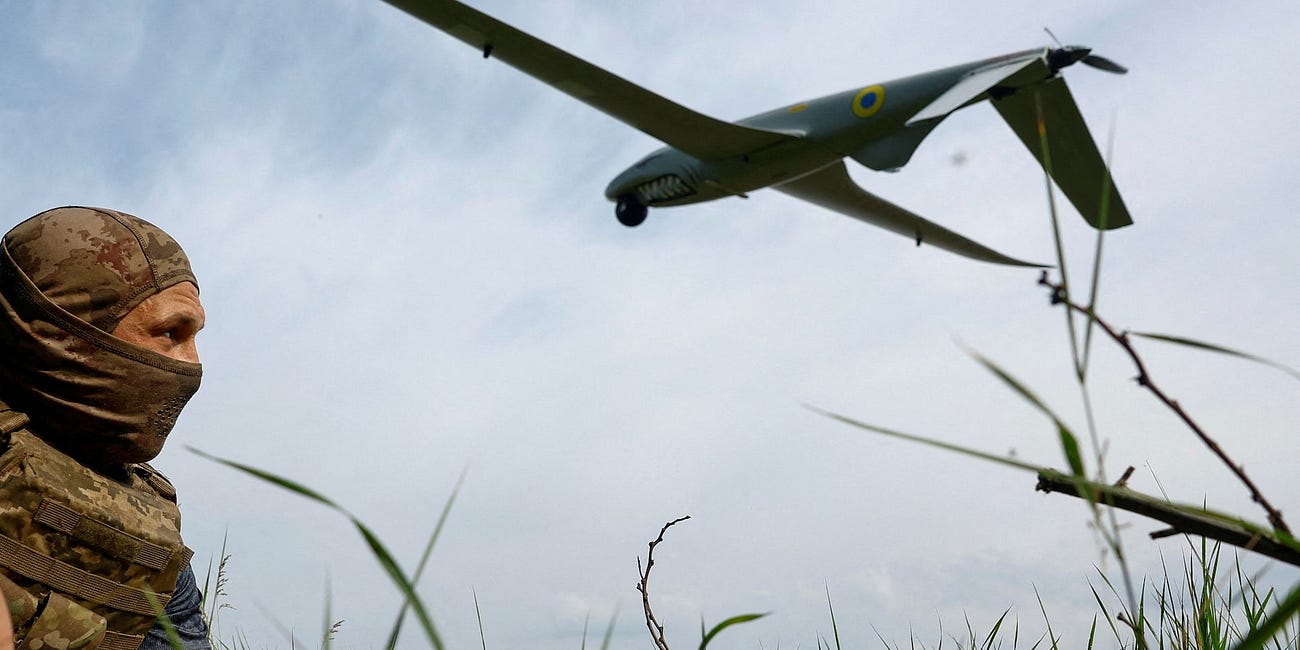
Within hours yesterday, Lithuania and the U.S. put out warnings that Russia may be preparing to test NATO with a limited attack on one of its members. Lithuania’s Defense Minister Robertas Kaunas said they had intelligence that Russia could carry out attacks against critical infrastructure in the Baltic region and could use Ukrainian-made drones for these attacks. “We are talking about a potential false-flag operation where a fake Ukrainian drone could be used,” he warned. “That’s the most realistic current scenario.”
Comments
Nothing yet. Say the first thing.
Sign in to join the conversation.