
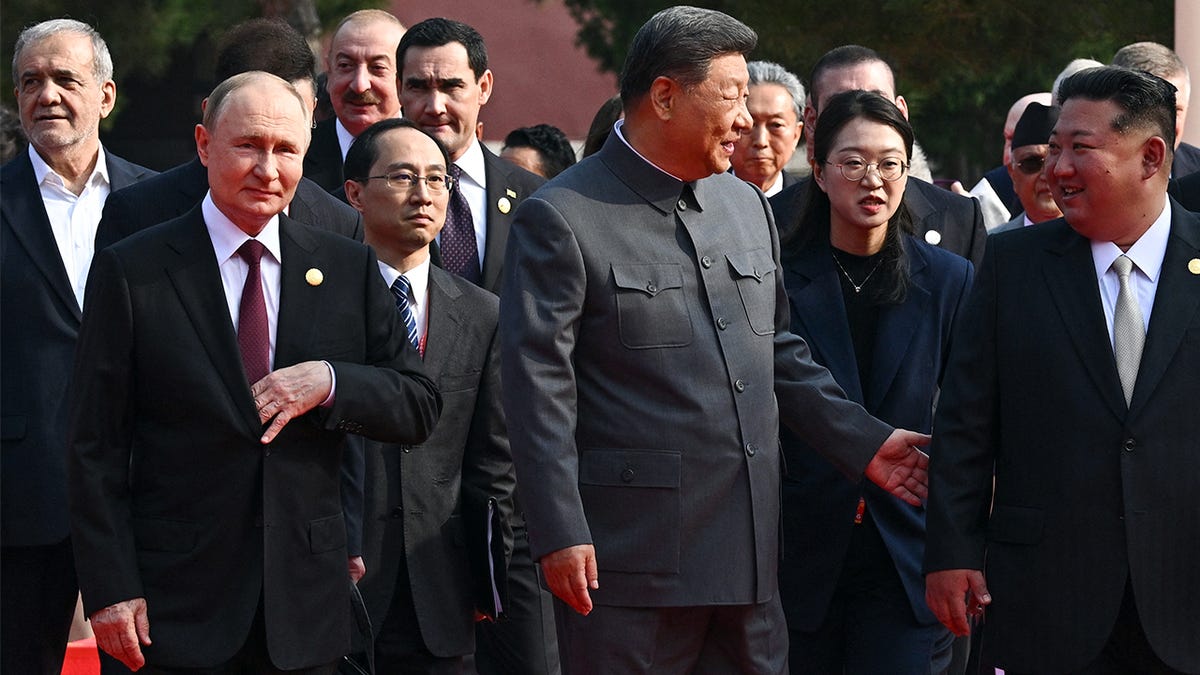
As with so many important developments these days, Japan’s newly released defense report barely got any attention. What makes the report significant is not that it revealed some new intelligence about Russia, China, or North Korea, but that it acknowledges something Ukraine has been warning about since the beginning of Russia’s genocidal full-scale invasion. While much of the international community viewed Russia’s war as a European security crisis, Kyiv warned that Moscow’s invasion would reach far beyond Ukraine, embolden authoritarian regimes, deepen military cooperation among America’s adversaries, and reshape the global security landscape. Those warnings were repeatedly dismissed as wartime rhetoric or seen as an appeal for more military support.
And now Japan’s report reinforces that assessment. Tokyo concluded that growing military coordination between Russia, China, and North Korea is reshaping the security environment in East Asia, pointing to provocative Chinese-Russian bomber patrols near Japanese airspace, Russia’s growing support for North Korea’s military modernization, and expanding military cooperation among these authoritarian regimes.
That broader pattern is what much of the West continues to miss, despite it unfolding openly for years. Russia, China, Iran, and North Korea have built a strategic network that affects security across Europe, the Indo-Pacific, and the Middle East. Since Russia launched its full-scale invasion, they have expanded military cooperation, strengthened partnerships, shared technology, coordinated diplomatically, and supported one another politically, economically, and militarily whenever doing so advanced their shared interests. Yet many policymakers still treat Europe, the Indo-Pacific, and the Middle East as separate security challenges instead of recognizing that the regimes driving those crises reinforce one another.
I have long argued that Moscow’s partners didn’t align themselves with Russia because they cared whether it seized more Ukrainian territory. They saw Russia’s full-scale invasion as an opportunity to advance a much larger objective: subverting the democratic world and overturning the U.S.-led international order. While much of the West focused on helping Ukraine defend itself, far less attention was paid to the close military, economic, and political cooperation taking shape among these regimes.
China has become one of the clearest examples. Despite decades of mistrust and competing interests, Moscow and Beijing have deepened their strategic partnership, expanding joint military exercises, strategic bomber patrols, naval operations, intelligence cooperation, and defense industrial ties while coordinating more closely on their broader geopolitical ambitions.
As Western sanctions isolated Russia, China became the Kremlin’s economic lifeline, supplying chips, dual-use products, and other components needed to keep Russia’s war machine running. Chinese companies have also helped Moscow evade sanctions and obtain critical technology it can no longer get from the West. The result is a Russia dependent on Beijing and reduced to China’s junior partner.
Russia’s relationship with Iran follows a similar pattern. Long before Iranian Shahed drones terrorized Ukrainian cities, Moscow and Tehran were fighting jointly in Syria. Russian forces and the IRGC established joint operations centers in Syria and Iraq, coordinating military operations to keep butcher Bashar al-Assad in power while sustaining a regime responsible for the brutal murders of more than 500,000 Syrians, widespread torture, and repeated chemical weapons attacks against civilians. Syria also became the testing ground where Russia refined the Grozny playbook it would later unleash against Ukraine, carpet bombing cities through relentless aerial bombardment and deliberately targeting hospitals, schools, markets, humanitarian corridors, and other civilian infrastructure to break the will of the people.
Meanwhile, North Korea has already supplied Russia with millions of artillery rounds, ballistic missiles, and roughly 10,000 troops, with intelligence assessments indicating another 30,000 are on the way. In return, Pyongyang has gained military technology, battlefield experience, and far greater access to Russia’s military capabilities than it would have otherwise.
Ukraine has become a real-time laboratory where Russia, China, Iran, and North Korea are testing, adapting, and refining the tactics, technologies, and military capabilities they will use in future conflicts.
We are already seeing how these partnerships operate outside of Ukraine. Russia and China are reportedly providing Tehran with intelligence, satellite imagery, targeting info, weapons, and other military support that is being used against American interests and U.S. forces across the Middle East. Iran, meanwhile, spent years supplying Russia with drones and military technology while learning tactics that it is now applying against the U.S.
And this could become even more dangerous. European security officials sounded the alarm last year that Russia and China could coordinate simultaneous crises to divide Western attention and military resources, with NATO Secretary General Mark Rutte warning that a Chinese attack on Taiwan could coincide with a Russian attack against NATO. Meanwhile, Trump got the U.S. into a quagmire with Iran and continues to attack America’s closest allies, undermine NATO, and pull U.S. military resources away from Europe. All of this only emboldens Moscow and America’s other adversaries, while creating exactly the kind of opening they have been waiting for.
If Russia, China, Iran, and North Korea are working together across regions, the international community needs to start doing the same. NATO, Ukraine, Japan, South Korea, Australia, and New Zealand need much closer military coordination, intelligence sharing, joint training, and defense cooperation, potentially through a reimagined security bloc that expands on NATO and is built to confront the threats we face today. A Russian attack on NATO and a Chinese invasion of Taiwan would not be two separate crises.
Europe is warning that Russia could test NATO’s Article 5, China is escalating pressure in the Indo-Pacific, and the U.S. is bogged down in Iran. Ukraine warned from the beginning that Russia’s war would not remain a European security crisis, and Japan is now sounding the alarm from the other side of the world. The question is whether the democratic world connects these threats before Moscow and Beijing decide the time is right to test NATO and Taiwan at the same time. That is why all of us should be paying attention.
China Secretly Trained Russian Troops for Ukraine
·
May 19
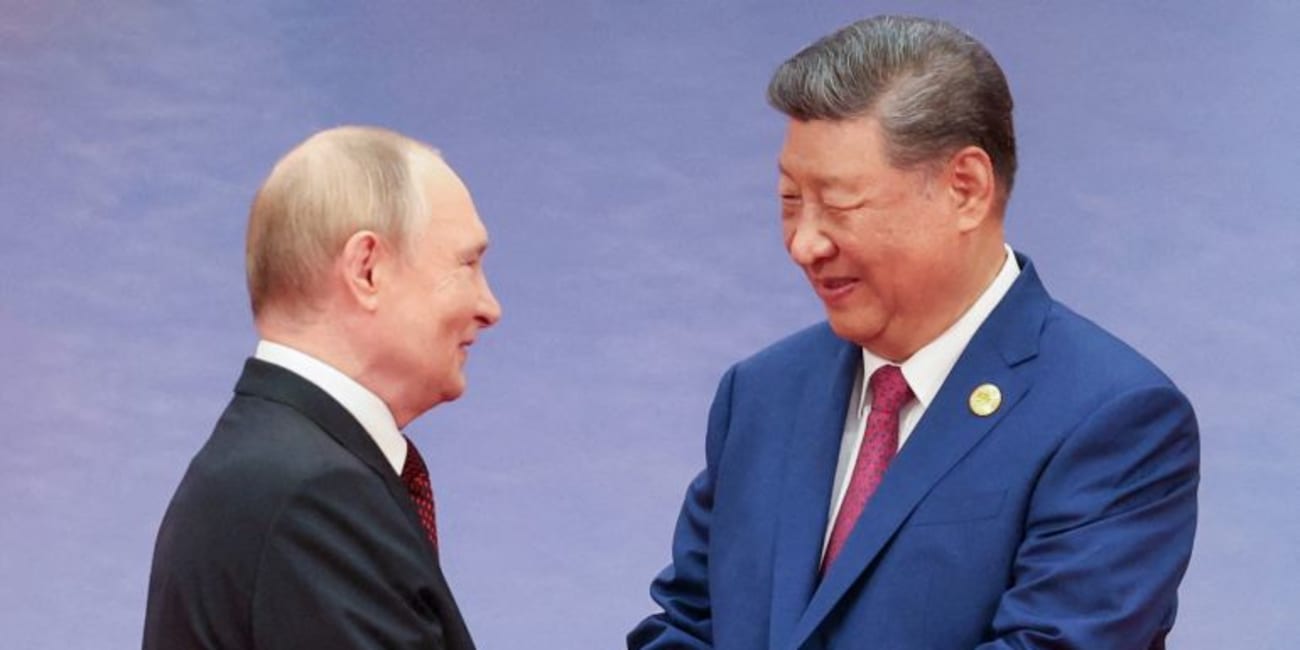
As Putin arrived in Beijing for his meeting with Xi Jinping, the Kremlin and Chinese state media celebrated what both governments described as an “unprecedented” relationship built on expanding trade, deepening military and energy cooperation, growing use of the ruble and yuan in bilateral trade, and a shared vision for a new “multipolar” world order designed to challenge Western influence. In reality, Russia’s economic isolation and dependence on Chinese markets, technology, and financial systems have reduced Moscow to China’s junior partner.
Comments
Nothing yet. Say the first thing.
Sign in to join the conversation.