
Yesterday, Russia launched yet another massive missile and drone attack as cruise missiles, ballistic missiles, and drones tore through homes and residential buildings across Ukraine. By Thursday morning, rescue workers were digging through the rubble in search of survivors while family members waited desperately for news of those trapped beneath collapsed buildings.
Among the victims was the Voronov family near Kryvyi Rih. A Russian ballistic missile destroyed their home, killing at least six members of the family, including the parents, three of their children, and their 18-month-old grandson. The impact was so devastating that almost nothing was left of the house, forcing investigators to identify the victims through forensic examinations.
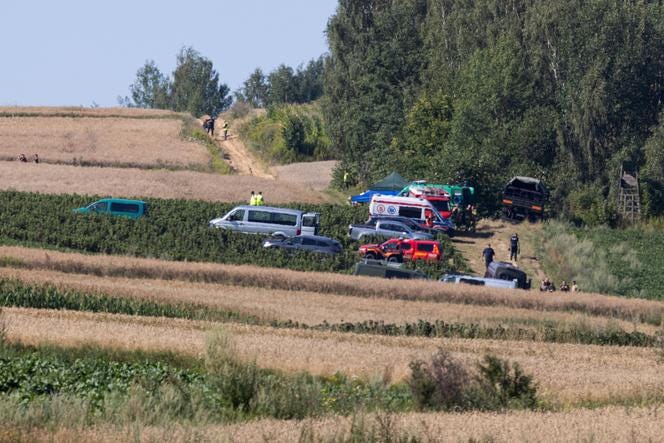
As rescue operations continued across Ukraine, the consequences of Russia’s latest attack were also unfolding across the border in Poland. Polish authorities were examining wreckage of a Russian cruise missile that had crossed deep into Polish territory before crashing into a field roughly 100 kilometers from the Ukrainian border. The impact was huge and carved a crater more than 30 feet wide near the village of Tarnawa-Kolonia.
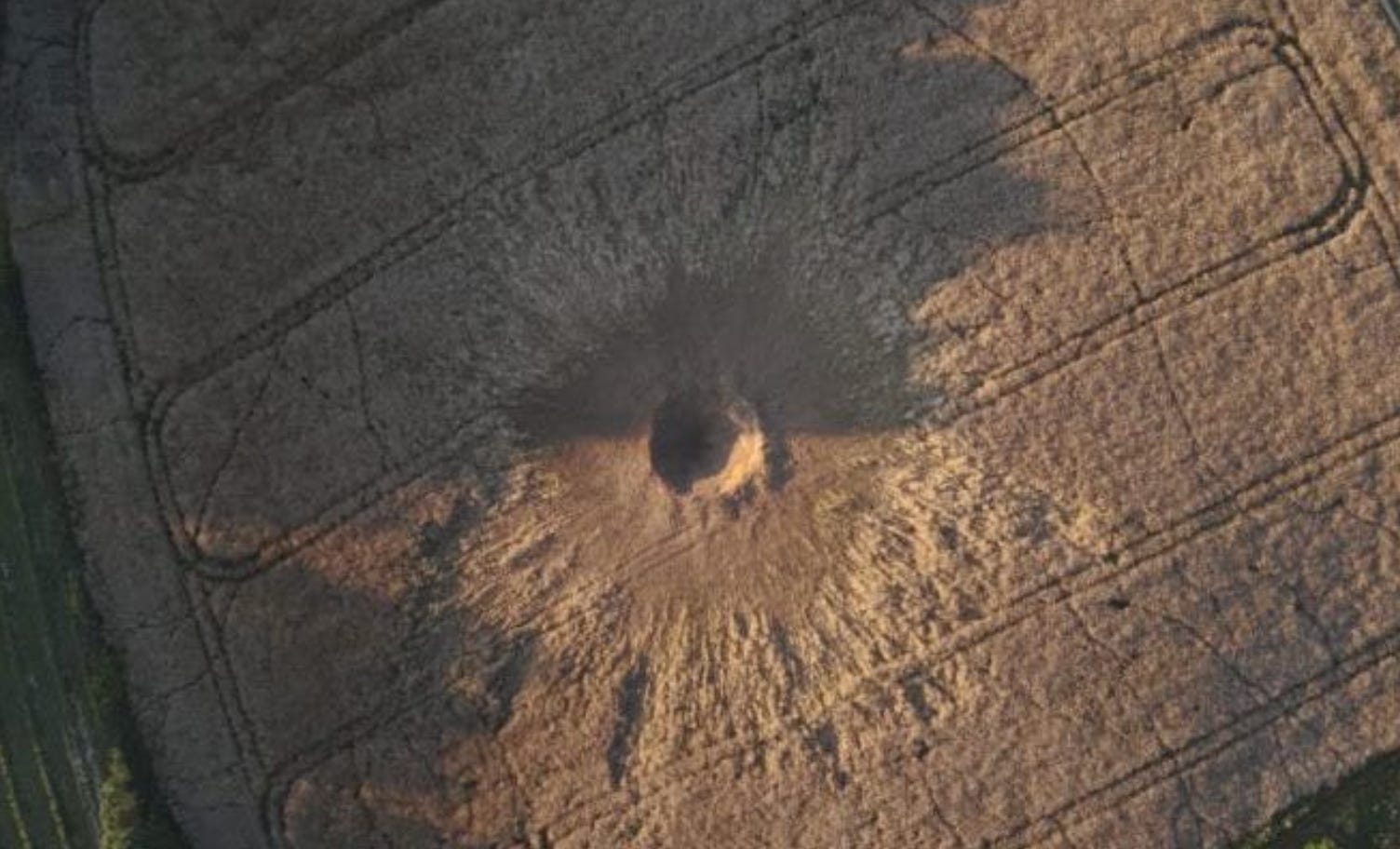
Speaking from the crash site, Polish Prime Minister Donald Tusk said the recovered fragments pointed to a Russian Kh-101 cruise missile. NATO Secretary General Mark Rutte condemned the incident as “yet another reckless act by Russia and a dangerous consequence of its war against Ukraine.”
And Poland wasn’t the only NATO country dealing with Russian airspace breaches this week.
Just last weekend, Romania spent three consecutive nights defending its airspace as Russian Shahed drones repeatedly crossed the border during Russia’s attacks on Ukraine. Romanian F-16s were scrambled each night, and in a notable shift from previous incidents, Romania actually shot the drones down. Bucharest summoned Russia’s ambassador, expelled a Russian diplomat, and recalled its own ambassador from Moscow, while the European Union condemned the repeated violations of Romanian airspace as a serious escalation.
None of this should surprise anyone who has been paying attention. Western intelligence agencies have increased their warnings that Russia is likely to test NATO through limited “military and hybrid provocations.” Earlier this month, reports revealed that the United States had warned Poland that Moscow could stage a provocation to probe the alliance’s response.
The warning was not limited to a single scenario. Other reporting and intelligence warnings described scenarios ranging from drone attacks on critical infrastructure and simulated air incursions to provocations launched from Belarus or Kaliningrad, false-flag operations blamed on Ukraine, and limited ground incursions intended to test NATO's willingness to respond. One scenario even involved Russia carrying out a provocation to escalate tensions and force Western allies to suspend military aid to Ukraine.
Over the past several weeks, alarm bells have been increasing. Latvian intelligence warned that Russia was preparing provocations against the Baltic states or Poland, while Lithuanian President Gitanas Nausėda said intelligence assessments pointed to possible attacks on critical infrastructure. Latvian President Edgars Rinkēvičs warned Moscow could test Article 5 through limited provocations instead of an outright invasion, and Polish Foreign Minister Radosław Sikorski said that Russia could stage a false-flag operation against a NATO member. There were even warnings that Russia could use captured Ukrainian drones against Poland or the Baltics.
For decades, Russia has relied on operations that remain below the threshold of conventional war. Cyberattacks, sabotage, espionage, election interference, GPS jamming, information warfare, and limited military provocations to sow chaos and probe defenses without triggering a direct military confrontation.
But since last September, Russia has significantly escalated its aggression against NATO. What began along the alliance's eastern border has expanded across much of Europe, with Poland, Romania, the Baltic states, the Nordic countries, Germany, Denmark, and others responding to repeated airspace breaches and drone activity. Governments have repeatedly scrambled fighter jets, strengthened air defenses, and revised their rules of engagement, while NATO launched Eastern Sentry to reinforce surveillance and coordination along its eastern flank.
And airspace breaches are only part of the story. Over the past several months, European authorities have investigated repeated sightings of unidentified drones near military bases, airports, critical infrastructure, industrial facilities, ports, logistics hubs, and transportation routes used to support Ukraine. Although many of the incidents remain publicly unattributed, they all fit the pattern of Russia’s reconnaissance and probing operations.
All of this is unfolding at a moment of growing uncertainty inside the alliance. Trump has repeatedly questioned NATO’s value, publicly attacked key allies, reduced U.S. military presence in Europe, and shifted American military resources toward his war with Iran. Also, the Pentagon just announced it will relinquish command of NATO's Security Assistance Group in Germany, the U.S.-led headquarters responsible for coordinating military aid, logistics, and training for Ukraine. The mission will continue under another NATO ally, but it marks another reduction in America's leadership role in Europe as Russia escalates.
As Trump drags the U.S. deeper into a quagmire with Iran, undermines NATO, and pulls the U.S. away from all of its closest allies, Russia continues strengthening its strategic partnership with China. The two countries have spent years expanding joint military exercises, training each other's forces, conducting patrols, sharing technology, and coordinating closely in Russia's genocidal war against Ukraine. In recent months, both have also supported Iran with intelligence, weapons, and satellite imagery to target U.S. positions in the Middle East.
But as Ukraine pushes the war deep into Russia and fuel shortages spread, the Kremlin is coming under growing domestic pressure. With the U.S. distracted and NATO divided, Moscow may use this opportunity to test NATO’s commitment to Article 5 and shift public attention at home. And that threat is not getting nearly enough attention.
Comments
Nothing yet. Say the first thing.
Sign in to join the conversation.