
As a fashion founder who went the venture route, I’ve been “tortured” by many provoking questions from investors. Including one early on:
“Why would a woman pay for OLEADA when she could buy a high-quality Hermès dupe for the same price?”
It’s a great question, but not *quite* the right one. Because on the surface, it sounds like they’re asking about Hermès dupes vs. OLEADA.
When in reality, the deeper question is:
“Why would a woman choose an unknown brand over a well-known dupe? Especially a dupe that makes a statement and gives her instant social currency, for the same price?”
In Luxury Brand Building 101, we focused on identity. In 102, we’re going to look at relationships between the brand and customer, starting with the brand side.
A brand, when it works well, behaves like a universe with its own gravity. It pulls certain people in. It lets others drift past.
Let’s take a closer look.
Every brand sits somewhere on a line between external and internal:

External brands are built to signal. The codes are legible from across a room. You don’t need to be in the conversation to know what they mean. The logo, the hardware, the celebrity in the front row. All of it engineered to broadcast quickly.
The Being does most of the work here. It is, essentially, the extrovert in the room.
Internal brands are built to be understood. The codes are quieter and they take a moment to really register. You usually have to already be in the world to read them properly. The cashmere weight, the draping details, the founder’s creative philosophy.
The Feel does most of the work. Just like an introverted person.
Neither is better. They are doing different jobs.
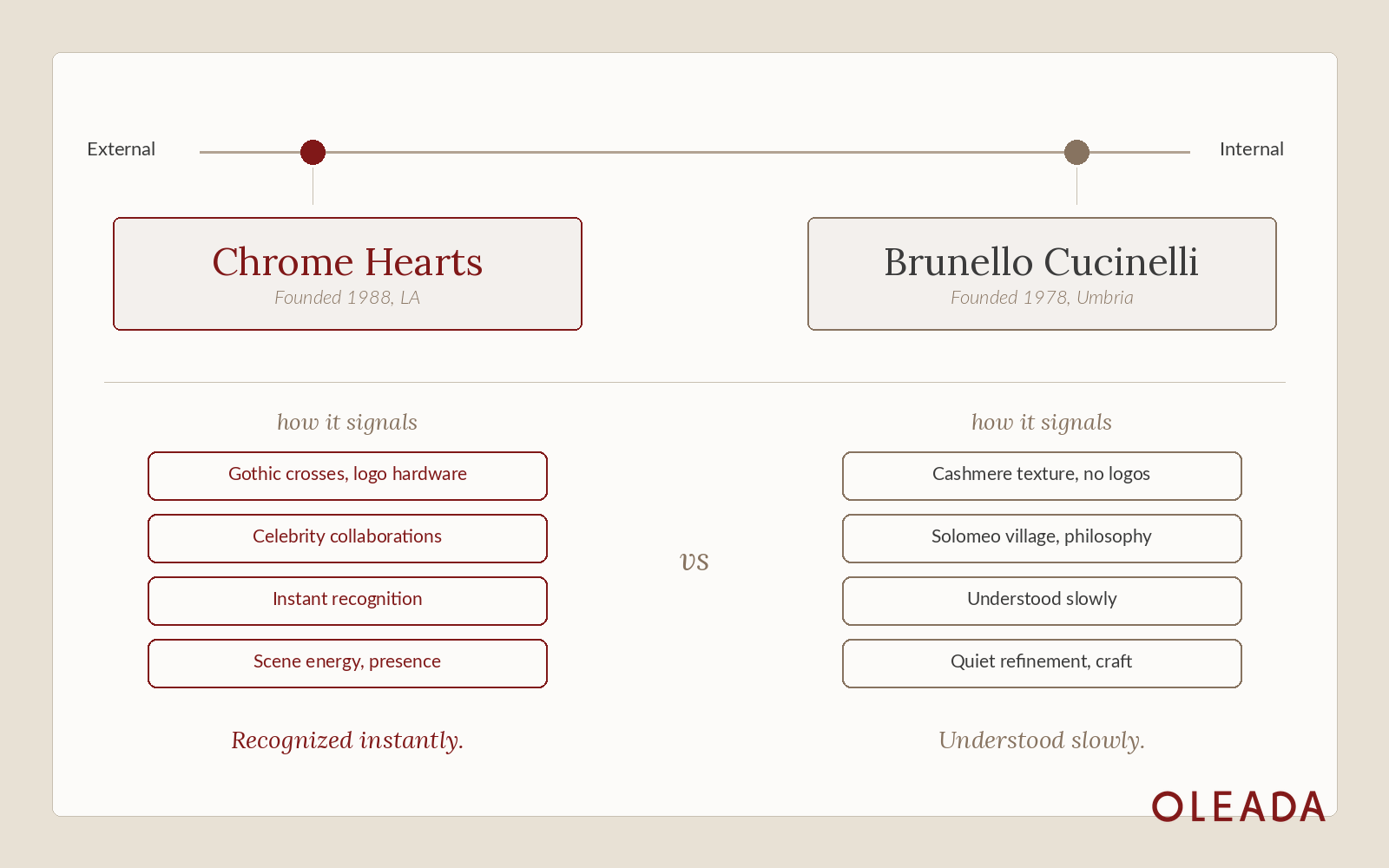
Chrome Hearts and Brunello Cucinelli are perfect examples of this. Both brands grew in roughly the same era and landed on opposite ends of this spectrum.

Chrome Hearts signals immediately. The gothic crosses, the heavy hardware, the celebrity collabs. You know what it means before anyone tells you. The brand performs in public, and its customers wear it in order to be recognized by association.

Brunello Cucinelli does the opposite. The cashmere, the no-logos, the Solomeo village, the gentle philosophy of humanistic capitalism. You have to already be in that world to recognize what you’re looking at. The brand whispers, and the people who hear it pay for the privilege of recognizing each other.
It’s the difference is being:
Recognized instantly vs Understood slowly.
The same logic applies to hospitality.
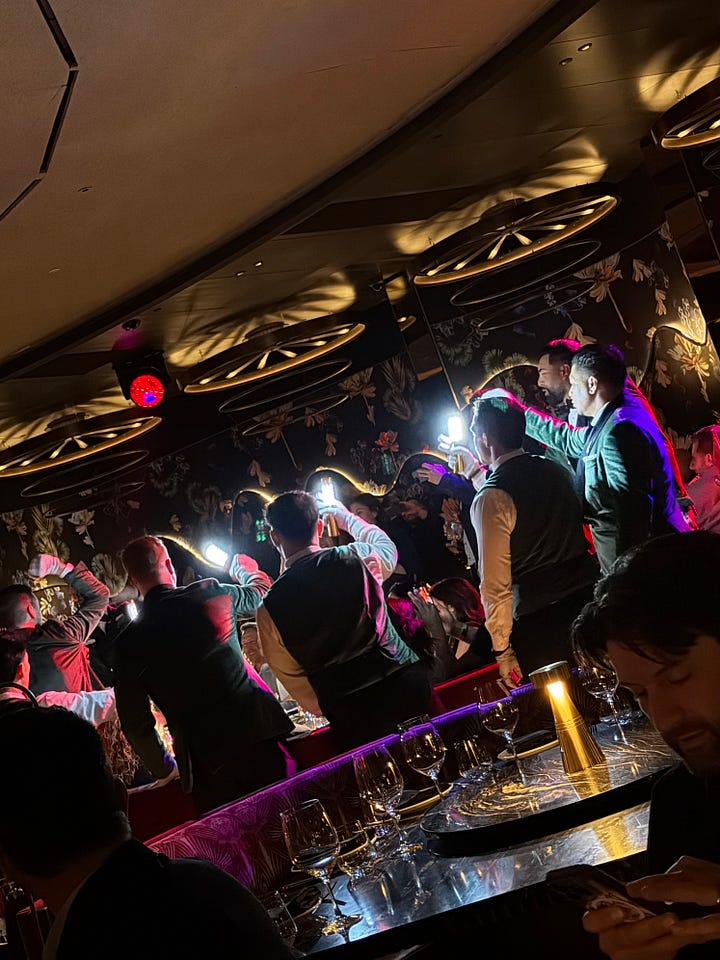
When you walk into Fontainebleau Las Vegas, you can feel the external experience. Every single design choice is screaming “Look at me, I’m the contemporary king!”
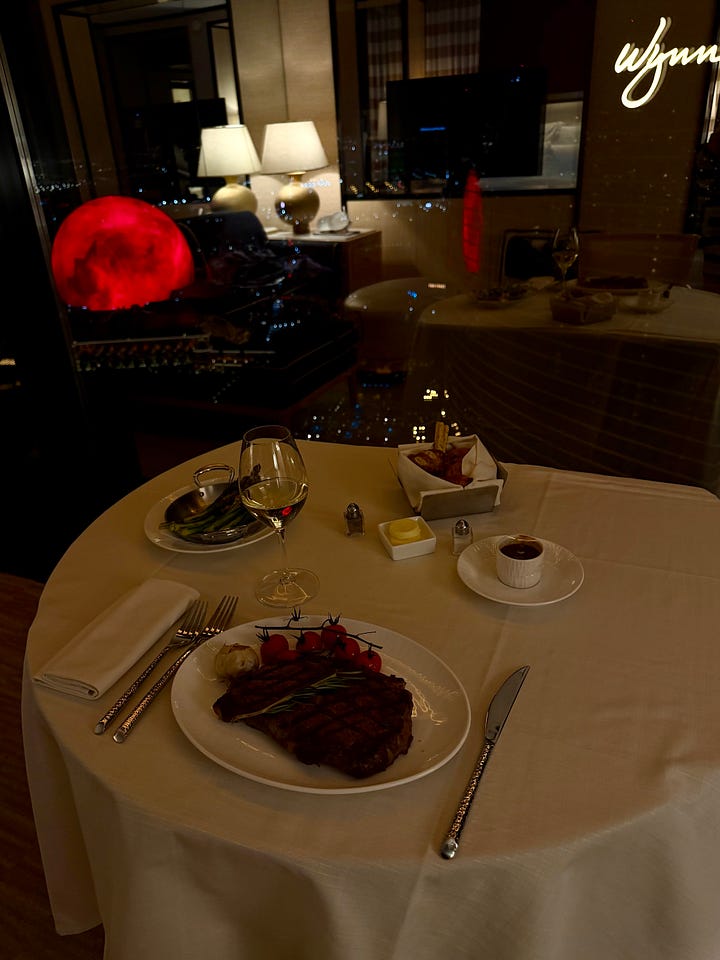
Then, across the street, is the Wynn. This brand is much more internal. The experience is all about comfort, curation, and quiet luxury.
The first puts you in a spotlight. The second puts you at ease.
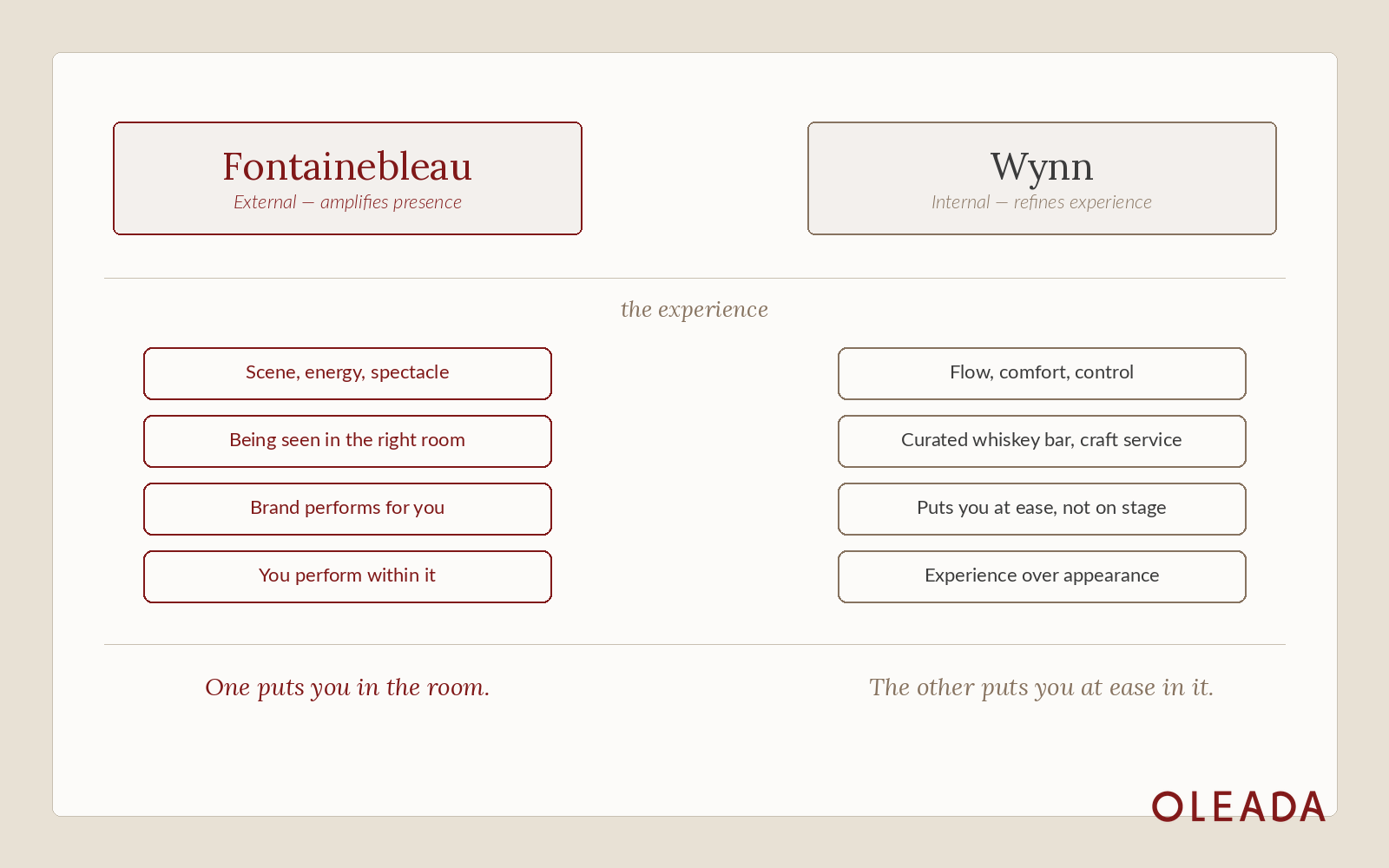
Neither is wrong. But they are not interchangeable.
And a brand that tries to be both without committing usually ends up being neither.
External and internal brands don’t just look different. They run on different business logic.
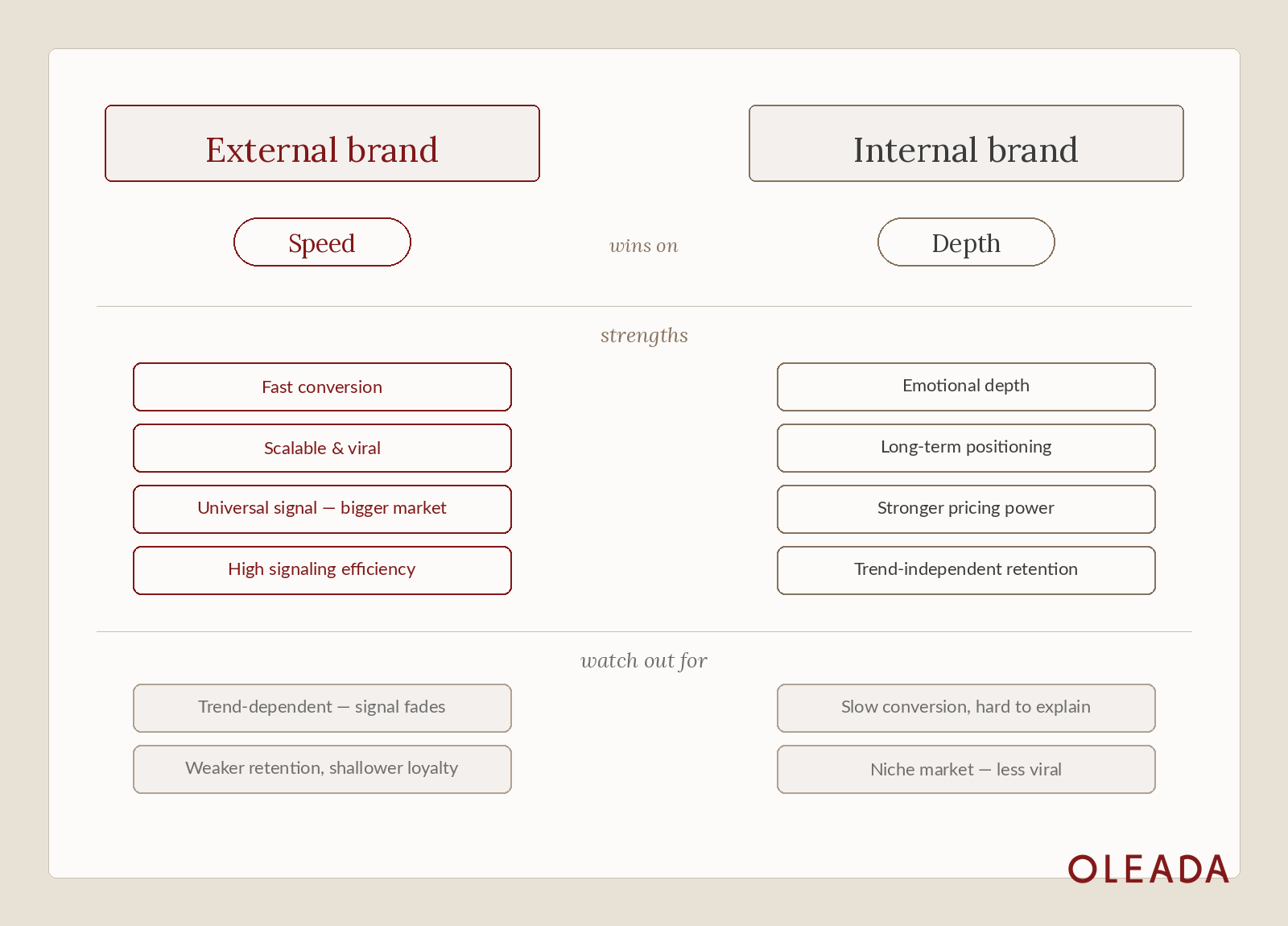
External brands win on speed.
The signal travels fast. The market is bigger because the meaning is legible to more people, and conversion is quick. Just by looking at the year of operation and annual revenue of Chrome Hearts and Brunello Cucinelli, you can tell the speed already.
The trade-off is that when the signal fades, so does the loyalty. Retention is shallow because the relationship was built on visibility, not values. At the extreme end, an external brand can hollow itself out, chasing relevance until the original meaning is gone.
Internal brands win with depth.
They’re harder to displace, have stronger pricing power, and aren’t dependent on trends. The trade-off is slower conversion, harder explanation, and almost no viral lift. Cucinelli reported consistent year-over-year revenue growth of around 10%, resilience to any market or economic changes.
But the trade-off is the smaller market. Only people, already tuned to that frequency, will fully get it. And it will never be a fast return investment.
So as you choose where to sit on the external-internal spectrum, realize that you’re also choosing which challenges you’ll have along the way.
“Why would a woman pay for OLEADA when she could buy a high-quality Hermès dupe for the same price?”
My response to our investors:
“The woman who buys a Hermès dupe is not our client.”
Not because she lacks taste, or money, or sophistication. (She often has all three). But that person is simply operating by a completely different compass.
What the dupe-loving customer buys is an external signal: the visible, recognizable, Hermès-ness of the Hermès bag.
But OLEADA sends a different signal entirely. So the real question we are always asking ourselves, is:
“Who is the OLEADA woman?”
This answer is ever-evolving (as women often are) but it’s rooted in her key values. The OLEADA woman holds high aesthetic standards, while also prioritizing function, quality, and her own comfort. She moves freely through the world with style and intentionality, and our bag supports her journey along the way.
Which is why our function-first, subtle-branding speaks to this customer.
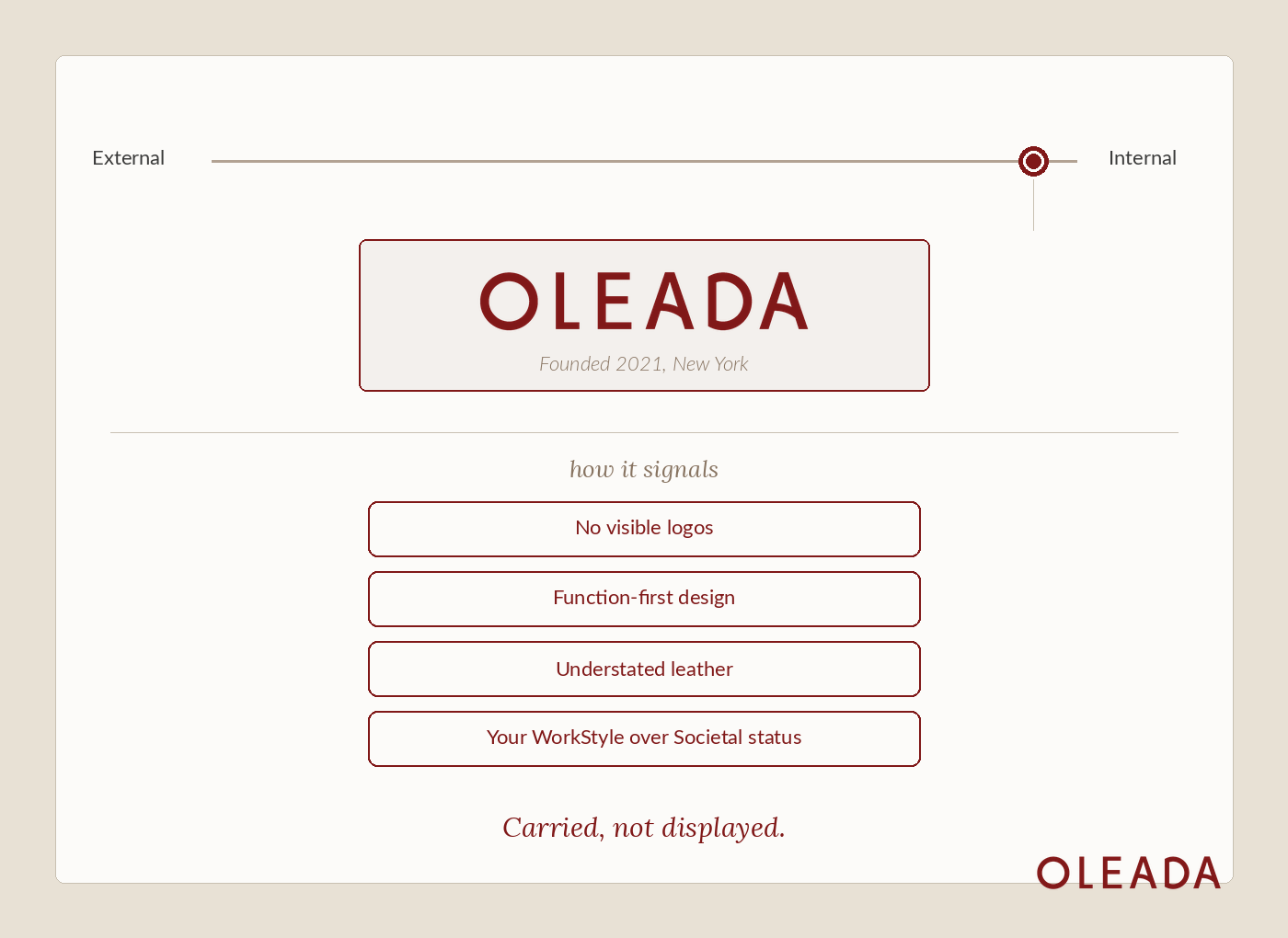
We sit on the internal end of the signal spectrum.
Our bags don’t announce you as you enter a room. They just work, really well, for a long time. The social message of OLEADA was never “I can afford the most expensive bag in the room.”
It’s “I know who I am. I can handle my day.”
That is an internal message. It attracts internal buyers.
And internal buyers, once they find you, tend to stick around for a long time.
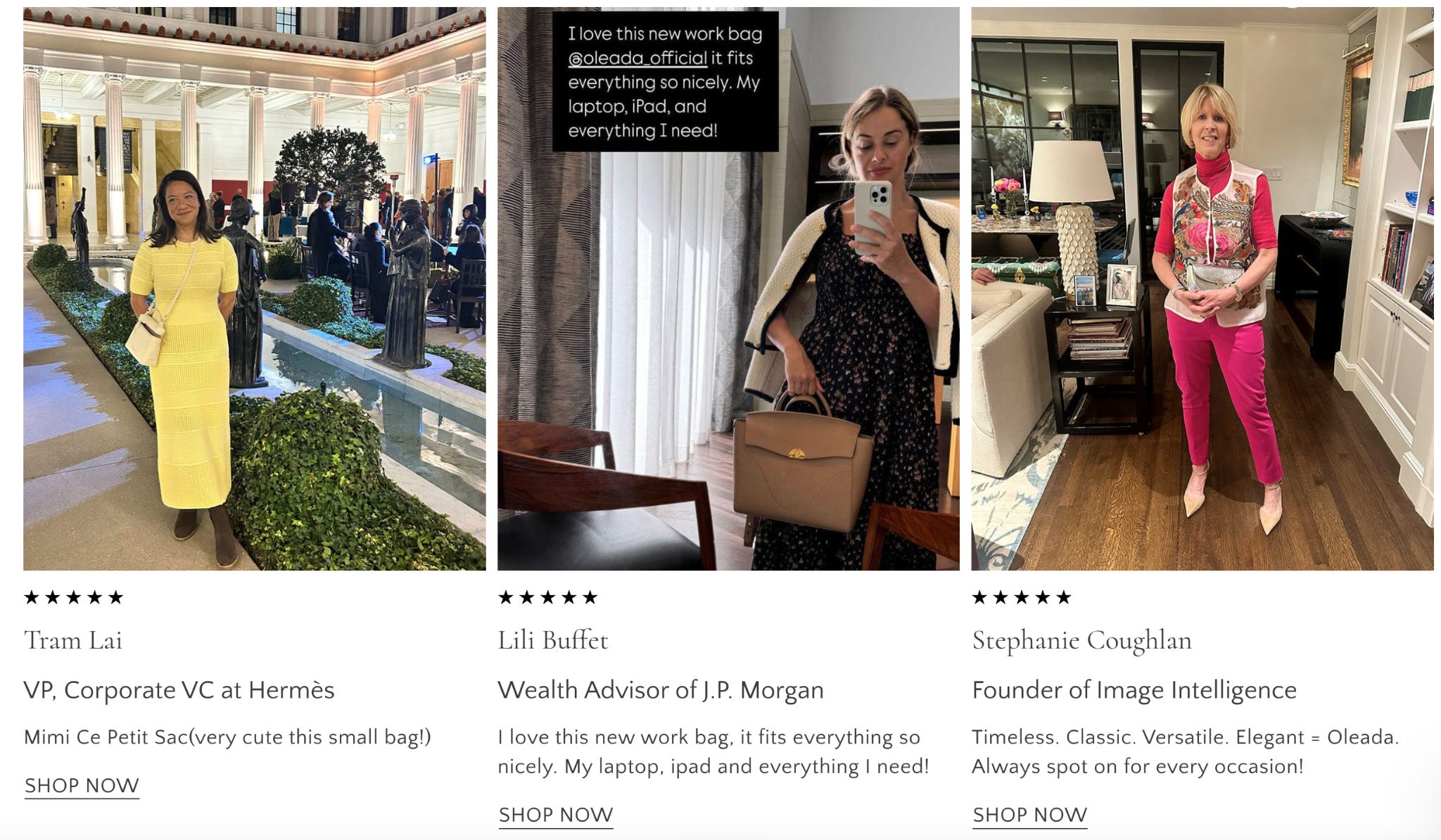
This is a slower way to build. The brand will never go viral on its own, and the volume will never come from people who saw it on someone famous last week. But the women who do find OLEADA, keep coming back. And over time, they bring the right people with them. That is a trade I would make every time.
So, where does your brand on the spectrum? And do you own that position clearly enough that the right people can recognize you?
The most dangerous place is occupying the messy middle, without intention.
Every decision about who you collaborate with, where you show up, and who gets early access to your product is a vote on where your brand actually lives.
And remember:
Speed buys you attention.
Depth buys you time.
You get to choose which is most important to your brand.
❤️ Tiffany
Next up in the Luxury Brand Building series: Once you’ve chosen where your brand sits, it’s time to understand your audiences. (Yes, there are more than one!)
Lesson 103 is a look at the four kinds of buyers any luxury brand attracts, and how to understand each of them.
Comments
Nothing yet. Say the first thing.
Sign in to join the conversation.