
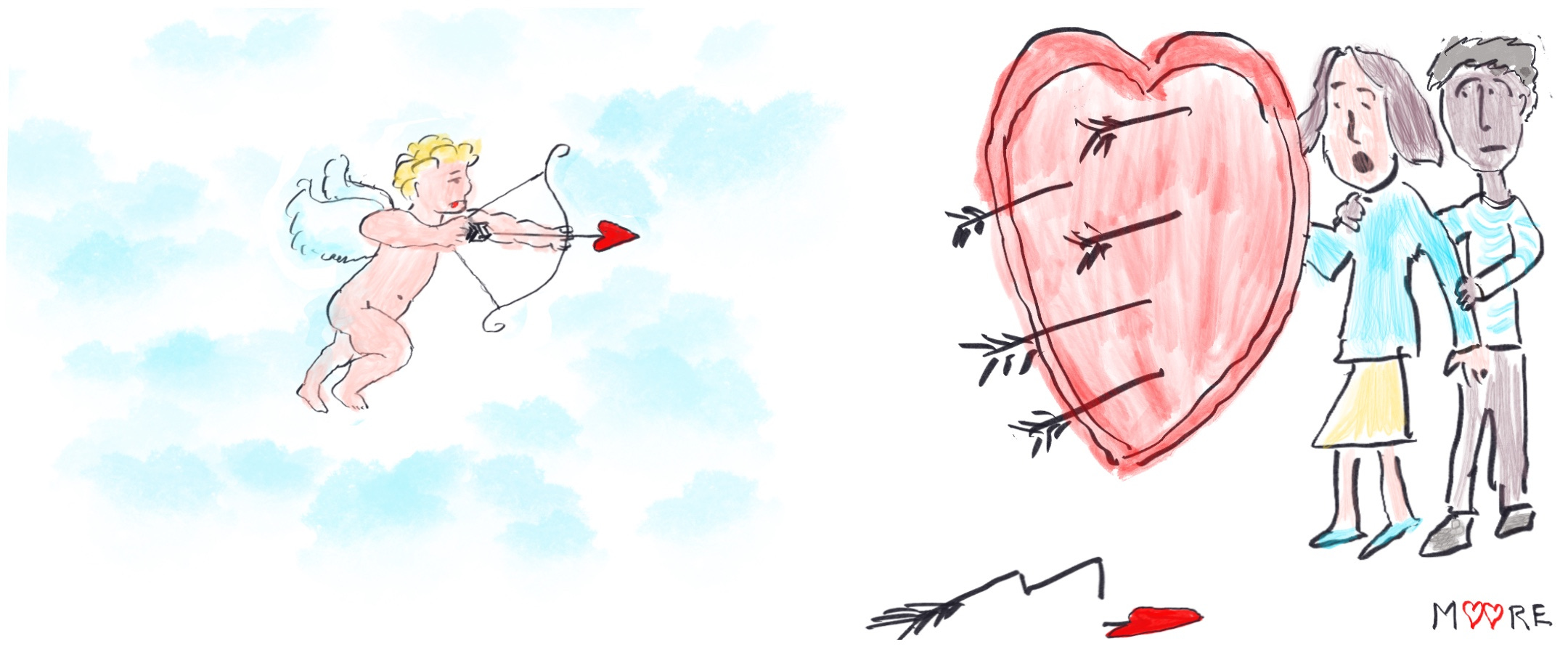
Text and all illustrations by Peter Moore.
THE OFFICIANT WAS PEPPERING my fiancée and me with questions.
How long had we been together?
Why were we getting married when there were so many alternatives to marriage?
Did we want kids, and if so, how many?
Had we merged finances?
And how were our parents’ marriages, anyway?
We were overwhelmed by all this, so okay, maybe we were guilty of dodging full answers. We just wanted rose petals to be strewn in our path, not to contemplate reality until death—or boredom!—do us part.
That’s when the minister leveled us with an Old-Testament-prophet gaze and said: “A marriage can’t end well. Either you’ll fall out of love and split up, or one of you will die and leave the other alone. So this relationship had better be worth it.”
Ouch. Nice job stuffing the cork back into the champagne bottle, Rev!
Still, we seem to have passed the exam. At the end of May, we celebrated a very Oldster event: Our 39th wedding anniversary. Only a third of marriages last that long. The rest are like the ones enjoyed by my buddy Theo, who married once per decade from the 80s onward. He has a lot of marital experience, too, but maybe not the right kind.
Each year in the U.S. about 2 million couples make their way toward the altar, uttering the magic words “I do.” But maybe they should be asking questions, instead. The scary bit: each of these questions can lead to relationship interruptus, if unaddressed.
So, as our minister told us: You better get it right.
1. Who are you, exactly? No, really. Who?

In 1987, when Claire and I wed, the average age for a first marriage was 26 for men, and 24 for women. Not exactly the golden moments for self-knowledge, right? By 2022, those first-marriage ages had risen to 30 for men and 29 for women—about where Claire and I were on our big day. Today’s married people will have been around the block a few times, which is good: They’re more likely to know why they’re saying “I do,” and who they’re saying “I do” to.
2. Wait. Sex isn’t everything?
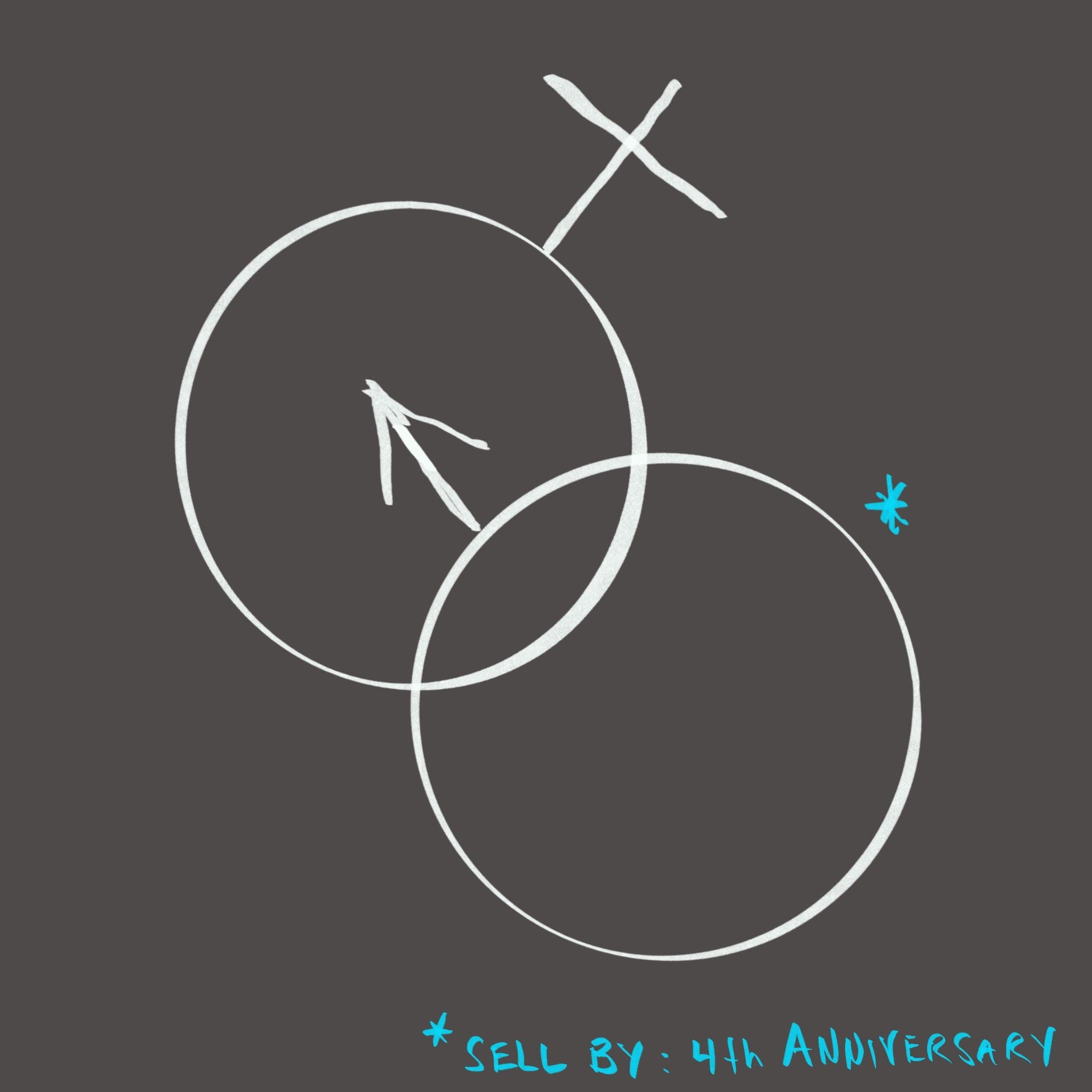
For a decade I worked at Playboy magazine, back when that still meant something. But before then I thought of it as “the sex magazine for men who aren’t having sex.” All fantasy, no engagement. What happens when the fantasy ages out, and you still have your body and your needs, and so does your partner? In a seasoned relationship, lust can give way to listening. And listening goes straight to your head. That’s the path to sustainable sex.
3. Is exhaustarating a word? Because that’s what kids are: exhausting + exhilarating.

During the pandemic I digitized our photo collection. Now our Google Home flashes a rolling revue of good, bad, ugly, and beautiful moments from our lives as young parents. The average new parent loses 44 nights of sleep in year one. No wonder my wife and I look so tired in the photos. But we look happy, too. It was exhaustarating, but we can sleep when we’re dead. Bring on the grandkids!
4. Our kids don’t need us anymore? At age 9?
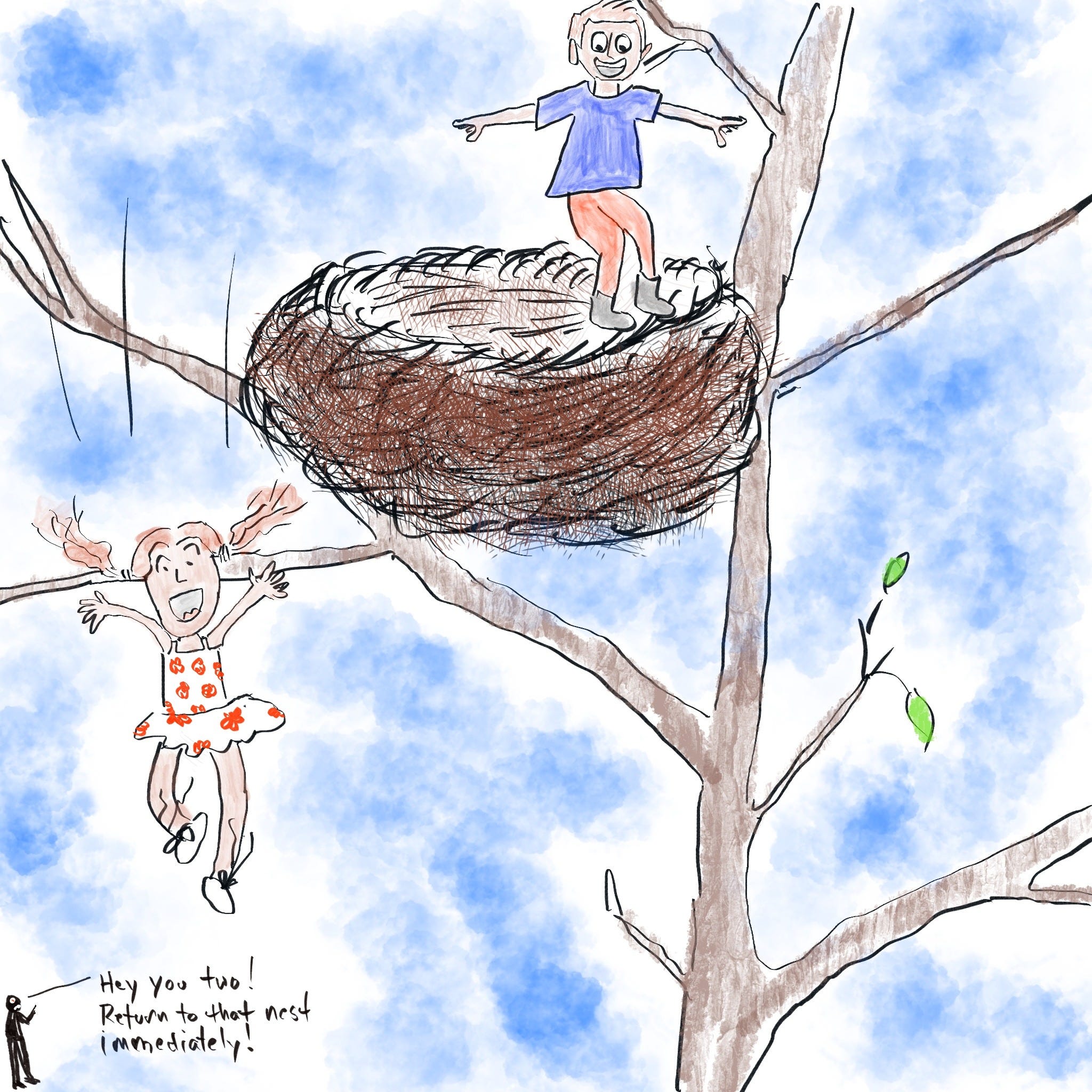
This one was a blow to me, especially. My boys and I were a wolfpack, and we ran like one. But when they were on the cusp of puberty, they began looking outward, and then disappeared completely. They had their own lives, it turns out. The shocker, for me, was that by the time they turned 9, we’d already spent more than half of our allotment of 1-on1-on-1-on-1 time. I was so lonely when they left. I had to learn how to make friends all over again, because my sons had learned to do that, too.
5. Who are you, again, person I’ve been with for three decades?
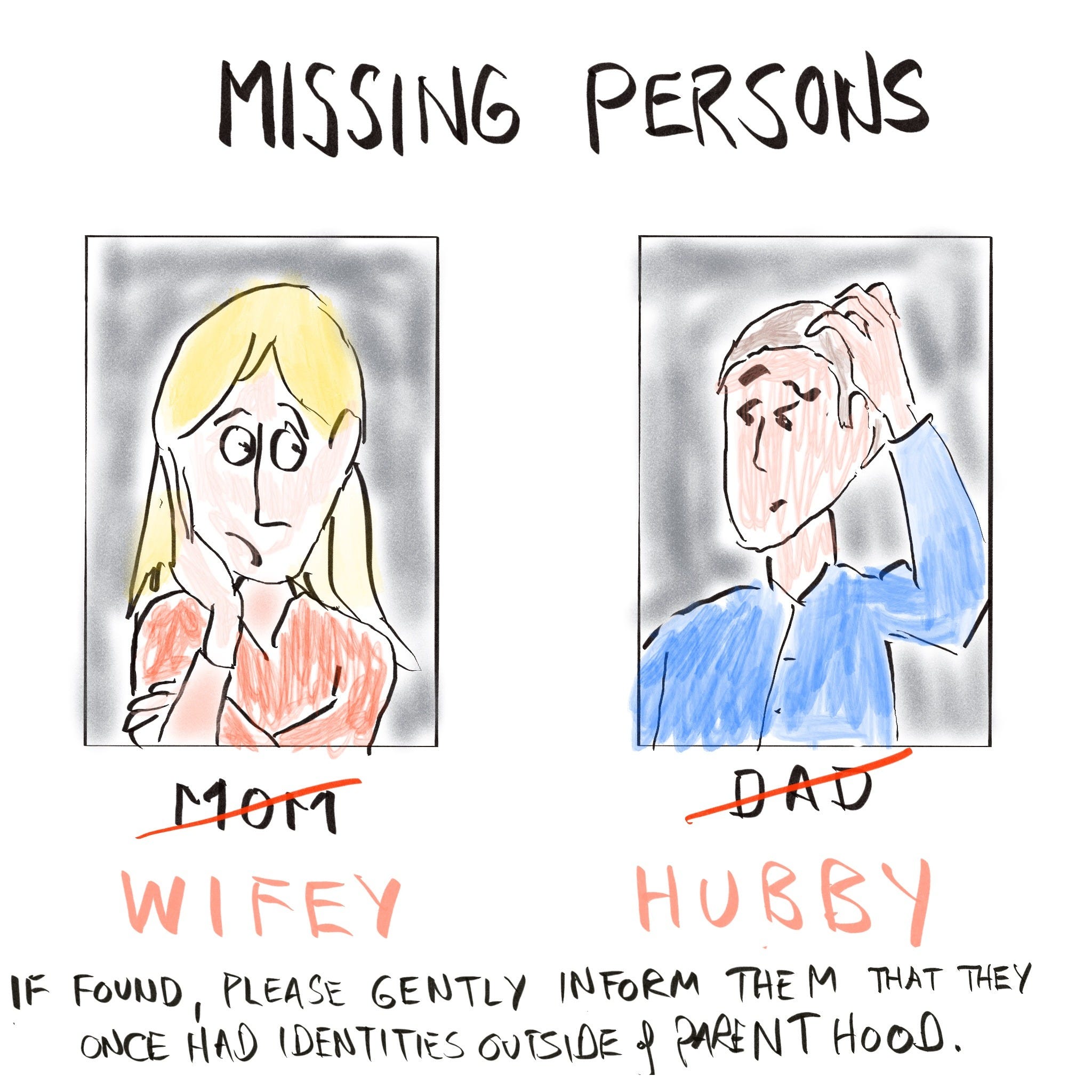
After we dropped our younger son off at college in central Pennsylvania, my wife and I had a choice: Return to the empty nest immediately (yikes), or make an adventure of it. We drove to the Frank Lloyd Wright masterpiece Fallingwater, and toured like a childless couple. No soccer practice to attend, no family dinner to cook. Then the weekend ended, and we returned to a house that hadn’t been that quiet for twenty years. But when we sat down to dinner, we talked to each other, and remembered something important: We had a relationship before the kids arrived, and dammit, we’d have one again, now. Plus, in a pinch, we could always talk about our kids. They’re fascinating!
6. Wait. We’re mortal?
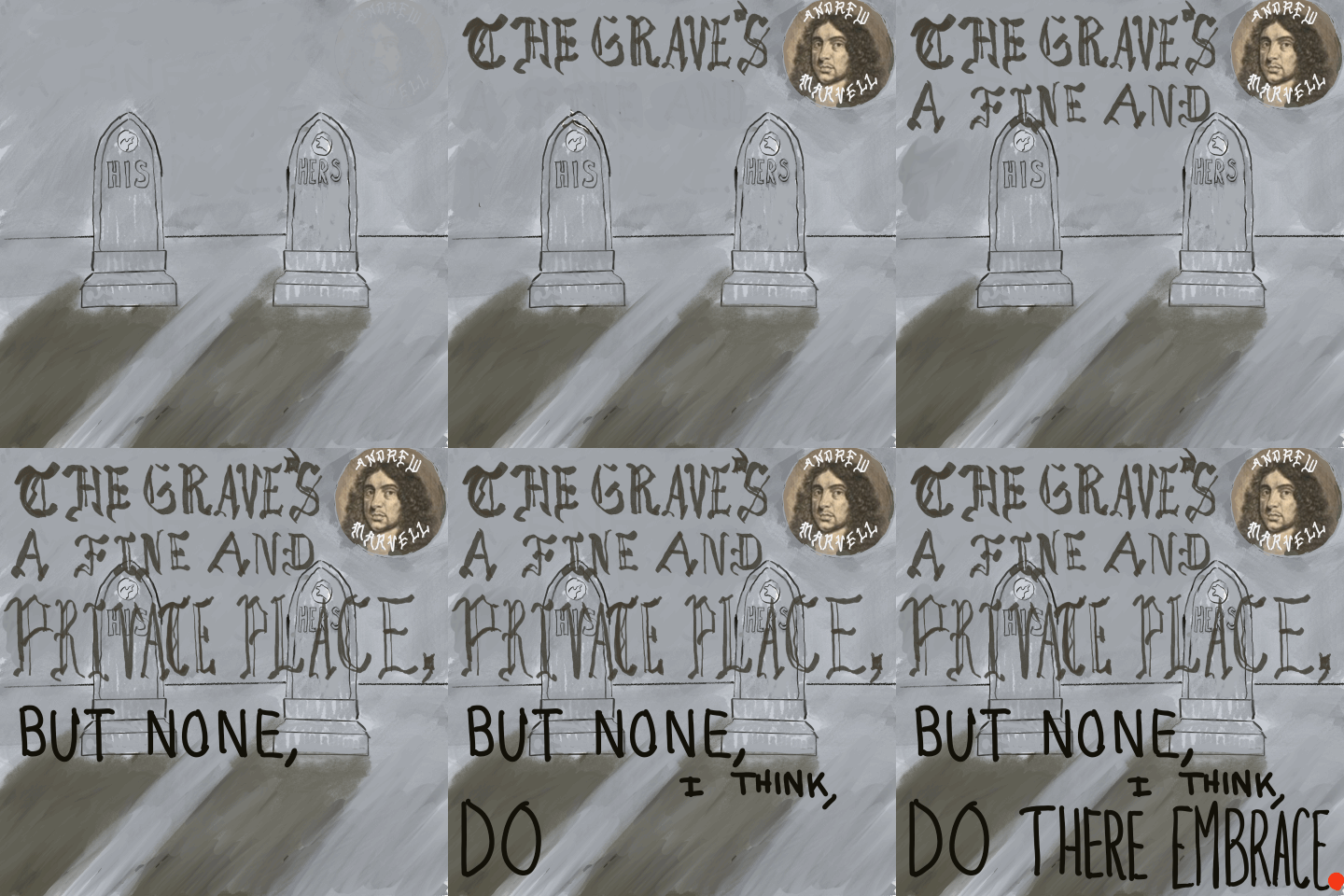
Now we’re sailing into the latter part of our lives, and saying goodbye to people we love. I don’t know how this whole mortality thing will work out. We’re healthy now, but so was my friend Aaron, who went from bike rides on Tuesdays to a heart attack that would kill him. So we, the living, do things with a little more urgency now. It’s time to rent that farmhouse in France, and to tell that child we love him, because we don’t know when the opportunity will arise again.
Urgency is good.
***
After my wife and I had exchanged our wedding vows, we looked to the minister to ratify our union. He had a blank look on his face. I was expecting something very official, such as: “By the authority vested in me by the state of Connecticut, I now pronounce you husband and wife.”
Instead the minister hissed: “Go!”
So we went!
Soon we were on our honeymoon, and as ink-stained wretches of the magazine world kind, we naturally had a contact with one of the top editors of the Martha’s Vineyard Gazette. We stopped by her office to see her, and introduced ourselves as young journalists in love. She took us in, in all of our dewy optimism, and shared a wake-up call that was actually useful.
“Marriage is work,” she told us, “But it’s the right kind of work.”
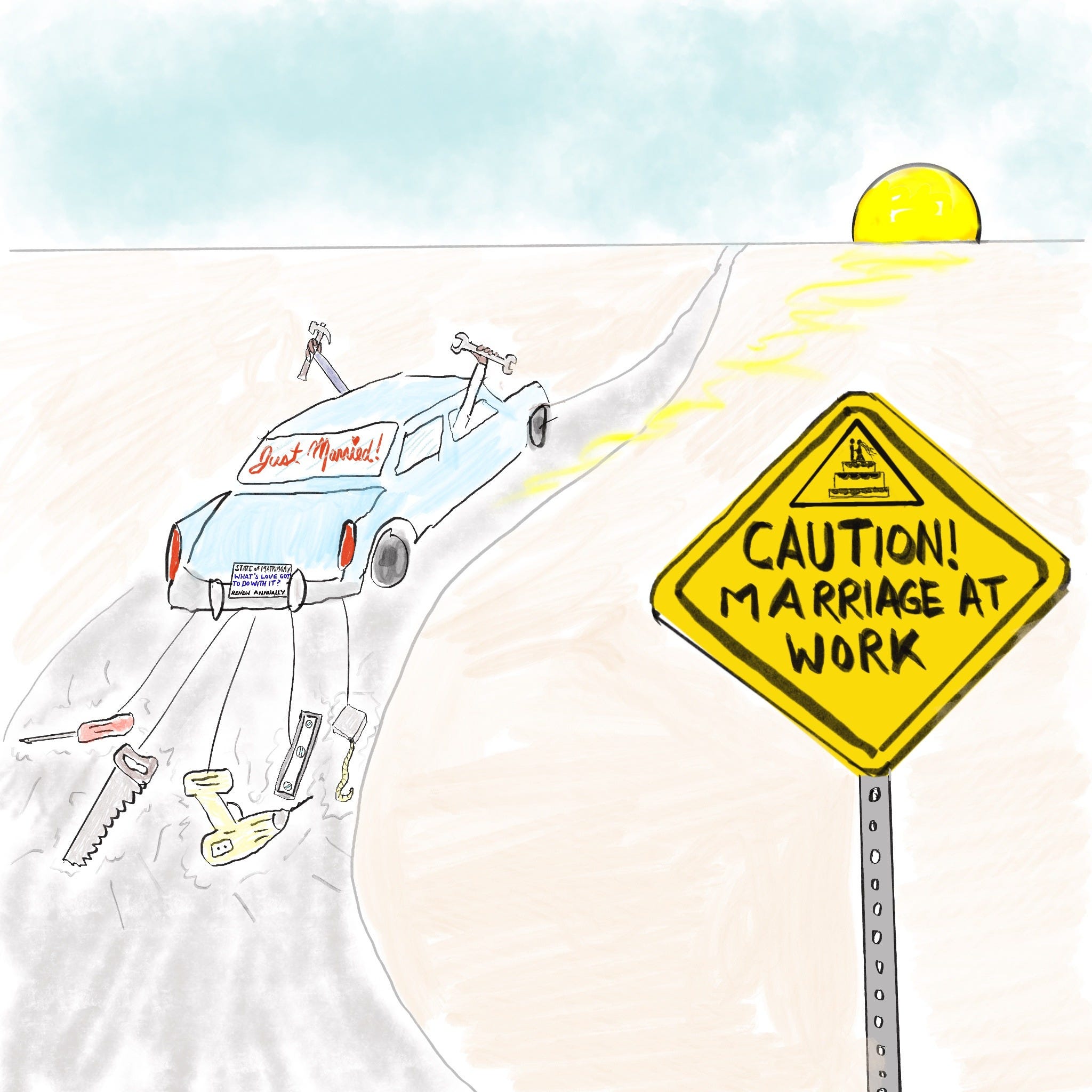
Many times over the ensuing decades, when love feels more like labor than bliss, one of us looks the other in the eye and states the first part of that refrain. And the other spouse finishes the sentence.
Love is work. But is there any better work to do?
Comments
Nothing yet. Say the first thing.
Sign in to join the conversation.