
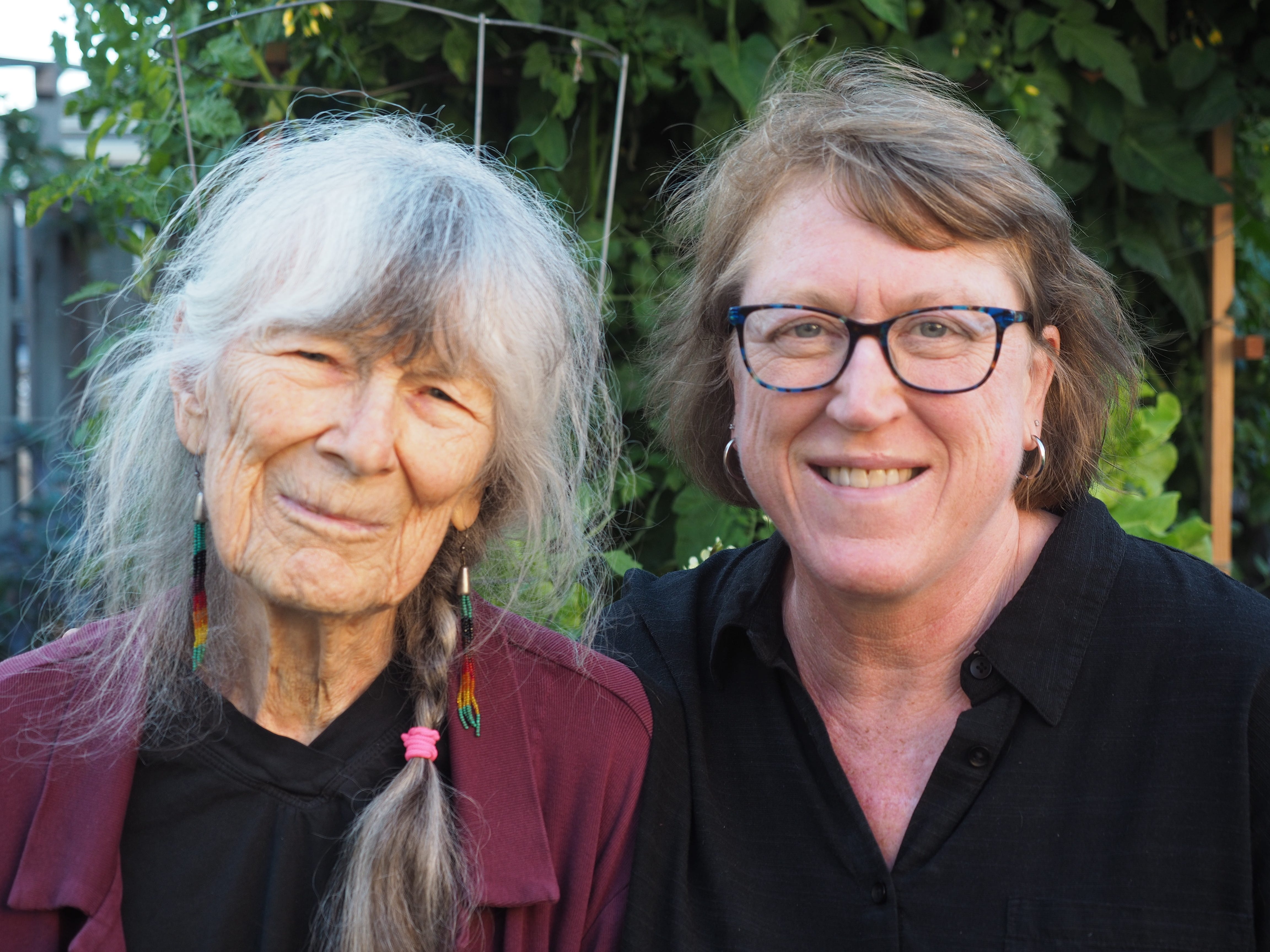
The face of my eighty-five-year-old neighbor Louise is a map of life experience. Her keen blue eyes have witnessed decades of social change, from early civil and women’s rights movements to the assassinations of President John F. Kennedy and Martin Luther King Jr. to the Cuban missile crisis and Vietnam War. She cradles her tea mug and smiles encouragingly as we sit at the snug table in her rented studio home, her high cheekbones framed by two silver gray braids that hang down to her shoulders. Born and raised in California, in Berkeley and Napa, Louise has spent her life as a writer, teacher, Buddhist practitioner, and social activist—devoting herself to peace initiatives, racial justice, antinuclear efforts, and caring for the earth. For fifteen years we’ve been neighbors in the Oakland, California, cohousing community I cofounded, and I value her as a powerful example of aging gracefully.
My husband, Randy, and I joined our cohousing community when I was twenty-eight. We met during our undergraduate years at UC Santa Cruz in a Christian fellowship where we learned to prioritize community over the nuclear family-oriented American Dream of suburban life. When we arrived in Oakland in 1997, we were already veterans of shared housing. Both of us had lived with roommates and together had rented an apartment with a young family during my graduate studies. At our new church, we connected with a team of couples and singles interested in using the cohousing model as a way to be of service in a specific Oakland neighborhood. We wanted to put down roots in an urban setting, tutor at the local school, and “live lightly on the earth” by installing solar panels to generate energy and sharing resources such as cars, tools, and laundry machines. When Randy and I decided to participate, I wasn’t thinking of what growing old in cohousing might look like. Instead, I was enamored with what felt like an avantgarde faith practice of creating community literally from the ground up.
Cohousing is an intentional neighborhood fostered by people who seek to live with others who share their values. Most cohousing in the United States is made up of specially designed condominium developments where members buy their homes at market rate and pay their own mortgages. Of course, this can be expensive and im-practical depending on the circumstances, so in urban areas where land is scarce, some cohousers find and buy adjacent homes in a model called retrofit cohousing. Every kind of cohousing complex is centered around shared spaces, including a common house. Ours contains a kitchen, a dining and laundry area, a bathroom, and a living room. We also tend a vegetable garden and share a tool shed, bicycle storage, and a small gym we’ve created in the barn.
In 1998, our group bought an empty lot in North Oakland and acted as our own developers, hiring a cohousing architect and a contractor, interacting with the city regarding necessary zoning changes, and putting in months of sweat equity by demolishing creaky garages and scraping old lead paint off the existing house and barn. The project kept me both exhilarated and exhausted, but my deeply held drive to commitment—especially when it came to faith community—undergirded it all. Although none of my fellow cohousers explicitly said, “Sign here indicating you will never leave;’ that was the rubric under which I was operating. I was all in.
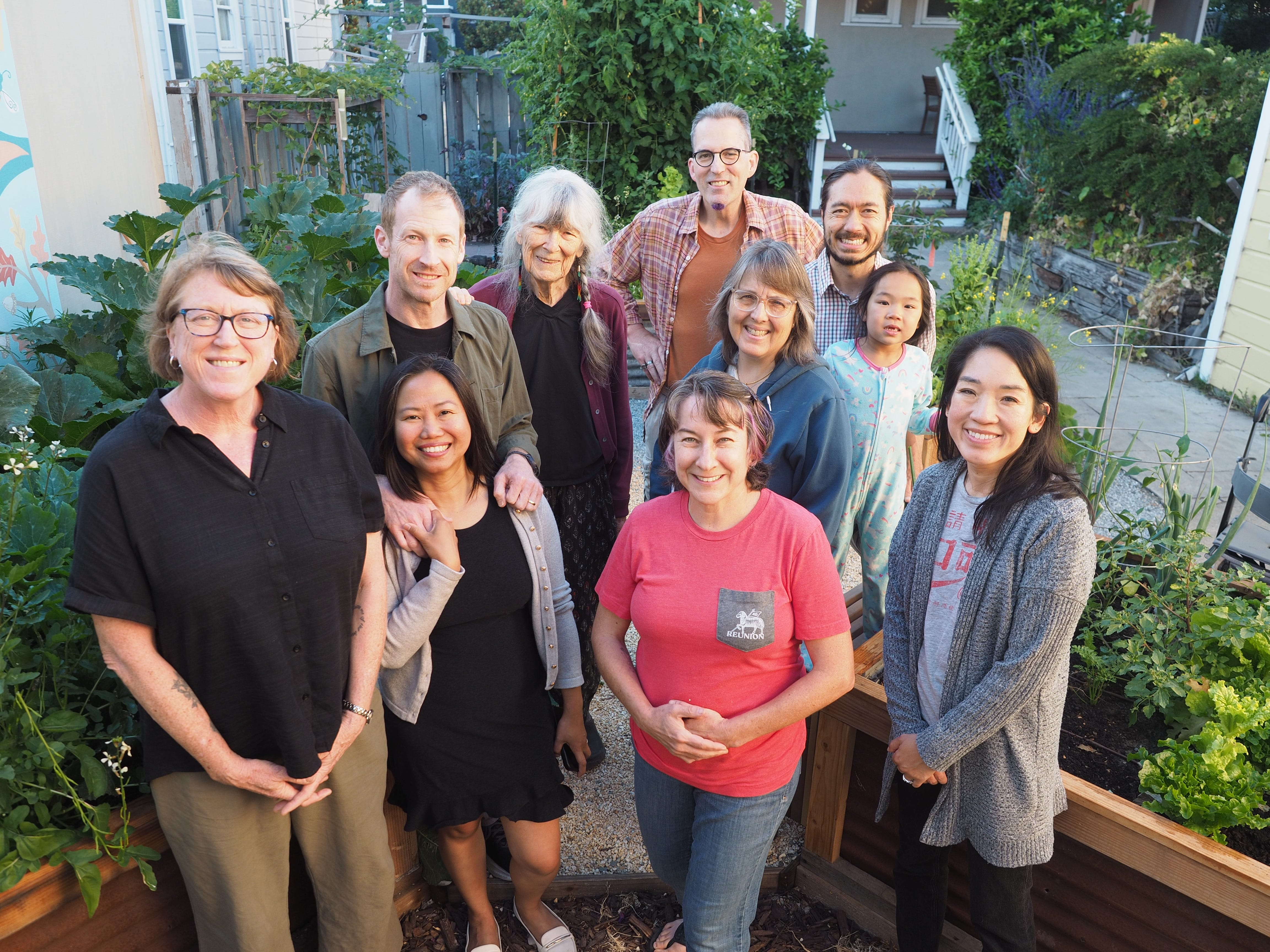
Our community consists of nine households. We initially had thirty residents, nine of whom were children. The first generation of kids, including my two sons, has grown up and moved away, but we have a new cohort of youngsters, who range in age from four to ten.
Our life together revolves around spontaneous meetups on the back lawn for a cold beverage or a round of croquet, weekly meals we take turns cooking in the common kitchen and share in our common dining room, and monthly “work parties” to care for our property. Having a built-in community is often as natural and joyful as I initially hoped it would be.
Still, when you’re twenty-eight, it’s hard to imagine thirty, let alone fifty-five. So much has changed in over twenty years of cohousing, and while there’s been lots of goodness, there have also been moments of disillusionment and frustration. My relationship to the faith that originally drew me to this way of life has shifted, and the daily reality of communal living has sometimes left me longing for a different path. We’ve had thorny monthly owners’ meetings where we try to reach consensus about how much of our yard should be food-growing garden space, revise the bylaws that govern our community practices, or develop guidelines about renovations in individual homes. I’ve experienced conflicts around parenting and communication styles, the challenge of relating to a range of people with different personalities and temperaments in close quarters, and the physical exhaustion of the monthly work days as I get older. I have also struggled with the painful realities of city life in Oakland—homelessness, civil unrest, racism, poverty—and how to most effectively engage with city leadership and local activists around these issues, which some of my neighbors and I have tried to do through participating in protests, contributing supplies for immigrant students at the nearby international high school, and at-tending Oakland city council meetings.
When it comes to aging with purpose and integrity, and determining if growing old in cohousing is the right path, I look to my neighbor Louise. Louise entered into this cohousing experiment nearly fifteen years ago, when she was in her early seventies. Her addition to our community expanded its generational range. Today, we have representation of almost every decade.
Yet I can’t deny that these challenges coexist with deeply satisfying, soul-nourishing moments of connection with my fellow cohousers. Those moments of connection have only grown deeper and more frequent with age and time. I’ve become a closer listener as I eat lunch with a neighbor at the picnic table under our magnolia tree and hear about the difficulties of raising a young child with special needs. That same neighbor joins me as the community comes together over the backyard firepit to mark with meditation and prayer the untimely passing of another member’s sibling. Even an activity as simple as spontaneously making chalk drawings in the courtyard with one of the children is something I might not have access to anymore if not for cohousing. And because of those monthly owners’ meetings, I’ve gotten better at communicating my needs and thoughts more clearly.
Lately, I’ve started to consider how I might shape the landscape of my remaining years. When it comes to aging with purpose and integrity, and determining if growing old in cohousing is the right path, I look to my neighbor Louise.
Louise entered into this cohousing experiment nearly fifteen years ago, when she was in her early seventies. Her addition to our community expanded its generational range. Today, we have representation of almost every decade. Our youngest member is four and Louise is our oldest. She has brought deep experience and wisdom to our community life, sharing expert gardening skills, peace and meditation practices, and healthy food for our common meals.
After earning a PhD in English literature at UC Berkeley in the 1960s, Louise spent more than forty years in Boston, where she taught at MIT. In the midst of the Vietnam War, she and her peers questioned the traditional narrative of American life, and part of this included exploring the idea of shared housing, although she didn’t pursue it until she bought a stake in a Cambridgeport twelve-unit limited-equity co-op in 1994. When she moved back to California in 2009, she found our cohousing group through one of our former members, who also happened to be the publisher of her first book, and rented one of the available studios.
Joining cohousing in California was both a fulfillment of Louise’s desire to continue living in community and a dramatic change after decades on the East Coast. When she first moved in, she’d wake up feeling a rush of joy being back in the place where she grew up. She was still in good health, mountain climbing, taking care of family land in Napa, organizing and participating in peace walks, and engaging with her Buddhist sangha. But as the years went by, Louise began to notice that her active lifestyle was catching up with her. She experienced a handful of significant health concerns, including a house dust allergy that briefly forced her out of her apartment, a concussion, an ovarian cyst, and a heart attack. She felt our community’s support during these crises, particularly with the heart attack, as her cohousing neighbors helped her get to the emergency room, visited her in the hospital, and checked in regularly once she was back home.
When Louise chose to live in cohousing in her seventies, she didn’t anticipate the level of physical support she might eventually need since she was in such good shape. But having a close, intentional community became vital as she learned how to shift the way she took care of herself by asking for assistance from family, friends, and neighbors. Although aging and illness were changing Louise’s sense of self and independence, she continued her commitment to social justice. At the age of eighty-four, she published a book that explored her family’s settler legacy in Napa, noting how it has been part of the theft of Indigenous land. I admire Louise both for her dedication to social justice and her flexibility in adapting to the demands of aging.
I’ve given a lot of thought to whether cohousing could provide me and my similarly aged neighbors with the right support moving through the last third of our lives, as it has for Louise. There’s certainly potential for helping each other navigate increasing physical limitations. Over the years, we’ve supported other cohousing members through mental illness, stroke, and cancer by providing additional meals, rides to medical appointments, and help with picking up prescriptions and groceries. In the future, if the work of making community meals becomes too labor-intensive, we might be able to share the cost of hiring a cook. We could use a similar strategy for maintaining individual homes and the community yard. House swapping might be another benefit of cohousing—and perhaps less stressful than the typical downsizing process many aging people face. Maybe a younger family could buy our four-bedroom home, and Randy and I could move into their two-bedroom unit. Somehow that feels more manageable when so much about aging feels overwhelming.
When Louise chose to live in cohousing in her seventies, she didn’t anticipate the level of physical support she might eventually need since she was in such good shape. But having a close, intentional community became vital as she learned how to shift the way she took care of herself by asking for assistance from family, friends, and neighbors
The deeper advantages of aging in cohousing may be less logistical and more relational. There’s our shared history and values, and the joy of interacting daily with a wide variety of generations. On top of that, I’d have the support of neighbors willing to act as sounding boards as I think through retirement from my career as a medical journalist, evolving relationships with adult children—-and perhaps future grandchildren—and the inevitable losses that come with aging, such as the deaths of parents and siblings.
Louise says about interdependent cohousing relationships: “You don’t have to love everybody, but you can still have a connection to them.” We’re not all best friends here, but inherent in the cohousing model is an overall desire to seek the health of the group. Although my neighbors and I are different in our temperaments, energy, emo-tional capacities, and spiritual practices, we’ve worked hard to set up a community that is flexible and compassionate enough to hold each of us as we age. Perhaps that’s the most important benefit of aging in cohousing: witnessing the life stages we all go through. More than once I’ve invited my neighbors to participate in rituals to mark particular age-related transitions. When I was thirty-two and my youngest son stopped nursing, I asked the women in my community to come over to discuss the grief I was feeling as I moved out of this stage of motherhood. When I turned forty, I threw a party that included 1980s dance tunes and a bouncy house in our common backyard. And when I turned fifty, my neighbors honored me with affirming cards and letters that boosted my morale as I ventured further into middle age. While these celebrations may not be unique to cohousing, I have found it profoundly meaningful to mark important milestones alongside people with whom I have shared decades of common life.
Randy and I are still in conversation about our future plans. Moving out of Oakland, and cohousing, is a possibility. But with elderly parents nearby and our children still needing a home base, we don’t foresee a move anytime soon. On the practical side, our home doesn’t require navigating stairs to get into and we’re close to transit, medical care, and good restaurants. But most importantly, when I think of what I originally sought out of cohousing—a sense of community, resource sharing, and the ability to be of service—I’m not so sure I want to give that up.
Comments
Nothing yet. Say the first thing.
Sign in to join the conversation.