
An overview of interesting and/or important news from over the month — maybe with an opinion or two here and there …

Construction of data centers around the country has become a source of concern, and Oklahoma is no exception. The energy-sucking centers use tremendous amounts of power and water, produce noise that can impact those living in their vicinity and can impact property values.
Oklahoma legislation requires groundwater permits for data centers that use cooling systems designed to conserve and recycle water. “But in practice,” USA Today reports, “data centers in Oklahoma do not need groundwater or surface water permits to operate.” While Oklahoma has at least 55 data centers, they all are buying water from municipal utilities, leaving their water use untracked by the government.
In recent times, water has been a major source of concern for rural Oklahomans, who have been impacted by drought and a shrinking Ogallala Aquifer. Oklahoma farmers and ranchers now have more water competition with data centers. The largest data center in Oklahoma is Google’s in Pryor. Operating at full capacity, this center uses about as much electricity as Oklahoma City.
Read more here, including the story of one Oklahoman who believes a proposed data center near her will upend her life.

Leaders in Edmond, Norman and Oklahoma City leaders are discussing a commuter rail proposal to develop new transportation options to connect the three cities. Funding would potentially come from a voter-approved sales tax initiative.
Read more here.
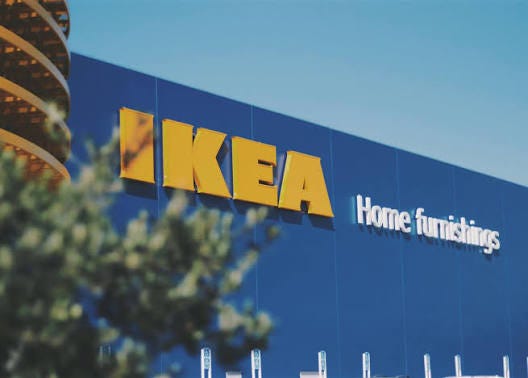
The world's largest furniture chain, known for ready-to-assemble home furnishings, IKEA is opening its first Oklahoma store in Tulsa this fall.
The new 51,000-square-foot store will open at the Tulsa Hills Shopping Center. The store may employ 50 to 60 employees and produce estimated annual sales of $30 to $40 million. The development was supported by a $2.5 million incentive package approved by the Tulsa City Council.
Begun in 1943 in Sweden, IKEA operates stores around the world.
Read more here.
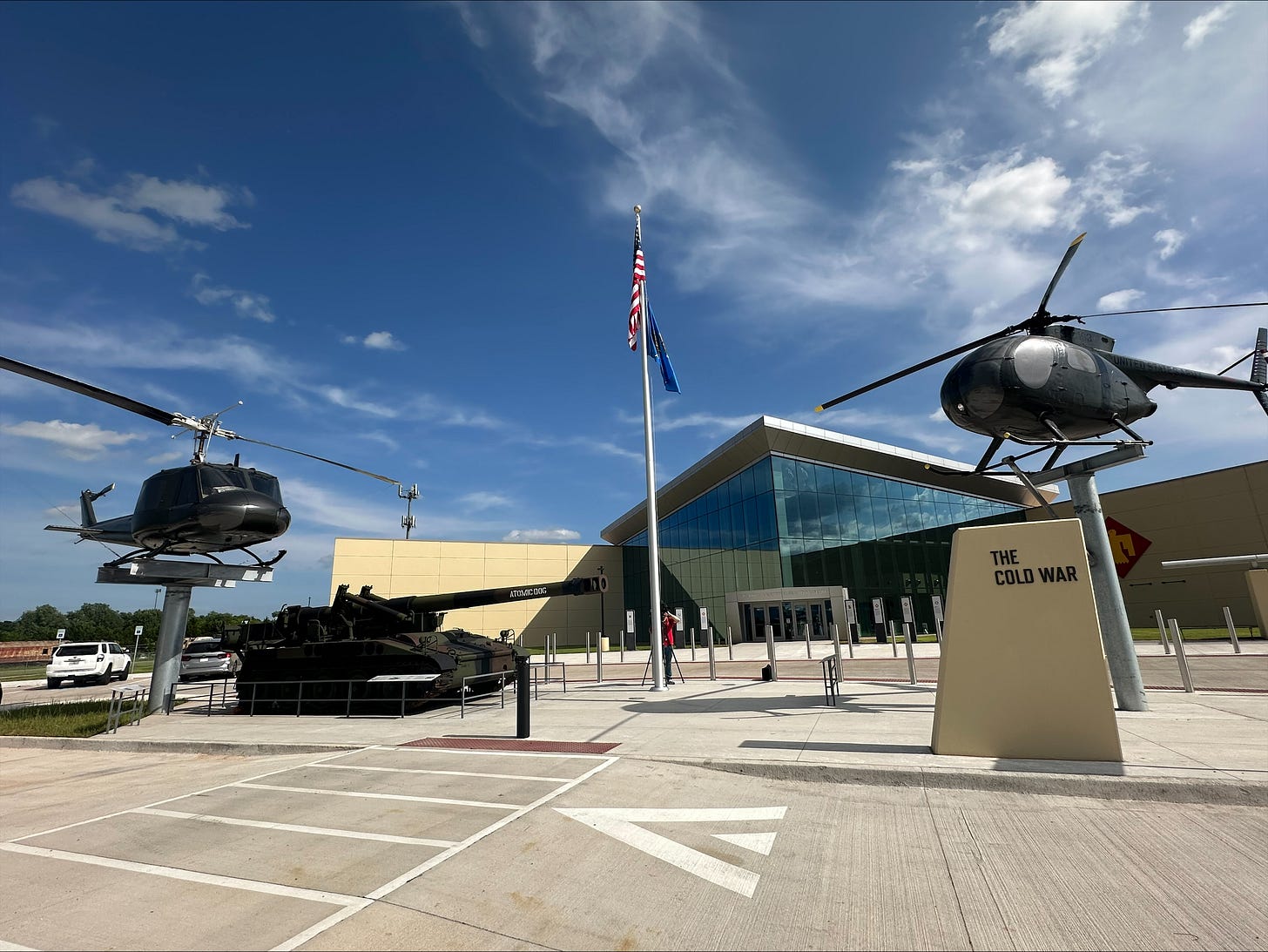
An expanded and modernized Oklahoma National Guard Museum is now open to the public for free at its new location, 3301 NE Grand Blvd. in Oklahoma City.
Inside the new museum’s 20,000 square feet of exhibition space visitors will find some visitor-favorite exhibits that remain on display, including tributes to the Oklahoma National Guard’s 12 Medal of Honor recipients, original Bill Mauldin cartoon drawings, stories of the 45th Infantry Division’s liberation of Dachau and war memorabilia from Hitler’s bunker and Munich apartment.
Among new additions to the museum are displays about the Oklahoma National Guard's domestic operations, including responses to the 1995 Oklahoma City Bombing, fires, floods and tornadoes.
The new National Guard Museum also includes a 10,000 square-foot event and education center with classrooms and an event hall.
Outside of the museum are static aircraft, tank, artillery and truck displays, including a new addition — a CH-47 Chinook, the distinctive twin-rotor transport aircraft.
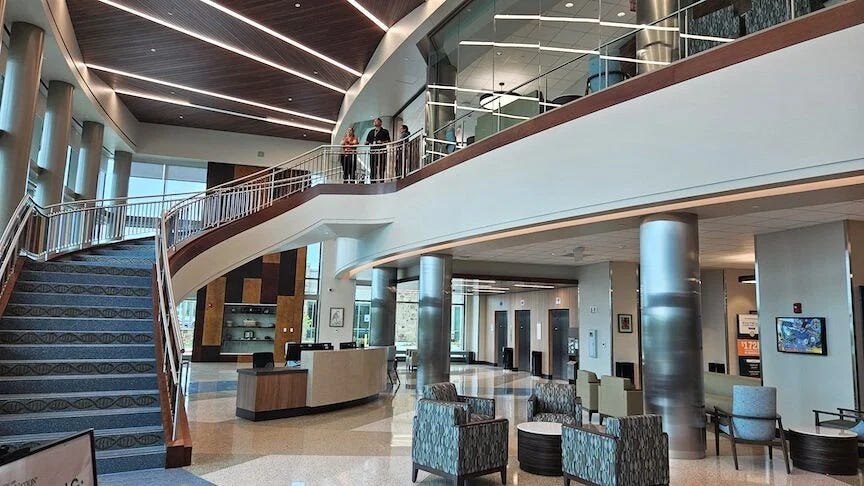
Tahlequah welcomes a new 400,000-square-foot, six-story hospital that doubles the capacity for inpatient services and includes space for 127 beds, a rooftop life flight helipad and other expanded services from its prior smaller hospital built in the mid-1980s.
Cherokee Nation officials celebrated the opening of the modern W.W. Hastings Hospital earlier this month. Funded through the tribe’s Respond, Recover and Rebuild plan, the new hospital represents a $470 million investment.
New services include a Level II Neonatal Intensive Care Unit, cardiac catheterization lab, inpatient hospice care, inpatient rehabilitation, an emergency department, surgery facilities, an intensive care unit, a pharmacy and imaging services.

After E. coli was found in multiple water samples in Moore, an order to boil water before using it was issued July 9. Commonly found in the intestines of humans and animals, some strains of the bacteria E. coli can cause serious infections.
The order was lifted July 11 by the City of Moore and the Oklahoma Department of Environmental Quality after two days of follow-up testing showed no presence of E. coli in the city’s water system
Read more here.

In 2022, “The Kansas City Jewish Chronicle” profiled partners Marc Kulick and Joe Loeffler, of the privately held real estate investment firm Vesta Capital, based in Tulsa, with operations in Little Rock, Oklahoma City, Tulsa and Wichita.
The article discussed the friendship of the two dating back to the Hyman Brand Hebrew Academy in Overland Park, Kansas, and the creation of their company with 35 real estate properties containing 9,500 units, as well as their commitment to Jewish philanthropy.
But in just a few years, as NonDoc reported this month, the success story took a dark turn. Lawsuits are rolling in, as well as complaints from renters who have reported uncollected trash, no trash dumpsters and living without water (Vesta failed to pay $150,000 in utility bills in Oklahoma City and $420,000 in Tulsa). Employees appeared to be treated no better. One said, “They treat employees like s***.” Other workers said the company covered up mold problems in units.
The “Vesta Empire,” as NonDoc called it, collapsed as quickly as it grew. Kulick, also a poker player and living the high life in Tulsa in a nearly 10,000 square foot house, had debt of more than $900 million when he defaulted on a loan that had an interest rate of 7,000 percent, compounded daily, as reported by 2 News Oklahoma. The loan was made to Kulick by Efraim Diveroli, a former arms dealer who was the basis for one of the characters in the movie “War Dogs.” Reportedly Diveroli now has taken over many of the Oklahoma apartments of Vesta.
Mr. Kulik’s story sounds like it may have echoes of Ponzi schemes and other financial shenanigans the likes of Bernie Madoff, Hassan Nemazee, Sam Bankman-Fried, Michael Milken, etc.
More information here, here, here and here.

This month Oklahoma City Mayor David Holt announced the name of Oklahoma City's new professional soccer team that will begin play after the new multi-purpose stadium opens in 2028.
The team name announced is “OKC United,” which sounds more like a tagline and nothing like a sports team name. Not only is the name horrible, the team’s logo is ghastly.
The price tag for the new stadium and surrounding development is $2 billion. Either city planners spent too little on the brand name and logo or too much! The cost of the brand name/logo creation has not been reported.
Read more here.

In March this year, President Trump announced the renovation of the Lincoln Memorial Reflecting Pool, one of the most photographed sites in Washington, D.C.
Two Atoka, Oklahoma, companies hired for the project worked long shifts for two months sandblasting the 7-acre pool and adding a waterproof liner.
With fanfare in May, the beautification project launched but quickly went south with paint peeling and algae blooming. By July 15, the pool was emptied for new repairs.
The Oklahoma companies didn’t respond to inquiries about their work on the project, reported The Oklahoman.
Read more here.

Oklahoma’s child vaccination rates are down, says Dr. Steven Crawford, a family physician and the chair for the Oklahoma Alliance for Healthy Families, even with outreach efforts to increase immunization rates by providing free and more accessible vaccinations.
Some parents are questioning vaccine efficacy post COVID, and they are invoking their right to use a state law that allows children to opt out of required vaccinations.
Read more here.
Beyond Substack, join us on X and FB for what’s happening in Oklahoma.
If you find this news recap useful, please share! Thanks!
Oklahoma Redux is published by Maria Fotopoulos.
Buy Maria a cup of coffee to keep OK Redux in production!



Comments
Nothing yet. Say the first thing.
Sign in to join the conversation.