
Where you live affects your quality of life in so many ways: whether you can walk to stores and parks, whether you feel close to neighbors, whether the air is clean and the streets safe, and, ultimately, whether you can get the care you may need in the future.
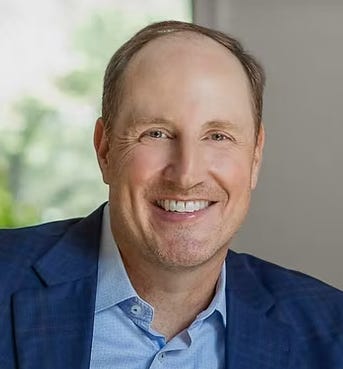
I discuss these issues in my latest Risking Old Age in America podcast with Ryan Frederick, author of Right Place, Right Time: The Ultimate Guide to Choosing a Home for the Second Half of Life and founder and CEO of Here, the home of Place Planning. He explains the importance of “place” – your housing arrangement and your community – to your quality of life. This is true at any age, but especially for retirees who often have more choice in where they live.
Here are some excerpts from our conversation:
Risking Old Age: Could we start by you introducing yourself and letting me know how you got into writing about the role of place in health and longevity?
Ryan Frederick: I went to business school at Stanford. This is about 20 years ago. People then weren’t thinking as much about longevity. So I got into the housing side out of business school and actually lived in a senior living community for a a month one summer, the only person under 30 and the only male in my wing. I was on the senior housing side initially, and then investment side, then joined one of the largest operating companies.
Then an “aha” moment came that people lack a framework of how to think about where to live. It’s multidimensional. In writing the book, I realized that is actually a much bigger thesis than I thought it would be at the outset.
ROA: Place could mean so many things. It’s what type of house you’re living in, a single-family house, an apartment? Are you moving to a congregate care community? But also do, what part of the country you’re in.
Some it’s just luck, right? You live in a part of the country where the economy’s booming, or you live in a part of the country where it’s failing and that could really affect your life.
So, what do you mean by “place?”
Frederick: It has layers to it. I introduced this concept called the four quadrants of place. Those four quadrants are environment, like the square footage, the area you, geographic area you live in. Then we have health, because where we live really drives our health habits in various ways, quality of sleep, how often we exercise, our diet, quality of air, etc.
The third one, which actually might be the most important, is community. It drives our social connections. And then the fourth one is finances. But if even within each quadrant there are layers.
So just to to amplify your point around the geographic or spatial pieces of place, it’s your four walls. It’s your your man cave. You might see on Zillow or your commercial the beautiful kitchen, stainless steel appliances.
And it’s not that that’s unimportant. It just happens to be, in my opinion, a very small piece of what comprises place. You have your block, your neighborhood, your metropolitan area. You have your county, state, country, region of the country.
You might be in the right dwelling But you might be in the wrong country. You might be in the right country, but there’s an opportunity to improve your place in so many other ways.
Just to finish this point out, I live in Austin, Texas. I believe you live in Boston.
I don’t live in Austin. You don’t live in Boston. We live in specific micro places within these metropolitan area. That micro place dictates the people you see, the amenities you have access to, in some cases the cultural norms.
So we don’t pick places, we actually pick micro places. And those micro places can make all the difference.
ROA: So it sounds like aging in place, which apparently the majority of people say they want to do, may not be the right thing for everybody.
Frederick: Here’s a crazy stat: The University of Michigan has a study in which roughly 85% of older adults say they want to age in place. Less than 15% of people have done anything about it.
ROA: Do you have to do anything about it if you’re just going stay put and not move?
Frederick: You’re talking to a place planning guy, so of course the answer is you have to roll up your sleeves. If you have a vision of what you want, does your place support that vision? One example, but often true for people that wish to age in a place: They’ve been in a single-family home in the suburbs for a number of decades, and now they just may not know their neighbors the way they once did.
They may be in a two-story home where they’re not really using the upstairs at this point. The cost of that home is often more than people realize. Even if you own your home, you have all the maintenance costs and property taxes.
There’s also the opportunity cost of your equity in your home that’s typically getting a lower return than the market at large. It’s also not liquid; you may not be able to sell it, when you want to. Place planning is solution agnostic, but it helps create a framework and intentionality so the decisions you make are thoughtful. There are quite a number of people that have gone through place planning that have decided to age in place. But they have their eyes wide open.
You may listen to our entire conversation here.
Topics
00:44 Ryan Frederick Origin Story
02:57 Writing Right Place Right Time
05:50 Four Quadrants of Place
08:11 Micro Places and Connection
09:30 What Is Place Planning
11:26 Intentionality and Agency
15:02 Aging Health and Longevity
19:01 Rethinking Aging in Place
21:09 Senior Living Options
22:31 Zoning and Housing Supply
24:13 Moving Abroad and Life Chapters
29:00 Policy Fixes for Better Housing
32:29 Advice to Boomers Plan Ahead
34:32 Closing Thoughts
No posts
Comments
Nothing yet. Say the first thing.
Sign in to join the conversation.