
Your Fantasy Novel is Dead.
It’s been six months. You have 142 pages of lore, three constructed languages, and a detailed map of a continent your protagonist will never visit.
You have written zero chapters.
Congratulations. You’ve stumbled into a Worldbuilding Trap, the place where many great fantasy novels go to die. We’ve sent a search party. They’re dead now, too. They started building a world down there. It has a really interesting tide-based economy. 🤦
Most fantasy writers get swallowed by one of two traps:
Worldbuilder’s Disease: You can’t stop. The magic system needs more bylaws. The royal lineage needs a third cousin, twice removed. The geopolitical landscape of the Saltforged Isles needs... more salt? Months pass. The manuscript stays blank. The world grows. This feels like progress. It’s not.
The “I’ll Fix It In Post” Fallacy: The dangerously seductive cousin of Worldbuilder’s Disease. You dive headfirst into Chapter One with a cool character name and a vague notion of a dragon. “I’ll figure out the world as I go,” you say. “It’s more organic.” You are lying to yourself. Now you’re 50,000 words in and realize your magic system lets characters teleport, completely breaking the epic cross-country chase you just wrote. The result? A rewrite so massive it makes you want to throw your laptop into the mouth of a giant fire toad. Which you can’t, because you haven’t invented fire toads yet!
Both traps are seductive. The first feels productive but generates zero story. The second tricks you into thinking you’re making progress, only to leave you with a mess so tangled that deleting it feels like a mercy killing.
The good news? There’s an escape hatch. The bad news? It’s guarded by a three-headed business analyst who only speaks in spreadsheets. Just kidding. The escape hatch starts with Scrivener.
Fantasy carries a unique, back-breaking burden. You aren’t just telling a story; you have to build the entire sandbox the story plays in, from the atoms up.
This pressure tricks your brain. It whispers, “More preparation equals more confidence.” And with more confidence, you’ll finally feel ready to write Chapter One, right?
Spoiler: “Ready” is a mythical creature, like a griffin or a fully funded 401(k) you never contributed too. It never shows up on its own. You have to write your way into existence.
But unfortunately this isn’t a problem that most writers can write themselves out of on their own because the problem isn’t that you’re not worldbuilding enough. The problem is that your worldbuilding is an amorphous, universe-devouring blob. It has no container. No limits. No one to tell it, “That’s a fun idea for a sentient mushroom kingdom, but the story is about a guy who lost his keys.”
Scrivener doesn’t just hold your manuscript. It builds a cage for your worldbuilding. A comfortable, well-appointed cage, but a cage nonetheless. It’s separate from your story, but connected. This distinction is more important than it sounds.
Here’s what this looks like in the real world, which you’ve been so eager to escape:
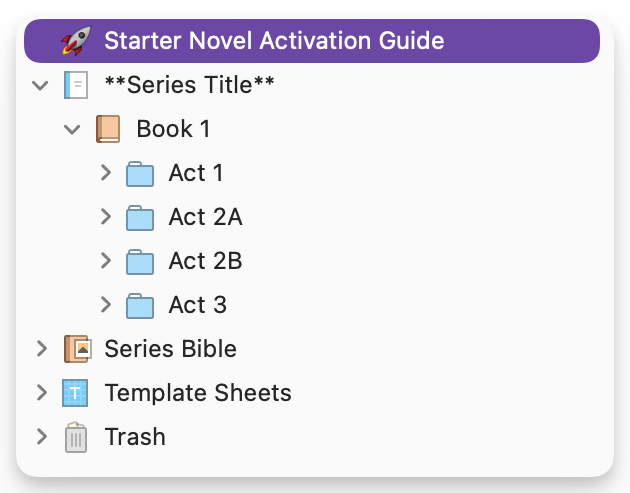
The Binder: This is your command center. Manuscript on one side, world-devouring blob (now neatly contained) on the other. Nothing gets lost in the abyss of 37 untitled Google Docs.
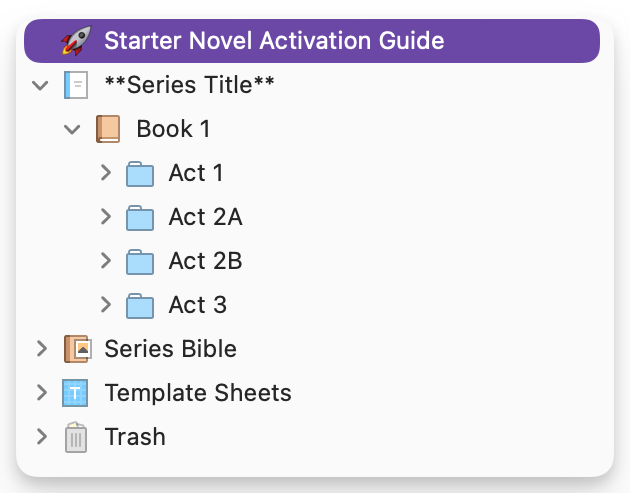
The Research Folder: This is your new “Story or Series Bible.” Subfolders for Locations, Magic Systems, Cultures, Characters. Go as deep or as shallow as you want. My advice? Start with what your story needs. If you don’t know what your story needs, you have a bigger problem. Figure it out. Now.
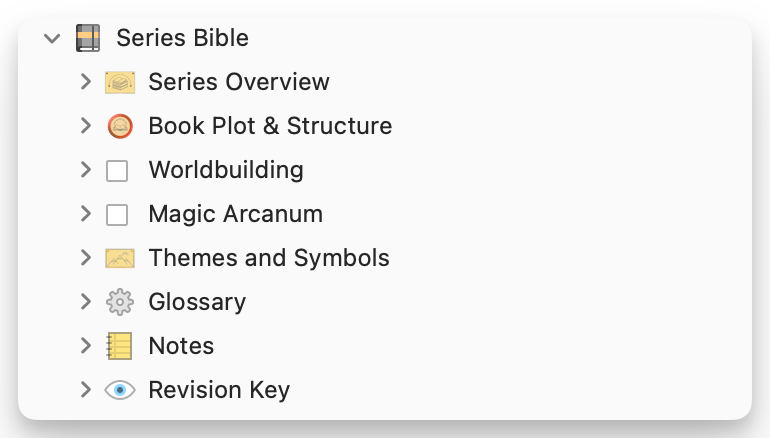
A Tale of Two Windows: Keep your writing and your lore separate but connected. Reference your story bible while drafting without ever leaving the app.
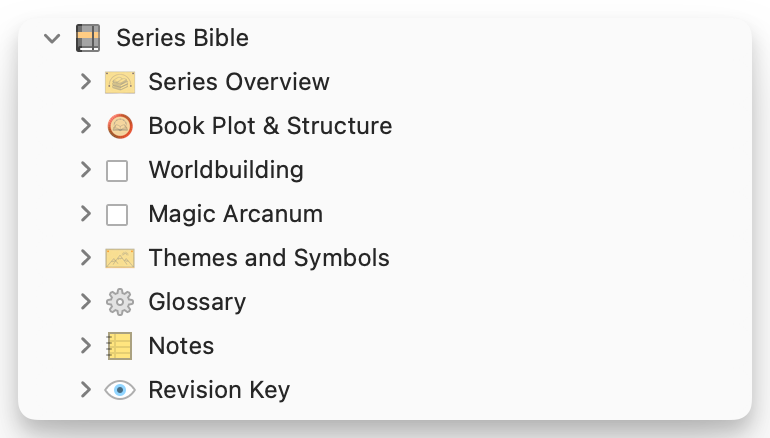
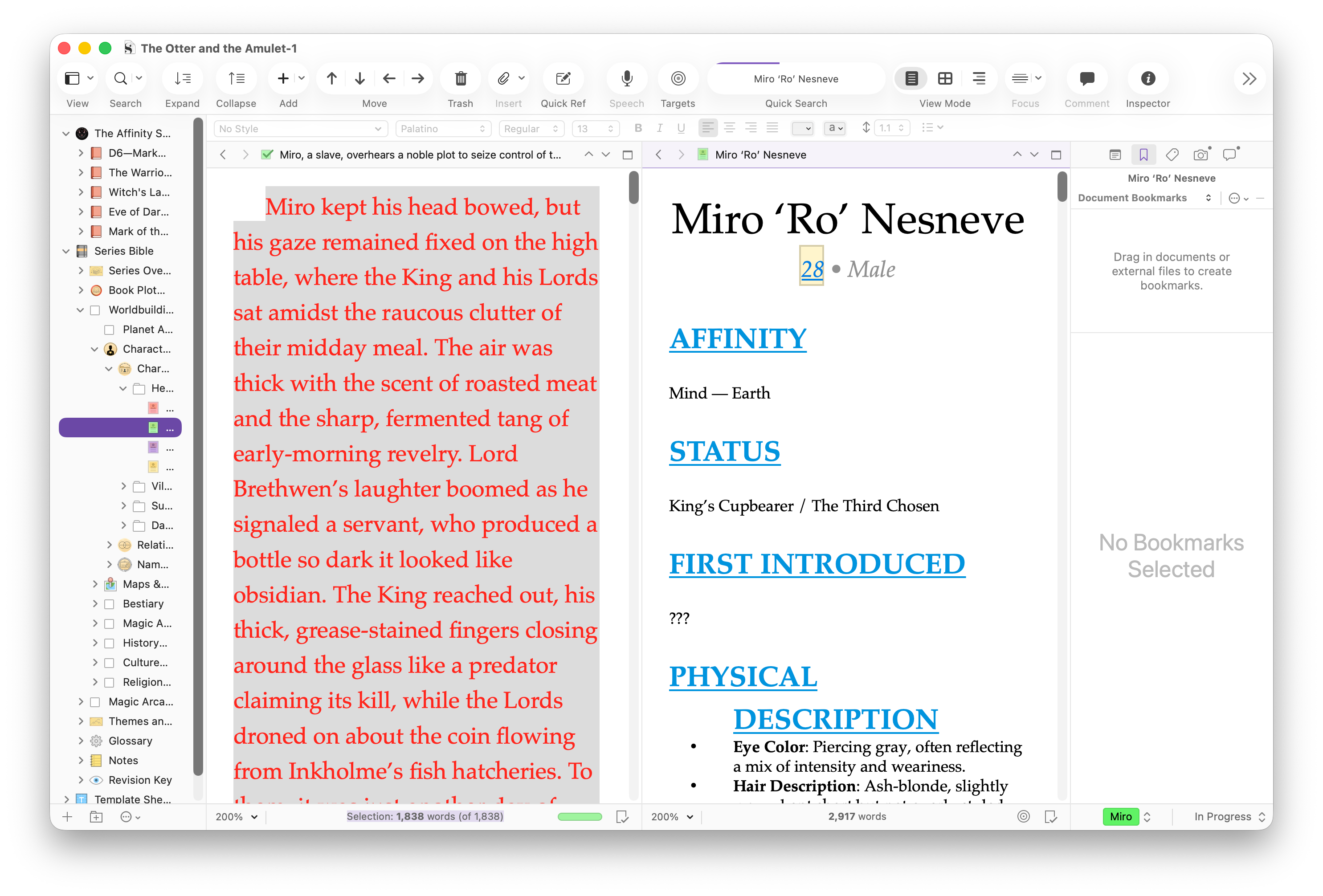
This structure is a psychological judo-flip. It makes your worldbuilding feel finite. Once it lives in a folder, it stops being an endless ocean and starts being a library you’re building with purpose.
Comments
Nothing yet. Say the first thing.
Sign in to join the conversation.